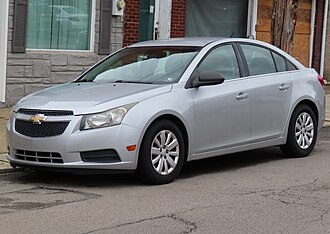
Chevrolet Cruze as a Used Car: Is This Affordable Family Car Still Worth Buying?
The Chevrolet Cruze is an interesting choice on the European used-car market because it combines the qualities of a conventional family car with a purchase price that is often lower than that of better-known rivals. Introduced as a global replacement for the Chevrolet Cobalt and Daewoo Lacetti-based models, the Cruze was intended to give Chevrolet a more competitive presence in the compact-car segment. In Europe, it was sold primarily as a four-door saloon and five-door hatchback, with a station wagon later joining the range. Today, the Cruze is no longer produced or sold as a new Chevrolet in most of Europe, but there are still plenty of used examples available, making it an option for buyers who want inexpensive everyday transportation with reasonable space and equipment.
The Cruze is not the sort of car that attracts buyers because of its prestige or driving excitement. Its appeal is much more practical. It offers a relatively spacious interior, a useful boot, comfortable long-distance manners and a broad choice of petrol and diesel engines. Later examples also benefited from improved equipment and a more polished driving experience. At the same time, Chevrolet’s withdrawal from the European new-car market means prospective owners should think carefully about servicing, parts availability and the condition of individual vehicles. A well-maintained Cruze can be an economical family car, but buying solely because the asking price is low can be a mistake.
For today’s buyer, the most important thing is to understand which Cruze you are looking at. The first-generation Cruze was produced from 2008, with European sales beginning around 2009, while an extensively revised version arrived later in its life. The second-generation Cruze was introduced globally for the 2016 model year but was not sold as a new Chevrolet across Europe in the same way as the first generation. Consequently, European used-car shoppers will most commonly encounter the first-generation model and its later facelifted versions.
What Is the Chevrolet Cruze?
The Cruze is a compact family car positioned in the same general market as the Volkswagen Golf, Ford Focus, Opel Astra, Renault Mégane and Škoda Octavia. Chevrolet offered the model in several body styles, although availability varied by country. The four-door saloon was particularly important in Europe, while the five-door hatchback and station wagon added versatility.
The saloon is worth considering because it provides a surprisingly large luggage compartment for a compact car. It has the traditional three-box shape that has become less common in Europe as buyers have moved toward hatchbacks and SUVs. The hatchback, on the other hand, is easier to load with bulky objects and is generally more convenient for urban use. The station wagon is the most practical choice for families who need substantial luggage capacity without moving to a larger vehicle.
Inside, the Cruze is straightforward rather than luxurious. The dashboard design is relatively conventional, controls are easy to understand and there is generally a good amount of space in the front. Rear-seat space is adequate for a compact family car, although taller passengers may find some rivals more generous.
Which Engine Is Best?
1.6 Petrol
The 1.6-litre petrol engine is one of the more common Cruze choices in Europe. It is a naturally aspirated four-cylinder engine, which makes it relatively straightforward compared with modern small turbocharged engines.
Its performance is adequate rather than exciting. The Cruze is not particularly light, so the 1.6 needs some revs when accelerating strongly or climbing hills. For city and suburban driving, however, it can be perfectly satisfactory. The main attraction is simplicity, particularly for buyers who drive relatively few kilometres each year.
A used 1.6 petrol is often worth considering if the vehicle has a good service history and has been maintained properly. It can also be a better choice than an old diesel for drivers whose journeys are mostly short and urban.
1.4 Turbo Petrol
Later Cruze versions were available with turbocharged petrol engines, including a 1.4-litre turbo in some markets. These engines provide stronger low- and mid-range performance than the naturally aspirated units and can make the Cruze feel considerably more responsive.
The turbocharged engine is especially useful if you regularly carry passengers or drive on motorways. Instead of having to rev the engine heavily, the turbo provides useful torque at lower engine speeds.
However, turbocharging introduces additional components, so the condition of the turbocharger, cooling system and lubrication system becomes more important when buying a used example. A complete service history is particularly valuable.
1.8 Petrol
The 1.8-litre petrol engine is another option encountered in European Cruze listings. It offers more power than the 1.6 and is better suited to drivers who want relaxed performance rather than maximum economy.
Its disadvantage is fuel consumption. A Cruze with the 1.8 can be reasonably economical when driven gently, but urban fuel consumption can rise significantly. For high-mileage drivers, the diesel versions are generally more attractive.
1.7 and 2.0 Diesel
Diesel engines are particularly important in the European Cruze market because compact diesel family cars were very popular when the model was new. Depending on year and market, buyers may encounter 1.7-litre and 2.0-litre diesel engines, with outputs varying substantially.
The diesel’s strong torque suits the Cruze’s character well. It is particularly comfortable on motorways, where the engine can maintain speed without needing to be worked hard. Fuel consumption can also be significantly lower than with the larger petrol engines.
The downside is complexity. An older diesel needs careful examination of its turbocharger, injectors, emissions equipment, clutch and dual-mass flywheel. A car that has spent its life making short trips around town may be a worse purchase than a higher-mileage diesel that has regularly completed long motorway journeys.
How Does the Cruze Drive?
The Cruze was designed primarily as comfortable family transportation, and its driving characteristics reflect that. It is stable at motorway speeds, reasonably comfortable over ordinary roads and predictable through corners.
The steering is relatively light and the suspension is tuned more toward comfort than sportiness. The car does not have the sharpness of a Ford Focus, nor does it attempt to imitate a premium compact sedan. Instead, it provides a relaxed driving experience that works well for commuting and family trips.
The Cruze’s size also gives it a sense of solidity. It feels more substantial than many inexpensive small hatchbacks, particularly in saloon form. On the motorway, that can be an advantage, although road and wind noise are more noticeable than in newer compact cars.
The hatchback is somewhat more practical for urban driving, while the saloon can feel particularly stable on longer journeys. Buyers should test both if body style is not predetermined by their needs.
Interior Space and Practicality
A Useful Family Cabin
The Cruze’s interior is one of its strongest qualities. There is enough room for a typical family, while the rear bench can accommodate adults reasonably well for a compact car.
The dashboard is not especially luxurious, but it is functional. The materials reflect the car’s affordable positioning, and some plastics can feel harder and less sophisticated than those in a Volkswagen Golf or newer Škoda.
That said, simplicity can be an advantage in an inexpensive used car. The Cruze does not attempt to overwhelm the driver with a huge number of menus and electronic functions. Buyers looking for basic controls and conventional instrumentation may appreciate this.
Boot Space
The saloon’s boot is particularly useful, offering a large luggage compartment for the vehicle’s class. The hatchback provides greater flexibility because the rear opening makes bulky objects easier to load, while the station wagon is the obvious choice for families who regularly transport large amounts of luggage.
Before buying, check the rear-seat folding mechanism and boot hinges. Older cars can develop problems with catches, hinges and trim, particularly if the luggage area has been used heavily.
What Should You Check Before Buying?
Inspect the Bodywork
Start with the exterior. Look for rust, mismatched paint, uneven panel gaps and signs of previous accidents. Check the wheel arches, doors, sills, boot lid and underside.
A used Cruze can have had a hard life as a family car, taxi or fleet vehicle, depending on the country. Evidence of professional repairs is not necessarily a reason to reject a car, but poorly repaired accident damage should be treated seriously.
Check the Engine Carefully
The engine should start easily from cold and settle into a smooth idle. Watch for excessive exhaust smoke, oil leaks, coolant leaks and warning lights.
Petrol engines should respond cleanly to throttle input without hesitation or persistent misfires. Turbocharged petrol and diesel engines require particular attention to boost delivery. A significant lack of power can indicate problems with the turbocharging or emissions system.
Inspect the Clutch and Dual-Mass Flywheel
Diesel Cruzes can be equipped with a dual-mass flywheel, and wear can become expensive. Listen for rattling or knocking noises at idle and when switching the engine off. During acceleration in a high gear at low engine speed, watch for clutch slip.
A clutch that engages very high or judders significantly deserves further investigation.
Test the Suspension and Steering
Drive the vehicle over different road surfaces and listen for knocking from the front or rear suspension. Uneven tyre wear can also indicate worn suspension components or incorrect wheel alignment.
The car should track straight without constantly requiring steering correction. Any unusual vibration at motorway speed should be investigated rather than dismissed as a minor issue.
Check the Electronics and Air Conditioning
Test every electrical function, including windows, central locking, lights, dashboard displays, audio equipment and air conditioning.
Air conditioning is particularly important. A system that does not produce cold air may require anything from a simple recharge to a compressor or condenser replacement, so do not assume the problem is inexpensive.
Is the Chevrolet Cruze Reliable?
The Cruze can be a dependable car, but its reliability depends heavily on engine choice, maintenance and age. The simplest petrol engines can be relatively straightforward to own, while diesel versions require more attention because of their additional emissions and fuel-system components.
As with any older family car, wear items are now an important consideration. Suspension bushes, shock absorbers, wheel bearings, brakes, exhaust components and cooling-system parts can all require replacement simply because of age.
The best evidence of reliability is therefore a strong maintenance record. Receipts for regular servicing, oil changes and replacement parts are much more useful than a seller’s verbal assurance that the car has “never had a problem.”
Parts and Servicing in Europe
Chevrolet’s departure from the European new-car market is one of the most frequently mentioned concerns surrounding used Cruze ownership. The important distinction is that the withdrawal of the brand does not mean that all servicing has suddenly become impossible.
Many mechanical components remain available through independent parts suppliers, aftermarket manufacturers and specialist workshops. The Cruze was also sold in large numbers internationally, so it is not an obscure one-off model.
The potential difficulty lies more with certain body panels, trim pieces, electronics and model-specific components. Before buying an unusual specification, it is sensible to check that replacement parts are readily available in your country.
An independent garage familiar with Chevrolet or General Motors products can also be an advantage, particularly for older vehicles.
Is the Cruze Economical?
The answer depends heavily on the engine and driving pattern. The smaller petrol engines are relatively simple, but they do not necessarily deliver spectacular real-world economy because the Cruze is a reasonably substantial compact car.
The diesel versions are more attractive for drivers who cover long distances. Their strong torque and lower fuel consumption make them natural motorway cars. However, diesel maintenance can be more expensive, so fuel savings should be weighed against potential repair costs.
Insurance and road taxes vary by European country and engine. Buyers should check the specific local taxation rules before purchase, particularly because larger petrol engines can attract significantly higher costs in some markets.
Is the Chevrolet Cruze Safe?
The Cruze was designed with modern safety standards in mind for its era and was equipped with systems such as airbags, ABS and electronic stability control depending on specification and market. It was substantially more modern in this respect than some of the inexpensive cars it replaced.
However, used-car buyers should remember that safety technology has progressed significantly since the Cruze was introduced. Newer cars can offer more sophisticated autonomous emergency braking, lane assistance, blind-spot monitoring and other driver-assistance systems.
For a used Cruze, condition remains critical. Check the tyres, brakes, suspension, airbags and warning lights carefully. If the car has been involved in a previous accident, make sure repairs were carried out properly and that the vehicle’s safety systems remain operational.
Which Cruze Is the Best Used Buy?
For many European buyers, a well-maintained 1.6 petrol is one of the safest choices if annual mileage is relatively low. It avoids much of the complexity associated with older diesels and can be perfectly adequate for normal urban and suburban use.
The 1.4 turbo petrol, where available, is more appealing if you want stronger performance and better flexibility on faster roads. It offers a more modern driving experience but requires careful attention to maintenance history.
For high-mileage motorway users, the 1.7 or 2.0 diesel can make sense. The fuel economy and torque are useful, but buyers should budget for potential diesel-system repairs and inspect the clutch, flywheel and emissions equipment carefully.
The station wagon is arguably the most practical body style, particularly for families, while the hatchback offers the best compromise between practicality and urban manoeuvrability. The saloon is worth considering if you prefer a traditional boot and want maximum luggage capacity without needing a large SUV.
Final Verdict: Is the Chevrolet Cruze Worth Buying?
The Chevrolet Cruze is not the most fashionable used car, and that can actually work in its favour. Because it lacks the popularity of the Volkswagen Golf, Škoda Octavia or Ford Focus, used examples can often be purchased for attractive prices. Buyers who are prepared to look beyond the badge can therefore obtain a comfortable, spacious and reasonably well-equipped family car for relatively little money.
The key is to avoid treating the Cruze as a disposable cheap car. Its low purchase price does not eliminate the need for proper maintenance, and an old diesel with a failing turbocharger, clutch, dual-mass flywheel or emissions system can quickly become more expensive than a better-maintained alternative.
For low-mileage drivers, the simpler petrol engines are generally the most appealing. For people covering long distances, the diesels provide stronger economy and torque but require more careful inspection. Whatever the engine, service history should be a major part of the buying decision.
Ultimately, the Chevrolet Cruze makes sense for buyers who want maximum everyday usefulness for relatively little money. It offers respectable space, a comfortable ride and a broad range of engines, while later versions provide enough equipment to remain pleasant by modern used-car standards. It may not have the refinement of a newer European competitor, but a clean and well-maintained Cruze can still be a sensible, inexpensive family car.
Chevrolet Cruze Technical Specifications
Specifications varied according to model year, body style, engine and European market. The table below summarizes representative first-generation European versions; individual vehicles should always be checked against their registration documents and VIN-specific specifications.
| Specification | 1.6 Petrol | 1.8 Petrol | 1.4 Turbo Petrol | 1.7 Diesel | 2.0 Diesel |
|---|---|---|---|---|---|
| Engine type | 4-cylinder petrol | 4-cylinder petrol | 4-cylinder turbo petrol | 4-cylinder turbo diesel | 4-cylinder turbo diesel |
| Displacement | 1,598 cc | 1,796 cc | 1,364 cc | 1,686 cc | 1,998 cc |
| Approx. power | 113–124 PS | approx. 141 PS | approx. 140 PS | approx. 130 PS | approx. 150–163 PS |
| Approx. torque | 150–157 Nm | approx. 176 Nm | approx. 200 Nm | approx. 300 Nm | approx. 320–360 Nm |
| Transmission | 5/6-speed manual or automatic depending on year | 5/6-speed manual or automatic | 6-speed manual/automatic depending on market | 6-speed manual | 6-speed manual/automatic depending on market |
| Drive | Front-wheel drive | Front-wheel drive | Front-wheel drive | Front-wheel drive | Front-wheel drive |
| Body styles | Saloon/hatchback | Saloon/hatchback | Saloon/hatchback | Saloon/hatchback/wagon | Saloon/hatchback/wagon |
| Seats | 5 | 5 | 5 | 5 | 5 |
| Typical character | Simple petrol | Stronger petrol | Flexible turbo petrol | Efficient diesel | Powerful diesel |
| Best suited to | Low-mileage use | Mixed driving | General/mixed use | High mileage | Long-distance use |
| Main concern | Modest performance | Fuel consumption | Turbo/maintenance | Diesel-system complexity | Higher running costs |
Bottom line: the Chevrolet Cruze can still be a smart used-car purchase if you focus on condition rather than simply looking for the cheapest example. The petrol versions are attractive for simpler, lower-mileage ownership, while the diesel engines are better suited to long-distance drivers who are prepared for their additional mechanical complexity. A complete service history, a careful inspection and a sensible maintenance budget are essential. For buyers who need affordable family transport and are willing to look beyond the most fashionable badges, a good Chevrolet Cruze can offer considerable value.
