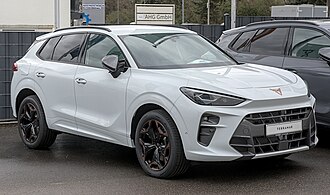
Cupra Terramar as a Used Car: A Complete Technical and Ownership Guide
The arrival of the Cupra Terramar marks a decisive step in the evolution of Cupra as a brand. Positioned as a sporty, mid-size SUV that blends practicality with performance, the Terramar replaces the older Cupra Ateca and targets buyers who want something more engaging than a conventional family SUV. However, as with any new model entering the used car market relatively early in its lifecycle, the Terramar presents both opportunities and risks.
This article takes a deep, technical look at the Terramar as a used car. It explores engineering fundamentals, drivetrain technology, reliability considerations, ownership costs, and real-world usability. The aim is not to simply describe the car, but to analyze how it behaves over time and what that means for a second-hand buyer.
What Is the Cupra Terramar?
The Cupra Terramar is a compact-to-mid-size crossover SUV introduced in 2024, built on the Volkswagen Group’s MQB Evo platform. Cupra Terramar It sits above the Formentor in size and aims to compete with vehicles like the Volkswagen Tiguan, BMW X1, and Audi Q3.
From a structural standpoint, the Terramar shares its architecture with multiple VW Group vehicles, including the Tiguan and Audi Q3, which is important for used buyers because it means:
- Proven drivetrain components
- Established parts availability
- Known long-term behavior patterns
Production takes place in Hungary, alongside Audi models, which generally suggests a high level of manufacturing consistency.
Platform and Engineering Fundamentals
MQB Evo Architecture
The Terramar is built on the MQB Evo platform, a modular transverse architecture used widely across the Volkswagen Group. This platform supports a wide range of powertrains, including:
- Mild hybrid petrol engines
- Conventional turbocharged petrol engines
- Plug-in hybrid systems
From an engineering perspective, MQB Evo provides:
- Transverse engine layout
- MacPherson strut front suspension
- Multi-link rear suspension
- Compatibility with advanced driver assistance systems
The advantage of this platform for used buyers is predictability. Unlike bespoke platforms, MQB Evo has been in use for years, meaning most mechanical issues are already well understood.
Dimensions, Body Structure and Practicality
Size and Proportions
The Terramar measures approximately:
- Length: 4,519 mm
- Width: 1,869 mm
- Height: 1,586 mm
- Wheelbase: 2,681 mm
These dimensions place it firmly in the compact SUV segment, but slightly larger than the Cupra Formentor.
Structural Characteristics
The body structure is designed with high-strength steel and optimized crumple zones. While not revolutionary, it follows Volkswagen Group’s well-established safety engineering principles.
The slightly lower height compared to traditional SUVs improves:
- Center of gravity
- Handling stability
- Aerodynamic efficiency
However, it also results in:
- Reduced headroom in the rear
- A more coupe-like feel
Engine Range and Powertrain Technology
One of the Terramar’s defining features is its broad range of electrified and combustion engines.
1.5 eTSI Mild Hybrid
The entry-level engine is a 1.5-liter turbocharged petrol unit with mild hybrid assistance, producing around 150 hp.
This setup includes:
- 48V starter-generator
- Energy recuperation
- Cylinder deactivation (ACT)
Advantages for used buyers:
- Lower complexity than plug-in hybrids
- Better fuel efficiency than traditional petrol engines
Disadvantages:
- Limited performance
- Still relies heavily on combustion engine
2.0 TSI Petrol Engines
The Terramar offers two main 2.0 TSI variants:
- ~204 hp
- ~265 hp (VZ version)
These engines are part of the EA888 family, widely regarded as one of Volkswagen Group’s most refined and reliable turbocharged engines.
Key features:
- Direct injection
- Turbocharging
- Dual-clutch DSG transmission
- Optional all-wheel drive (4Drive)
The 265 hp version shares its roots with the Golf GTI powertrain, offering strong performance and proven durability.
Plug-in Hybrid (eHybrid)
The plug-in hybrid combines a 1.5 TSI engine with an electric motor, producing:
- 204 hp
- 272 hp (VZ)
The battery capacity is around 19.7–25.8 kWh depending on configuration, with electric range exceeding 100 km under ideal conditions.
This is one of the strongest aspects of the Terramar, as it offers:
- Significant electric-only driving capability
- Reduced fuel consumption
- Tax advantages in some markets
However, from a used car perspective, it introduces complexity.
Transmission and Drivetrain
All versions of the Terramar use a 7-speed DSG dual-clutch transmission.
DSG Characteristics
Advantages:
- Fast gear changes
- Good efficiency
- Smooth operation under normal driving
Potential issues:
- Clutch wear over time
- Mechatronic unit failures (rare but costly)
Drive Layout
- Front-wheel drive (FWD): standard
- All-wheel drive (4Drive): available on higher power petrol versions
Interestingly, the plug-in hybrid models remain front-wheel drive, which can lead to traction limitations under heavy acceleration—a point often mentioned by early owners.
Driving Experience and Chassis Dynamics
Suspension Setup
The Terramar uses:
- MacPherson strut front suspension
- Multi-link rear suspension
- Optional adaptive dampers (DCC)
Cupra has tuned the chassis for a sportier feel compared to the Volkswagen Tiguan.
Key changes include:
- Lowered ride height (~10 mm)
- Increased negative camber
- Revised control arms
Real-World Driving Behavior
The Terramar is best described as a balanced SUV rather than a true performance machine.
Strengths:
- Stable handling
- Predictable cornering
- Comfortable cruising
Weaknesses:
- Less engaging than the Formentor
- Steering lacks feedback
- Heavy feel in aggressive driving
From a used car perspective, this is actually a positive. Cars that are less aggressively tuned tend to age better mechanically.
Interior Technology and Build Quality
Cabin Design
The interior features:
- 12.9-inch infotainment system
- 10.25-inch digital instrument cluster
- Touch-sensitive controls
- Premium materials and copper accents
The design is modern but follows the controversial trend of minimizing physical buttons.
Technology Features
- Wireless Apple CarPlay and Android Auto
- Wireless charging
- Advanced driver assistance systems
These features enhance usability but increase long-term complexity.
Reliability and Early Ownership Feedback
Because the Terramar is a new model, long-term reliability data is limited. However, early owner feedback provides valuable insights.
Reported Issues (Community Feedback)
From early users:
“Buzzing noise… vibration at higher speeds” (Reddit)
“Car pulls to the right… suspension feels loose” (Reddit)
“Steering feels unstable under full throttle” (Reddit)
These reports suggest potential early-production issues in:
- Suspension calibration
- Build quality consistency
- Steering behavior
It is important to note that such issues are not uncommon in new models and are often resolved in later production batches.
Ownership Costs
Fuel Consumption
- Mild hybrid: ~6–6.5 L/100 km
- 2.0 TSI: ~7.5–9 L/100 km
- PHEV: extremely low when charged regularly
Maintenance
Costs are moderate but vary:
- Petrol models: relatively affordable
- DSG servicing: moderate cost
- PHEV: higher complexity and potential repair costs
Practicality and Everyday Use
Space and Comfort
The Terramar is more practical than the Formentor:
- Larger rear seating area
- Bigger boot
- More family-friendly layout
It is designed as a true family SUV, not just a sporty crossover.
Daily Usability
Strengths:
- Comfortable ride
- Quiet cabin
- Efficient engines
Weaknesses:
- Touch controls can be distracting
- Limited physical buttons
What to Check When Buying a Used Cupra Terramar
Mechanical Inspection
- Suspension condition
- DSG gearbox behavior
- Engine smoothness
Electronics
- Infotainment responsiveness
- Sensor functionality
- Software updates
Hybrid System (if applicable)
- Battery health
- Charging capability
- Error messages
Build Quality
- Interior trim condition
- Panel alignment
- Unusual noises
Best Version to Choose
For most used buyers:
- Best overall: 2.0 TSI 204 hp
- Best performance: 2.0 TSI 265 hp VZ
- Best efficiency: 1.5 eTSI mild hybrid
The plug-in hybrid is appealing but carries more risk due to complexity.
Pros and Cons of Buying a Used Cupra Terramar
Advantages
- Modern design
- Strong engine lineup
- Practical size
- Proven platform
Disadvantages
- Limited reliability data
- Early production issues
- Complex hybrid systems
- DSG maintenance costs
Final Verdict
The Cupra Terramar is a fascinating used car option, but one that requires careful consideration. It offers a compelling mix of performance, practicality, and modern technology, wrapped in a distinctive design.
From a technical perspective, its biggest strength is the MQB Evo platform and shared Volkswagen Group components, which provide a solid foundation. However, its biggest weakness lies in its newness—there simply isn’t enough long-term data yet.
For cautious buyers, a petrol version with a full service history is the safest choice. For those willing to take on some risk, the plug-in hybrid offers impressive efficiency and modern appeal.
Ultimately, the Terramar is a car that will likely improve as it matures in the used market—but early buyers should approach it with informed caution.
Technical Specifications Table (Cupra Terramar)
| Parameter | 1.5 eTSI | 2.0 TSI 204 | 2.0 TSI 265 VZ | 1.5 eHybrid 272 |
|---|---|---|---|---|
| Engine type | Mild hybrid petrol | Petrol turbo | Petrol turbo AWD | Plug-in hybrid |
| Power | 150 hp | 204 hp | 265 hp | 272 hp |
| Torque | ~250 Nm | ~320 Nm | ~400 Nm | ~400 Nm |
| Transmission | 7-speed DSG | 7-speed DSG | 7-speed DSG | 7-speed DSG |
| Drive type | FWD | AWD | AWD | FWD |
| 0–100 km/h | ~9.3 s | ~7.1 s | ~5.9 s | ~7.3 s |
| Top speed | ~205 km/h | ~225 km/h | ~243 km/h | ~215 km/h |
| Fuel consumption | 6–6.6 L/100 km | 7.5–8 L/100 km | 8.4–8.8 L/100 km | ~0.5 L/100 km |
| Battery | — | — | — | ~20–25.8 kWh |
| Electric range | — | — | — | up to ~100 km |
| Platform | MQB Evo | MQB Evo | MQB Evo | MQB Evo |
| Length | 4519 mm | 4519 mm | 4519 mm | 4519 mm |
| Wheelbase | 2681 mm | 2681 mm | 2681 mm | 2681 mm |
