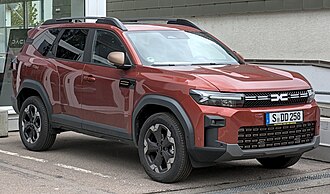
Dacia Bigster as a Used Car: A Deep Technical and Ownership Analysis
The Dacia Bigster represents one of the most important shifts in Dacia’s modern history. Traditionally known for budget-friendly, no-frills vehicles, Dacia has steadily moved upmarket while maintaining its core philosophy of affordability and simplicity. The Bigster, launched in 2025, sits at the top of the brand’s lineup as a larger, more mature SUV designed to compete in the highly competitive C-segment.
As the first examples begin to appear on the used car market, the Bigster becomes an intriguing proposition. It promises space, efficiency, and low ownership costs—but also raises questions about long-term durability, engineering compromises, and resale value.
This article provides a comprehensive, technically detailed, and long-form analysis of the Dacia Bigster as a used car. It focuses not just on specifications, but on how the vehicle behaves over time, what to expect from ownership, and whether it is a smart second-hand purchase.
What Is the Dacia Bigster?
The Dacia Bigster is a mid-size SUV positioned above the Dacia Duster. It was developed as part of Renault Group’s strategy to expand Dacia into higher segments without abandoning its cost-conscious approach.
Unlike premium competitors, the Bigster focuses on:
- Simplicity over complexity
- Proven technology over innovation
- Cost efficiency over luxury
From a used car perspective, this philosophy is extremely important. Cars that are simpler tend to age better and cost less to maintain—but they may also feel less refined or technologically advanced.
Platform and Engineering Architecture
CMF-B Platform: Proven and Cost-Efficient
The Bigster is built on the Renault-Nissan CMF-B platform, which underpins models like the Dacia Sandero, Jogger, and Duster.
This platform is designed for:
- Small to mid-size vehicles
- Front-wheel drive and optional all-wheel drive
- Hybrid and internal combustion powertrains
From an engineering standpoint, CMF-B is not cutting-edge, but it is highly optimized for cost efficiency and durability. It has been in production for several years, which means most of its weaknesses are already known.
For used buyers, this is a major advantage. Unlike brand-new architectures, CMF-B has a track record, and spare parts availability is excellent.
Dimensions, Body Structure and Practicality
Exterior Dimensions
The Bigster is significantly larger than the Duster and sits firmly in the C-SUV segment:
- Length: 4570 mm
- Width: 1813 mm
- Height: up to 1712 mm
- Wheelbase: ~2700 mm (Auto Data)
These dimensions make it comparable to vehicles like the Hyundai Tucson or Volkswagen Tiguan.
Interior Space and Cargo Capacity
One of the Bigster’s strongest selling points is practicality:
- Boot capacity: 464–626 liters
- Maximum cargo volume: up to ~1900 liters
- High ground clearance (~220 mm)
This makes it an excellent choice for families, outdoor enthusiasts, and anyone needing a versatile vehicle.
However, the interior design prioritizes function over luxury. Materials are durable but not premium, and the overall feel is closer to entry-level SUVs than premium competitors.
Engine Range and Powertrain Technology
The Bigster offers a diverse but relatively simple range of engines, all focused on efficiency and affordability rather than performance.
Mild Hybrid Petrol Engines (1.2 TCe)
The core of the lineup is the 1.2-liter turbocharged three-cylinder engine with mild hybrid assistance.
Variants include:
- 130 hp (with AWD option)
- 140 hp (FWD)
These engines use a 48V system to:
- Improve fuel efficiency
- Reduce emissions
- Assist during acceleration
Fuel consumption ranges around 5.4–6.1 L/100 km depending on configuration.
From a used car perspective, these engines are relatively simple and should prove durable if properly maintained.
LPG Variant (ECO-G 140)
One of Dacia’s unique selling points is its LPG technology.
The ECO-G version offers:
- Dual-fuel capability (petrol + LPG)
- Lower running costs
- Extended driving range
This system is particularly attractive in markets where LPG is widely available.
However, buyers should be aware:
- LPG systems require specific maintenance
- Long-term durability depends on usage patterns
Full Hybrid System (1.8 Hybrid 155/156 hp)
The most advanced powertrain is the full hybrid system, producing around 155–156 hp.
Key features include:
- Naturally aspirated petrol engine
- Two electric motors
- Multi-mode automatic transmission
Fuel consumption is as low as 4.6–4.7 L/100 km.
This system is derived from Renault’s hybrid technology and is designed for urban efficiency.
However, from a used car perspective, it introduces complexity and potential long-term repair costs.
Diesel Engine (1.5 dCi)
In some markets, the Bigster offers a 1.5 dCi diesel engine with around 115 hp.
This engine is well-known within the Renault Group and offers:
- Excellent fuel economy (~4.7 L/100 km)
- Proven reliability
For high-mileage drivers, this may be the most practical option.
Transmission and Drivetrain
Manual vs Automatic
The Bigster offers:
- Manual transmission (most common)
- Automatic (mainly in hybrid versions)
Manual gearboxes are typically more durable and cheaper to maintain.
The hybrid automatic system is innovative but more complex.
All-Wheel Drive System
Unlike many competitors, the Bigster offers genuine AWD in selected versions.
This system is:
- Mechanical (not electric)
- Suitable for light off-road use
- Relatively simple compared to advanced AWD systems
This makes the Bigster one of the few affordable SUVs with real off-road capability.
Driving Experience and Chassis Behavior
Suspension Setup
The Bigster uses:
- MacPherson strut front suspension
- Rear torsion beam or multi-link (depending on version)
The setup is tuned for comfort rather than sportiness.
Real-World Driving Characteristics
Strengths:
- Comfortable ride quality
- Good visibility
- Easy handling
Weaknesses:
- Limited steering feedback
- Moderate body roll
- Lack of sporty character
This is not a driver-focused car. Instead, it prioritizes ease of use and comfort.
Interior Technology and Equipment
Infotainment System
The Bigster features a modern infotainment system with:
- Touchscreen display (up to 10.1 inches)
- Smartphone integration
- Navigation (optional)
However, it is less advanced than systems found in premium competitors.
Build Quality
Dacia has improved significantly in this area, but:
- Hard plastics are still common
- Some components may wear faster
- Fit and finish is acceptable but not exceptional
From a used car perspective, durability matters more than luxury—and here the Bigster performs reasonably well.
Reliability and Known Issues
Early Ownership Feedback
Since the Bigster is a new model, long-term reliability data is limited. However, early reports provide some insight.
From user experiences:
“No issues so far… 18,000 km”
But also:
“Engine loud and jumpy… switching issues” (Reddit)
These mixed reports suggest:
- Generally solid mechanical reliability
- Possible software or hybrid system quirks
Expected Reliability Trends
Based on Dacia’s history:
- Simple petrol engines → likely reliable
- Diesel → proven durability
- Hybrid → more uncertain long-term
Ownership Costs
Purchase Price and Depreciation
Dacia vehicles typically:
- Depreciate quickly initially
- Stabilize over time
This makes them attractive as used cars.
Running Costs
- Fuel consumption: low
- Maintenance: affordable
- Parts: widely available
The Bigster is designed to be inexpensive to own.
Practicality and Everyday Use
Strengths
- Large interior
- Versatile cargo space
- Good ground clearance
Weaknesses
- Limited premium features
- Basic interior feel
What to Check When Buying a Used Dacia Bigster
Mechanical Inspection
- Engine performance
- Transmission smoothness
- Suspension condition
Hybrid System (if applicable)
- Battery operation
- System transitions
- Error messages
Interior Condition
- Wear on plastics
- Infotainment responsiveness
Best Version to Choose
- Best overall: 1.2 TCe 140
- Best economy: Hybrid 155
- Best durability: 1.5 dCi diesel
- Best for low cost: LPG ECO-G
Pros and Cons
Advantages
- Excellent value for money
- Spacious and practical
- Simple engineering
- Low running costs
Disadvantages
- Limited refinement
- New model uncertainty
- Basic interior materials
- Hybrid complexity
Final Verdict
The Dacia Bigster is one of the most interesting used SUV options in its class—not because it is the most advanced or luxurious, but because it offers a rare combination of size, simplicity, and affordability.
From a technical perspective, its biggest strengths are:
- Proven platform
- Simple engines
- Low-cost ownership
Its biggest weaknesses are:
- Limited long-term reliability data
- Basic interior quality
- Potential hybrid system issues
For used buyers, the Bigster makes the most sense as a practical, budget-conscious SUV. It is not a car that excites—but it is one that delivers dependable transportation with minimal financial strain.
Technical Specifications Table (Dacia Bigster)
| Parameter | 1.2 TCe 140 | 1.2 TCe 130 AWD | Hybrid 155 | 1.5 dCi |
|---|---|---|---|---|
| Platform | CMF-B | CMF-B | CMF-B | CMF-B |
| Engine type | Mild hybrid petrol | Mild hybrid petrol | Full hybrid | Diesel |
| Power | 140 hp | 130 hp | 155–156 hp | 115 hp |
| Torque | ~230 Nm | ~230 Nm | ~205 Nm | ~260 Nm |
| Transmission | Manual | Manual | Automatic | Manual |
| Drive type | FWD | AWD | FWD | FWD |
| 0–100 km/h | ~10 s | ~11.2 s | ~9.7 s | ~11 s |
| Top speed | ~180 km/h | ~180 km/h | ~180 km/h | ~180 km/h |
| Fuel consumption | 5.4–5.5 L/100 km | 6.0–6.1 L/100 km | 4.6–4.7 L/100 km | ~4.7 L/100 km |
| Length | 4570 mm | 4570 mm | 4570 mm | 4570 mm |
| Wheelbase | ~2700 mm | ~2700 mm | ~2700 mm | ~2700 mm |
| Boot capacity | 464–626 L | 464–626 L | 464–626 L | 464–626 L |
| Ground clearance | ~220 mm | ~220 mm | ~220 mm | ~220 mm |
