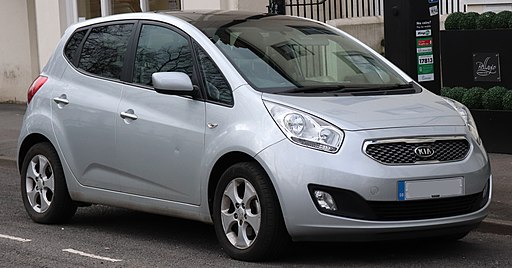
KIA Venga as a Used Car: A Complete Buyer’s Guide
The Kia Venga is an increasingly interesting choice for anyone looking for an affordable used car with a surprising amount of interior space. It may not have the fashionable image of a modern crossover, but that is precisely what makes the Venga appealing. Designed as a small MPV, it combines the compact footprint of a supermini with the upright seating position, flexible rear seats and generous luggage space normally associated with a much larger family vehicle. Produced from 2009 until 2019, the Venga is now old enough to be one of the more affordable ways into a practical Kia, yet it remains modern enough to serve as everyday transport for a small family, older driver or anyone who values easy access and efficient use of interior space.
The Venga was developed specifically with European buyers in mind and was produced at Kia’s factory in Nošovice in the Czech Republic, alongside its closely related Hyundai ix20. Its design was deliberately different from a conventional hatchback: the body is relatively tall, the roof is high and the rear seats can slide to alter the balance between passenger room and luggage capacity. Later versions could offer a 440-litre luggage compartment, while moving the rear seats forward increased capacity further, and folding them produced a remarkably useful load area.
For a used-car buyer, the Venga also has another major advantage: reliability. In What Car?’s survey of used MPVs, the 2010–2019 Venga achieved a 95.8% reliability rating, with most reported problems involving relatively minor bodywork and non-engine electrical issues. An earlier What Car? reliability survey gave it an even higher 97.2% rating, with only 8% of surveyed cars reported as having suffered faults. These figures do not guarantee that every used Venga will be trouble-free, but they provide an encouraging background for a car that is now entering an age where condition and maintenance history are increasingly important.
What is the Kia Venga?
A small MPV with a big-cabin philosophy
The Venga belongs to the small MPV or supermini-MPV category, a class that was much more popular when the model was launched than it is today. Its rivals included cars such as the Honda Jazz, Nissan Note, Hyundai ix20, Vauxhall Meriva and Renault Modus. Unlike a conventional small hatchback, the Venga prioritises interior volume and accessibility rather than sporty styling or low-slung proportions.
That philosophy is immediately obvious when you sit inside. The driving position is relatively high, the doors open wide and the roof provides plenty of headroom. The official specifications for the later Venga list approximately 1,020 mm of front headroom and 980 mm at the rear, while rear legroom is around 901 mm. These are useful figures for a vehicle only about 4.08 metres long.
This makes the Venga particularly attractive to buyers who find conventional hatchbacks difficult to get into or out of. Children can also be easier to place in the rear seats, while older passengers benefit from the upright seating position and wide-opening doors.
Simple design, clever packaging
The Venga does not rely on complicated technology to make itself useful. Its greatest trick is packaging. The rear bench can slide forwards and backwards, allowing the owner to choose between additional legroom and additional boot space. That flexibility is one of the reasons the car can feel significantly larger inside than its exterior dimensions suggest.
It is worth remembering that this type of practicality was once one of the major selling points of small MPVs. Today, many buyers have replaced them with compact SUVs, but a vehicle such as the Venga can actually make better use of its footprint. It is relatively narrow, easy to park and economical to run while providing the kind of upright cabin that many people want from an SUV.
Why buy a used Kia Venga?
Exceptional practicality for its size
The Venga’s greatest strength is unquestionably its interior. Depending on configuration and market, the boot offers around 440 litres of capacity, and sliding the rear seats forward can increase this substantially. With the seats folded, official Kia figures give a maximum capacity of approximately 1,486 litres in some later specifications.
That makes the Venga an excellent option for buyers who need to carry shopping, pushchairs, luggage or other bulky objects but do not want a large car. The low loading area and wide tailgate also make the boot easy to use.
The rear-seat flexibility is particularly valuable. If nobody is sitting in the back, the seats can be moved forward to create additional luggage room. If rear passengers are present, they can be moved backwards to provide more legroom. It is a simple system, but one that can make a substantial difference in daily use.
Excellent visibility and easy access
The Venga’s tall body provides another benefit: visibility. The driver sits relatively high and has a good view over the bonnet and towards the corners of the car. This makes it reassuring in urban traffic and particularly easy to position in tight spaces.
The wide-opening rear doors are another practical feature. Families with young children will appreciate the additional access, while older passengers can get into the rear seats without having to lower themselves into a low-slung hatchback.
This emphasis on accessibility also makes the Venga worth considering for drivers who are buying a car primarily for comfort rather than performance. It is an uncomplicated vehicle to operate and does not require much adaptation.
Which engine should you choose?
1.4 petrol: the simple choice
The 1.4-litre naturally aspirated petrol engine is one of the most common Venga powerplants and is probably the easiest recommendation for buyers who prioritise simplicity. Depending on model year and market, it was offered with roughly 90 PS and a five-speed manual transmission. Later official specifications list 90 PS and 137 Nm.
There is no turbocharger to complicate the engine, and the power output is sufficient for ordinary urban and suburban driving. The downside is performance. The Venga is relatively tall and can be heavily loaded, so the 1.4 petrol needs to be worked hard when accelerating onto faster roads.
If you spend most of your time in town and prefer a straightforward petrol engine, that may not matter. However, motorway drivers should test the car carefully before buying. Accelerating from 80 to 120 km/h with several passengers on board will give you a much better idea of whether the engine suits your needs than a short drive around a dealership.
1.6 petrol: better for mixed driving
The 1.6-litre petrol engine is a stronger all-rounder. Later specifications list approximately 124–125 PS and 156 Nm, with a six-speed manual available and, in some markets, a four-speed automatic.
The extra power makes a noticeable difference when the Venga is fully loaded. It is still a naturally aspirated engine, so it needs some revs to produce its best performance, but it is considerably more relaxed than the 1.4 on faster roads.
The automatic version can be attractive to city drivers, although the four-speed gearbox is old-fashioned by modern standards. It changes the character of the car from an economical small MPV into something more relaxed and easy to operate, but fuel consumption can be higher and acceleration less impressive.
1.4 CRDi diesel: economical but not the strongest choice
The 1.4 CRDi diesel was offered with around 90 PS. It provides substantially more low-speed torque than the 1.4 petrol, with later specifications quoting up to 220 Nm.
That makes it useful for urban and rural driving where low-rev pulling power matters, but contemporary used-car reviews have criticised this engine for being relatively coarse and lacking flexibility compared with the larger diesel. Auto Express specifically recommends the 1.6 CRDi over the 1.4 CRDi, while noting hesitation and throttle-response issues can occur on some 1.4-litre diesel examples.
A diesel Venga should therefore be bought according to its previous use. If the car spent its life covering long distances, the diesel can be an economical choice. If it was mainly used for short urban trips, a petrol version is usually the safer proposition.
1.6 CRDi: the diesel for long-distance drivers
The 1.6 CRDi is arguably the most suitable diesel engine in the range. Later versions were available with around 115 or 128 PS, depending on specification, and up to 260 Nm of torque.
The additional torque makes the Venga much more relaxed on motorways and when carrying passengers. It is also the engine to consider if the car will regularly travel long distances.
There is an important caveat, however. Modern diesel engines should not be purchased simply because they consume less fuel. Buyers need to consider DPF operation, emissions equipment and the previous owner’s driving pattern. A diesel that spent most of its time on short trips may have accumulated expensive problems that would not be apparent from its relatively low mileage.
What is the Kia Venga like to drive?
The Venga was never designed as a driver’s car, and buyers should approach it with the correct expectations. Its strengths are visibility, comfort, manoeuvrability and practicality rather than cornering ability.
The steering is light and easy to operate, making the car pleasant in town, but it offers relatively little feedback. The tall body also means that there is noticeable body movement when cornering quickly. Contemporary reviews criticised its handling compared with more driver-focused rivals, while describing the ride as somewhat bumpy over poor urban surfaces.
For everyday use, however, these characteristics are not necessarily a problem. The Venga is easy to drive and predictable. Its high seating position provides a good view of surrounding traffic, and the compact dimensions make it comfortable in busy streets.
A used buyer should pay particular attention to the suspension during the test drive. Listen for knocks over speed bumps and broken surfaces, and check that the car remains stable and tracks straight. Because many Vengas are now more than a decade old, age-related wear in suspension components is more important than the original model’s reputation.
What should you check before buying a used Venga?
Start with the service history
Age is the most important factor when shopping for a Venga today. Even a car with a relatively low odometer reading may have experienced years of wear, so service records are essential.
Look for evidence of regular oil changes, brake servicing and replacement of consumable items. On a diesel, ask specifically about the DPF and any previous emissions-related work. On a petrol car, check that the engine has been serviced according to the manufacturer’s schedule.
The Venga’s strong reliability statistics are encouraging, but they do not make maintenance unnecessary. What Car?’s survey found that many reported Venga faults were minor and inexpensive, but this applies to surveyed cars as a group rather than guaranteeing the condition of an individual vehicle.
Inspect the brakes carefully
Brake discs deserve particular attention. Auto Express identifies brake-disc wear as one of the Venga’s areas to check, noting that some cars have required disc replacement at relatively low mileages.
During a test drive, brake firmly from different speeds and make sure the car remains straight. The pedal should feel consistent, and there should be no vibration through the steering wheel. Inspect the discs visually if possible, looking for deep grooves, heavy corrosion or a pronounced lip around the outer edge.
Brake replacement is normal wear rather than evidence of a fundamentally bad car, but it should be reflected in the price if discs and pads are approaching the end of their life.
Listen for rattles
Interior rattles are another point worth checking. Contemporary used-car guidance reports dashboard rattles, particularly when the weather is cold.
A few noises from an older car are not necessarily serious, but persistent rattles can become irritating. Drive over different road surfaces with the radio switched off and listen carefully to the dashboard, doors, boot area and rear seats.
Also inspect the boot for rattles and make sure the sliding rear-seat mechanism operates correctly. The flexibility of the interior is one of the Venga’s biggest advantages, so it is important that the mechanism has not been damaged or neglected.
Check the electronics
The Venga’s electronics are relatively simple compared with newer cars, but age can still cause electrical problems. Test the central locking, electric windows, air conditioning, infotainment system, lights and dashboard displays.
Higher-specification cars may have satellite navigation, a panoramic roof, climate control and other equipment, so make sure everything works before buying. What Car?’s reliability surveys recorded battery, sat-nav and non-engine electrical problems among the reported Venga faults, although the overall failure rate remained low.
How practical is the Venga for a family?
The Venga is arguably more practical than many newer small crossovers. Its rear seats slide, its doors open widely and its roof provides substantial headroom. That means child seats are easier to install, adults can use the rear compartment without feeling excessively cramped, and bulky luggage can be accommodated without immediately requiring a larger vehicle.
The boot’s 440-litre capacity is particularly impressive for a car of this size. With the rear seats folded, the available space can exceed 1,200 litres, while some official specifications quote up to 1,486 litres depending on measurement method and configuration.
This is why the Venga can be a surprisingly good alternative to a small SUV. It may lack fashionable styling and four-wheel drive, but if your priority is getting people and luggage from one place to another, its packaging is extremely effective.
How reliable is a used Kia Venga?
Reliability is one of the Venga’s strongest arguments. What Car? awarded the 2010–2019 model a 95.8% reliability rating in its used MPV survey, placing it second in that category. The survey found that 25% of owners had reported a problem, but most faults were minor, all affected cars remained driveable and repair costs were generally low.
Another What Car? survey rated the Venga at 97.2%, with only 8% of surveyed vehicles suffering faults. Reported problems included batteries, satellite navigation and non-engine electrical systems.
These figures are particularly impressive given the age of the cars involved. Nevertheless, reliability statistics should be used as a guide rather than a guarantee. A ten-year-old Venga with poor maintenance can be considerably less reliable than a well-cared-for example with twice the mileage.
The best approach is therefore to combine the model’s good reputation with a thorough inspection. The engine, gearbox, suspension, brakes and electronics should all be checked, while a professional pre-purchase inspection is worthwhile for any expensive or particularly clean example.
Venga versus Hyundai ix20
The Hyundai ix20 is the Venga’s closest relative and shares much of its mechanical architecture. The two cars were produced in the Czech Republic and offered similar engine choices, dimensions and practical characteristics.
The choice between them is therefore likely to come down to condition, price and equipment rather than major mechanical differences. If you find a Venga with an excellent history and a neglected ix20, buy the Venga; if the situation is reversed, the Hyundai deserves consideration.
The Kia’s long warranty was historically a useful advantage, although on older examples much of the original coverage will now have expired. The important thing today is the individual vehicle rather than the badge.
Which used Kia Venga should you buy?
For most buyers, the 1.4 petrol is the sensible low-cost choice. It is simple, reasonably economical and adequate for urban driving. If you regularly travel on motorways or carry several passengers, the 1.6 petrol is preferable because the additional performance makes the Venga considerably more relaxed.
The 1.6 CRDi is the diesel to look for if you cover high annual mileage, particularly on longer journeys. Its strong torque suits the Venga’s practical character, but it should only be considered if the car’s history suggests that the diesel emissions system has been used correctly.
Automatic buyers have fewer choices because the 1.6 petrol was the principal automatic option and used a four-speed gearbox. It is easy to drive but not particularly sophisticated, so a test drive is essential.
Trim level also matters. Higher-specification cars can provide climate control, navigation, privacy glass, a panoramic roof and other useful features, but condition should always take priority over equipment. A clean, well-maintained mid-spec Venga is a better purchase than a neglected top-of-the-range car.
Final verdict: is the Kia Venga a good used car?
The Kia Venga is a classic example of a used car whose strengths become more obvious with age. It was never the most fashionable vehicle in its class, but it was designed around something that remains extremely valuable: practical everyday usability.
Its compact exterior dimensions make it easy to drive and park, while its tall body, sliding rear seats and generous luggage compartment provide an impressive amount of interior space. The engines are relatively straightforward, equipment levels can be generous and, most importantly, the Venga has accumulated an encouraging reliability record. What Car?’s 95.8% reliability score for the 2010–2019 model reinforces the impression that this is a fundamentally dependable used car.
There are weaknesses. The ride can be firm, the handling is not particularly engaging and the 1.4 petrol can feel underpowered when the vehicle is heavily loaded. The four-speed automatic is also dated, while diesel versions require careful consideration of their previous use and emissions systems. Interior materials are functional rather than luxurious, and some examples may suffer from rattles or age-related electrical issues.
Nevertheless, those shortcomings are relatively easy to accept when you consider what a good used Venga offers. It is spacious without being large, inexpensive without feeling dangerously basic and practical without the running costs associated with a larger SUV. For families, older drivers, commuters and anyone who values easy access and maximum interior space, the Venga remains a remarkably sensible second-hand choice.
The key is to buy on condition rather than age alone. Find an example with a complete service history, healthy brakes and suspension, working electronics, good tyres and an engine appropriate for your driving pattern, and the Kia Venga can provide years of inexpensive and highly practical transport.
Kia Venga technical specifications
| Specification | 1.4 CVVT Petrol | 1.6 CVVT Petrol | 1.4 CRDi Diesel | 1.6 CRDi Diesel |
|---|---|---|---|---|
| Body style | 5-door small MPV | 5-door small MPV | 5-door small MPV | 5-door small MPV |
| Seating capacity | 5 | 5 | 5 | 5 |
| Drive | Front-wheel drive | Front-wheel drive | Front-wheel drive | Front-wheel drive |
| Engine type | Naturally aspirated petrol | Naturally aspirated petrol | Turbocharged diesel | Turbocharged diesel |
| Displacement | 1,396 cc | 1,591 cc | 1,396 cc | 1,582 cc |
| Typical power | 90 PS | 124–125 PS | 90 PS | 115–128 PS |
| Maximum torque | 137 Nm | 156 Nm | approx. 220–240 Nm | approx. 260 Nm |
| Typical transmission | 5-speed manual | 6-speed manual / 4-speed automatic, depending on year | 6-speed manual | 6-speed manual |
| Fuel tank | 50 litres | 50 litres | 50 litres | 50 litres |
| Length | 4,075 mm | 4,075 mm | 4,075 mm | 4,075 mm |
| Width | 1,765 mm | 1,765 mm | 1,765 mm | 1,765 mm |
| Height | 1,600 mm | 1,600 mm | 1,600 mm | 1,600 mm |
| Wheelbase | 2,615 mm | 2,615 mm | 2,615 mm | 2,615 mm |
| Ground clearance | approx. 156 mm | approx. 156 mm | approx. 156 mm | approx. 156 mm |
| Boot capacity | up to 440 litres* | up to 440 litres* | up to 440 litres* | up to 440 litres* |
| Maximum luggage capacity | up to approx. 1,253–1,486 litres* | up to approx. 1,253–1,486 litres* | up to approx. 1,253–1,486 litres* | up to approx. 1,253–1,486 litres* |
| Front suspension | MacPherson strut | MacPherson strut | MacPherson strut | MacPherson strut |
| Rear suspension | Torsion beam | Torsion beam | Torsion beam | Torsion beam |
| Typical wheel sizes | 15–16 inches | 15–17 inches | 15–16 inches | 15–16 inches |
| Maximum speed, approx. | 167 km/h | 183–185 km/h | 167 km/h | 182–185 km/h |
| 0–100 km/h, approx. | 12.8 sec | 10.8 sec | 14.2 sec | 11.1–11.4 sec |
*Specifications vary according to model year, market, trim and measurement method. Kia’s MY2016 European technical documentation lists the Venga at 4,075 mm long, 1,765 mm wide, 1,600 mm high, with a 2,615 mm wheelbase, 156 mm ground clearance, a 50-litre fuel tank and 440 litres of luggage capacity. It lists the 1.4 CVVT at 90 PS, the 1.6 CVVT at 125 PS, the 1.4 CRDi at 90 PS and the 1.6 CRDi at 115 or 128 PS depending on specification. Boot capacity can vary according to rear-seat position and the measurement standard used; Kia’s published figures and independent used-car sources quote different maximum figures, so buyers should verify the exact specification of the individual vehicle.
