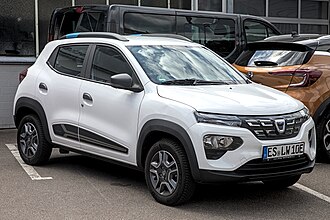
Dacia Spring as a Used Car – Is the Cheapest Electric Vehicle on the Market a Smart Second-Hand Purchase?
The automotive industry is undergoing one of the biggest transformations in its history. For more than a century, drivers have relied primarily on internal combustion engines, but growing environmental concerns, stricter emissions regulations, and technological progress have accelerated the transition toward electric mobility. While premium manufacturers initially dominated the electric vehicle market with expensive models aimed at early adopters, the arrival of affordable electric cars has fundamentally changed the landscape. Among these vehicles, the Dacia Spring occupies a unique position.
When the Spring was introduced, it immediately attracted attention because of one simple fact: it was one of the cheapest electric cars available in Europe. At a time when most battery-powered vehicles remained significantly more expensive than their petrol-powered counterparts, Dacia offered a compact electric crossover that prioritized affordability over luxury. The result was a vehicle designed primarily for urban mobility, daily commuting, and practical transportation rather than high performance or cutting-edge technology.
As the first wave of Spring models enters the used-car market, many buyers are beginning to ask whether this compact electric vehicle represents a sensible second-hand purchase. The answer is not entirely straightforward. The Spring offers several compelling advantages, including low operating costs, mechanical simplicity, and accessibility to electric mobility. At the same time, prospective buyers must consider battery condition, charging capabilities, long-term durability, and the realities of living with a small electric vehicle.
This comprehensive guide examines every important aspect of buying a used Dacia Spring, including its strengths, weaknesses, ownership costs, reliability, battery longevity, charging infrastructure considerations, and overall value proposition.
The Origins of the Dacia Spring
To understand the Spring, it is important to understand Dacia’s philosophy.
Since becoming part of the Renault Group, Dacia has built its reputation on delivering practical, affordable vehicles that focus on essential transportation needs rather than luxury features. Models such as the Logan, Sandero, and Duster demonstrated that buyers were willing to sacrifice premium materials and advanced technology in exchange for lower purchase prices and reduced ownership costs.
When Renault sought to introduce an affordable electric vehicle under the Dacia brand, the company applied the same philosophy. Rather than developing an entirely new electric platform from scratch, Dacia utilized technology already proven within the Renault-Nissan-Mitsubishi alliance.
The resulting vehicle, launched in Europe in 2021, was the Dacia Spring. Based largely on the Renault City K-ZE developed for emerging markets, the Spring was engineered to offer basic electric transportation at a price point previously unseen in the European market.
Its mission was clear: make electric mobility accessible to people who would otherwise never consider purchasing an electric vehicle.
Why the Spring Became So Popular
The success of the Dacia Spring surprised many automotive observers.
At first glance, the specifications appeared unimpressive. The power output was modest, the battery was relatively small, and the interior was clearly budget-oriented. Yet buyers quickly embraced the concept.
The primary reason was affordability. Even when new, the Spring often cost significantly less than competing electric vehicles. Government incentives in many countries reduced the purchase price even further, making it one of the most accessible electric cars available.
Another factor was practicality. Many drivers do not travel hundreds of kilometers every day. For urban commuting, shopping trips, school runs, and local transportation, the Spring’s range proved more than adequate.
Low operating costs further enhanced its appeal. Electricity costs are typically lower than fuel expenses, while electric drivetrains require fewer routine maintenance procedures than internal combustion engines.
As a result, the Spring became one of Europe’s most successful budget electric vehicles.
Understanding the Dacia Spring’s Purpose
One of the biggest mistakes prospective buyers make is evaluating the Spring using the same criteria applied to larger and more expensive electric vehicles.
The Spring was never intended to compete with premium electric crossovers or long-distance touring vehicles. Instead, it was designed primarily as an urban mobility solution.
Everything about the vehicle reflects this philosophy. The compact dimensions facilitate city parking. The small battery reduces cost and weight. The modest power output prioritizes efficiency. The elevated seating position improves visibility in urban traffic.
Drivers who understand this purpose often appreciate the vehicle far more than those expecting the capabilities of significantly more expensive alternatives.
Exterior Design and Styling
The Spring’s design is arguably one of its strongest attributes.
Unlike many early budget cars that openly displayed their low-cost origins, the Spring incorporates styling cues commonly associated with modern crossovers and SUVs. Raised ride height, protective body cladding, roof rails, and contemporary lighting elements create an appearance that is more sophisticated than its price tag might suggest.
Its compact proportions contribute to excellent maneuverability while still providing a sense of visual presence.
Although it is one of the smallest electric vehicles available, the Spring avoids looking like a basic city car. Instead, it projects the image of a miniature crossover, which undoubtedly contributes to its popularity.
Interior Quality and Cabin Experience
Stepping inside the Spring immediately reveals where cost savings have been made.
Hard plastics dominate much of the interior, and material quality cannot compete with vehicles from higher market segments. Nevertheless, the cabin is functional, logically designed, and surprisingly pleasant considering the vehicle’s budget positioning.
The dashboard layout is straightforward and easy to understand. Controls are generally well placed, and visibility is excellent thanks to large windows and an elevated driving position.
Higher trim levels introduce additional features such as touchscreen infotainment systems, smartphone connectivity, reversing cameras, and modern driver assistance technologies.
While luxury is absent, practicality remains strong.
Space and Practicality
One of the Spring’s most impressive qualities is how effectively it utilizes its compact dimensions.
Front-seat occupants enjoy sufficient space for daily use, and the elevated roofline creates a surprisingly airy cabin environment. Rear-seat accommodation is naturally more limited, but still acceptable for short journeys or occasional adult passengers.
The luggage compartment is relatively generous compared with many urban-focused vehicles. Grocery shopping, commuting equipment, and everyday cargo can generally be accommodated without difficulty.
For families seeking a primary vehicle, the Spring may feel somewhat restrictive. However, as a second car or dedicated city vehicle, its practicality often exceeds expectations.
Driving the Dacia Spring
The driving experience differs significantly from traditional petrol-powered vehicles.
Like most electric cars, the Spring delivers immediate torque from a standstill. Urban acceleration feels responsive, particularly at lower speeds where electric motors perform best.
The absence of engine noise contributes to a relaxing driving environment. In city traffic, the Spring feels effortless and easy to operate.
Steering is light, which aids maneuverability in tight spaces. The suspension prioritizes comfort over sporty handling, effectively absorbing potholes and rough urban surfaces.
High-speed driving reveals the vehicle’s limitations. Motorway performance is adequate rather than impressive, and strong crosswinds can affect stability due to the vehicle’s relatively narrow dimensions and lightweight construction.
Nevertheless, within its intended environment, the Spring performs remarkably well.
Electric Motor Options
The Spring has been offered with several power configurations.
44 Horsepower Version
The original version produced approximately 44 horsepower.
While this figure appears extremely modest by modern standards, it proves sufficient for urban transportation. Acceleration is not rapid, but city driving rarely demands high performance.
The lower-powered variant generally offers slightly better efficiency.
65 Horsepower Version
Later versions introduced a more powerful electric motor producing approximately 65 horsepower.
This upgrade significantly improves acceleration and overall drivability. The additional power enhances confidence during overtaking maneuvers and motorway entry.
Many used-car buyers specifically seek this version because it offers a more versatile driving experience without sacrificing efficiency.
Battery Technology
The battery represents the most important component of any electric vehicle.
The Dacia Spring utilizes a lithium-ion battery pack with a capacity of approximately 26.8 kWh. While relatively small compared with larger electric vehicles, this battery contributes to lower purchase prices and reduced vehicle weight.
The battery is liquid-cooled in some markets and configurations, although the thermal management system is simpler than those found in premium electric vehicles.
Because the Spring’s battery is not subjected to extreme performance demands, long-term durability may actually benefit from the vehicle’s modest power output.
Real-World Range
Official range figures often differ from real-world results.
Under ideal conditions, the Spring can achieve approximately 220 to 230 kilometers according to standardized testing procedures. In urban environments, where regenerative braking plays a larger role, some drivers report even better results.
However, real-world conditions vary considerably.
Cold weather can significantly reduce range, as can high-speed motorway driving. Winter temperatures, cabin heating requirements, and aggressive acceleration all increase energy consumption.
Most owners report practical real-world ranges between 150 and 220 kilometers depending on driving conditions.
For daily commuting and urban use, this is generally sufficient.
Battery Degradation – A Key Concern for Used Buyers
Battery health is arguably the most important consideration when purchasing a used electric vehicle.
Unlike conventional engines, batteries gradually lose capacity over time. This process, known as degradation, reduces available range as the vehicle ages.
Fortunately, early data from Spring owners suggests that degradation rates appear relatively modest. Many vehicles retain a high percentage of their original capacity after several years of use.
Prospective buyers should request battery health reports whenever possible. Diagnostic inspections can reveal the current state of battery capacity and help predict future performance.
A well-maintained battery can remain usable for many years.
Charging the Dacia Spring
Charging flexibility plays a major role in ownership satisfaction.
Home Charging
Most Spring owners charge their vehicles at home.
Using a dedicated wallbox, a full charge can typically be completed overnight. This convenience eliminates many of the concerns associated with public charging infrastructure.
For drivers with access to home charging, daily ownership becomes remarkably simple.
Public Charging
The Spring also supports public charging networks.
Although charging speeds are not particularly fast compared with modern premium electric vehicles, they remain adequate for the vehicle’s intended role.
Many owners rarely rely on rapid chargers because daily driving requirements rarely exhaust the battery completely.
Reliability and Durability
Electric vehicles contain significantly fewer moving parts than traditional combustion-powered cars.
The absence of oil changes, timing belts, turbochargers, fuel systems, and exhaust components reduces the number of potential failure points.
This simplicity benefits the Spring considerably.
Early reliability reports have generally been positive. The electric drivetrain itself has demonstrated good durability, while major mechanical failures remain relatively uncommon.
Because the model is still young, long-term reliability data remains limited compared with older Dacia vehicles. Nevertheless, initial indications are encouraging.
Common Problems and Weaknesses
No vehicle is perfect, and the Spring has several weaknesses buyers should understand.
Interior Material Quality
The use of inexpensive materials results in noticeable wear over time.
Scratches, rattles, and signs of use may appear earlier than in more expensive vehicles.
Limited Motorway Performance
The Spring performs best in urban environments.
Drivers regularly covering long motorway distances may find performance and range limitations frustrating.
Charging Speed Limitations
Compared with newer electric vehicles, charging speeds are relatively modest.
Long-distance travel requires more planning and patience.
Wind and Road Noise
Because of its lightweight construction and budget-oriented design, noise insulation is not exceptional.
At higher speeds, wind and road noise become more noticeable.
Battery Condition Uncertainty
As with any used electric vehicle, battery condition varies between individual examples.
Proper assessment before purchase is essential.
Ownership Costs
One of the Spring’s strongest selling points is affordability.
Electricity costs are generally lower than petrol or diesel expenses, especially when charging at home.
Routine maintenance requirements are minimal. There are no oil changes, spark plugs, exhaust systems, or timing belts to replace.
Brake wear is often reduced thanks to regenerative braking.
Insurance costs vary by region, but operating expenses remain highly competitive overall.
For many owners, the Spring becomes one of the cheapest vehicles they have ever operated.
Comparing the Spring with Other Used Electric Cars
The Spring faces competition from several electric alternatives.
Compared with the Renault Zoe, the Spring is generally cheaper but offers less range and refinement.
Against the Nissan Leaf, the Spring sacrifices performance and interior quality while maintaining a significantly lower purchase price.
Compared with newer electric crossovers, the Spring often costs thousands less while fulfilling similar urban transportation duties.
Its greatest strength remains value for money.
What to Check Before Buying a Used Dacia Spring
A careful inspection is crucial.
Request a battery health report and verify charging functionality.
Inspect the charging port for signs of damage or excessive wear.
Review service records and software update history.
Check suspension components, tires, brakes, and steering systems.
Verify operation of all electrical features, including infotainment systems, climate control, cameras, and charging equipment.
A professional inspection by an EV specialist is strongly recommended.
Who Should Buy a Used Dacia Spring?
The Spring is not a universal solution.
Drivers regularly traveling long distances may be better served by larger electric vehicles with greater range.
However, the Spring is exceptionally well suited to:
- Urban commuters.
- First-time EV owners.
- Households seeking a second vehicle.
- Retirees.
- Delivery services.
- Budget-conscious drivers.
- Residents with home charging access.
For these users, the Spring can provide an outstanding ownership experience.
Long-Term Ownership Prospects
The future of used electric vehicles remains a major topic of discussion.
The Spring’s simple design and modest performance demands may actually support long-term durability. Reduced mechanical complexity, lower operating costs, and improving charging infrastructure all work in its favor.
Battery longevity remains the most significant unknown, but current evidence suggests that the vehicle should remain practical for many years when properly maintained.
As used prices continue to decline, the Spring may become one of the most accessible electric vehicles available to private buyers.
Final Verdict
The Dacia Spring represents a fascinating development in modern automotive history. It proves that electric mobility does not have to be expensive, luxurious, or technologically overwhelming. Instead, it focuses on the essentials: affordable transportation, low operating costs, and everyday practicality.
As a used car, the Spring offers many compelling advantages. Running costs are exceptionally low, reliability appears promising, and ownership is remarkably straightforward for drivers with access to home charging. While its limitations in performance, range, and refinement prevent it from being an ideal solution for every driver, it performs its intended role extremely well.
For urban commuters and budget-conscious buyers looking to enter the world of electric mobility without spending a fortune, a carefully chosen used Dacia Spring may be one of the smartest purchases currently available.
Technical Parameters of the Dacia Spring
| Parameter | Value |
|---|---|
| Production start | 2021 |
| Body style | 5-door electric crossover |
| Drive layout | Front-wheel drive |
| Motor type | Permanent magnet electric motor |
| Power output | 44 hp or 65 hp |
| Maximum torque | Approx. 125 Nm |
| Battery type | Lithium-ion |
| Battery capacity | 26.8 kWh |
| Official WLTP range | Approx. 220–230 km |
| Real-world range | Approx. 150–220 km |
| Transmission | Single-speed automatic |
| Charging AC | Up to 6.6 kW |
| DC fast charging | Up to approximately 30 kW (depending on version) |
| Seating capacity | 4–5 passengers |
| Trunk capacity | Approx. 290 liters |
| Length | Approx. 3,734 mm |
| Width | Approx. 1,622 mm |
| Height | Approx. 1,516 mm |
| Wheelbase | Approx. 2,423 mm |
| Weight | Approx. 970–1,050 kg |
| Top speed | 125 km/h |
| Typical strengths | Low operating costs, simple ownership, affordability |
| Typical weaknesses | Limited range, modest performance, basic interior quality |
