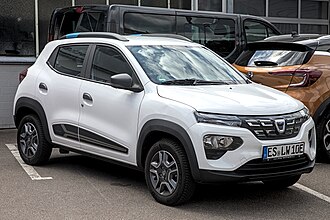
Dacia Spring – The Electric Car That Brought Electromobility to the Masses
The automotive industry has undergone a profound transformation over the past decade. What was once considered a niche technology reserved for enthusiasts and early adopters has become a central pillar of the future of mobility. Electric vehicles are no longer experimental products or luxury statements; they are increasingly becoming practical transportation tools for everyday drivers. Amid this transition, manufacturers have approached electrification from different angles. Some have focused on premium technology, extraordinary performance, and cutting-edge innovation. Others have concentrated on range, luxury, and prestige. Yet one manufacturer took a distinctly different route: making electric mobility accessible to ordinary people.
The Dacia Spring represents one of the most interesting and disruptive products in the modern automotive market. Rather than competing directly with high-end electric vehicles, the Spring was developed around a simple but powerful idea: creating an electric car that is affordable enough for average households while still delivering the essential benefits of zero-emission driving. This philosophy perfectly reflects the identity of Dacia, a brand that has built its reputation on practicality, simplicity, and exceptional value.
Since its launch, the Dacia Spring has attracted significant attention from consumers, journalists, fleet operators, and city dwellers looking for an economical way to enter the world of electric mobility. While it may not boast the largest battery, the longest range, or the fastest acceleration, the Spring offers something equally important: accessibility. It demonstrates that electric vehicles do not necessarily need to be expensive, complicated, or oversized.
The significance of the Dacia Spring extends beyond its technical specifications. It serves as a symbol of democratized electric transportation. In many ways, it has challenged assumptions about what consumers truly need from an electric car and whether affordability should be sacrificed in pursuit of technological perfection. Through its minimalist design and practical approach, the Spring has become one of the most influential budget electric vehicles in Europe.
The Origins of the Dacia Spring
To fully understand the Dacia Spring, it is important to understand the philosophy of the Dacia brand itself. Founded in Romania in 1966 and later integrated into the Renault Group, Dacia developed a unique market position by offering straightforward vehicles at highly competitive prices. Models such as the Logan, Sandero, and Duster achieved remarkable success because they focused on value rather than luxury.
When the automotive industry began transitioning toward electrification, Dacia faced a significant challenge. Electric vehicles were generally associated with high production costs, expensive battery technology, and premium pricing. Introducing an affordable EV seemed difficult, especially for a manufacturer known for low-cost transportation.
Fortunately, Dacia could leverage the extensive technological resources of the Renault Group. Instead of developing an entirely new electric platform from scratch, engineers adapted existing technologies and production processes to minimize costs. This strategy enabled the company to launch an electric vehicle that remained true to the brand’s value-oriented identity.
The Dacia Spring made its public debut in 2021 and immediately gained attention as one of the most affordable electric vehicles available in Europe. The car was based on the Renault City K-ZE, a compact electric model originally developed for Asian markets. Through extensive modifications and compliance updates, the vehicle was adapted to meet European regulations and customer expectations.
The result was a compact urban electric crossover designed primarily for city driving. It was not intended to replace larger family vehicles or long-distance touring cars. Instead, it aimed to provide practical, affordable transportation for daily commuting, shopping trips, and urban mobility.
Design Philosophy: Function Before Fashion
The Dacia Spring’s design reflects a clear commitment to practicality. While many modern electric vehicles feature futuristic styling, complex lighting signatures, and aerodynamic experimentation, the Spring adopts a more conservative approach.
At first glance, the vehicle resembles a compact crossover rather than a traditional city car. Its elevated ride height creates a sense of robustness while also improving visibility in urban traffic. Plastic body cladding around the wheel arches contributes to a rugged appearance and protects against minor parking damage.
The front fascia incorporates Dacia’s contemporary design language, with a distinctive grille, modern lighting elements, and simple geometric shapes. While the Spring is undeniably compact, its proportions give it a surprisingly substantial presence on the road.
One of the most notable aspects of the design is its emphasis on practicality over unnecessary complexity. Every component appears designed with cost efficiency and durability in mind. This approach helps keep manufacturing costs low while ensuring ease of maintenance and repair.
Inside the cabin, the same philosophy continues. The interior does not attempt to imitate luxury vehicles. Instead, it focuses on usability, ergonomics, and functionality. Hard plastics dominate the dashboard and door panels, but assembly quality is generally solid, and the layout is intuitive.
Recent updates have significantly improved the interior experience. New digital displays, enhanced infotainment systems, and refreshed design elements provide a more modern atmosphere while maintaining the vehicle’s affordable character.
Exterior Styling and Urban Character
The Spring’s compact dimensions are among its greatest strengths. In crowded urban environments, where parking spaces are limited and traffic congestion is common, a small footprint can dramatically improve daily usability.
The vehicle’s relatively narrow width allows drivers to navigate tight streets with confidence. Its short overall length simplifies parking maneuvers and reduces stress in densely populated city centers.
Despite its modest dimensions, the Spring avoids appearing overly basic or utilitarian. Strategic styling elements create a sense of personality and visual appeal. LED daytime running lights, sculpted body surfaces, and crossover-inspired details contribute to a contemporary appearance.
The latest generation introduces a sharper front-end design, revised bumpers, and more sophisticated lighting signatures. These updates help the Spring align with modern automotive trends while preserving its essential simplicity.
Color options and personalization features further enhance the vehicle’s appeal, particularly among younger buyers seeking an affordable yet distinctive electric car.
Interior Space and Practicality
One of the most surprising aspects of the Dacia Spring is how effectively it utilizes its compact dimensions. While the vehicle belongs to the small city-car segment, the cabin provides a respectable amount of space for passengers and cargo.
The elevated roofline creates generous headroom, particularly for front occupants. Large windows improve visibility and contribute to an airy interior atmosphere. The seating position is relatively high, offering a crossover-like driving perspective that many consumers appreciate.
Rear passenger space is naturally limited compared with larger vehicles, but it remains adequate for short urban journeys. For families with young children or individuals primarily driving alone, the available space is generally sufficient.
Cargo capacity is another strong point. The luggage compartment offers practical storage for groceries, shopping bags, and everyday items. Folding rear seats further increase versatility, allowing larger objects to be transported when necessary.
Numerous storage compartments throughout the cabin enhance convenience during daily use. Cup holders, door pockets, and center-console storage areas provide useful spaces for personal belongings.
Electric Powertrain and Performance
Performance has never been the primary focus of the Dacia Spring. Instead, the vehicle prioritizes efficiency, affordability, and practicality.
The electric motor delivers modest power output compared with larger EVs, but it is more than adequate for urban driving conditions. Instant electric torque ensures responsive acceleration from standstill, making the vehicle feel lively in city traffic.
Traffic lights, intersections, and low-speed urban environments play to the Spring’s strengths. The absence of gear changes contributes to smooth operation, while the electric drivetrain remains exceptionally quiet during everyday driving.
Later versions introduced more powerful motor options, improving acceleration and overall responsiveness. These upgrades addressed some criticism directed at earlier models while maintaining energy efficiency.
Top speed remains relatively modest, reflecting the vehicle’s urban focus. Nevertheless, highway capability exists, allowing occasional longer journeys when required.
The driving experience emphasizes simplicity and ease of use. There are no complicated driving modes or performance-oriented features. Drivers simply enter the vehicle, select drive mode, and proceed with minimal effort.
Battery Technology and Driving Range
Battery technology represents one of the most critical aspects of any electric vehicle. The Dacia Spring utilizes a relatively compact battery pack designed to balance affordability with practical range.
Rather than pursuing maximum battery capacity, Dacia focused on optimizing efficiency. Because the vehicle is lightweight compared with many electric competitors, energy consumption remains impressively low.
Under typical driving conditions, the Spring can deliver a practical range suitable for most urban users. Studies consistently show that average daily driving distances are significantly lower than many consumers assume. For commuting, errands, school runs, and local travel, the Spring’s range is generally sufficient.
Urban driving often benefits electric vehicles due to regenerative braking. Frequent stopping and starting allow energy recovery that helps maximize efficiency.
Weather conditions, driving style, and road characteristics naturally influence real-world range. Nevertheless, the Spring’s efficient powertrain enables competitive performance within its intended operating environment.
For many owners, charging frequency becomes surprisingly manageable. Daily commuting requirements often represent only a fraction of the available battery capacity.
Charging Solutions and Convenience
Charging convenience plays a crucial role in EV ownership. The Dacia Spring supports several charging methods designed to accommodate different lifestyles and infrastructure situations.
Home charging remains the most common solution. Overnight charging using residential electricity allows owners to begin each day with a fully charged battery. This eliminates the need for frequent visits to public charging stations.
Public AC charging stations provide additional flexibility during daily activities. Shopping centers, office buildings, and municipal parking facilities increasingly offer charging infrastructure suitable for vehicles like the Spring.
DC fast charging capability is available on certain versions, reducing charging times during longer journeys. While charging speeds are not class-leading, they remain practical for the vehicle’s intended use.
One advantage of the Spring’s relatively small battery is that full charging sessions often require less time compared with vehicles equipped with significantly larger battery packs.
Driving Experience in Everyday Life
The true success of the Dacia Spring becomes evident during daily use. Unlike performance-oriented EVs that emphasize acceleration statistics, the Spring focuses on solving real transportation challenges.
Urban driving is where the vehicle excels. Its compact dimensions, light steering, excellent visibility, and quiet operation create a stress-free driving experience. Navigating narrow streets and crowded parking areas becomes noticeably easier.
The elevated seating position contributes to confidence and awareness. Drivers enjoy a clear view of surrounding traffic, pedestrians, and road conditions.
Electric propulsion enhances comfort through smooth acceleration and minimal vibration. The absence of engine noise creates a more relaxed environment, particularly during stop-and-go traffic situations.
Suspension tuning prioritizes comfort over sportiness. Road imperfections are generally absorbed effectively, contributing to a pleasant ride quality suitable for daily commuting.
Although highway performance is adequate rather than exceptional, the vehicle remains stable and predictable during higher-speed travel.
Safety Features and Driver Assistance
Safety has become an increasingly important consideration for all vehicle manufacturers, including budget-oriented brands.
The Dacia Spring incorporates numerous safety systems designed to protect occupants and improve accident prevention. Depending on specification level and model year, these features may include emergency braking assistance, lane departure warning systems, speed assistance technologies, and electronic stability control.
Structural improvements and updated safety equipment have enhanced occupant protection compared with earlier versions.
While premium vehicles may offer more advanced driver assistance technologies, the Spring provides essential safety features that align with its affordability-focused mission.
The evolution of European safety regulations continues to influence vehicle development, encouraging manufacturers to integrate increasingly sophisticated protective systems.
Ownership Costs and Economic Benefits
One of the strongest arguments in favor of the Dacia Spring is its economic efficiency. Purchase price remains significantly lower than many competing electric vehicles, reducing the barrier to EV ownership.
Operating costs are also highly attractive. Electricity typically costs less than gasoline or diesel fuel on a per-kilometer basis. Combined with excellent energy efficiency, this can generate substantial savings over time.
Maintenance requirements are generally lower than those associated with internal combustion vehicles. Electric motors contain fewer moving parts, reducing wear and minimizing routine service needs.
Regenerative braking can extend brake component lifespan, further reducing maintenance expenses.
Insurance costs vary by market and individual circumstances, but the Spring’s modest performance characteristics may contribute to competitive rates in certain regions.
For businesses and fleet operators, total cost of ownership calculations often reveal significant financial advantages.
Environmental Impact and Sustainability
Environmental considerations are central to the appeal of electric vehicles. The Dacia Spring contributes to reduced local emissions by eliminating tailpipe pollutants during operation.
Urban air quality can benefit from increased adoption of electric transportation, particularly in densely populated areas where traffic-related pollution remains a concern.
The vehicle’s relatively small battery pack also requires fewer raw materials than larger EV batteries. This characteristic may contribute to a lower production-related environmental footprint.
Lightweight construction improves overall efficiency and reduces energy consumption throughout the vehicle’s life cycle.
While debates regarding electricity generation and battery production continue, the Spring represents an important step toward more sustainable urban mobility.
Market Success and Consumer Reception
The commercial success of the Dacia Spring demonstrates strong demand for affordable electric vehicles. Many consumers have expressed enthusiasm for a product that prioritizes accessibility over excessive complexity.
Fleet operators, car-sharing companies, and municipal organizations have shown particular interest in the model. Its low operating costs and urban suitability align well with commercial transportation requirements.
Private buyers often cite affordability as the primary purchase motivation. For many households, the Spring serves as a practical second vehicle dedicated to daily commuting and local transportation.
Consumer feedback frequently highlights ease of use, low running costs, and maneuverability as major strengths.
The model’s success has encouraged broader industry discussions regarding the importance of affordable electrification.
How the Dacia Spring Changed the EV Market
The significance of the Dacia Spring extends beyond its sales figures. It challenged a prevailing industry assumption that electric vehicles must inevitably become more expensive and technologically complex.
By prioritizing affordability, Dacia demonstrated that many consumers value practicality and accessibility more than extreme performance or luxury features.
The Spring effectively created a benchmark for budget-oriented electric mobility. Competing manufacturers have increasingly recognized the importance of offering lower-cost EV alternatives.
This shift may prove essential for accelerating widespread adoption of electric transportation. While premium electric vehicles generate headlines, mass-market affordability ultimately determines the pace of market transformation.
The Spring’s influence therefore extends beyond its own customer base. It has helped reshape industry priorities and consumer expectations.
Future Prospects
The future appears promising for the Dacia Spring. As battery technology continues to evolve and production efficiencies improve, opportunities exist for enhanced range, improved performance, and additional features.
Future generations may benefit from advances in energy density, charging speed, software integration, and manufacturing techniques.
However, preserving affordability will remain crucial. The Spring’s identity is fundamentally linked to accessible electric mobility, and maintaining this positioning will be essential for continued success.
Growing charging infrastructure across Europe further strengthens the vehicle’s long-term appeal. As public charging networks expand, practical limitations associated with smaller battery capacities become less significant.
The Spring is likely to remain an important participant in the ongoing transition toward sustainable transportation.
Conclusion
The Dacia Spring occupies a unique and highly important position within the modern automotive landscape. Rather than attempting to compete with luxury electric vehicles or high-performance models, it focuses on solving everyday transportation needs at a price point accessible to a much broader audience.
Its strengths are not found in acceleration records, massive battery capacities, or cutting-edge luxury features. Instead, they emerge through affordability, efficiency, simplicity, and practicality. These qualities make the Spring one of the most significant electric vehicles of its era.
For urban residents, commuters, small families, and budget-conscious drivers, the Spring offers a compelling alternative to traditional internal combustion vehicles. It demonstrates that electric mobility can be realistic, economical, and approachable.
Perhaps most importantly, the Dacia Spring proves that the future of transportation does not need to be exclusive. By lowering the financial barriers associated with EV ownership, it has helped bring electric mobility closer to ordinary consumers, fulfilling a mission that may ultimately prove more influential than any performance statistic ever could.
Technical Specifications Table
| Parameter | Dacia Spring (latest generation) |
|---|---|
| Vehicle Type | Compact electric crossover |
| Seating Capacity | 4–5 passengers |
| Drive Type | Front-wheel drive |
| Motor Type | Permanent magnet electric motor |
| Power Output | 45 hp (33 kW) or 65 hp (48 kW) |
| Maximum Torque | Up to 113 Nm |
| Battery Capacity | Approx. 26.8 kWh |
| WLTP Range | Up to 225 km |
| Urban WLTP Range | Up to 305 km |
| Top Speed | Up to 125 km/h |
| Acceleration 0–100 km/h | Approx. 13.7–19.1 seconds |
| Energy Consumption | Approx. 14.1–14.6 kWh/100 km |
| DC Fast Charging | Available (up to 30 kW) |
| AC Charging | Up to 7 kW |
| Length | Approx. 3,701 mm |
| Width | Approx. 1,583 mm |
| Height | Approx. 1,519 mm |
| Wheelbase | Approx. 2,423 mm |
| Ground Clearance | Approx. 151 mm |
| Cargo Capacity | Approx. 308 liters |
| Vehicle Weight | Around 970–1,050 kg |
| Regenerative Braking | Yes |
| Driving Modes | Standard and Eco |
| Safety Systems | ABS, ESC, emergency braking assistance, lane assistance (depending on version) |
| Production Group | Renault Group / Dacia |
| Market Position | Affordable urban electric vehicle |
