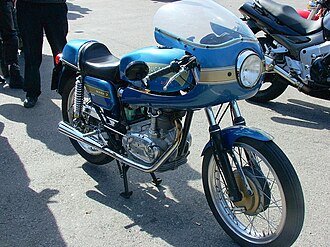
Ducati 250 Mark 3: The Italian Single That Defined a Golden Era
The Ducati 250 Mark 3 occupies a special place in the history of classic Italian motorcycles. It was compact, relatively light, mechanically sophisticated for its time, and powered by one of Ducati’s legendary bevel-drive single-cylinder engines. Produced from 1967 through 1974, the Mark 3 arrived during an important period in Ducati’s development, when the company was refining the engineering principles that would later become central to its identity. Although it had only one cylinder and a displacement of roughly 249cc, the motorcycle offered serious performance for its class, with a high-compression overhead-camshaft engine, five-speed transmission, sporty chassis, and the unmistakable character of an Italian performance machine.
The Mark 3 was also part of a broader family of Ducati single-cylinder motorcycles that included the earlier Diana Mark 3 and the later high-performance Mark 3D Desmo. Its history is therefore more complicated than the name might initially suggest. Early versions used Ducati’s narrow-case engine, while the wide-case engine arrived in 1968 with a stronger bottom end and other mechanical improvements. The model subsequently evolved through several updates, receiving changes to its frame, suspension, wheels, tank, seat, braking equipment, and styling.
For today’s enthusiast, the Ducati 250 Mark 3 represents something increasingly unusual: a motorcycle where sophisticated mechanical engineering was combined with simplicity, light weight, and a very direct connection between rider and machine. It lacks the electronic complexity of modern motorcycles, yet its bevel-driven camshaft and carefully developed single-cylinder engine give it a technical character that remains fascinating more than half a century later.
The Origins of the Ducati 250 Mark 3
From the Diana Mark 3 to the New Generation
The story of the 250 Mark 3 begins with Ducati’s earlier Diana Mark 3, a 249cc sporting single that was produced during the first half of the 1960s. The Diana Mark 3 had already established the formula of a high-performance Ducati single: a 74mm bore, 57.8mm stroke, bevel-driven overhead camshaft, five-speed transmission in later versions, and a performance-oriented chassis. The later 250 Mark 3 carried that basic philosophy into a new generation.
When the 250 Mark 3 entered production in 1967, Ducati was continuing to develop its famous bevel-drive single-cylinder platform. The motorcycle was positioned as a sporting road machine rather than a basic commuter, and its engine was designed to deliver considerably more character than its modest displacement might suggest. The model’s production continued until 1974, giving Ducati several years to refine the design and incorporate important changes.
One of the most significant developments came in 1968 with the introduction of the wide-case engine. Compared with the earlier narrow-case unit, the wide-case design had larger main bearings and a larger big-end arrangement, creating a stronger bottom end. The oil capacity also increased, while the kick-start mechanism was upgraded. The frame was modified to accommodate the wider engine and gained twin rear loops that increased rigidity.
This transition is important when discussing the Mark 3 because not every motorcycle carrying the name has exactly the same specification. Collectors and restorers often distinguish between early narrow-case examples and later wide-case machines, while subsequent production updates introduced further differences.
The Ducati 250 Mark 3 Engine
A 249cc Bevel-Drive Single
The defining feature of the Mark 3 is undoubtedly its engine. It is a 248.6cc, air-cooled, four-stroke single-cylinder unit with an overhead camshaft driven by bevel gears. The bore measures 74mm and the stroke 57.8mm, producing the characteristic oversquare configuration that helped the engine operate effectively at relatively high rpm.
The engine’s architecture was sophisticated for a motorcycle of this size. Rather than relying on a conventional chain or gear arrangement to drive the camshaft, Ducati used a vertical bevel-gear drive. This became one of the company’s most recognizable engineering features and gave its single-cylinder engines a distinctive mechanical appearance. The cylinder head and barrel were made from alloy with a cast-iron liner, while the engine used a wet-sump lubrication system.
The commonly cited specification gives the engine a compression ratio of around 10:1 and a maximum output of approximately 30 horsepower, with a quoted top speed of around 145 km/h, or 90 mph. However, published figures vary according to the specific year and specification being described, so period-correct examples should not all be assumed to produce exactly the same output.
For a 250cc single-cylinder motorcycle of the late 1960s and early 1970s, those figures were impressive. The engine’s appeal was not simply its peak output, however. The combination of relatively low mass, five closely spaced gears, high compression, and a sporting chassis gave the Mark 3 the ability to make ordinary road riding feel much more exciting than the displacement alone would suggest.
Dell’Orto Carburetion and Mechanical Character
Fuel delivery was handled by a Dell’Orto carburetor, with the 29mm unit documented for the Mark 3 wide-case specification. Ducati’s own restoration documentation also lists the SSI 29 D carburetor for the 250 Mark 3 wide-case model from 1968–69.
There is something particularly appealing about the mechanical nature of this system. Starting, warming, and riding the motorcycle required direct involvement from the rider. There was no electronic fuel injection automatically correcting mixture, no traction control, and no computer-controlled engine management. Instead, the rider interacted with a traditional carbureted single-cylinder engine whose behavior changed noticeably with throttle position, temperature, gearing, and engine speed.
That mechanical involvement is a major part of the Mark 3’s enduring appeal. It makes the motorcycle feel like a machine rather than merely a means of transportation.
Five-Speed Transmission and Performance
Gearing for a Sporting Ride
The Mark 3 was equipped with a five-speed transmission and a multiplate wet clutch. Primary drive was handled through helical gears, while a chain transferred power from the gearbox to the rear wheel.
The five-speed gearbox was especially valuable because the relatively small engine benefited from being kept in an effective part of its rev range. Rather than relying on a large-displacement engine’s abundant torque, the rider could work through the gears and exploit the single’s willingness to rev. That characteristic gave the motorcycle a distinctly sporting personality.
The Mark 3 was never intended to deliver the effortless acceleration of a large twin or four-cylinder motorcycle. Instead, its performance came from balance. A lightweight chassis, responsive engine, appropriate gearing, and relatively compact dimensions combined to produce a machine that could be ridden enthusiastically without requiring enormous power.
Contemporary testing of Ducati’s wide-case singles highlighted the sophistication of their road manners. A 1969 Cycle World report described the riding position as sporty without being excessively tiring and praised the machine’s damping, braking, ground clearance, and stability. The publication also noted that vibration became noticeable after about 6,000 rpm, illustrating the physical character of the big single at higher engine speeds.
Chassis and Suspension
A Lightweight Single-Cradle Frame
The Mark 3 used a single-cradle frame in which the engine formed an important structural part of the motorcycle. When the wide-case engine arrived, Ducati strengthened and modified the frame around the wider rear engine mountings, adding twin rear loops that improved rigidity.
This was a sensible engineering approach for a relatively light motorcycle. Instead of surrounding the engine with an unnecessarily heavy structure, Ducati integrated the power unit into the chassis. The result was a motorcycle that could retain a manageable weight while providing the stiffness required for sporting road use.
The published dry weight of the Mark 3 is around 127–128kg depending on the source and specification. That figure is a major part of the motorcycle’s performance story. Even 30 horsepower becomes surprisingly effective when it has relatively little motorcycle to move.
Marzocchi Rear Shocks
At the rear, the Mark 3 used a swinging arm with twin Marzocchi shock absorbers. These shocks were three-way adjustable, giving riders the ability to alter the suspension behavior according to riding conditions and preference. At the front were telescopic forks, with 31.5mm Ducati forks specified for the earlier wide-case configuration.
For a motorcycle from this period, adjustable rear damping was an important feature. It reflected Ducati’s intention to make the Mark 3 a serious sporting machine rather than simply an economical small motorcycle.
The combination of relatively low weight, a 1,360mm wheelbase, 18-inch wheels, and sporting suspension contributed to the Mark 3’s agile nature. The motorcycle was compact enough to change direction readily while maintaining the stability needed for faster road riding.
Brakes, Wheels and Tires
Traditional Drum Brakes
Early and mid-production Mark 3 motorcycles relied on drum brakes at both ends. The commonly documented wide-case specification used a 180mm front drum and a 160mm rear drum, with 2.75-18 front and 3.00-18 rear tires.
Those dimensions may seem modest compared with modern motorcycle equipment, but they were entirely appropriate for the period. The Mark 3’s relatively low weight helped compensate for the limitations of drum braking, and contemporary testing found the braking performance satisfactory for enthusiastic road riding.
Ducati continued to update the chassis during the motorcycle’s production life. From 1973, a twin-sided Grimeca front brake was introduced, while later versions also received other chassis and equipment changes. The final production period therefore differs noticeably from the earliest examples.
Styling and Evolution
The Classic Italian Silhouette
The Ducati 250 Mark 3 has a distinctive appearance that combines exposed mechanical components with simple, elegant bodywork. The motorcycle is narrow through the middle, with a relatively slim fuel tank, long seat, spoke wheels, and an exposed single-cylinder engine. The vertical bevel-drive shaft on the right side of the engine is particularly characteristic.
The early wide-case Mark 3 models of 1968–69 are especially recognizable because they used a fuel tank with twin filler caps. Later models adopted a single filler cap. Ducati Classics notes that the 1973 update brought a new fuel tank, seat, side covers, Marzocchi front fork, and Borrani aluminum wheels.
These changes mean that the Mark 3 should not be viewed as one visually identical motorcycle throughout its production run. The basic mechanical identity remained, but Ducati progressively modernized the machine.
The Mark 3D Desmo
Ducati’s Revolutionary Desmodromic Version
No discussion of the 250 Mark 3 is complete without mentioning the Mark 3D Desmo. Introduced for 1968–69, this higher-performance version employed Ducati’s desmodromic valve system. Instead of relying entirely on conventional valve springs to close the valves, the desmodromic mechanism mechanically controlled both valve opening and closing.
The 250 Mark 3D Desmo used the same basic 248.6cc displacement, with a 74 × 57.8mm bore and stroke and a 10:1 compression ratio. Published specifications give approximately 22 horsepower at 7,500 rpm and a top speed around 150 km/h, or 93 mph.
The Desmo was also visually distinctive. Sources describe features including clip-on handlebars, a single seat, fiberglass fuel tank, and the famous silver metal-flake finish that led to the nickname “Silver Shotgun.”
This version is particularly important in Ducati history because it demonstrates how the company was beginning to establish desmodromic valve control as a defining part of its engineering identity. The Mark 3D therefore connects the classic Ducati single-cylinder era directly with the desmodromic technology that would become central to many later Ducati motorcycles.
What Was the Ducati 250 Mark 3 Like to Ride?
A properly functioning Mark 3 is best understood as a motorcycle that rewards active participation. Its engine is not enormous, its brakes are not modern, and its chassis does not have electronic assistance, but the combination of light weight and responsive handling creates a very direct riding experience.
The relatively upright yet sporting riding position makes the motorcycle suitable for winding roads and ordinary road use, while the five-speed gearbox allows the rider to keep the engine working effectively. The big single produces the characteristic pulse and mechanical vibration associated with classic Ducati singles, giving the motorcycle a physical presence that modern engines often deliberately suppress.
The Mark 3 also demonstrates why classic motorcycle performance cannot be judged simply by horsepower. Thirty horsepower sounds modest today, but with a dry weight of roughly 127kg and a compact chassis, the motorcycle could deliver genuinely entertaining performance. Period testing of related Ducati wide-case singles emphasized their stable steering, effective damping, ground clearance, and ability to remain comfortable at substantial road speeds.
Collecting and Restoring a Ducati 250 Mark 3
For collectors, the Mark 3 presents an attractive combination of historical importance and mechanical interest. Its production run was long enough to produce numerous variations, but the underlying engineering remains recognizable across the family.
Condition is particularly important. A complete motorcycle with its original engine, correct carburetor, appropriate frame components, period instruments, wheels, tank, and exhaust system can be considerably more interesting than an example that has been heavily modified. The various production changes also mean that restoration should begin with identifying exactly which year and specification the motorcycle represents.
Special attention should be paid to the bevel-drive system, cylinder head, valve gear, carburetion, gearbox, clutch, and bottom end. The wide-case engine was stronger than its predecessor, but these motorcycles are now many decades old and should not be treated as if they were modern machines. Correct lubrication, careful mechanical inspection, and proper adjustment are essential when returning one to regular use.
Ducati 250 Mark 3 Technical Specifications
The table below summarizes the commonly documented specifications for the Ducati 250 Mark 3, with emphasis on the wide-case model. Because Ducati changed the motorcycle during its production run, individual examples can differ, particularly in suspension, wheels, brakes, ignition, bodywork, and other equipment.
| Specification | Ducati 250 Mark 3 |
|---|---|
| Production | 1967–1974 |
| Manufacturer | Ducati |
| Class | Standard / Sporting motorcycle |
| Engine | Air-cooled, 4-stroke single-cylinder |
| Valve Train | SOHC, bevel-gear driven |
| Displacement | 248.6 cc |
| Bore × Stroke | 74 × 57.8 mm |
| Compression Ratio | Approx. 9.7:1–10:1, depending on version |
| Carburetor | Dell’Orto, commonly 29 mm |
| Cooling | Air cooled |
| Lubrication | Wet sump |
| Ignition | Battery/coil; electronic ignition on later models |
| Starting | Kick starter |
| Transmission | 5-speed manual |
| Clutch | Multiplate wet clutch |
| Primary Drive | Helical gears |
| Final Drive | Chain |
| Final Drive Ratio | Approx. 2.812:1 |
| Maximum Power | Approx. 30 hp, depending on specification |
| Claimed Top Speed | Approx. 145 km/h / 90 mph |
| Frame | Single-cradle steel frame |
| Front Suspension | Telescopic fork |
| Rear Suspension | Swingarm, twin Marzocchi shocks |
| Front Brake | 180 mm drum on earlier versions |
| Rear Brake | 160 mm drum |
| Front Tire | 2.75-18 |
| Rear Tire | 3.00-18 |
| Wheelbase | Approx. 1,360 mm |
| Length | Approx. 2,000 mm |
| Seat Height | Approx. 735 mm |
| Dry Weight | Approx. 127–128 kg |
| Fuel Capacity | Approx. 13 litres |
The Legacy of the Ducati 250 Mark 3
The Ducati 250 Mark 3 is one of those motorcycles whose importance goes well beyond its specification sheet. On paper, it is a 249cc single-cylinder motorcycle with a five-speed gearbox and drum brakes. In practice, it represents one of the most interesting stages in the development of Ducati’s famous single-cylinder engineering.
Its bevel-driven overhead camshaft, high-compression engine, lightweight chassis, and sporting character made it an unusually sophisticated small motorcycle. The introduction of the wide-case engine strengthened the mechanical package, while the later updates demonstrate Ducati’s willingness to evolve the design throughout its production life.
Most importantly, the Mark 3 sits at the intersection of several chapters in Ducati history. It inherited ideas from the earlier Diana and Mach-era singles, developed alongside Ducati’s increasingly sophisticated bevel-drive motorcycles, and existed alongside the remarkable Mark 3D Desmo. The latter’s desmodromic valve system would become one of the most recognizable technical signatures of the Ducati brand.
Today, the 250 Mark 3 appeals because it offers a very different idea of motorcycle performance. It does not need a huge engine or electronic technology to be engaging. Its charm comes from the sound and pulse of a single cylinder, the visible bevel-drive mechanism, the need to work the five-speed gearbox, the light chassis, and the unmistakable feeling of riding a machine engineered during one of the great eras of Italian motorcycle design.
For enthusiasts interested in classic Ducati motorcycles, the Mark 3 is therefore much more than an old 250. It is a compact demonstration of Ducati’s engineering philosophy at a pivotal moment—a motorcycle where performance, mechanical beauty, and simplicity came together in a remarkably complete package.
