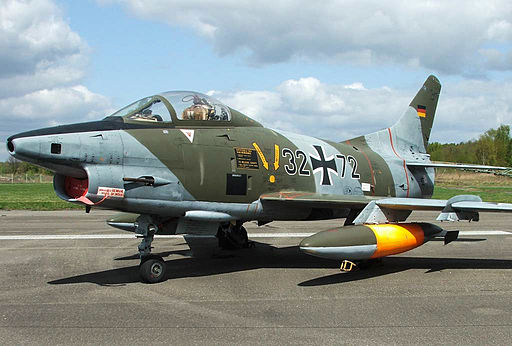
Fiat G.91
The Fiat G.91, an iconic Italian jet fighter-bomber, holds a significant place in aviation history for its versatility, agility, and combat effectiveness. Developed by Fiat Aviazione in the 1950s, the G.91 was conceived as a lightweight, supersonic aircraft capable of performing a multitude of roles, including close air support, interdiction, reconnaissance, and tactical nuclear strike. Its sleek design, powered by a single afterburning turbojet engine, allowed for impressive performance characteristics, including high speed and exceptional maneuverability, making it a formidable adversary in both air-to-air and air-to-ground combat.
With a length of approximately 11 meters and a wingspan of around 8 meters, the Fiat G.91 boasted a compact yet efficient airframe optimized for combat missions. Its robust construction and advanced avionics systems ensured reliability and precision in all weather conditions, enabling pilots to operate effectively in various operational theaters. Equipped with a diverse array of weaponry, including guns, rockets, bombs, and air-to-air missiles, the G.91 could deliver a devastating punch against enemy targets while maintaining a low-profile and agile presence in the battlefield.
Throughout its service life, the Fiat G.91 earned a reputation for its combat prowess and operational versatility, serving with distinction in the air forces of several NATO countries, including Italy, Germany, Portugal, and Greece. Its combat record includes participation in numerous conflicts, including the Portuguese Colonial War, the Six-Day War, and the Vietnam War. Despite being eventually phased out of frontline service, the G.91’s legacy endures as a testament to Italian engineering excellence and innovation in military aircraft design, inspiring future generations of fighter pilots and aircraft enthusiasts around the world.
Fiat G.91 parameters
Here are some parameters of the Fiat G.91:
- Length: Approximately 10.3 meters (33 feet 9 inches)
- Wingspan: Around 8.56 meters (28 feet 1 inch)
- Height: Approximately 4.34 meters (14 feet 3 inches)
- Empty Weight: Roughly 4,200 kilograms (9,259 pounds)
- Maximum Takeoff Weight: Up to 7,400 kilograms (16,314 pounds)
- Engine: Typically equipped with a single Bristol Siddeley Orpheus turbojet engine, producing around 22 kN (4,940 lbf) of thrust.
- Maximum Speed: Approximately 1,075 kilometers per hour (668 miles per hour)
- Cruise Speed: Typically around 800 kilometers per hour (497 miles per hour)
- Range: Approximately 1,600 kilometers (994 miles)
- Service Ceiling: Up to 13,400 meters (43,963 feet)
- Armament: Capable of carrying various combinations of guns, rockets, bombs, and air-to-air missiles, depending on mission requirements.
- Crew: Typically a single pilot.
- Operational Role: Primarily used as a lightweight fighter-bomber for close air support, interdiction, reconnaissance, and tactical nuclear strike missions.
- Manufacturer: Fiat Aviazione, an Italian aerospace company.
