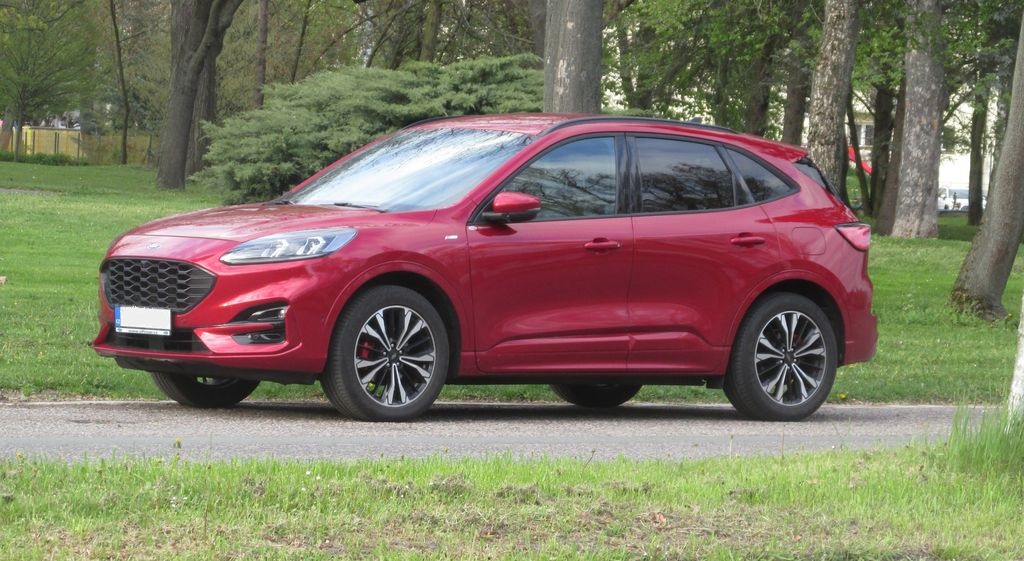
Ford Kuga as a Used Car: A Complete Buyer’s Guide to One of Ford’s Most Popular SUVs
The Ford Kuga has established itself as one of the most successful compact SUVs in Europe, combining practicality, attractive styling, comfortable driving characteristics, and a broad range of engines to appeal to families, commuters, and adventure-minded motorists alike. Since its introduction, the Kuga has become a familiar sight on European roads, competing against some of the strongest players in the highly competitive crossover segment. Models such as the Volkswagen Tiguan, Toyota RAV4, Hyundai Tucson, Kia Sportage, Nissan Qashqai, Peugeot 3008, and Honda CR-V have all challenged the Kuga, yet Ford’s SUV has consistently remained one of the most popular choices thanks to its balanced approach to performance, comfort, technology, and value.
Today, the Ford Kuga represents an especially attractive proposition on the used-car market. Depreciation has made even relatively young examples significantly more affordable than when new, while Ford’s extensive dealer network and the widespread availability of replacement parts help keep maintenance costs under control. Buyers can choose from economical diesel engines, responsive turbocharged petrol units, modern hybrid and plug-in hybrid versions, manual or automatic transmissions, and front-wheel or all-wheel drive, making it possible to find a Kuga that suits almost any driving requirement.
However, choosing the right used Kuga requires careful research. Different generations have different strengths, certain engines are considerably more reliable than others, and maintenance history can have a major influence on long-term ownership costs. Like any modern SUV, the Kuga combines sophisticated electronics, advanced safety systems, and increasingly complex powertrains, meaning that careful inspection before purchase is more important than ever.
This comprehensive guide examines the Ford Kuga as a used vehicle, exploring its history, design, engines, driving characteristics, reliability, ownership costs, common faults, buying advice, and long-term value to help prospective buyers make an informed decision.
The Evolution of the Ford Kuga
The Ford Kuga was introduced in 2008 as Ford’s response to the rapidly expanding compact SUV market. Buyers were increasingly looking for vehicles that combined the elevated driving position and practicality of an SUV with the comfort, efficiency, and road manners of a conventional passenger car. Rather than building a rugged off-roader, Ford developed the Kuga as a road-focused crossover based largely on the highly regarded Ford Focus platform.
The first generation immediately attracted attention thanks to its sporty handling, distinctive styling, and impressive driving dynamics. Unlike many competitors that prioritized comfort above all else, the original Kuga retained much of the responsive steering and agile chassis tuning that had made Ford passenger cars popular with enthusiastic drivers.
The second generation, launched in 2012, became considerably more practical and family-oriented. Interior space increased, technology improved dramatically, and buyers gained access to a much wider range of engines, transmissions, and optional equipment. This generation significantly broadened the Kuga’s appeal and established it as one of Europe’s best-selling SUVs.
The third generation, introduced in 2019, represented another major step forward. Built on Ford’s modern C2 platform, it became lighter, more efficient, and considerably more advanced. Hybrid and plug-in hybrid powertrains joined the range, while sophisticated driver assistance systems, digital displays, and improved connectivity moved the Kuga firmly into the modern era.
As a result, today’s used-car buyers have a wide variety of Kuga models to choose from, covering everything from affordable early diesel examples to nearly new plug-in hybrid versions packed with advanced technology.
Exterior Design: A Practical SUV with Modern Styling
The Ford Kuga has evolved significantly over three generations, but every version has maintained a distinctive identity that separates it from many competitors.
First Generation (2008–2012)
The original Kuga adopted Ford’s kinetic design language, characterized by flowing lines, muscular wheel arches, and a prominent front grille. Although compact by modern SUV standards, it projected a sporty and robust appearance that appealed to buyers wanting something more dynamic than traditional family vehicles.
Even today, the first-generation Kuga remains visually attractive, especially in higher trim levels equipped with alloy wheels, roof rails, and metallic paint.
Second Generation (2012–2019)
The second-generation model introduced smoother bodywork, larger dimensions, and a more sophisticated appearance. Improved aerodynamics not only enhanced fuel economy but also reduced wind noise during motorway driving.
This generation remains particularly popular on the used market because it offers a modern appearance without the high prices commanded by newer vehicles.
Third Generation (2019–Present)
The latest Kuga features sharper styling, slimmer LED lighting, cleaner body lines, and a more premium overall appearance. The design is less aggressive than some competitors but projects confidence and maturity.
Despite its crossover proportions, the Kuga avoids looking bulky. The relatively low roofline and carefully sculpted body panels give it a more athletic presence than many similarly sized SUVs.
Interior Quality and Practicality
The interior has always been one of the Kuga’s strongest selling points, particularly in later generations.
Ford focused on creating a cabin that combines practicality with comfort, offering high seating positions, supportive seats, and intuitive controls that make everyday driving pleasant.
Material quality has steadily improved with each generation. Early models feature durable but relatively simple plastics, while later versions introduce softer materials, larger infotainment displays, digital instrument clusters, and improved sound insulation.
One of the greatest advantages of the Kuga is that it feels more spacious inside than its exterior dimensions might suggest.
Front Seats
The driving position is excellent, offering good visibility in all directions. The seats provide strong support for long journeys, and higher specifications include electric adjustment, heating, lumbar support, and memory functions.
Drivers transitioning from conventional hatchbacks often appreciate the elevated seating position without feeling as though they are driving an oversized SUV.
Rear Passenger Accommodation
Rear passengers benefit from generous headroom and legroom, especially in the second and third generations.
Many later models feature sliding rear seats, allowing owners to prioritize either passenger space or cargo capacity depending on current needs.
This flexibility makes the Kuga particularly attractive for growing families.
Luggage Capacity
The cargo area is one of the Kuga’s practical highlights.
With the rear seats in place, there is ample space for shopping, luggage, pushchairs, or sports equipment.
Folding the rear seats creates a large and nearly flat loading area capable of accommodating furniture, bicycles, or camping equipment.
The wide tailgate opening also simplifies loading bulky objects.
Engine Options
One reason for the Kuga’s popularity is its broad selection of engines.
Petrol Engines
Ford’s EcoBoost petrol engines provide an excellent balance between performance and efficiency.
The popular 1.5-liter EcoBoost delivers responsive acceleration and relatively low fuel consumption, making it an ideal choice for drivers covering moderate annual mileage.
The 2.0-liter EcoBoost available in some markets offers significantly stronger performance and pairs well with all-wheel drive.
Regular oil changes are essential for long-term reliability, particularly on turbocharged engines.
Diesel Engines
For many years, diesel engines dominated European Kuga sales.
The 1.5 TDCi and 2.0 TDCi engines became known for strong torque, impressive motorway economy, and long-distance comfort.
Buyers who frequently travel on highways often continue to prefer diesel versions due to their lower fuel consumption.
However, modern emissions systems require regular longer journeys to maintain diesel particulate filter health.
Hybrid Models
The latest generation introduced self-charging hybrid technology.
Combining a naturally aspirated petrol engine with an electric motor, these versions provide excellent urban efficiency while avoiding the charging requirements of plug-in hybrids.
They are particularly well suited to mixed driving.
Plug-in Hybrid (PHEV)
The Kuga Plug-in Hybrid became one of Europe’s best-selling PHEVs.
Its larger battery allows many daily commutes to be completed using electricity alone.
For owners with home charging, running costs can be remarkably low.
When the battery is depleted, the petrol engine ensures unrestricted long-distance usability.
Transmission Options
Depending on engine and generation, buyers can choose between manual and automatic gearboxes.
Ford’s manual transmissions are generally well regarded, offering precise gear changes and strong reliability.
Automatic options include conventional torque-converter units and dual-clutch systems depending on model year and market.
Smooth operation during a test drive is essential because transmission repairs can be expensive.
Driving Experience
The Ford Kuga has consistently been praised for its enjoyable driving characteristics.
Unlike many SUVs that prioritize soft suspension at the expense of handling, the Kuga maintains impressive composure through corners while remaining comfortable over rough roads.
Steering is accurate, body roll is well controlled, and motorway stability is excellent.
Even drivers accustomed to hatchbacks often find the Kuga surprisingly engaging.
Higher-powered engines transform the driving experience further, making overtaking effortless and long-distance travel particularly relaxing.
Hybrid versions emphasize refinement, delivering exceptionally smooth operation in urban traffic.
Fuel Economy
Fuel efficiency varies considerably depending on engine choice.
The diesel engines remain the champions of long-distance economy, especially on motorway journeys.
The 1.5 EcoBoost petrol provides a good compromise for mixed use.
Hybrid versions excel during urban driving thanks to frequent electric assistance.
Plug-in Hybrid models can achieve exceptionally low fuel consumption when regularly charged, although real-world efficiency depends heavily on charging habits.
Reliability
Overall, the Ford Kuga enjoys a positive reliability reputation.
Many mechanical components originate from other successful Ford models, ensuring widespread familiarity among independent workshops.
However, maintenance history remains critically important.
Vehicles serviced according to manufacturer recommendations generally prove dependable for high mileages.
Routine servicing should never be postponed, especially for turbocharged engines and automatic transmissions.
Common Problems to Watch For
EcoBoost Cooling Issues
Certain earlier EcoBoost engines experienced cooling-system concerns.
Buyers should verify that any manufacturer service campaigns have been completed and inspect for evidence of coolant leaks.
Diesel Particulate Filter
Diesel models used primarily for short urban journeys may suffer blocked particulate filters.
Vehicles regularly driven on longer trips generally avoid these issues.
Automatic Transmission Maintenance
Automatic gearboxes require proper servicing despite claims of “lifetime” fluids.
Harsh shifting or hesitation should be investigated before purchase.
Electrical Equipment
Modern Kugas contain numerous electronic systems including adaptive cruise control, parking sensors, cameras, infotainment, navigation, and smartphone integration.
Every feature should be tested carefully.
Suspension Wear
As mileage increases, bushings, control arms, and anti-roll bar links naturally wear.
Fortunately, replacement costs remain relatively reasonable.
Maintenance Costs
Compared with premium European SUVs, the Kuga remains relatively affordable to maintain.
Routine servicing, brake components, suspension repairs, and filters are widely available.
Insurance costs are generally competitive.
Hybrid models eliminate some traditional maintenance items but introduce additional complexity related to battery systems.
Fortunately, Ford’s hybrid technology has generally proven dependable.
Safety
Safety has always been a Kuga strength.
Later generations include numerous advanced systems such as:
- Autonomous emergency braking
- Adaptive cruise control
- Blind-spot monitoring
- Lane-keeping assistance
- Traffic sign recognition
- Rear cross-traffic alert
- Automatic parking assistance
- Multiple airbags and electronic stability control
These technologies make even used examples highly competitive with newer rivals.
Ownership Experience
Daily ownership of a Ford Kuga is generally straightforward.
The vehicle starts reliably, offers comfortable seating, provides excellent visibility, and remains easy to maneuver despite its generous interior.
Owners frequently praise its balance between SUV practicality and passenger-car handling.
Servicing is uncomplicated, replacement parts are readily available, and fuel economy remains competitive across most engine choices.
Many owners also appreciate the relatively understated styling, which has aged gracefully over multiple generations.
Buying Advice
When inspecting a used Ford Kuga, focus on overall condition rather than mileage alone.
Look for:
- Complete service history.
- Evidence of regular oil changes.
- Smooth transmission operation.
- Proper functioning of hybrid systems where applicable.
- No warning lights.
- Even tire wear.
- Healthy suspension with no knocking noises.
- Proper operation of all electronic equipment.
A professional pre-purchase inspection remains one of the best investments before buying any used SUV.
Ford Kuga Compared with Competitors
Compared with the Volkswagen Tiguan, the Kuga often offers more engaging driving dynamics while maintaining similar practicality.
Against the Toyota RAV4, the Ford generally provides sharper steering and lower purchase prices, although Toyota retains a stronger long-term reliability reputation.
Compared with the Hyundai Tucson and Kia Sportage, the Kuga delivers a more driver-focused experience but sometimes slightly less generous equipment in lower trim levels.
The Peugeot 3008 features a more dramatic interior design, while the Kuga emphasizes practicality and familiar ergonomics.
Overall, the Kuga’s greatest advantage lies in its balanced character. It rarely dominates any single category but performs consistently well across comfort, practicality, handling, technology, and value.
Is the Ford Kuga a Good Used Buy?
The answer is unquestionably yes—provided buyers select the right example.
The Ford Kuga successfully combines comfortable driving, spacious accommodation, attractive styling, efficient engines, and reasonable ownership costs into one highly practical package.
It remains one of the best-rounded compact SUVs available on the used market.
Its main strengths include excellent driving dynamics, generous passenger space, broad engine selection, competitive maintenance costs, and strong parts availability.
Potential weaknesses such as EcoBoost cooling concerns, diesel emissions systems, or automatic transmission servicing can largely be managed through careful vehicle selection and proper maintenance.
For buyers seeking a versatile family SUV capable of handling commuting, holidays, motorway travel, and everyday life without excessive ownership costs, the Kuga remains one of Ford’s finest modern vehicles.
Final Verdict
The Ford Kuga deserves its reputation as one of Europe’s most successful compact SUVs. Rather than excelling in only one area, it delivers a carefully balanced combination of comfort, practicality, enjoyable driving characteristics, modern technology, and competitive running costs that continues to impress long after purchase.
Whether choosing an economical diesel for frequent motorway journeys, a responsive EcoBoost petrol for mixed driving, or a highly efficient hybrid for urban commuting, buyers can find a version suited to their individual needs. Strong safety credentials, comfortable interiors, generous luggage space, and readily available spare parts further enhance its appeal as a used vehicle.
The key to successful ownership lies in selecting a well-maintained example with documented service history and ensuring that any known manufacturer updates or recalls have been completed. Buyers who invest time in finding the right vehicle are likely to enjoy many years of dependable, comfortable, and economical motoring.
For anyone searching for a practical, refined, and affordable used SUV that continues to feel modern and enjoyable to drive, the Ford Kuga remains one of the strongest recommendations in its class.
Technical Specifications Summary
| Specification | Ford Kuga 1.5 EcoBoost | Ford Kuga 2.5 Plug-in Hybrid |
|---|---|---|
| Production years (3rd generation) | 2019–Present | 2019–Present |
| Body style | 5-door compact SUV | 5-door compact SUV |
| Platform | Ford C2 Platform | Ford C2 Platform |
| Engine | 1.5 L turbocharged EcoBoost petrol | 2.5 L petrol hybrid with electric motor |
| Combined power | 150 hp | 225 hp |
| Torque | 240 Nm | Hybrid system optimized (engine: approx. 200 Nm) |
| Transmission | 6-speed manual / 8-speed automatic | Continuously variable automatic (eCVT) |
| Drive system | Front-wheel drive | Front-wheel drive |
| 0–100 km/h | Approx. 9.5 seconds | Approx. 9.2 seconds |
| Top speed | Approx. 195 km/h | Approx. 200 km/h |
| Fuel consumption (combined) | Approx. 6.5–7.5 L/100 km | As low as 1.0–1.5 L/100 km (WLTP with charged battery) |
| Electric-only range (PHEV) | Not applicable | Up to approximately 69 km WLTP |
| Fuel tank capacity | 54 liters | 43 liters |
| Length | 4,614 mm | 4,614 mm |
| Wheelbase | 2,711 mm | 2,711 mm |
| Luggage capacity | Approx. 553 liters | Approx. 411 liters |
| Typical strengths | Comfort, handling, affordable maintenance, practicality | Excellent efficiency, quiet operation, low running costs |
| Typical weaknesses | Earlier EcoBoost cooling concerns, automatic servicing requirements | Reduced luggage space, battery adds weight, requires regular charging for best economy |
_PHEV_IMG_3320.jpg)