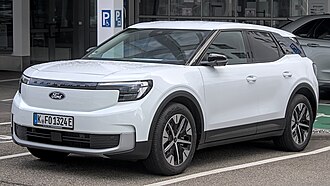
Ford Explorer EV as a Used Car: A Complete Buyer’s Guide to Ford’s New Electric SUV
The transition from internal combustion engines to fully electric vehicles has changed the automotive landscape more dramatically than any technological revolution in recent decades. Manufacturers that built their reputations on gasoline and diesel engines are now investing billions in electric mobility, introducing entirely new models that combine zero-emission driving with advanced digital technology and increasingly sophisticated driver assistance systems. Ford is no exception. After the success of models such as the Mustang Mach-E and the F-150 Lightning in selected markets, the company introduced the Ford Explorer EV for Europe—a compact all-electric SUV that combines familiar Ford styling with proven electric vehicle technology.
Although the Explorer EV shares its name with the legendary American SUV, it is a completely different vehicle. Rather than being a large body-on-frame off-roader, the European Explorer EV is a modern electric crossover developed specifically for European roads and driving habits. It offers practical dimensions, impressive driving range, contemporary technology, and a spacious cabin while benefiting from one of the most mature dedicated electric platforms currently available.
As the first examples begin appearing on the used-car market, many buyers are asking whether purchasing a pre-owned Ford Explorer EV represents a smart investment. Electric vehicles depreciate differently from conventional cars, battery health becomes a critical factor, and software support can significantly influence long-term ownership. At the same time, lower maintenance costs, quiet operation, and competitive efficiency make modern electric SUVs increasingly attractive alternatives to traditional petrol or diesel vehicles.
This comprehensive guide examines the Ford Explorer EV as a used vehicle, covering its design, electric drivetrain, battery technology, driving experience, charging, reliability, maintenance, common concerns, ownership costs, depreciation, and buying advice. Whether you are considering your first electric vehicle or replacing an older EV with something more modern, understanding the Explorer EV’s strengths and weaknesses will help you make an informed decision.
The Story Behind the Ford Explorer EV
The Ford Explorer EV marks an important chapter in Ford’s European strategy. Instead of adapting an existing combustion-powered SUV, Ford developed a dedicated electric crossover that takes advantage of modern battery packaging and advanced software integration.
Built using Volkswagen Group’s Modular Electric Drive Matrix (MEB) platform through a strategic partnership between Ford and Volkswagen, the Explorer EV combines Ford’s own design language and chassis tuning with a proven electric architecture already used in several successful European electric vehicles. This cooperation allows Ford to reduce development costs while giving customers access to mature battery technology, efficient electric motors, and fast-charging capability.
Although some enthusiasts questioned the decision to share its technical foundation with another manufacturer, the result is a vehicle that combines Ford’s driving character with one of the industry’s most thoroughly tested electric platforms.
For used buyers, this partnership is particularly reassuring because many drivetrain components have already accumulated millions of kilometers of real-world experience across multiple vehicle models.
Exterior Design: Modern Without Being Excessive
The Explorer EV adopts a contemporary SUV design that balances practicality with visual appeal. Unlike many electric vehicles that rely on unconventional styling to emphasize their futuristic nature, the Explorer EV retains a familiar and approachable appearance.
The upright front end, muscular wheel arches, short overhangs, and clean body surfaces create a confident stance without appearing oversized. Slim LED lighting elements, aerodynamic wheel designs, and carefully sculpted body panels contribute to both efficiency and modern aesthetics.
Although compact enough for European cities, the Explorer EV projects the presence of a larger SUV, making it appealing to buyers who appreciate commanding road presence without the inconvenience of driving a full-size vehicle.
The overall design is likely to age well because it avoids overly fashionable details that may quickly become outdated.
Aerodynamics and Efficiency
Every aspect of the exterior has been designed with efficiency in mind.
Smooth underbody panels, optimized airflow around the wheels, flush exterior details, and carefully shaped mirrors reduce aerodynamic drag, helping maximize driving range while minimizing wind noise.
These improvements also contribute to the quiet cabin that characterizes modern electric vehicles.
Interior Design and Cabin Quality
The Explorer EV features a spacious interior made possible by its dedicated electric platform.
Without a traditional engine, transmission tunnel, or large drivetrain components occupying valuable space, designers have created an open cabin that feels noticeably larger than many similarly sized SUVs.
Material quality is impressive throughout, with soft-touch surfaces, durable trim pieces, and high-quality upholstery depending on specification.
The dashboard follows a minimalist approach centered around a large adjustable touchscreen that controls most vehicle functions while still retaining physical buttons for several frequently used features.
This balance between digital technology and traditional controls makes everyday operation easier than in some competitors that rely exclusively on touch-sensitive interfaces.
Driving Position
The elevated seating position provides excellent visibility while maintaining a comfortable and supportive posture during long journeys.
Multiple seat adjustments allow drivers of different sizes to find an ideal position, while higher trim levels add heating, massage functions, and premium upholstery.
The flat floor further enhances comfort by allowing greater flexibility in foot placement.
Rear Passenger Accommodation
Rear-seat passengers benefit from generous legroom and headroom despite the vehicle’s relatively compact exterior dimensions.
The absence of a transmission tunnel creates additional foot space for the middle passenger, making the Explorer EV genuinely practical for carrying five adults.
Wide-opening rear doors also improve accessibility for children and elderly passengers.
Luggage Space
Practicality remains one of the Explorer EV’s greatest strengths.
The rear cargo area comfortably accommodates family luggage, shopping, bicycles, or outdoor equipment.
Folding rear seats significantly expands available space, making the Explorer EV suitable for holidays, home improvement projects, and active lifestyles.
Additional storage compartments throughout the cabin further improve everyday usability.
Electric Drivetrain Options
The Explorer EV is available with multiple drivetrain configurations designed to satisfy different customer requirements.
Rear-Wheel Drive
The rear-wheel-drive version offers an excellent balance between efficiency, performance, and purchase price.
The electric motor delivers smooth acceleration and precise power delivery, while rear-wheel drive contributes to balanced handling and predictable road manners.
This configuration will likely remain the most popular choice on the used market.
All-Wheel Drive
Dual-motor all-wheel-drive models add a second electric motor to power the front wheels.
The result is stronger acceleration, improved traction during poor weather, and enhanced confidence on slippery roads.
Although energy consumption increases slightly, many buyers consider the additional performance worthwhile.
Battery Technology
Battery condition is naturally one of the most important considerations when purchasing any used electric vehicle.
The Explorer EV benefits from modern lithium-ion battery technology supported by sophisticated thermal management systems that help preserve long-term battery health.
Available battery capacities allow buyers to choose between lower purchase costs and maximum driving range.
Battery management software carefully controls charging and temperature to minimize degradation over time.
Most owners are unlikely to notice significant capacity loss during the vehicle’s early years if charging recommendations have been followed.
Driving Experience
Ford has traditionally been known for producing vehicles with enjoyable handling, and the Explorer EV continues that philosophy.
Despite carrying a heavy battery beneath the floor, the low center of gravity actually improves cornering stability.
Steering feels accurate and natural, body roll remains well controlled, and ride quality successfully balances comfort with composure.
Electric torque provides immediate acceleration from any speed, making urban driving effortless.
Motorway cruising is equally impressive thanks to excellent sound insulation and refined suspension tuning.
Unlike many electric vehicles that prioritize efficiency above all else, the Explorer EV retains a genuinely engaging driving character.
Driving Range
Driving range depends on battery size, drivetrain configuration, weather conditions, and driving style.
Under favorable conditions, the larger battery versions provide sufficient range for extended motorway journeys without frequent charging stops.
Urban driving often produces better efficiency because regenerative braking recovers energy during deceleration.
Cold temperatures naturally reduce range because battery chemistry becomes less efficient and cabin heating requires additional energy.
Potential buyers should therefore consider their typical driving patterns rather than relying solely on official laboratory figures.
Charging Performance
Charging capability plays a major role in everyday ownership.
Home Charging
Most owners will rely primarily on home charging.
Installing a dedicated wallbox significantly reduces charging time compared with domestic electrical outlets.
Overnight charging ensures the vehicle begins each day with a nearly full battery while taking advantage of lower electricity tariffs where available.
Public Charging
The Explorer EV supports high-power DC rapid charging, allowing significant battery replenishment during relatively short breaks.
Real-world charging speeds depend on battery temperature, charger capability, and current state of charge.
For drivers undertaking regular long-distance journeys, this rapid charging capability greatly enhances practicality.
Technology and Connectivity
Modern buyers increasingly expect advanced digital technology, and the Explorer EV delivers accordingly.
Features available depending on trim include:
- Large adjustable touchscreen.
- Wireless Apple CarPlay and Android Auto.
- Cloud-connected navigation.
- Over-the-air software updates.
- Digital instrument display.
- Wireless smartphone charging.
- Voice control.
- Premium audio systems.
- Multiple USB-C charging ports.
Software updates are particularly valuable because they allow Ford to improve functionality and address minor issues throughout the vehicle’s life.
Used buyers should verify that all available updates have been installed.
Safety Features
Safety technology represents another major strength.
Depending on specification, the Explorer EV offers:
- Adaptive cruise control.
- Automatic emergency braking.
- Lane-centering assistance.
- Blind-spot monitoring.
- Rear cross-traffic alert.
- Traffic sign recognition.
- Driver attention monitoring.
- Parking cameras.
- Automatic parking assistance.
- Multiple airbags and advanced stability control.
These systems contribute to excellent occupant protection while reducing driver workload during everyday journeys.
Reliability and Long-Term Durability
Although the Explorer EV is still relatively new, early indications suggest strong reliability potential.
Electric vehicles contain significantly fewer moving mechanical components than combustion-powered cars.
There are no engine oil changes, spark plugs, timing belts, fuel injectors, exhaust systems, or conventional automatic transmissions requiring routine servicing.
Instead, attention shifts toward battery cooling systems, software stability, charging hardware, and suspension components.
The proven MEB platform provides additional confidence because its technology has already accumulated substantial real-world experience.
Common Areas to Inspect Before Buying
Even modern electric vehicles deserve careful inspection.
Battery Health
Request documentation confirming battery condition.
Diagnostic reports showing remaining battery capacity provide valuable reassurance.
Charging Equipment
Verify correct operation of AC and DC charging.
Inspect charging connectors for physical damage or excessive wear.
Software Updates
Confirm that the vehicle has received the latest manufacturer software.
These updates often improve charging performance, infotainment stability, and battery management.
Tire Wear
Electric vehicles generate substantial torque and carry greater weight than similarly sized combustion cars.
Uneven tire wear may indicate suspension alignment issues.
Suspension Components
The additional battery weight increases demands on suspension bushings, dampers, and wheel bearings.
Any knocking noises should be investigated.
Maintenance Costs
Routine maintenance costs are generally lower than comparable petrol or diesel SUVs.
Owners eliminate expenses associated with oil changes, engine filters, timing belts, and many drivetrain repairs.
Brake pads often last significantly longer because regenerative braking reduces mechanical wear.
However, tires may wear more rapidly due to increased vehicle weight and instant torque.
Insurance costs vary depending on market conditions but may exceed equivalent combustion vehicles because repair procedures for electric cars remain relatively specialized.
Depreciation and Used Values
Electric vehicles often experience faster early depreciation than traditional cars.
Rapid technological development means newer models frequently offer improved battery capacity and charging performance.
For used buyers, however, this creates attractive opportunities.
A two- or three-year-old Explorer EV may retain nearly all of its practicality while costing substantially less than a new example.
Higher trim levels with larger batteries and all-wheel drive are likely to retain stronger resale values.
Ford Explorer EV Compared with Competitors
The Explorer EV competes against numerous established electric SUVs.
Compared with the Volkswagen ID.4, it offers more distinctive styling and Ford-specific chassis tuning while sharing much of the underlying technology.
Against the Hyundai Ioniq 5, the Explorer emphasizes traditional SUV proportions rather than futuristic design.
Compared with the Tesla Model Y, the Ford provides more conventional controls and interior ergonomics, although Tesla retains certain advantages in charging infrastructure and software integration.
Against the Kia EV6 and Skoda Enyaq, the Explorer positions itself as a balanced all-rounder offering comfort, technology, practicality, and enjoyable driving dynamics.
Who Should Buy a Used Ford Explorer EV?
The Explorer EV suits buyers seeking a modern electric SUV without the size of a full-size family vehicle.
It is particularly appealing to families, commuters, and drivers who regularly travel moderate distances while appreciating advanced technology and comfortable interiors.
Owners with access to home charging will benefit most from its low operating costs.
Drivers frequently undertaking extremely long motorway journeys should evaluate charging infrastructure along their typical routes before purchasing.
Ownership Experience
Living with the Explorer EV quickly becomes routine for most owners.
Home charging eliminates regular visits to fuel stations, while quiet operation makes daily commuting noticeably more relaxing.
Instant acceleration improves urban driving, and the spacious cabin comfortably accommodates family life.
Software updates continue enhancing the ownership experience long after purchase, allowing the vehicle to evolve over time rather than remaining technologically static.
Combined with Ford’s extensive dealer network and growing experience with electric vehicles, long-term ownership appears promising.
Final Verdict
The Ford Explorer EV represents one of the most compelling modern electric SUVs available on the used market. It combines attractive styling, impressive practicality, advanced technology, competitive driving range, and enjoyable road manners into a package that successfully balances innovation with everyday usability.
Its partnership with Volkswagen for the underlying electric platform may initially surprise some buyers, but it ultimately provides significant advantages. Mature battery technology, proven electric drivetrains, and established charging capabilities reduce many of the uncertainties associated with first-generation electric vehicles.
For used buyers, the Explorer EV offers the opportunity to enter electric motoring at a significantly lower price than purchasing new while retaining the majority of its modern features and capabilities. Careful attention should be paid to battery health, software updates, charging equipment, and general maintenance history, but these considerations are now becoming standard practice when evaluating any used electric vehicle.
Drivers seeking a comfortable, spacious, technologically advanced, and genuinely enjoyable electric SUV will find the Explorer EV to be an excellent choice. It demonstrates that Ford’s transition toward electrification can preserve the qualities that have long defined the brand: practical engineering, comfortable everyday usability, and rewarding driving dynamics.
Technical Specifications Summary
| Specification | Ford Explorer EV Extended Range RWD | Ford Explorer EV Extended Range AWD |
|---|---|---|
| Production years | 2024–Present | 2024–Present |
| Body style | 5-door compact electric SUV | 5-door compact electric SUV |
| Platform | Volkswagen MEB electric platform (Ford-tuned) | Volkswagen MEB electric platform (Ford-tuned) |
| Battery capacity (usable) | Approximately 77 kWh | Approximately 79 kWh |
| Drive system | Rear-wheel drive | All-wheel drive (dual motor) |
| Maximum power | 286 hp (210 kW) | 340 hp (250 kW) |
| Maximum torque | 545 Nm | 679 Nm |
| Transmission | Single-speed automatic | Single-speed automatic |
| 0–100 km/h | Approx. 6.4 seconds | Approx. 5.3 seconds |
| Top speed | 180 km/h | 180 km/h |
| WLTP driving range | Up to approximately 602 km | Up to approximately 566 km |
| Maximum DC charging power | Up to 135 kW | Up to 185 kW |
| AC charging | 11 kW | 11 kW |
| Length | Approximately 4,468 mm | Approximately 4,468 mm |
| Wheelbase | Approximately 2,767 mm | Approximately 2,767 mm |
| Luggage capacity | Approximately 470–1,460 liters | Approximately 470–1,460 liters |
| Typical strengths | Long driving range, comfortable ride, spacious cabin, efficient operation | Excellent acceleration, superior traction, premium driving experience |
| Typical weaknesses | Technology depreciation, charging infrastructure dependence | Higher purchase price, increased energy consumption, more expensive insurance |
