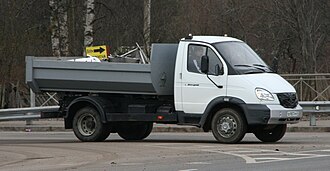
GAZ Valdai: A Complete Overview of Russia’s Modern Medium-Duty Truck
The Return of the Valdai Name in the Russian Truck Market
The GAZ Valdai represents an important chapter in the evolution of Russian commercial vehicles, combining decades of experience from the Gorky Automobile Plant with modern demands for efficiency, reliability, and urban transport capability. Introduced as a modern medium-duty truck, the Valdai was designed to fill a gap between light commercial vehicles and heavier cargo trucks, offering businesses a practical solution for regional transportation, city deliveries, and specialized applications.
The name “Valdai” carries historical significance within the GAZ product family. It was previously associated with a medium-duty truck produced in the 2000s, based on the GAZ-3310 platform. The modern GAZ Valdai, however, is a significantly different vehicle created for a new generation of commercial users. Rather than being simply a continuation of the previous model, the new Valdai reflects changing logistics requirements in Russia and neighboring markets, where operators increasingly demand compact dimensions, good payload capacity, improved fuel economy, and driver comfort.
Manufactured by GAZ Group, the truck is positioned as a versatile platform for businesses that need a dependable work vehicle without the size and operating costs associated with heavier trucks. Its development reflects a broader trend in the commercial vehicle industry: the move toward more efficient medium-duty trucks capable of handling a wide variety of roles.
The Valdai is particularly suited for urban and suburban logistics. Modern distribution networks require trucks that can navigate crowded streets, operate efficiently over short and medium distances, and provide enough cargo capacity for professional transportation companies, retailers, agricultural businesses, and service organizations. This combination of maneuverability and practicality has become one of the model’s defining characteristics.
The History Behind the GAZ Valdai Name
The Original Valdai Truck
The first truck to carry the Valdai name appeared in the early 2000s as part of GAZ’s attempt to modernize its medium-duty vehicle lineup. At the time, Russian businesses needed trucks that were more capable than traditional light commercial vehicles but less expensive and easier to operate than heavy-duty models.
The original Valdai was based on the GAZ-3310 platform and was developed as a replacement for older medium trucks that had been popular throughout Russia and the former Soviet Union. It offered increased payload capability, improved chassis design, and greater comfort compared with many older domestic vehicles.
However, the commercial vehicle market changed significantly over the following years. Customers began expecting better fuel efficiency, more ergonomic cabins, modern diesel engines, and improved reliability. Imported trucks from manufacturers such as Isuzu Motors and Hyundai Motor Company became increasingly competitive in the medium-duty segment.
GAZ responded by developing a new generation of vehicles aimed at meeting these expectations.
Development of the Modern GAZ Valdai
A New Approach to Medium-Duty Transportation
The modern GAZ Valdai was introduced as part of the company’s effort to strengthen its commercial vehicle portfolio. Instead of simply updating an existing design, engineers focused on creating a truck adapted to contemporary logistics operations.
The vehicle was designed around several important principles:
- Efficient operation in urban environments
- Reduced operating costs
- High reliability under Russian road conditions
- Improved driver working conditions
- Flexible body configurations
Unlike larger trucks intended for long-distance transportation, the Valdai focuses primarily on regional and urban freight tasks. Its compact size makes it easier to operate in cities, while its chassis provides enough strength for demanding commercial use.
The truck occupies a position between lighter vehicles such as the GAZelle and heavier models like traditional full-size cargo trucks. This positioning allows companies to select a vehicle that matches their actual transportation requirements rather than purchasing an oversized truck with unnecessary operating costs.
Exterior Design and Construction
Practical Styling Focused on Function
The design of the GAZ Valdai follows a practical philosophy. Commercial trucks are primarily working tools, and every exterior element serves a purpose. The cab design emphasizes visibility, durability, and ease of maintenance.
The front section features a modern appearance while maintaining the rugged character expected from a Russian commercial vehicle. Large headlights provide improved illumination, while the front grille and bumper are designed to withstand daily use in demanding environments.
The truck’s dimensions are optimized for maneuverability. Compared with heavier trucks, the Valdai can operate more easily in narrow streets, industrial areas, and delivery zones. This is particularly valuable for businesses involved in urban logistics, where vehicle size can directly affect productivity.
The chassis construction is designed to handle significant loads while maintaining reasonable weight. A strong frame allows the vehicle to support various body configurations, including:
- Flatbed platforms
- Box bodies
- Refrigerated bodies
- Cargo vans
- Specialized equipment installations
This flexibility increases the Valdai’s appeal because a single chassis can serve multiple industries.
Cabin Design and Driver Comfort
A More Modern Working Environment
Truck drivers often spend many hours inside their vehicles, making cabin design an important factor in productivity and safety. The GAZ Valdai represents a significant improvement over older generations of domestic medium-duty trucks by providing a more comfortable and practical workplace.
The cabin layout prioritizes visibility and accessibility. The seating position provides a good view of surrounding traffic, which is especially important during urban deliveries. Controls are arranged logically, reducing driver fatigue during long working days.
Depending on configuration, the cabin can include features such as:
- Adjustable driver seating
- Heating and ventilation systems
- Improved sound insulation
- Modern instrument displays
- Storage compartments
- Multimedia connectivity options
While the Valdai is not positioned as a luxury truck, it provides the essential comfort features required for professional commercial operation.
Driver comfort has become increasingly important in fleet management because a comfortable driver is generally more productive and less likely to experience fatigue-related issues. For businesses operating multiple vehicles, improvements in cabin ergonomics can contribute directly to efficiency.
Engine and Powertrain
Diesel Performance for Commercial Applications
The GAZ Valdai is equipped with diesel powertrains designed to provide a balance between performance and operating economy. Medium-duty trucks require engines that deliver sufficient torque for carrying heavy loads while remaining economical during daily operation.
The diesel engine characteristics are focused on:
- Strong low-speed torque
- Fuel efficiency
- Durability
- Ease of servicing
Unlike passenger vehicles where maximum horsepower is often emphasized, commercial trucks depend heavily on torque characteristics. A delivery truck frequently operates under changing conditions, including frequent stops, starts, hills, and variable cargo weights.
The Valdai’s engine setup allows it to perform effectively in these situations. Its power output is appropriate for regional transportation, where reliability and running costs are often more important than maximum speed.
Maintenance accessibility is another important consideration. Commercial operators depend on minimizing downtime, and a truck that can be quickly serviced provides a major economic advantage.
Driving Characteristics and Handling
Designed for Urban and Regional Routes
The GAZ Valdai’s driving characteristics reflect its intended role as a medium-duty work truck. Unlike large highway trucks, which prioritize long-distance comfort and maximum cargo volume, the Valdai focuses on flexibility.
Its relatively compact dimensions provide several advantages:
- Easier parking
- Better maneuverability
- Lower operating restrictions in cities
- Improved suitability for delivery routes
The suspension system is designed to handle Russian road conditions, where surfaces can vary dramatically between urban streets, highways, and rural routes. Durability is a key requirement because commercial vehicles often operate daily throughout the year.
The truck’s handling characteristics make it suitable for businesses that require frequent stops and deliveries. Examples include food distribution companies, construction suppliers, retail logistics operators, and municipal services.
Applications of the GAZ Valdai
Transportation and Logistics
The logistics sector is one of the primary markets for the Valdai. Growing demand for regional delivery services has created a need for medium-sized trucks that can efficiently transport goods without the costs associated with larger vehicles.
Companies can use the Valdai for:
- Warehouse-to-store deliveries
- Regional freight transportation
- Construction material delivery
- Industrial supply transportation
- Agricultural logistics
Its ability to accept different body types makes it adaptable to many commercial requirements.
Construction and Service Industries
Construction companies often require trucks capable of transporting equipment, tools, and materials. The Valdai’s chassis strength and payload capacity make it suitable for these tasks.
Service companies may also use the truck as a platform for specialized vehicles, including:
- Repair units
- Utility vehicles
- Mobile workshops
- Technical service platforms
This versatility increases the vehicle’s overall value because businesses can configure it according to their operational needs.
Advantages of the GAZ Valdai
Lower Operating Costs
One of the strongest arguments for the Valdai is economic efficiency. Businesses purchasing commercial vehicles are usually focused on total ownership costs rather than purchase price alone.
Important cost factors include:
- Fuel consumption
- Maintenance expenses
- Spare parts availability
- Repair simplicity
- Vehicle durability
GAZ has a large service network in Russia and surrounding markets, which can provide advantages compared with some foreign competitors.
Adaptation to Local Conditions
Russian commercial vehicles must operate in challenging environments, including extreme temperatures, poor road conditions, and long distances between service locations.
The Valdai benefits from being designed with these conditions in mind. Components and systems are selected with durability and practicality as priorities.
This does not mean the truck is only suitable for Russia. Its characteristics also make it useful in markets with similar transportation challenges.
Limitations and Challenges
Competition in the Medium Truck Segment
The medium-duty truck market is highly competitive. Manufacturers from Europe, Japan, South Korea, and China offer vehicles with advanced technology and established reputations.
The Valdai competes by emphasizing affordability, simplicity, and local support. However, some buyers may prefer imported alternatives because of brand recognition or advanced features.
Technology and Comfort Expectations
Modern commercial vehicle customers increasingly expect features such as advanced driver assistance systems, automated transmissions, and highly refined cabins.
While the Valdai provides the essential requirements for professional operation, future generations may need additional technology upgrades to remain competitive.
The Role of the GAZ Valdai in the Future of Commercial Transport
The commercial vehicle market is undergoing major changes. Businesses are seeking vehicles that reduce operating costs while meeting increasingly complex logistics demands.
Medium-duty trucks like the Valdai are likely to remain important because they provide a practical balance between capacity and efficiency. Not every transportation task requires a large heavy-duty truck, and not every delivery operation can be handled by a small van.
The Valdai occupies this middle ground effectively. Its combination of durability, adaptability, and relatively low operating costs gives it a strong position among businesses that need dependable transportation equipment.
Future developments may include improved engines, alternative powertrains, digital fleet management systems, and additional comfort features. As transportation requirements continue to evolve, manufacturers will need to combine traditional durability with modern technology.
Conclusion: Is the GAZ Valdai a Practical Commercial Truck?
The GAZ Valdai represents a modern interpretation of the medium-duty truck concept. It is not designed to compete with the largest highway trucks or premium international models. Instead, it focuses on what many businesses actually need: a reliable, efficient, and adaptable vehicle capable of performing everyday transportation tasks.
Its strengths include practical design, strong chassis construction, good maneuverability, and suitability for a wide range of commercial applications. For companies operating in regional logistics, construction, agriculture, and service industries, the Valdai provides a balanced solution.
The truck continues the long tradition of GAZ commercial vehicles by emphasizing durability and functionality. In a market where operating efficiency is increasingly important, vehicles like the Valdai demonstrate that a well-designed medium-duty truck can remain an essential tool for modern business.
GAZ Valdai Technical Specifications Table
| Specification | Details |
|---|---|
| Manufacturer | GAZ Group |
| Vehicle Type | Medium-duty commercial truck |
| Production Category | Regional and urban freight vehicle |
| Cab Type | Cab-over-engine design |
| Main Purpose | Cargo transportation, delivery, specialized applications |
| Engine Type | Diesel engine |
| Fuel Type | Diesel |
| Transmission | Manual transmission (configuration dependent) |
| Drive Layout | Rear-wheel drive |
| Payload Capacity | Approximately 3–5 tonnes (depending on configuration) |
| Gross Vehicle Weight | Approximately 6.7 tonnes class |
| Suspension | Heavy-duty commercial suspension system |
| Brake System | Pneumatic braking system |
| Wheel Configuration | 4×2 |
| Body Options | Flatbed, box body, refrigerated body, specialized equipment |
| Operating Environment | Urban, regional, and mixed road conditions |
| Cabin Features | Driver-oriented commercial cabin with heating and ventilation |
| Primary Markets | Russia and selected export regions |
| Key Advantages | Reliability, versatility, service availability, operating economy |
| Main Competitors | Medium-duty trucks from Asian and European manufacturers |
| Intended Users | Logistics companies, construction firms, service operators, municipalities |
