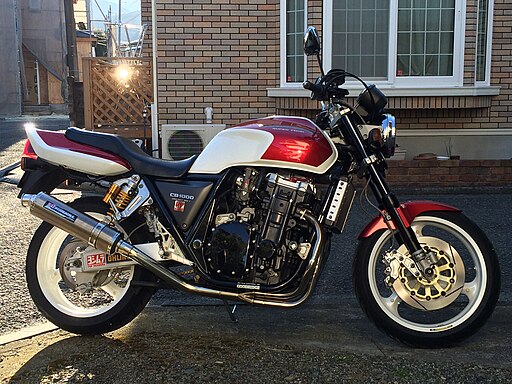
The Honda CB1000 is a high-performance standard motorcycle that combines the reliability of Honda engineering with aggressive sportbike-inspired characteristics. Introduced in the late 1990s as a successor to the CB900 series, the CB1000 blends versatility for street riding with the performance capabilities expected from a liter-class machine. It is designed for riders seeking a balance between everyday usability, comfort, and spirited riding.
Engine Architecture and Performance
The Honda CB1000 is powered by an inline four-cylinder, liquid-cooled engine that emphasizes smooth torque delivery and high-revving performance. Its design is derived from Honda’s CB series of liter-class motorcycles, offering a balance between power and reliability.
Key engine specifications include:
-
Displacement: 998 cc
-
Configuration: Inline four-cylinder, liquid-cooled, DOHC
-
Bore x Stroke: 75 mm x 60 mm
-
Compression Ratio: 10.0:1
-
Valve Train: 16 valves, dual overhead camshaft
-
Carburetion or Fuel System: Fuel-injected in later models
-
Ignition: Electronic CDI
-
Power Output: Approximately 120–125 horsepower at 8,500 rpm
-
Torque: Approximately 100 Nm at 7,000 rpm
The engine delivers linear power throughout the rev range, providing strong acceleration while remaining manageable for street riding. Lightweight pistons and a short-stroke configuration contribute to rapid throttle response and high-revving capability.
Transmission and Drivetrain
The CB1000 features a five-speed manual transmission, optimized for street and occasional touring use.
-
Clutch: Multi-plate wet type for smooth engagement
-
Final Drive: Chain drive with adjustable sprockets
-
Gear Ratios: Balanced to provide strong acceleration and comfortable highway cruising
The chain final drive ensures efficient power delivery while allowing maintenance flexibility and performance tuning.
Chassis and Frame
The CB1000 utilizes a steel double-cradle frame designed to provide rigidity and stability while maintaining manageable weight. The frame geometry enables responsive handling and confident cornering.
Chassis specifications:
-
Frame Type: Steel double-cradle
-
Wheelbase: 1,450 mm
-
Rake/Trail: 25.5 degrees / 105 mm
-
Dry Weight: Approximately 220 kg
-
Seat Height: 795 mm
The frame provides a stable platform for spirited riding while accommodating a comfortable upright seating position for daily use.
Suspension System
The CB1000’s suspension balances comfort and performance for both city and open-road conditions.
Front Suspension:
-
Type: Telescopic fork
-
Travel: Approximately 130 mm
-
Adjustability: Limited preload and damping adjustments on later models
Rear Suspension:
-
Type: Dual shock absorbers with adjustable preload
-
Travel: 110–120 mm
This suspension setup ensures rider comfort, stability under braking, and effective handling in corners.
Braking Components
Braking performance on the CB1000 is designed to match its liter-class engine and street-oriented performance.
Front Brakes:
-
Dual hydraulic disc brakes
-
Disc Diameter: 296 mm
-
Calipers: Two-piston
Rear Brake:
-
Single hydraulic disc brake
-
Diameter: 220 mm
The brakes provide reliable stopping power with predictable modulation for both solo and two-up riding.
Wheels and Tires
The CB1000 comes with wheels and tires sized to balance grip, handling, and comfort.
-
Front Wheel: 17-inch alloy rim
-
Rear Wheel: 17-inch alloy rim
-
Front Tire: 120/70-ZR17
-
Rear Tire: 180/55-ZR17
The tire sizes provide stability at high speeds while ensuring responsive handling on city streets and open roads.
Fuel System and Efficiency
The CB1000 employs a fuel system designed for efficiency, reliability, and smooth throttle response.
-
Fuel Capacity: Approximately 20 liters
-
Fuel Delivery: Electronic fuel injection (in later models)
-
Fuel Economy: 35–40 mpg depending on riding conditions
The fuel system offers precise fuel metering, enabling consistent performance across varying engine loads.
Bodywork and Styling
The CB1000 features a minimalistic, naked bike design with a focus on functional aesthetics and rider ergonomics.
-
Materials: Steel and plastic body panels for weight reduction
-
Seat: Wide and comfortable for both rider and passenger
-
Handlebars: Upright positioning for relaxed riding posture
-
Instrumentation: Analog tachometer and speedometer, fuel gauge, and indicator lights
The styling emphasizes simplicity and accessibility while allowing a comfortable and natural riding position.
Electrical System
The CB1000 incorporates a reliable electrical system to support both standard and optional equipment.
-
Battery: 12V maintenance-free
-
Lighting: Halogen headlamp, turn signals, and tail/brake lights
-
Ignition: Electronic CDI for precise spark control
The electrical system is designed to ensure consistent performance and reliability under daily use and long-distance riding.
Comfort and Ergonomics
Honda designed the CB1000 to offer a comfortable upright riding position suitable for long rides and city commuting.
-
Rider Ergonomics: Upright with relaxed knee angle and neutral footpeg position
-
Passenger Comfort: Stepped seat and grab handles
-
Wind Protection: Limited, suitable for naked motorcycle design
The ergonomics allow riders to cover long distances without fatigue while maintaining control and visibility.
Maintenance and Reliability
The CB1000 is known for its durability and straightforward maintenance requirements. Regular chain lubrication, valve inspections, and oil changes are sufficient to ensure long-term performance. Its robust engine and chassis design contribute to reliability and low ownership costs.
Model Variations and Evolution
The CB1000 series evolved over its production run with minor updates to styling, carburetion, suspension tuning, and instrumentation. Fuel injection was introduced in later models to meet emission standards and improve throttle response. Cosmetic and ergonomic updates were implemented to improve rider comfort and handling characteristics.
Legacy and Influence
The Honda CB1000 occupies an important place in the standard motorcycle segment. Its combination of liter-class engine performance, balanced handling, and daily usability influenced subsequent Honda models, including the CB1100 series. The CB1000 remains a popular choice among riders seeking performance without the extremes of full sportbikes.
Conclusion
The Honda CB1000 is a versatile, high-performance standard motorcycle that blends power, handling, and practicality. Its inline-four engine, steel double-cradle frame, and comfortable ergonomics make it suitable for daily commuting, spirited rides, and occasional touring. With its reliability and balanced performance, the CB1000 continues to be recognized as a benchmark in Honda’s liter-class standard motorcycle lineup.
