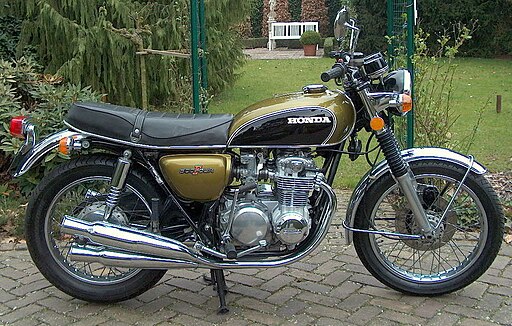
Honda CB500 Four
The Honda CB500 Four resurrects the spirit of the mid-1970s inline-four street bikes with contemporary engineering and reliability. Blending a celebrated heritage design with modern performance, this motorcycle appeals to enthusiasts seeking both classic flair and everyday usability. From the moment you set eyes on its sculpted fuel tank and quad-pipe exhaust, the CB500 Four promises an engaging ride that honors its forebears while meeting today’s demands.
Heritage and Evolution
From 1971 to Today
When Honda first introduced the original CB500 Four in 1971, it represented a remarkable feat: an accessible middleweight featuring four cylinders in a compact package. Decades later, Honda draws on that legacy to craft a machine that channels the original’s character—its finger-light handling, its distinctive growl, and its aesthetic purity—while leveraging advancements in metallurgy, electronics, and manufacturing precision.
Design Philosophy
The modern CB500 Four carries forward key visual cues: a teardrop-shaped tank with knee indents, a flat two-level seat, and a quartet of upswept mufflers. Subtle touches such as brushed-aluminum engine covers, wire-spoke wheels with polished rims, and a minimalist rear fender reinforce the retro ethos. Yet every component—frame, suspension, brakes—benefits from decades of refinement to deliver consistency and durability that vintage models could only dream of.
Engine and Performance
Inline-Four Heart
A liquid-cooled 498 cc inline-four sits at the core, featuring dual overhead camshafts and four valves per cylinder. The nearly square bore and stroke (61.0 mm × 55.1 mm) optimize a balance between high-rpm power and usable midrange torque. A compression ratio of 11.3 : 1 boosts efficiency and responsiveness, while precision machining reduces internal friction for smoother acceleration.
Power Delivery
Programmed Fuel Injection with 36 mm throttle bodies ensures crisp throttle transitions and precise mixtures across all conditions. Peak output of 47 horsepower at 8,500 rpm comes on smoothly, encouraging spirited rev-matching and extended pulls. Maximum torque of 44 Nm at 7,000 rpm delivers strong roll-on acceleration—ideal for carving corners or overtaking in traffic. An assist and slipper clutch eases lever effort by 30 percent and controls rear-wheel chatter during aggressive downshifts.
Chassis and Handling
Frame and Suspension
A steel double-cradle frame uses the engine as a stressed member to minimize weight and maximize rigidity. The 1,445 mm wheelbase offers a blend of agility and high-speed stability. Up front, 41 mm Showa inverted forks provide 120 mm of travel with preload adjustment. At the rear, a twin-shock setup with remote reservoirs and five-step preload lets riders dial in sag for solo or two-up riding. Together, they soak up road imperfections while preserving sharp feedback.
Brakes and Wheels
Stopping power comes from a 320 mm wave-pattern disc at the front, gripped by a radial-mount four-piston caliper. The rear features a 240 mm rotor with a single-piston caliper. Standard dual-channel ABS modulates brake pressure for confident deceleration on varied surfaces. Wire-spoke wheels (19 in front, 18 in rear) wrapped in dual-compound tires balance vintage aesthetics with modern grip and stability.
Electronics and Instrumentation
Lighting and Display
Full LED lighting delivers bright, energy-efficient illumination. A round headlamp houses dual-beam projectors behind a classic chrome bezel. Slim LED turn signals and a crisp tail lamp preserve the bike’s clean lines. Instrumentation centers on a circular LCD gauge flush with the top yoke, displaying speed, tachometer bar graph, fuel level, gear position, dual trip meters, and a clock.
Rider Aids
Traction control with two selectable intervention modes helps riders maintain smooth throttle control in slippery conditions without feeling intrusive. A selectable sport riding mode sharpens throttle response and lifts the cornering-attitude characteristic, while a standard mode softens power delivery for a relaxed cruising experience.
Ergonomics and Comfort
The CB500 Four’s rider triangle features mid-mounted pegs, a gently swept handlebar, and a relatively narrow seat comprised of dual-density foam. This configuration promotes an upright posture with minimal strain on wrists or lower back. The slim tank profile allows easy ground reach for riders of average height, and passenger grab rails plus optional pillion pad enhance two-up touring comfort.
Technical Specifications
| Specification | Detail |
|---|---|
| Engine type | 498 cc liquid-cooled inline-four, DOHC, 16 valves |
| Bore × Stroke | 61.0 mm × 55.1 mm |
| Compression Ratio | 11.3 : 1 |
| Maximum Power | 47 hp @ 8,500 rpm |
| Maximum Torque | 44 Nm @ 7,000 rpm |
| Fuel Delivery | PGM-FI electronic injection, 36 mm throttle bodies |
| Transmission | 6-speed constant mesh |
| Clutch | Assist and slipper wet multi-plate |
| Final Drive | STD O-ring chain |
| Frame | Steel double-cradle, engine as stressed member |
| Front Suspension | 41 mm inverted fork, preload-adjustable, 120 mm travel |
| Rear Suspension | Twin shocks with remote reservoir, 5-position preload, 120 mm travel |
| Front Brake | 320 mm disc, radial-mount 4-piston caliper, ABS |
| Rear Brake | 240 mm disc, single-piston caliper, ABS |
| Front Wheel | 19 × 1.85 in wire-spoke |
| Rear Wheel | 18 × 2.15 in wire-spoke |
| Front Tire | 110/80-19 dual-compound |
| Rear Tire | 130/80-18 dual-compound |
| Wheelbase | 1,445 mm |
| Seat Height | 790 mm |
| Curb Weight | 184 kg |
| Fuel Capacity | 15.5 L |
| Electrical System | 12 V, 350 W stator; full LED lighting |
| Instrumentation | Circular LCD; traction control modes; riding modes |
Maintenance and Ownership
Routine oil and filter changes every 6,000 km, valve clearance checks at 12,000 km, and brake fluid replacement every two years keep the CB500 Four running at peak condition. Accessible fairing-mounted components streamline service, while a maintenance-free drive chain option further reduces upkeep. Honda’s extensive dealer network and parts availability ensure hassle-free ownership.
Riding Experience
On winding tarmac, the CB500 Four reveals surprising agility for its heritage styling. The inline-four hums crisply through the midrange, making sweeping bends feel controlled and engaging. Urban commuting feels just as natural: light steering, manageable heat output, and smooth throttle modulation transform stop-and-go traffic into a seamless affair. Whether piloting through canyon curves or rolling along boulevard boulevards, the CB500 Four communicates every nuance of the road beneath its vintage-inspired shell.
Conclusion
With the CB500 Four, Honda delivers a motorcycle that pays homage to a storied past and meets modern expectations. Its blend of classic design cues, precise engineering, and accessible performance caters to riders who crave character without compromise. This bike stands as a testament to Honda’s ability to reimagine its legacy with authenticity, functionality, and enduring appeal.
