Hyundai Bayon as a Used Car: A Complete Buyer’s Guide for Smart Buyers
The crossover market has experienced extraordinary growth over the past decade, and manufacturers have continuously introduced new models to satisfy drivers who want the practicality of an SUV without the size and running costs of a traditional sport utility vehicle. Among these relatively new entries is the Hyundai Bayon, a compact crossover that first appeared in 2021 and quickly became one of Hyundai’s most accessible urban SUVs. Positioned below the Kona in the company’s European lineup, the Bayon combines compact dimensions, efficient engines, modern technology, and attractive ownership costs.
Because the model is still relatively young, the used market offers mostly low-mileage examples that often retain factory warranties and have modern safety equipment unavailable in many older competitors. This combination makes the Hyundai Bayon an increasingly interesting option for buyers who want a nearly new vehicle without paying the premium associated with buying directly from the showroom.
This article explores every important aspect of buying a used Hyundai Bayon. From design and practicality to engine reliability, maintenance expenses, driving comfort, resale value, and common issues, this guide aims to help prospective buyers make an informed decision before purchasing one of Hyundai’s smallest crossovers.
Introducing the Hyundai Bayon
The Hyundai Bayon was developed primarily for European customers who wanted a compact crossover capable of navigating crowded cities while still offering elevated seating, efficient engines, and the versatility expected from modern SUVs. Built on the same platform as the Hyundai i20, the Bayon shares much of its mechanical architecture with the popular supermini but adds greater ground clearance, distinctive styling, and increased practicality.
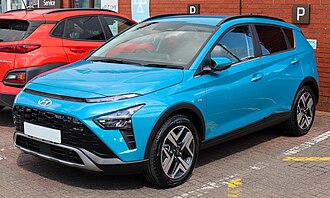
Its unusual exterior design immediately divides opinions. The split headlights, wide grille, angular rear styling, and sharply sculpted bodywork ensure that the Bayon stands out in parking lots filled with more conservatively styled competitors. While beauty remains subjective, there is no doubt that Hyundai wanted the Bayon to have its own identity rather than simply creating another anonymous crossover.
For used buyers, this youthful appearance is beneficial because even the earliest models still look contemporary. Unlike many cars that quickly appear dated, the Bayon’s futuristic styling allows it to maintain a fresh appearance several years after its introduction.
Exterior Design That Ages Well
One of the strongest points of the Bayon is its distinctive styling. Hyundai took risks with the lighting signature, body creases, rear spoiler, and taillight arrangement, creating a crossover that looks considerably more expensive than its actual price suggests.
The compact dimensions are particularly useful in urban environments. Parking spaces that may challenge larger SUVs are generally manageable with the Bayon, while generous visibility and available parking sensors further reduce stress during city driving.
Even after several years on the road, corrosion has not emerged as a significant concern. Hyundai’s paint quality is generally good, although buyers should still inspect lower door edges, wheel arches, and the front bumper for stone chips caused by motorway driving.
Interior Quality and Practicality
Inside, the Bayon follows Hyundai’s modern design philosophy by prioritizing ergonomics over unnecessary complexity. Physical buttons remain available for many climate controls, reducing driver distraction compared with vehicles that hide every function inside a touchscreen. The dashboard materials are primarily hard plastics, but assembly quality is excellent, and there are few reports of annoying rattles or premature wear.
The seating position is higher than in the Hyundai i20, giving drivers better visibility without making the vehicle feel excessively tall. Front occupants enjoy generous headroom, while rear passengers have sufficient space considering the vehicle’s compact exterior dimensions. Families with young children will appreciate the wide-opening rear doors, making child seat installation relatively easy.
Boot capacity is another pleasant surprise. Depending on specification, luggage space exceeds many direct competitors, making the Bayon suitable for shopping trips, airport transfers, or weekend holidays. Folding the rear seats further increases versatility, allowing the transportation of larger household items when necessary.
Technology and Equipment
One of the reasons why used Bayons represent excellent value is their impressive standard equipment. Even entry-level versions typically include touchscreen infotainment systems, smartphone connectivity through Apple CarPlay and Android Auto, multiple USB ports, Bluetooth, cruise control, lane-keeping assistance, autonomous emergency braking, and numerous airbags.
Higher trim levels become even more attractive on the used market because buyers obtain premium features without paying premium prices. Equipment may include climate control, wireless smartphone charging, heated front seats, heated steering wheel, keyless entry, navigation, premium audio systems, and larger alloy wheels.
Technology reliability has generally been excellent. Infotainment systems operate smoothly, software issues are uncommon, and electronic failures have remained relatively rare compared with several competitors introduced during the same period.
Available Engines
1.2 MPi Naturally Aspirated Petrol
The entry-level 1.2-liter naturally aspirated petrol engine prioritizes simplicity over outright performance. Producing modest horsepower, this engine suits drivers who mainly operate within cities or suburban environments. Mechanical simplicity generally translates into excellent reliability and lower maintenance costs because there is no turbocharger requiring additional attention.
Performance, however, is modest. Fully loaded vehicles require careful planning during motorway overtaking, and drivers frequently traveling long distances may prefer one of the turbocharged alternatives.
1.0 T-GDi Turbo Petrol
The most desirable engine in the Bayon range is the 1.0-liter turbocharged three-cylinder petrol engine. Despite its small displacement, turbocharging delivers surprisingly energetic performance while maintaining respectable fuel economy. Available in multiple power outputs, this engine provides an excellent balance between efficiency and everyday usability.
Many versions include mild hybrid technology that improves fuel consumption during urban driving by assisting the combustion engine during acceleration and enabling smoother stop-start operation.
This engine has generally demonstrated strong reliability provided maintenance schedules are followed carefully. Regular oil changes using high-quality lubricants remain particularly important for turbocharged engines.
Transmission Choices
Most Bayons are equipped with either a six-speed manual gearbox or Hyundai’s seven-speed dual-clutch automatic transmission. The manual gearbox enjoys an excellent reputation for durability, smooth shifting, and relatively low maintenance costs.
The dual-clutch automatic offers faster gear changes and greater convenience during congested city driving. While generally reliable, prospective buyers should ensure the gearbox shifts smoothly during test drives. Hesitation, jerky engagement, or warning lights may indicate software updates or maintenance requirements.
Driving Experience
The Bayon emphasizes comfort rather than sporting performance. Suspension tuning effectively absorbs road imperfections while maintaining sufficient body control during cornering. Steering is light, making city maneuvering effortless, although enthusiastic drivers may find it lacks feedback.
Motorway refinement is respectable considering the vehicle’s class. Wind noise remains controlled, engine noise is well insulated, and seats provide adequate comfort for longer journeys. The elevated seating position contributes to driver confidence while reducing fatigue during extended trips.
Although front-wheel drive is the only available drivetrain, the Bayon performs confidently on gravel roads and poorly maintained rural routes thanks to its additional ride height compared with conventional hatchbacks.
Fuel Economy
Excellent fuel economy represents one of the Bayon’s strongest selling points. Depending on engine choice, transmission, driving style, and traffic conditions, owners commonly achieve fuel consumption figures ranging from approximately 5 to 6 liters per 100 kilometers. Even during motorway driving, consumption generally remains competitive within the crossover segment.
For buyers concerned about rising fuel prices, these efficient engines contribute significantly to affordable long-term ownership.
Reliability
Since the Bayon remains a relatively new model, comprehensive long-term reliability statistics are still developing. Nevertheless, early ownership experiences have been overwhelmingly positive. Hyundai has built an increasingly strong reputation for producing dependable vehicles, and the Bayon appears to continue this tradition.
Major mechanical failures remain rare. Engines have proven durable, electronics generally function reliably, and suspension components show little premature wear. Routine servicing remains the most important factor influencing long-term dependability.
Common Problems
Although the Bayon has an excellent reputation overall, no vehicle is entirely free from potential concerns. Some owners have reported minor infotainment software glitches that were resolved through dealer updates. Occasional trim noises have also been mentioned, particularly during colder weather, although these issues are generally cosmetic rather than mechanical.
Turbocharged engines require careful adherence to servicing schedules, especially regarding oil quality and replacement intervals. Ignoring maintenance can eventually shorten turbocharger lifespan.
As with any modern vehicle featuring extensive electronic driver assistance systems, buyers should verify that every safety feature functions correctly during inspection and test driving.
Maintenance Costs
Running costs remain one of the Bayon’s greatest strengths. Service intervals are straightforward, replacement parts are widely available throughout Europe, and Hyundai dealerships generally offer competitive maintenance packages. Independent garages familiar with Hyundai vehicles can also service the Bayon without difficulty.
Insurance premiums usually remain reasonable due to the vehicle’s modest performance and strong safety ratings. Tire replacement costs are similarly affordable because most versions use relatively common wheel sizes.
Brake components, filters, spark plugs, and suspension parts are competitively priced, contributing to predictable long-term ownership expenses.
Safety Performance
Safety represents another area where the Bayon performs impressively. Hyundai equipped even lower trim levels with numerous advanced driver assistance systems that were optional or unavailable in many competitors. Features such as autonomous emergency braking, lane-keeping assist, driver attention monitoring, speed limit recognition, and multiple airbags provide reassurance for families.
Strong structural engineering and modern crash protection contribute to excellent occupant safety while helping preserve resale values through continued consumer confidence.
Buying Tips
When inspecting a used Bayon, begin by verifying the complete service history. Because many vehicles are still covered by manufacturer warranties, authorized servicing can represent additional peace of mind. Carefully inspect body panels for accident repairs, ensuring paint color remains consistent across adjacent panels.
During the test drive, confirm that the engine starts immediately, idles smoothly, accelerates without hesitation, and produces no unusual smoke. The transmission should shift cleanly, brakes should operate quietly, and steering should remain free from vibration.
Check every electronic feature individually, including parking sensors, reversing camera, infotainment system, climate control, heated seats, smartphone connectivity, and all driver assistance systems.
Ownership Experience
Most owners praise the Bayon for delivering stress-free transportation. It rarely attracts unexpected repair bills, offers excellent visibility, remains economical to operate, and provides enough practicality for small families without becoming cumbersome in city traffic.
Long-distance drivers appreciate the efficient engines, while urban commuters benefit from compact dimensions and light steering. The combination of practicality, technology, and reliability has allowed the Bayon to develop a loyal owner base despite entering an already crowded crossover market.
Resale Value
Hyundai vehicles have steadily improved their residual values over recent years, and the Bayon appears to continue this trend. Strong demand for economical crossovers supports healthy used prices, particularly for well-maintained examples with documented service histories and desirable trim levels.
Vehicles equipped with the turbocharged engine, automatic transmission, and higher equipment specifications generally command stronger resale prices than basic entry-level models.
Is the Hyundai Bayon Better Than Its Rivals?
The compact crossover segment includes formidable competitors from numerous manufacturers, yet the Bayon distinguishes itself through excellent equipment levels, dependable engineering, efficient engines, generous warranty coverage, and practical design. While some rivals may offer sportier handling or more luxurious interiors, few combine all these strengths into such a balanced ownership proposition.
Buyers seeking emotional styling, low operating costs, and dependable engineering will likely find the Bayon among the strongest choices within its price category.
Final Verdict
As a used vehicle, the Hyundai Bayon represents outstanding value. Its relatively recent introduction means most available examples remain modern, well-equipped, and mechanically fresh. Buyers benefit from contemporary safety technology, economical engines, comfortable driving characteristics, generous interior space, and Hyundai’s growing reputation for long-term reliability.
While no car is completely flawless, the Bayon has demonstrated remarkably few significant weaknesses during its early years. Routine servicing, careful inspection before purchase, and choosing a well-maintained example should reward owners with many years of dependable, economical transportation.
For drivers seeking a compact crossover that combines affordability, efficiency, practicality, and modern technology without excessive ownership costs, the Hyundai Bayon deserves serious consideration. It may not be the most exciting crossover on the market, but it succeeds where many buyers place the greatest importance: dependable everyday usability and excellent value for money.
Technical Specifications Summary
| Specification | Hyundai Bayon |
|---|---|
| Production | 2021–present |
| Body Style | 5-door compact crossover SUV |
| Platform | Hyundai-Kia K2 Platform |
| Drive Type | Front-wheel drive (FWD) |
| Engine Options | 1.2 MPi Petrol, 1.0 T-GDi Turbo Petrol (including Mild Hybrid) |
| Power Output | Approximately 84–120 hp (depending on engine) |
| Transmission | 5/6-speed Manual, 7-speed Dual-Clutch Automatic |
| Fuel Type | Petrol |
| Average Fuel Consumption | Approximately 5.0–6.0 l/100 km |
| Length | 4,180 mm |
| Width | 1,775 mm |
| Height | 1,490 mm |
| Wheelbase | 2,580 mm |
| Boot Capacity | 411 liters |
| Seating Capacity | 5 occupants |
| Typical Safety Equipment | Autonomous Emergency Braking, Lane Keeping Assist, Multiple Airbags, Driver Attention Warning, Cruise Control |
| Typical Used Market Strengths | Excellent reliability, modern safety features, economical engines, practical interior, low maintenance costs |
| Main Weaknesses | Limited rear legroom, firm plastics inside, modest performance from naturally aspirated engine |
.jpg)