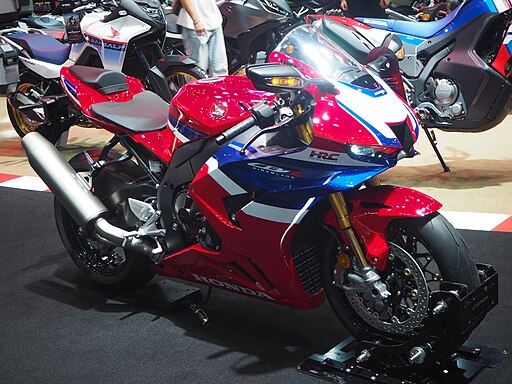
The Honda CBR1000RR, also known as the Fireblade, is one of the most iconic superbikes in modern motorcycling. Since its introduction in 2004 as a successor to the CBR954RR, the CBR1000RR has embodied Honda’s philosophy of achieving “Total Control” — a balance between power, precision, and rider confidence. Designed for both the racetrack and the open road, it represents Honda’s relentless pursuit of performance, innovation, and reliability.
Over its various generations, the CBR1000RR has undergone continuous refinement, incorporating advanced electronics, lightweight materials, and aerodynamically optimized design. It stands as a cornerstone of Honda’s superbike heritage, offering superb handling dynamics and engine performance inspired by MotoGP technology.
Engine and Performance
At the heart of the Honda CBR1000RR is a 999cc inline four-cylinder engine, a powerplant that delivers a combination of smoothness, linear power, and incredible top-end performance. Built with precision engineering, it employs advanced materials and technologies drawn directly from Honda’s racing experience.
-
Engine Type: Liquid-cooled, DOHC, inline 4-cylinder
-
Displacement: 999 cc
-
Bore x Stroke: 76 mm x 55.1 mm
-
Compression Ratio: 13.0:1
-
Maximum Power Output: Approximately 189 hp (141 kW) @ 13,000 rpm (2020 model and beyond)
-
Maximum Torque: Around 114 Nm (84 lb-ft) @ 11,000 rpm
-
Fuel System: PGM-DSFI (Dual Stage Fuel Injection)
-
Ignition System: Digital transistorized with electronic advance
-
Transmission: 6-speed constant mesh with quickshifter (on later models)
-
Final Drive: #525 O-ring sealed chain
The CBR1000RR engine is a masterpiece of balance and efficiency. The high compression ratio and titanium intake valves enable efficient combustion, while the throttle-by-wire system provides precise control over power delivery. The engine is designed to deliver usable torque throughout the rev range, offering explosive acceleration while maintaining tractability at lower RPMs.
Later models, such as the CBR1000RR-R Fireblade SP, feature even more advanced engineering, including a longer stroke and finger-follower rocker arms for improved valve control at high speeds.
Chassis and Frame
The CBR1000RR features a diamond-style aluminum twin-spar frame, designed for optimal rigidity and agility. This lightweight chassis provides exceptional feedback and control, whether carving through corners on the racetrack or navigating winding roads.
-
Frame Type: Aluminum twin-spar
-
Front Suspension: Showa Big Piston Fork (BPF), fully adjustable, 43 mm
-
Rear Suspension: Unit Pro-Link with Showa Balance Free Rear Cushion (BFRC) shock, fully adjustable
-
Front Wheel Travel: 120 mm
-
Rear Wheel Travel: 138 mm
-
Swingarm Type: Aluminum, braced for rigidity and stability
The Unit Pro-Link rear suspension system isolates the shock absorber from chassis stress, enhancing rear-wheel traction and stability. The geometry of the frame has been optimized for cornering precision, with an ideal weight distribution between front and rear.
On higher-spec SP models, Öhlins Smart EC 2.0 semi-active suspension replaces the Showa components, allowing electronic adjustment in real time based on riding conditions.
Braking System
The braking performance of the CBR1000RR is on par with its engine’s ferocity. Equipped with high-spec Brembo or Tokico calipers (depending on model), it ensures confidence-inspiring braking under all conditions.
-
Front Brakes: Dual 320 mm floating discs with 4-piston radial-mount calipers
-
Rear Brake: Single 220 mm disc with single-piston caliper
-
ABS: Honda Selectable Torque Control (HSTC) integrated with cornering ABS (on newer models)
The system offers excellent stopping power and feedback, while the advanced cornering ABS allows controlled braking even when leaned over, reducing the risk of wheel lock-up.
Electronics and Rider Aids
Modern iterations of the Honda CBR1000RR are equipped with a sophisticated suite of electronic rider aids that enhance performance, safety, and customization.
-
Ride-by-Wire throttle system for precise control
-
Selectable Riding Modes: Power, Engine Brake, and HSTC levels
-
Honda Selectable Torque Control (HSTC) for traction management
-
Wheelie Control and Launch Control for track use
-
Selectable Engine Braking adjustment
-
ABS with cornering functionality
-
Quickshifter with auto-blipper for clutchless up and downshifts
-
Full-color TFT instrument display with intuitive menu navigation
These electronics are managed through a six-axis Inertial Measurement Unit (IMU) that constantly monitors lean angle, pitch, and yaw. This allows for dynamic adjustments to traction control, braking, and suspension, ensuring the rider always has optimal performance and safety.
Aerodynamics and Design
Honda’s design approach with the CBR1000RR is driven by the principle of form serving function. Every contour and vent on the motorcycle is engineered to enhance aerodynamic performance and rider stability.
-
Aerodynamic winglets (on Fireblade SP) integrated into the fairing for downforce at high speeds
-
Compact LED headlight design for a sharp, aggressive appearance
-
Slim profile and narrow seat for reduced drag and improved rider mobility
-
Centralized mass layout for agility and balance
The CBR1000RR’s design draws influence from MotoGP, incorporating lessons learned from the RC213V. The aerodynamic winglets increase front-end stability under acceleration, improving confidence during high-speed corner exits.
Dimensions and Weight
-
Overall Length: 2,100 mm
-
Overall Width: 745 mm
-
Overall Height: 1,140 mm
-
Wheelbase: 1,455 mm
-
Seat Height: 830 mm
-
Curb Weight: 201 kg (CBR1000RR) / 201–201.3 kg (Fireblade SP)
-
Fuel Tank Capacity: 16.1 liters
These dimensions give the CBR1000RR its razor-sharp handling characteristics. The short wheelbase aids agility, while the low weight enhances acceleration and braking performance. Despite being a liter-class superbike, it remains approachable for skilled street riders.
Wheels and Tires
The CBR1000RR uses lightweight cast-aluminum wheels for reduced unsprung mass, enhancing both acceleration and cornering responsiveness.
-
Front Tire: 120/70 ZR17
-
Rear Tire: 190/50 ZR17 (standard) / 200/55 ZR17 (Fireblade SP)
The tire profiles are chosen to provide optimal grip and feedback during aggressive cornering and high-speed stability.
Riding Dynamics
Riding the Honda CBR1000RR is an immersive experience that blends brute force with refinement. The engine delivers explosive acceleration, yet the powerband remains smooth and predictable. The chassis feels incredibly planted, giving the rider confidence to push harder through corners.
The seating position is aggressive yet ergonomic, with handlebars and footpegs positioned to provide control and leverage without excessive fatigue. The throttle response is immediate, the gearbox slick, and the clutch light — all combining for precise control both on track and on road.
At high speeds, the aerodynamic efficiency becomes noticeable, with minimal buffeting and a stable, composed feel even during rapid acceleration or heavy braking.
Fuel Efficiency and Range
While performance is the focus, the CBR1000RR still achieves reasonable fuel economy for a superbike.
-
Average Fuel Consumption: 15–18 km/l (depending on riding style)
-
Estimated Range: 250–290 km per full tank
For riders who alternate between daily commutes and weekend track sessions, the efficiency and tank size strike a practical balance.
Maintenance and Reliability
Like most Honda motorcycles, the CBR1000RR is built to last. The precision engineering, durable components, and top-tier manufacturing quality make it one of the most reliable superbikes in its class.
Regular maintenance is straightforward, with clearly defined service intervals and easy access to key components. The engine, even in high-performance tune, is known for its longevity when properly maintained. Honda’s high-quality finish and corrosion-resistant materials also ensure that the motorcycle maintains its appearance and function over years of use.
Legacy and Evolution
Since its debut, the CBR1000RR has undergone continuous evolution to remain competitive against rivals like the Yamaha R1, Kawasaki ZX-10R, and Suzuki GSX-R1000. The introduction of the CBR1000RR-R Fireblade marked a major leap, integrating MotoGP-derived technologies such as aerodynamics, advanced electronics, and titanium components.
Despite its racing pedigree, the CBR1000RR remains approachable for skilled road riders, offering an ideal blend of usability, reliability, and extreme performance — a true testament to Honda’s engineering mastery.
Conclusion
The Honda CBR1000RR stands as a symbol of balance, precision, and power. It is a superbike that doesn’t just focus on raw performance, but on creating a seamless connection between rider and machine. With its advanced electronics, lightweight construction, and race-derived technology, it delivers an experience that is both thrilling and controllable.
