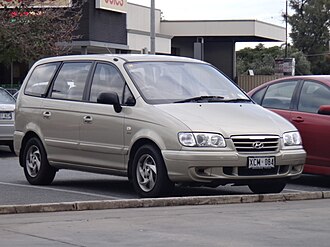
Hyundai Trajet as a Used Car: Is This Practical MPV Still Worth Buying?
The Hyundai Trajet is one of those used cars that has almost disappeared from the mainstream conversation, yet it can still make a surprisingly convincing case for itself if you are looking for affordable family transport. Introduced around the turn of the millennium, the Trajet was Hyundai’s answer to the growing European demand for large multi-purpose vehicles, offering seven seats, a spacious cabin and a choice of petrol and diesel engines. It was designed in an era when practicality mattered more than fashionable SUV styling, and that gives it a very different character from the crossovers that dominate today’s market. A used Trajet is not going to impress anyone with cutting-edge infotainment, hybrid technology or a luxurious interior, but it can offer something increasingly difficult to find for little money: a genuinely spacious vehicle capable of carrying a large family and plenty of luggage.
There is, however, an important distinction between buying a cheap Trajet and buying a good Trajet. These cars are now old, with most examples being well over 15 years old, so age and condition are more important than the original specification. Mechanical components may have accumulated considerable mileage, suspension and rubber parts will have aged, corrosion can become an issue, and some electronic or trim components may be difficult to replace. The low purchase price therefore needs to be viewed as the beginning of the ownership calculation rather than the entire calculation. A carefully maintained Trajet can still be an inexpensive and useful family car, while a neglected example can quickly consume the money saved on its purchase.
What Is the Hyundai Trajet?
The Hyundai Trajet was a large MPV designed primarily for families and buyers who needed flexible passenger accommodation. In Europe, it competed with vehicles such as the Renault Espace, Ford Galaxy, Volkswagen Sharan and SEAT Alhambra, although the Hyundai often appealed to buyers who wanted a lower purchase price and a generous amount of standard equipment.
Its biggest selling point was the cabin. The Trajet was available with seven seats, and its interior was designed around flexibility rather than sporty driving. Depending on the exact configuration, the rear seats could be folded, removed or rearranged to create substantially more cargo space. This made the vehicle suitable for everything from school runs and family holidays to transporting bicycles, furniture or work equipment.
Unlike many modern seven-seat SUVs, the Trajet was designed from the beginning as a people carrier. That distinction matters. A modern compact SUV may technically offer seven seats, but the rearmost passengers are often squeezed into a very limited space. The Trajet’s tall roof and relatively boxy body provide a much more useful cabin, especially for families who regularly carry several passengers.
Which Engine Is Best in a Used Trajet?
2.0 CRDi Diesel
For European buyers, the 2.0 CRDi diesel is generally the most interesting engine. Hyundai offered a two-litre common-rail turbocharged diesel producing around 112 PS in earlier versions, with later examples receiving an output of approximately 140 PS. The stronger version is particularly attractive because the Trajet is a large and relatively heavy vehicle, and additional torque makes a noticeable difference when the car is fully loaded.
The diesel is well suited to long-distance driving. A family travelling several hundred kilometres with seven people and luggage will benefit from the engine’s low-speed torque, while motorway fuel consumption can be considerably more manageable than with the larger petrol engines. For buyers covering high annual mileage, this can make the diesel the obvious choice.
Nevertheless, age changes the equation. A 20-year-old diesel should not be evaluated solely on its official fuel-consumption figure. Turbochargers, injectors, clutch components, cooling systems and emissions-related equipment can all require attention, and the cheapest diesel on the market may be the least economical vehicle to own if major repairs are needed immediately after purchase.
2.0 and 2.7 V6 Petrol Engines
The Trajet was also sold with petrol engines, including four-cylinder and V6 options depending on model year and market. The 2.0-litre petrol is relatively straightforward and can be appealing for buyers who drive limited annual mileage, particularly if they find a well-preserved example.
The 2.7-litre V6 is a more unusual proposition. It provides substantially smoother and stronger performance than the smaller engines and suits the Trajet’s character well. A large naturally aspirated petrol engine can make an old MPV pleasantly relaxed, especially when accelerating onto a motorway or carrying a full load.
The downside is fuel consumption. The Trajet is a heavy vehicle with considerable aerodynamic drag, so a large V6 petrol engine can consume a substantial amount of fuel. In today’s European fuel-price environment, this can quickly outweigh the lower purchase price. The V6 is therefore best considered a niche choice for someone who values smoothness, drives relatively few kilometres or simply wants an unusual version of the Trajet.
How Does the Hyundai Trajet Drive?
The Trajet was never intended to be a driver’s car. Its tall body, soft suspension and large cabin mean that it feels much more like a traditional family MPV than a modern crossover. The steering is relatively light, the driving position is upright and the body moves noticeably through corners when compared with a conventional hatchback.
That is not necessarily a disadvantage. The relaxed character is actually appropriate for its purpose. On a motorway, the Trajet can provide a comfortable environment for a family, with plenty of space for passengers and a good view of the road. The tall body also makes getting in and out easier than in a low passenger car, which can be particularly useful for families with young children or older passengers.
Where the Trajet is less impressive is in modern refinement. Engine noise, wind noise and road noise are more noticeable than they are in a contemporary MPV or SUV. The suspension can also feel somewhat floaty, particularly when the vehicle is lightly loaded. Buyers should therefore take a proper test drive rather than assuming that the car’s spacious interior automatically means it will be comfortable in every situation.
The Biggest Advantage: Interior Space
Seven Seats That Actually Have a Purpose
The strongest argument for buying a Trajet is its cabin. Seven-seat practicality was the reason these vehicles existed, and the Trajet remains useful in this respect. Families can carry several passengers without immediately sacrificing all luggage space, while the flexible seating arrangement makes it possible to adapt the interior to different journeys.
This is one area where an older MPV can still outperform a much newer SUV. Modern seven-seat crossovers frequently use small third-row seats that are best reserved for children, whereas the Trajet’s tall and boxy body was designed specifically to maximize usable interior volume.
The seating flexibility also makes the Trajet useful outside family life. Tradespeople, hobbyists and outdoor enthusiasts can benefit from the ability to create a large load area. With rear seats folded or removed, the vehicle can carry bulky items that would be difficult to fit into a normal hatchback or compact SUV.
Lots of Space, But an Old-Fashioned Cabin
The interior materials are inevitably dated. Plastics and trim do not have the visual or tactile quality expected from modern cars, and the dashboard design belongs firmly to the early 2000s. Infotainment is similarly basic by today’s standards.
For some buyers, however, this simplicity is actually an advantage. There are fewer complicated screens and fewer advanced electronic systems to become obsolete. If your main requirements are comfortable seats, heating, air conditioning and somewhere to put seven people, the Trajet can still fulfil the brief remarkably well.
What Should You Check Before Buying?
Buying an older Trajet requires a thorough inspection. Age is now a bigger concern than the original design.
Check the Body and Underside for Corrosion
Rust should be one of the first things you inspect. Look carefully at the wheel arches, sills, doors, tailgate, suspension mounting points and underside. Pay particular attention to structural areas because corrosion that has progressed into the chassis or mounting points can turn an inexpensive MPV into an uneconomical repair project.
A professional inspection on a lift is strongly recommended. This is particularly important for cars that have spent many years in Central or Northern Europe, where winter road salt can accelerate corrosion.
Inspect the Engine and Cooling System
The engine should start easily from cold and settle into a stable idle. Look for excessive smoke, oil leaks, coolant leaks and unusual noises. On the diesel, pay attention to the turbocharger and the way the engine delivers power. A healthy diesel should pull progressively rather than producing severe hesitation or excessive smoke.
The cooling system deserves particular attention because an overheating engine can lead to expensive consequences. Check the coolant level and condition, inspect hoses and look for signs that coolant has been escaping. During the test drive, monitor the temperature gauge and make sure it remains stable.
Test the Clutch and Gearbox
A worn clutch is not unusual on an old MPV, particularly if it has spent years carrying heavy loads or towing. During the test drive, check for slipping under acceleration, judder when moving away and difficulty selecting gears.
If the vehicle has an automatic transmission, make sure the shifts are smooth and consistent. An old automatic gearbox that hesitates, slips or engages harshly should be treated as a major warning sign rather than a minor inconvenience.
Check Every Electrical Function
The Trajet’s electrical equipment is relatively simple compared with a modern vehicle, but age can still create problems. Test the air conditioning, electric windows, central locking, dashboard controls, interior lighting, audio system and all seat adjustments.
Air conditioning deserves special attention. A large MPV can become extremely uncomfortable in summer if the system is not working properly, and repairing an old air-conditioning system can involve more than simply recharging the refrigerant.
Is the Hyundai Trajet Reliable?
The Trajet can be durable, but buyers should avoid treating it as a modern low-maintenance vehicle. Most examples now have enough years behind them that age-related failures are unavoidable possibilities. Suspension bushes, shock absorbers, wheel bearings, steering components, exhaust parts, hoses and electrical components can all deteriorate simply because of time.
The engine and gearbox are therefore only part of the reliability equation. A car with a well-maintained engine can still need substantial investment in the rest of the vehicle.
Maintenance history is consequently one of the most valuable things a used Trajet can have. Receipts showing regular servicing, replacement of wear items and attention to problems as they appeared are more reassuring than an impressive-looking odometer reading. An older car with 250,000 kilometres and excellent records can sometimes be a better proposition than one with half that mileage and no documentation.
What Are the Running Costs Like?
Fuel consumption is likely to be the largest routine expense. The diesel is the sensible option for high-mileage owners, while petrol versions become more attractive as annual mileage falls. The V6 is the least economical choice, although its smoothness can make it appealing to a particular type of enthusiast.
Tyres, brakes and suspension components also deserve consideration because this is a large, heavy vehicle. Seven people and luggage can place significant loads on the suspension and braking system, so a used Trajet that has spent years fully loaded may show more wear than its mileage alone suggests.
Insurance can sometimes be relatively reasonable because of the vehicle’s age, but availability and pricing vary significantly by country and driver. Parts availability is another factor to investigate before purchase. Common mechanical components may still be obtainable, but some model-specific trim or body parts can be increasingly difficult to source.
Is the Trajet Safe by Modern Standards?
Safety is one of the areas where the Trajet’s age is impossible to ignore. It was developed at a time when electronic driver assistance was far less advanced than it is today. Depending on specification and market, equipment could include airbags, ABS and electronic stability-related systems, but it will not provide the comprehensive suite of radar-based assistance, lane-centering technology and advanced collision avoidance found in newer vehicles.
This does not mean that a Trajet is automatically unsafe, but it does mean that buyers should have realistic expectations. If maximum crash protection and the latest driver-assistance technology are priorities, a much newer vehicle is preferable.
For a buyer on a very limited budget, however, there can still be a practical argument for the Trajet. A structurally sound, properly maintained large vehicle may be more useful than a smaller but equally old car, particularly for families. The important point is to inspect the vehicle carefully and confirm that safety-critical components are in good condition.
Who Should Buy a Used Hyundai Trajet?
The Trajet makes the most sense for someone who needs maximum interior space at a minimum purchase price. Large families, people who regularly transport several passengers, hobbyists and owners who need a large load area can all find genuine value in it.
It can also appeal to buyers who simply prefer the old-school MPV concept. The modern market has moved heavily toward SUVs, but a large MPV remains a more efficient way to package passenger and cargo space. If your priorities are practicality and affordability rather than image, the Trajet’s unconventional character can be a benefit.
It is less suitable for buyers who want low running costs, modern safety technology, premium interior quality or trouble-free ownership. A newer compact MPV or SUV will usually be a better choice if the budget allows.
Final Verdict: Is the Hyundai Trajet Worth Buying?
The Hyundai Trajet is not an obvious used-car recommendation, but that does not mean it should be dismissed. Its greatest strengths are exactly the things that made large MPVs popular in the first place: seven-seat capacity, a spacious cabin, flexible seating and a practical body. Today, those qualities can be obtained for surprisingly little money because the market has largely moved away from MPVs toward SUVs.
The key is to buy condition rather than simply buying the cheapest Trajet. A rust-free example with a documented maintenance history, a healthy engine and gearbox, working air conditioning and sound suspension can remain a very useful family vehicle. A neglected example, on the other hand, may require more money in repairs than the vehicle is worth.
For European buyers, the 2.0 CRDi diesel is generally the most logical version for long-distance and high-mileage use, while petrol models can make sense for lower annual mileage. The V6 is best viewed as an enthusiast’s choice rather than the economical option.
Ultimately, the Trajet’s appeal lies in its honesty. It does not pretend to be a luxury SUV or a modern technology showcase. It is a large, straightforward people carrier designed to move people and luggage efficiently. If that is exactly what you need, and you can find a well-preserved example, the Hyundai Trajet can still be a surprisingly sensible used car.
Hyundai Trajet Technical Specifications
Specifications varied according to production year and European market, so the figures below should be regarded as representative rather than universal. Individual equipment, transmission and engine specifications should always be confirmed using the vehicle’s registration documents and VIN-specific information.
| Specification | Trajet 2.0 Petrol | Trajet 2.0 CRDi | Trajet 2.7 V6 |
|---|---|---|---|
| Engine type | 4-cylinder petrol | 4-cylinder turbo diesel | V6 petrol |
| Displacement | 1,997 cc | 1,991 cc | 2,656 cc |
| Approx. power | 136 PS | 112–140 PS | approx. 173 PS |
| Approx. torque | approx. 184 Nm | approx. 245–305 Nm | approx. 245 Nm |
| Transmission | 5-speed manual / automatic depending on market | 5-speed manual / automatic depending on market | Automatic/manual depending on market |
| Drive | Front-wheel drive | Front-wheel drive | Front-wheel drive |
| Seating | 7 | 7 | 7 |
| Body type | 5-door MPV | 5-door MPV | 5-door MPV |
| Length | approx. 4.70 m | approx. 4.70 m | approx. 4.70 m |
| Width | approx. 1.84 m | approx. 1.84 m | approx. 1.84 m |
| Height | approx. 1.76 m | approx. 1.76 m | approx. 1.76 m |
| Wheelbase | approx. 2.83 m | approx. 2.83 m | approx. 2.83 m |
| Main advantage | Simpler petrol ownership | Best balance of torque/economy | Smooth performance |
| Best suited to | Low annual mileage | Long-distance/family use | Low-mileage enthusiasts |
| Main concern | Fuel consumption | Age-related diesel repairs | High fuel consumption |
Bottom line: the Hyundai Trajet is worth considering only if you approach it as an old, practical MPV rather than a cheap modern family car. Its spacious seven-seat interior remains its strongest feature, while its age, fuel consumption and potential maintenance requirements are the main compromises. Find a carefully maintained example and it can still be a remarkably useful vehicle; buy solely on low price, and the bargain can quickly disappear.
