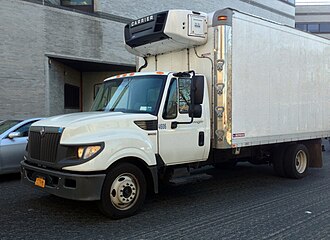
International TerraStar: A Comprehensive Look at the Versatile Medium-Duty Commercial Truck
The International TerraStar occupies a unique place in the history of North American commercial vehicles, offering businesses a medium-duty truck that successfully bridged the gap between light commercial pickups and larger Class 6 and Class 7 vocational trucks. Introduced by Navistar International during a period when fleet operators were seeking greater versatility, improved maneuverability, and lower operating costs, the TerraStar was designed to deliver professional-grade capability in a package that remained approachable for drivers transitioning from smaller commercial vehicles. Its combination of rugged engineering, dependable diesel power, adaptable chassis configurations, and relatively compact dimensions made it an attractive solution for municipalities, utility companies, delivery fleets, construction firms, landscaping businesses, emergency services, and countless independent contractors. Although its production life was relatively short, the TerraStar established itself as a practical and durable workhorse that reflected International’s long tradition of building commercial vehicles capable of handling demanding workloads day after day.
Throughout its existence, the TerraStar demonstrated that medium-duty trucks could provide exceptional capability without requiring the size and complexity associated with heavier commercial models. Operators appreciated its ability to perform demanding vocational tasks while remaining relatively easy to maneuver in congested urban environments, residential neighborhoods, industrial parks, and confined construction sites. The truck’s engineering philosophy emphasized reliability, serviceability, driver comfort, and operational flexibility, ensuring that businesses could configure the chassis for numerous applications while maintaining reasonable ownership costs. As industries increasingly demanded vehicles capable of fulfilling multiple roles, the TerraStar emerged as an adaptable platform that could evolve according to customer requirements rather than forcing businesses to compromise between payload, maneuverability, or operating efficiency.
The Origins of the International TerraStar
During the late 2000s, the commercial transportation industry experienced significant changes. Urban expansion increased demand for delivery vehicles capable of navigating crowded streets, while contractors sought trucks that could transport heavy equipment without requiring the operational complexity of larger vocational models. International recognized that many businesses required something positioned between heavy-duty pickups and conventional medium-duty trucks. The result was the TerraStar, introduced as a Class 4 and Class 5 commercial truck specifically engineered for vocational flexibility.
Rather than simply downsizing one of its larger commercial vehicles, International designed the TerraStar with its own identity. Engineers focused on creating a truck that retained the durability associated with the company’s heavy-duty lineup while providing dimensions, handling characteristics, and driver accessibility better suited for urban and suburban operations. This strategy allowed the TerraStar to compete in an increasingly competitive segment where maneuverability, payload capacity, and total cost of ownership played equally important roles in purchasing decisions.
Exterior Design Philosophy
Professional Appearance with Functional Engineering
The International TerraStar featured an exterior design that reflected its commercial purpose without sacrificing visual appeal. Its bold grille, aerodynamic hood, large headlights, and muscular stance gave it an unmistakable presence while also improving cooling efficiency and visibility. Every body panel served both aesthetic and functional purposes, contributing to easier maintenance, improved airflow, and enhanced durability in demanding working environments.
The front fascia incorporated International’s recognizable styling language, allowing the TerraStar to fit naturally within the company’s broader commercial lineup. Unlike some competitors that prioritized aggressive styling alone, the TerraStar’s appearance communicated strength and professionalism while maintaining the practical characteristics required by fleet operators. Wide-opening doors, substantial mirrors, integrated steps, and carefully positioned grab handles simplified driver entry and exit, an important consideration for operators who entered and exited the cab numerous times during a workday.
Compact Dimensions for Urban Operations
One of the defining characteristics of the TerraStar was its relatively compact overall size compared with larger vocational trucks. This allowed operators to navigate narrow streets, crowded job sites, loading docks, and residential neighborhoods with greater confidence. The shorter wheelbase options enhanced turning capability while still providing sufficient chassis length for numerous body configurations, making the truck especially attractive for businesses operating in confined spaces where maneuverability directly influenced productivity.
Chassis Construction and Structural Durability
At the heart of the TerraStar’s capability was a heavy-duty ladder-frame chassis engineered to withstand years of commercial service. Built using high-strength steel rails and reinforced crossmembers, the frame provided exceptional rigidity while supporting a broad range of vocational bodies. Whether configured as a flatbed, utility truck, refrigerated delivery vehicle, dump truck, service body, stake bed, landscape truck, or emergency response vehicle, the chassis delivered the strength necessary for demanding daily operations.
Engineers designed the frame with body installers in mind, simplifying the process of mounting specialized equipment while preserving structural integrity. Numerous wheelbase configurations allowed customers to select the optimal balance between maneuverability and cargo capacity. This flexibility significantly expanded the TerraStar’s market appeal because businesses could purchase a single chassis platform suitable for countless vocational applications.
Powertrain and Engine Performance
MaxxForce Diesel Technology
The International TerraStar was powered primarily by the MaxxForce 7 diesel engine, a turbocharged V8 designed specifically for medium-duty commercial service. This engine emphasized strong low-end torque, dependable durability, and responsive performance under load. Unlike passenger vehicle engines that often prioritize high engine speeds, the MaxxForce platform delivered substantial pulling power at relatively low revolutions, enabling confident acceleration with cargo while minimizing unnecessary fuel consumption.
The engine incorporated advanced electronic management systems that monitored fuel delivery, turbocharger performance, emissions control, and operating conditions. These technologies optimized performance across varying workloads, helping drivers maintain productivity whether traveling on highways, climbing steep grades, or operating in stop-and-go urban traffic. Properly maintained engines demonstrated excellent longevity, an essential characteristic for commercial operators seeking maximum return on investment.
Transmission Integration
Complementing the diesel engine was an automatic transmission designed to withstand demanding commercial applications. Automatic shifting reduced driver fatigue, particularly during urban delivery routes involving frequent stops. Carefully selected gear ratios ensured smooth acceleration while keeping engine speeds within their optimal operating range, improving both drivability and fuel efficiency.
Ride Quality and Handling Characteristics
Medium-duty commercial trucks must balance payload capacity with predictable handling. The TerraStar achieved this balance through carefully engineered suspension systems that provided stability under load while maintaining acceptable ride comfort when operating with lighter cargo. Heavy-duty leaf springs, reinforced axles, and commercial-grade shock absorbers contributed to confident handling across varying road conditions.
Steering responsiveness represented another strength of the platform. Compared with larger vocational trucks, the TerraStar felt relatively nimble, allowing drivers to position the vehicle accurately in congested environments. Fleet operators appreciated this characteristic because it reduced driver stress while improving operational efficiency during frequent deliveries or service calls.
Driver-Focused Cabin Design
Ergonomics and Comfort
Recognizing that commercial drivers often spend entire workdays inside their vehicles, International devoted considerable attention to cabin ergonomics. The TerraStar’s interior featured supportive seating, logically arranged controls, large analog instrumentation, and excellent outward visibility. Drivers could quickly familiarize themselves with the dashboard layout, reducing distractions while operating the vehicle.
Storage compartments, cup holders, durable materials, and wide-opening doors reflected the practical needs of commercial operators rather than luxury-focused design priorities. Climate control systems maintained comfortable cabin temperatures across diverse weather conditions, while effective sound insulation reduced engine and road noise during extended highway travel.
Visibility and Safety
Large windows, expansive mirrors, elevated seating, and carefully engineered sightlines significantly improved visibility. These features enhanced safety when maneuvering near pedestrians, loading docks, construction equipment, or other vehicles. Reduced blind spots also contributed to driver confidence during lane changes and tight turns.
Vocational Applications
The TerraStar’s greatest strength lay in its adaptability. Municipal governments employed the truck for road maintenance, parks departments, snow removal support, and infrastructure inspection. Utility companies equipped the chassis with service bodies carrying tools, replacement parts, and maintenance equipment. Construction contractors installed dump bodies, flatbeds, or crane equipment, while landscaping businesses configured stake bodies for transporting plants, soil, and machinery.
Delivery companies also found value in the TerraStar because its compact dimensions allowed efficient operation within cities while still providing substantial cargo capacity. Refrigerated bodies, moving vans, beverage distribution units, and parcel delivery boxes all found suitable foundations on the TerraStar chassis. Emergency service organizations further expanded its versatility by converting the platform into rescue vehicles, command centers, and specialized response units.
Fuel Economy and Operational Efficiency
Although medium-duty commercial trucks naturally consume more fuel than passenger vehicles, International sought to minimize operating costs through efficient diesel engine calibration, optimized transmission programming, and aerodynamic improvements. Fleet managers recognized that even modest improvements in fuel economy translated into significant long-term savings when multiplied across multiple vehicles operating year-round.
Maintenance accessibility further contributed to lower ownership costs. Routine service procedures were simplified wherever possible, enabling technicians to complete inspections and repairs more efficiently. Reduced downtime translated directly into improved productivity, an important factor for businesses whose profitability depended upon vehicle availability.
Maintenance and Long-Term Reliability
Commercial trucks must withstand demanding operating schedules while remaining dependable over hundreds of thousands of miles. The TerraStar benefited from International’s experience building vocational trucks intended for extended service lives. Heavy-duty components, durable suspension systems, reinforced frames, and commercial-grade braking systems all contributed to long-term reliability when vehicles received proper maintenance.
Preventive maintenance remained essential, including regular oil changes, fuel filter replacement, cooling system inspections, brake servicing, and suspension checks. Businesses that adhered to manufacturer-recommended service schedules often experienced dependable performance over many years of operation, reinforcing the TerraStar’s reputation as a reliable vocational platform.
Safety Features
Commercial Vehicle Protection
Safety engineering played an important role in the TerraStar’s development. High-strength cab construction provided occupant protection, while anti-lock braking systems improved vehicle control during emergency braking situations. Carefully calibrated steering and suspension systems enhanced stability when carrying varying payloads, helping drivers maintain predictable handling characteristics across different operating conditions.
Exterior lighting systems provided excellent visibility during nighttime operations, while reflective surfaces and large mirrors enhanced awareness for both drivers and surrounding traffic. Fleet operators appreciated these features because commercial vehicles frequently operate in challenging weather, low-light environments, and congested urban settings.
Competition in the Medium-Duty Market
During its production years, the TerraStar competed against several established medium-duty commercial trucks from domestic and international manufacturers. Success in this segment required balancing acquisition cost, durability, payload capacity, maneuverability, and operating expenses. The TerraStar distinguished itself by leveraging International’s extensive commercial vehicle expertise while offering a compact platform suitable for numerous vocational applications.
Customers evaluating commercial trucks often considered long-term support networks, parts availability, and service infrastructure alongside technical specifications. International’s established dealer network provided an important advantage for fleet operators requiring dependable maintenance and readily available replacement components.
The Legacy of the International TerraStar
Although production of the International TerraStar concluded after only a relatively brief period, the model remains respected within the commercial vehicle community. It demonstrated that medium-duty trucks could successfully combine vocational capability with manageable dimensions, providing businesses with an efficient solution for demanding daily operations. Many examples continue to serve municipalities, contractors, utility companies, and independent operators, highlighting the durability of the underlying engineering.
The TerraStar also influenced later commercial vehicle development by emphasizing versatility and driver accessibility. Modern medium-duty trucks increasingly prioritize maneuverability, ergonomic cabins, and adaptable chassis configurations—qualities that the TerraStar embodied throughout its production life. Its legacy illustrates how thoughtful engineering can create lasting value even within a highly competitive commercial marketplace.
Collectibility and Continued Use
While the TerraStar has not yet reached the collector status enjoyed by classic commercial vehicles from earlier decades, it has earned appreciation among vocational truck enthusiasts and fleet managers seeking dependable used equipment. Businesses continue to purchase pre-owned TerraStar chassis for conversion into specialized service vehicles because the truck’s structural strength and flexible design remain highly practical. As time passes, well-preserved examples may gain historical significance as representatives of an important transitional era in medium-duty truck engineering.
Technical Specifications Summary
| Specification | International TerraStar |
|---|---|
| Manufacturer | Navistar International |
| Production Years | 2010–2014 |
| Vehicle Class | Class 4–5 Medium-Duty Commercial Truck |
| Body Style | Conventional Cab Chassis |
| Primary Engine | 6.4-liter MaxxForce 7 Turbocharged V8 Diesel |
| Horsepower | Approximately 220–300 hp (depending on configuration) |
| Torque | Up to approximately 660 lb-ft (configuration dependent) |
| Transmission | Allison Automatic Transmission |
| Drive Configuration | 4×2 |
| Frame | High-strength steel ladder-frame chassis |
| Suspension | Heavy-duty leaf spring suspension |
| Braking System | Hydraulic disc brakes with ABS |
| GVWR | Approximately 16,000–25,999 lbs depending on model |
| Cab Configuration | Regular Cab |
| Fuel Type | Ultra-Low Sulfur Diesel |
| Typical Applications | Utility service, landscaping, delivery, construction, municipalities, emergency services, towing, flatbeds, box trucks, dump trucks |
Conclusion
The International TerraStar represents an excellent example of practical commercial vehicle engineering tailored to the evolving needs of modern businesses. By combining a durable chassis, dependable diesel powertrain, compact dimensions, comfortable cab, and remarkable vocational flexibility, International created a truck capable of serving a wide range of industries with confidence and efficiency. Although its production run lasted only a few years, the TerraStar demonstrated that medium-duty trucks could successfully balance capability, maneuverability, and operating economy without compromising durability.
Today, the TerraStar continues to earn respect among fleet managers, technicians, and commercial vehicle enthusiasts who appreciate its straightforward engineering and versatile design. Its ongoing presence in construction fleets, municipal departments, service companies, and independent businesses serves as a testament to the quality of its engineering and the enduring value of a truck built with real-world commercial demands in mind. As the commercial transportation industry continues to evolve toward greater efficiency, connectivity, and sustainability, the International TerraStar remains an important milestone in the history of medium-duty vocational trucks and a lasting reminder that thoughtful engineering can create vehicles whose usefulness extends far beyond their years of production.
