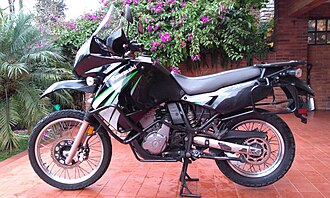
Kawasaki KLR650: The Legendary Adventure Motorcycle Built for Endless Exploration
The Kawasaki KLR650 is one of the most iconic dual-sport and adventure motorcycles ever created. For decades, it has represented a simple but powerful idea: a motorcycle should be capable of taking riders almost anywhere while remaining affordable, reliable, and easy to maintain. Unlike specialized machines designed exclusively for racing, touring, or urban transportation, the KLR650 was created as a true all-purpose adventure motorcycle capable of handling highways, dirt roads, mountain trails, and remote backcountry routes with equal determination.
Since its introduction in the late 1980s, the Kawasaki KLR650 has developed a reputation unlike almost any other motorcycle in its class. Riders around the world have used it for daily commuting, long-distance touring, cross-country adventures, and journeys into areas where reliability matters more than luxury. Its combination of rugged construction, long-range capability, simple mechanical design, and comfortable ergonomics has earned it a devoted following among adventure riders.
The KLR650 is not defined by extreme performance figures or cutting-edge technology. Instead, its identity comes from practicality and durability. It is a motorcycle designed to keep moving regardless of the road conditions, weather, or distance ahead. Many owners describe it as a dependable travel companion rather than simply a machine, because the motorcycle’s greatest strength is its ability to inspire confidence during exploration.
The enduring success of the Kawasaki KLR650 demonstrates that adventure riding is not always about having the largest engine, the most advanced electronics, or the most expensive equipment. Sometimes the most rewarding motorcycle is the one that allows riders to focus on the journey itself. The KLR650 has become a symbol of independence, simplicity, and the freedom to explore beyond traditional roads.
The History and Evolution of the Kawasaki KLR650
The Kawasaki KLR650 was introduced in 1987 as the successor to Kawasaki’s earlier KLR600 model. During this period, dual-purpose motorcycles were becoming increasingly popular because riders wanted machines that could combine everyday transportation with off-road adventure capability. Kawasaki recognized that many riders did not want a motorcycle limited to one environment. They wanted a machine that could commute during the week, explore trails on weekends, and travel long distances when necessary.
The original KLR650 was designed around this philosophy of versatility. Kawasaki engineers focused on creating a motorcycle with a reliable large single-cylinder engine, comfortable ergonomics, useful suspension travel, and enough durability to handle demanding conditions. The result was a motorcycle that could serve many different purposes without requiring major compromises.
Over the years, the KLR650 underwent numerous updates while maintaining its core identity. Kawasaki refined the engine, chassis, braking system, bodywork, and comfort features, but the fundamental concept remained unchanged. The motorcycle continued to prioritize reliability, range, and practicality over unnecessary complexity.
The KLR650 became particularly popular among adventure travelers because it offered something many larger motorcycles could not: confidence in remote environments. A rider traveling far from civilization needs a motorcycle that can be repaired, maintained, and trusted. The KLR650’s straightforward design made it especially appealing to explorers who valued self-sufficiency.
The Birth of the “Do-It-All” Adventure Motorcycle
Long before adventure motorcycles became one of the fastest-growing segments in the motorcycle industry, the KLR650 was already demonstrating the appeal of a versatile travel machine. It showed riders that a motorcycle did not need to be specialized to create memorable experiences.
The KLR650 became known as a “do-it-all” motorcycle because it could handle an impressive variety of tasks. It could carry luggage across continents, navigate city traffic, travel on highways, and explore unpaved roads. Few motorcycles achieved this level of flexibility while maintaining such a simple ownership experience.
This philosophy helped create a loyal community of KLR650 owners who continue to modify, maintain, and ride their motorcycles decades after purchase. The model’s reputation has grown over time, transforming it from a practical dual-sport motorcycle into a legendary adventure platform.
Design Philosophy: Built for Real-World Adventure
The design of the Kawasaki KLR650 reflects a focus on durability and practicality rather than appearance alone. Every major component serves a purpose, creating a motorcycle that is functional, adaptable, and ready for long-distance exploration.
The tall riding position provides excellent visibility and control, especially when navigating unpredictable terrain. Riders sit in a commanding position that allows them to see over traffic on highways while also providing the leverage needed for off-road riding. This upright posture contributes significantly to the motorcycle’s comfort during long journeys.
The bodywork is designed to provide protection from wind, weather, and debris while maintaining the narrow profile necessary for off-road maneuverability. Unlike large touring motorcycles with extensive body panels, the KLR650 remains relatively simple and practical, making repairs and modifications easier.
One of the most important design features of the KLR650 is its balance between size and manageability. With a larger engine than many lightweight dual-sport motorcycles, it offers improved highway capability while still maintaining enough agility for dirt roads and trails.
The Purposeful Adventure Styling
The appearance of the KLR650 has always communicated adventure readiness. Its tall front fairing, large fuel tank, long suspension travel, and upright stance create the unmistakable appearance of a motorcycle built to travel beyond paved roads.
The design has evolved throughout different generations, but the essential character has remained consistent. The motorcycle looks rugged because it is rugged. Its styling is not focused on creating an aggressive image but rather expressing its ability to withstand demanding environments.
Many riders appreciate this honesty. The KLR650 does not pretend to be something it is not. It is a machine designed to work, travel, and explore.
The Legendary 651 cc Single-Cylinder Engine
The heart of the Kawasaki KLR650 has traditionally been its 651 cc single-cylinder four-stroke engine. This engine became one of the motorcycle’s defining characteristics, earning a reputation for reliability, simplicity, and strong real-world performance.
A large single-cylinder engine provides several advantages for adventure riding. It delivers strong low-end torque, which is extremely valuable when navigating dirt roads, steep climbs, and difficult terrain. Instead of requiring high engine speeds, the KLR650 produces usable power in the ranges where adventure riders spend most of their time.
The engine’s character perfectly matches the motorcycle’s purpose. It is not designed for racing or extreme acceleration. Instead, it provides dependable thrust, excellent fuel efficiency, and the ability to maintain highway speeds while carrying luggage.
The simplicity of the single-cylinder design is another major advantage. Adventure riders often travel to locations where specialized mechanical support may not be available. A proven and relatively simple engine design provides peace of mind during long journeys.
Performance Characteristics and Riding Feel
The Kawasaki KLR650 delivers a smooth and predictable power experience. The engine produces enough torque to make everyday riding enjoyable while remaining manageable on loose surfaces. This balance allows riders to confidently transition between pavement and dirt.
On highways, the engine provides enough performance for extended travel, especially when equipped with appropriate wind protection and luggage. While it is not a high-performance touring engine, it is capable of carrying riders and equipment over significant distances.
Off-road, the engine’s torque characteristics become even more valuable. Controlled acceleration helps maintain traction on gravel, sand, and uneven terrain. Riders can focus on selecting lines and managing balance rather than constantly controlling excessive power.
Chassis, Suspension, and Handling Performance
The Kawasaki KLR650’s chassis was developed to provide stability across multiple environments. A successful adventure motorcycle must feel secure on highways while remaining capable when roads become rough. Kawasaki designed the KLR650 around this balance.
The motorcycle’s long-travel suspension allows it to absorb uneven terrain while maintaining comfort during long-distance travel. The suspension is not designed for professional enduro competition, but it provides enough capability for adventure riding, gravel roads, and moderate trails.
The relatively lightweight construction compared with larger adventure motorcycles is one of the KLR650’s biggest advantages. Riders can maneuver the motorcycle more easily in difficult situations and recover from mistakes with less effort.
Stability on Pavement and Dirt
One of the reasons the KLR650 has remained popular is its ability to transition smoothly between environments. Many motorcycles excel either on pavement or off-road, but the KLR650 is designed to handle both.
On paved roads, it provides stable handling and comfortable cruising characteristics. On dirt roads, the motorcycle’s narrow profile and balanced chassis allow riders to maintain control. This versatility is the foundation of its adventure reputation.
The KLR650 encourages riders to explore routes that would be inconvenient or impossible on purely street-oriented motorcycles. A road ending does not necessarily mean the journey has to stop.
Comfort and Long-Distance Touring Capability
One of the defining qualities of the Kawasaki KLR650 is its ability to cover long distances while remaining comfortable and practical. Adventure riding often involves spending many hours in the saddle, traveling through different climates, road surfaces, and environments. Kawasaki designed the KLR650 with this reality in mind, creating a motorcycle that prioritizes endurance and rider comfort.
The upright seating position is one of the motorcycle’s greatest advantages during extended rides. Unlike aggressive sport motorcycles that place the rider in a forward-leaning position, the KLR650 allows a relaxed posture that reduces pressure on the wrists, shoulders, and lower back. This makes it suitable for multi-day trips and long exploration rides where rider fatigue can become a major concern.
The seat design has always been an important part of the KLR650 experience. While opinions about factory motorcycle seats vary among riders, many owners improve comfort further through aftermarket seats or additional padding. These modifications can transform the KLR650 into an even more capable long-distance touring machine.
Wind protection is another advantage of the KLR650 compared with smaller dual-sport motorcycles. The front fairing and windscreen help reduce fatigue during highway travel, especially when riding for several hours at a time. Many owners install larger windscreens to improve comfort during extended adventures.
Luggage Capacity and Travel Practicality
The Kawasaki KLR650 has earned a strong reputation among adventure travelers because of its ability to carry luggage effectively. The motorcycle’s sturdy subframe and practical design make it suitable for installing luggage racks, panniers, soft bags, and camping equipment.
Many riders have used the KLR650 for cross-country journeys and international adventures because it provides the necessary combination of carrying capacity, fuel range, and mechanical reliability. The motorcycle encourages self-supported travel, allowing riders to carry tools, supplies, and equipment without significantly affecting usability.
This practicality is one of the reasons the KLR650 has remained relevant for so many years. It is not merely a motorcycle for short recreational rides—it is a platform capable of supporting serious exploration.
Fuel Range and Adventure Independence
Long-distance adventure riding requires independence, and fuel range is a major factor in determining how far a motorcycle can travel between stops. The Kawasaki KLR650 has traditionally been praised for its large fuel capacity and efficient engine characteristics.
The combination of a large fuel tank and economical single-cylinder engine allows riders to travel significant distances before needing to refuel. This capability is especially valuable when exploring remote regions where fuel stations may be widely separated.
Many adventure riders consider fuel range one of the KLR650’s greatest strengths because it reduces planning limitations. Instead of constantly searching for fuel, riders can focus on navigation, scenery, and exploration.
Reliability and Mechanical Durability
The reputation of the Kawasaki KLR650 is built largely on reliability. Few adventure motorcycles have developed such a strong reputation for durability and long-term ownership. The motorcycle’s straightforward engineering allows it to survive demanding conditions while remaining relatively easy to maintain.
The single-cylinder engine has proven capable of handling high mileage when properly serviced. Regular oil changes, valve inspections, cooling system maintenance, and general mechanical care are essential, but the basic design is known for endurance.
Adventure riders often value reliability above all else because a motorcycle failure far from home can become a serious problem. The KLR650’s proven mechanical platform provides confidence during remote travel.
Maintenance Simplicity and Owner Support
Another reason for the KLR650’s popularity is its accessibility for owners who enjoy performing their own maintenance. The motorcycle does not require highly specialized equipment for many common service tasks, allowing riders to develop a deeper understanding of their machines.
The global KLR650 community has also created a vast amount of knowledge regarding repairs, upgrades, and maintenance techniques. Owners frequently share solutions, modifications, and travel experiences, creating one of the strongest adventure motorcycle communities in existence.
This community support adds significant value to ownership because riders can find information and advice for nearly every aspect of maintaining or improving their motorcycles.
Common Modifications and Upgrades
The Kawasaki KLR650 is one of the most commonly modified adventure motorcycles in the world. Its simple design and strong aftermarket support allow owners to customize the motorcycle according to their specific needs.
Some riders focus on improving comfort for long-distance travel, while others prioritize off-road capability or protection. Popular modifications include upgraded seats, larger windscreens, luggage systems, crash bars, skid plates, stronger hand guards, suspension upgrades, and improved lighting.
Protection upgrades are especially common among adventure riders. Components such as engine guards, radiator protection, and stronger luggage mounts help prepare the motorcycle for demanding terrain where falls and impacts are possible.
Creating the Ideal Adventure Setup
Because every rider uses a KLR650 differently, there is no single perfect setup. A commuter who occasionally explores gravel roads may prioritize comfort and storage, while a long-distance traveler may focus on durability and self-sufficiency.
This flexibility is one of the motorcycle’s greatest advantages. The KLR650 can be transformed into a lightweight touring machine, a rugged backcountry explorer, or a practical daily motorcycle depending on the owner’s goals.
The ability to personalize the motorcycle has helped create generations of passionate owners who view their KLR650 as a unique adventure companion rather than a standard factory product.
The Kawasaki KLR650 Compared With Other Adventure Motorcycles
The KLR650 has competed against many adventure motorcycles throughout its history, including models such as the Honda XR650L, Suzuki DR650, Yamaha XT660, BMW F650 series, and more modern middleweight adventure bikes. Each motorcycle offers different strengths, but the KLR650 remains distinctive because of its combination of affordability, reliability, and simplicity.
Compared with larger adventure motorcycles, the KLR650 offers reduced weight and easier off-road handling. While it may not match the horsepower or electronic features of premium adventure bikes, it provides a more direct and mechanical riding experience.
Compared with smaller dual-sport motorcycles, the KLR650 provides better highway capability and greater luggage capacity. Its larger engine allows riders to travel longer distances more comfortably while still maintaining reasonable off-road ability.
Why Riders Continue Choosing the KLR650
Many riders choose the KLR650 because it represents a different approach to adventure motorcycling. Instead of focusing on luxury or maximum performance, it focuses on reliability and freedom.
The motorcycle appeals to riders who believe adventure is about reaching interesting places rather than arriving with the fastest or most expensive machine. The KLR650 encourages exploration because it is practical, dependable, and easy to live with.
The Legacy of the Kawasaki KLR650
Few motorcycles have achieved the legendary status of the Kawasaki KLR650. Its decades-long production history and worldwide popularity have made it one of the most recognizable adventure motorcycles ever produced.
The KLR650 has carried riders across continents, through deserts, over mountain passes, and along countless rural roads. Its legacy is not based solely on technical specifications but on the experiences it has enabled.
The motorcycle represents a philosophy of adventure based on independence and curiosity. It proves that exploration does not require the latest technology or the largest engine. A reliable machine and a willingness to travel are often enough.
Kawasaki KLR650 Technical Specifications
| Specification | Kawasaki KLR650 Details |
|---|---|
| Manufacturer | Kawasaki |
| Model | KLR650 |
| Production History | 1987–present (with generation updates) |
| Category | Adventure / Dual-Sport Motorcycle |
| Engine Type | Four-stroke single-cylinder DOHC |
| Engine Displacement | 651 cc |
| Bore × Stroke | 100.0 mm × 83.0 mm |
| Cooling System | Liquid cooled |
| Fuel System | Carburetor (earlier models), fuel injection (newer models) |
| Compression Ratio | Approximately 9.8:1 |
| Maximum Power | Approximately 40 hp |
| Maximum Torque | Approximately 50 Nm |
| Transmission | 5-speed manual |
| Final Drive | Chain |
| Frame Type | Steel semi-double cradle frame |
| Front Suspension | Telescopic fork |
| Rear Suspension | Uni-Trak single shock |
| Front Brake | Single hydraulic disc |
| Rear Brake | Single hydraulic disc |
| Front Wheel Size | 21 inches |
| Rear Wheel Size | 17 inches |
| Fuel Capacity | Approximately 22 liters |
| Seat Height | Approximately 890 mm |
| Ground Clearance | Approximately 210–230 mm depending on generation |
| Wheelbase | Approximately 1,500 mm |
| Weight | Approximately 200–220 kg depending on model |
| Primary Use | Adventure touring, commuting, off-road exploration |
Conclusion: The Kawasaki KLR650 and the Spirit of Adventure
The Kawasaki KLR650 has earned its legendary status because it delivers something timeless: the ability to explore freely. It is a motorcycle built around practicality, reliability, and confidence rather than unnecessary complexity.
For decades, riders have trusted the KLR650 to take them across cities, highways, forests, deserts, and remote landscapes. Its simple engineering, strong community support, and adaptable design have allowed it to remain relevant in a rapidly changing motorcycle industry.
The true strength of the KLR650 is not found in a single specification. It exists in the experiences created by the motorcycle. It encourages riders to choose the road less traveled, discover unfamiliar places, and embrace adventure with confidence.
The Kawasaki KLR650 remains a symbol of practical adventure motorcycling—a machine that proves the greatest journeys are not always about speed, technology, or luxury, but about the freedom to explore wherever the road leads.
