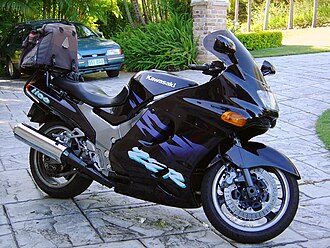
The Kawasaki Ninja ZX-11 Legend
The Kawasaki Ninja ZX-11 is one of the most iconic motorcycles from the golden era of Japanese superbikes. Introduced in 1990, the ZX-11 immediately established itself as a technological masterpiece and became famous for its incredible speed, long-distance capability, and impressive engineering. At a time when motorcycle manufacturers were competing to build the fastest production machines in the world, Kawasaki created the Ninja ZX-11 as a statement of performance and innovation.
For more than a decade, the ZX-11 held a reputation as one of the fastest production motorcycles available. Its combination of a powerful 1,058cc inline-four engine, aerodynamic bodywork, and excellent stability made it a favorite among riders who wanted extreme performance without sacrificing comfort. Unlike many pure sport motorcycles that focused exclusively on racing ability, the ZX-11 was designed as a high-performance machine capable of covering long distances at remarkable speeds.
The Ninja ZX-11 was more than just a fast motorcycle. It represented Kawasaki’s engineering philosophy during the 1990s: create machines that were powerful, reliable, technologically advanced, and exciting to ride. Even years after production ended, the ZX-11 remains highly respected among motorcycle enthusiasts and collectors because of its historical importance and unique character.
The Birth of the Kawasaki Ninja ZX-11
Kawasaki’s Search for Ultimate Performance
During the late 1980s, the motorcycle industry was experiencing a period of rapid development. Japanese manufacturers were constantly improving engine technology, chassis design, and aerodynamics in an effort to create faster and more advanced motorcycles. Kawasaki already had a strong reputation for producing powerful machines, but the company wanted to build a motorcycle that would redefine the limits of production performance.
The Ninja ZX-11 was developed as the successor to Kawasaki’s earlier high-performance models and was designed to compete directly with the fastest motorcycles of the era. Engineers focused on creating a machine that could deliver extraordinary acceleration and top-speed capability while remaining stable and comfortable for everyday riders.
When the ZX-11 was introduced in 1990, it quickly gained attention because of its performance figures and advanced design. It was one of the first production motorcycles to combine superbike-level power with the practicality of a sport-tourer, creating a unique category that appealed to performance-focused riders who also valued comfort.
The Motorcycle That Became a Speed Icon
The Kawasaki Ninja ZX-11 became famous primarily because of its speed. For many years, it was recognized as one of the fastest production motorcycles in the world, with a top speed exceeding 280 km/h in unrestricted conditions. This achievement was remarkable during the early 1990s and helped establish Kawasaki as a leader in high-performance motorcycle engineering.
The motorcycle’s reputation was strengthened by its smooth power delivery and excellent stability at high speeds. While some motorcycles of the era were difficult to control when pushed to their limits, the ZX-11 was praised for its confidence-inspiring behavior and refined performance.
The Powerful Heart of the Ninja ZX-11
The 1,058cc Inline-Four Engine
The centerpiece of the Kawasaki Ninja ZX-11 was its 1,058cc liquid-cooled inline-four engine. This engine represented a significant step forward in motorcycle performance, combining advanced technology with Kawasaki’s proven reliability.
The DOHC, 16-valve engine produced approximately 145 horsepower, providing exceptional acceleration and effortless high-speed cruising. The power delivery was smooth and predictable, allowing riders to enjoy strong performance across the entire rev range.
Unlike some aggressive superbike engines that focused only on high-rpm power, the ZX-11 engine was designed to be versatile. It offered strong mid-range torque, making it enjoyable for everyday riding, while still providing the thrilling acceleration expected from a flagship Kawasaki motorcycle.
The engine’s durability also became one of the ZX-11’s strongest qualities. Many examples have remained reliable after decades of use, demonstrating the quality of Kawasaki’s engineering and manufacturing standards.
Ram Air Technology and Performance
One of the most advanced features of the ZX-11 was its Ram Air induction system. Kawasaki used this technology to improve engine performance at higher speeds by directing pressurized air into the intake system. As the motorcycle moved faster, the system helped increase the amount of air available for combustion, improving power output.
The Ram Air system became an important part of Kawasaki’s performance identity and was later used on many Ninja models. On the ZX-11, it contributed to the motorcycle’s reputation as a high-speed machine capable of maintaining strong performance even at extreme velocities.
Chassis Design and Riding Experience
Stability at High Speeds
A motorcycle capable of reaching extreme speeds requires a chassis capable of handling those forces. Kawasaki equipped the Ninja ZX-11 with a strong aluminum frame designed to provide rigidity, stability, and predictable handling.
The motorcycle’s larger dimensions and weight compared with smaller sportbikes helped it remain composed during high-speed riding. Instead of feeling nervous or unstable, the ZX-11 provided a planted and confident experience, especially during highway cruising and long-distance journeys.
This stability was one of the reasons the motorcycle became popular among riders who wanted both performance and touring ability. The ZX-11 could deliver superbike acceleration while remaining comfortable enough for extended rides.
Sport-Touring Comfort
Although the ZX-11 was built around speed, Kawasaki also considered rider comfort. The riding position was more relaxed than many racing-focused motorcycles, allowing riders to spend more time on the bike without excessive fatigue.
The full fairing provided excellent wind protection, while the comfortable seat and practical ergonomics made the motorcycle suitable for touring. This balance between performance and comfort became one of the ZX-11’s defining characteristics.
Many owners considered the ZX-11 the ideal motorcycle for fast touring because it offered superbike performance without the extreme riding position of a dedicated race machine.
Design and Aerodynamics of the Kawasaki Ninja ZX-11
A Futuristic 1990s Appearance
The Kawasaki Ninja ZX-11 featured styling that perfectly represented the technology-driven design trends of the 1990s. Its large aerodynamic fairing, sharp lines, and aggressive front profile gave it a futuristic appearance when it was introduced.
The bodywork was not only designed for visual impact but also played an important role in improving high-speed performance. Kawasaki engineers carefully shaped the motorcycle to reduce aerodynamic resistance and improve stability.
The ZX-11’s appearance helped create its legendary status. Even today, enthusiasts recognize its distinctive shape as a symbol of Kawasaki’s performance heritage.
Functional Aerodynamics
At high speeds, aerodynamic efficiency becomes extremely important. The ZX-11’s fairing design helped protect the rider from wind pressure while allowing the motorcycle to move efficiently through the air.
The Ram Air intake was integrated into the front design, contributing to both performance and appearance. This combination of function and style made the ZX-11 one of the most recognizable motorcycles of its generation.
Technology and Features
Engineering Before the Electronic Era
Modern superbikes are equipped with advanced electronic systems such as traction control, riding modes, and cornering ABS. The Kawasaki Ninja ZX-11 was created before these technologies became common, relying instead on mechanical engineering and rider skill.
This simplicity is part of the motorcycle’s appeal. Riders experienced a direct connection with the machine, where throttle control, braking technique, and riding ability played a major role in performance.
The ZX-11 demonstrated that exceptional performance could be achieved through thoughtful engineering rather than relying on electronic assistance.
Reliability and Everyday Usability
Despite its extreme performance capabilities, the ZX-11 developed a reputation for reliability. Kawasaki designed the motorcycle to handle demanding riding conditions while maintaining long-term durability.
Many owners used their ZX-11 motorcycles for daily riding, touring, and high-mileage adventures. This reliability helped the model develop a loyal following among enthusiasts who appreciated both performance and practicality.
The Legacy of the Kawasaki Ninja ZX-11
A Motorcycle That Defined an Era
The Ninja ZX-11 played a major role in Kawasaki’s history and helped establish the company as one of the leading manufacturers of high-performance motorcycles. It represented the peak of the speed-focused development era before electronic technology transformed the industry.
Although later motorcycles eventually surpassed it in horsepower and technology, the ZX-11 remains important because of what it achieved during its production years. It proved that a motorcycle could combine extreme speed with everyday usability.
Appreciation Among Collectors
Today, the Kawasaki Ninja ZX-11 is appreciated by collectors and enthusiasts who recognize its historical significance. It represents a time when motorcycle manufacturers competed through engineering innovation and mechanical excellence.
Well-maintained examples continue to attract attention because they offer a unique riding experience. The ZX-11 provides the excitement of a classic superbike while still delivering impressive performance decades after its introduction.
Conclusion: The Kawasaki Ninja ZX-11 as a Motorcycle Legend
The Kawasaki Ninja ZX-11 remains one of the most memorable motorcycles ever produced by Kawasaki. Its powerful inline-four engine, advanced aerodynamics, Ram Air technology, and high-speed stability made it a benchmark during the 1990s.
While modern motorcycles have surpassed it in electronic features and outright performance, the ZX-11 continues to hold a special place in motorcycle history. It represents an era when engineers pushed mechanical limits and created machines that inspired generations of riders.
The Ninja ZX-11 was not simply built to be fast. It was built to be a complete performance motorcycle, combining speed, comfort, reliability, and innovation. That combination is what has allowed it to remain a true Kawasaki legend.
Kawasaki Ninja ZX-11 Technical Specifications
| Specification | Details |
|---|---|
| Model Name | Kawasaki Ninja ZX-11 |
| Production Years | 1990–2001 |
| Motorcycle Type | Sport-touring superbike |
| Engine Type | Liquid-cooled, four-stroke, DOHC inline-four |
| Engine Displacement | 1,058cc |
| Bore x Stroke | 76 mm x 58 mm |
| Compression Ratio | Approximately 11.0:1 |
| Fuel System | Carburetors |
| Cooling System | Liquid cooling |
| Transmission | 6-speed manual |
| Final Drive | Chain |
| Maximum Power | Approximately 145 hp |
| Maximum Torque | Approximately 108 Nm |
| Top Speed | Over 280 km/h (varied by market and conditions) |
| Frame Type | Aluminum twin-spar frame |
| Front Suspension | Telescopic fork |
| Rear Suspension | Uni-Trak single-shock system |
| Front Brakes | Dual hydraulic disc brakes |
| Rear Brake | Single hydraulic disc brake |
| Wheelbase | Approximately 1,500 mm |
| Seat Height | Approximately 800 mm |
| Fuel Capacity | Approximately 22 liters |
| Dry Weight | Approximately 233 kg |
| Notable Features | Ram Air induction, high-speed stability, sport-touring comfort, legendary inline-four performance |
