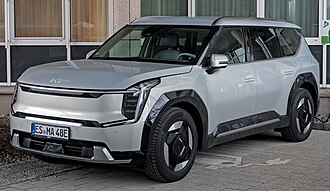
KIA EV9 as a Used Car: What Buyers Should Know
The KIA EV9 is a very different proposition from most electric cars on the used market. It is a large, fully electric SUV designed primarily for families who need genuine three-row practicality rather than simply wanting the appearance of an SUV. With its enormous cabin, seven-seat configuration in many versions, large 99.8 kWh battery, 800-volt charging system and impressive towing capability, the EV9 was developed as a replacement for the kind of large diesel or petrol SUV that has traditionally dominated family travel. That makes it particularly interesting as a used car because there are relatively few direct alternatives offering the same combination of space and electric capability. The EV9 is also still a young model, so a second-hand example should generally have plenty of warranty remaining. At the same time, its size, weight, sophisticated electronics and expensive battery mean that buyers should carry out a more thorough inspection than they might with a conventional used car.
What Is the KIA EV9?
The EV9 is Kia’s flagship electric SUV and one of the largest vehicles built around the company’s dedicated E-GMP electric platform. Its exterior is more than five metres long and approximately two metres wide, giving it a substantial road presence. More importantly, the long 3,100 mm wheelbase creates the interior space necessary for three rows of seats. This is the feature that separates the EV9 from smaller electric SUVs such as the EV5 and EV6. A used EV9 is not simply an electric crossover with occasional-use rear seats; it is designed from the outset to function as a genuine family vehicle for six or seven occupants, depending on configuration.
The EV9’s design also makes an important statement about what a large electric SUV can be. The body is upright and relatively boxy, which sacrifices some aerodynamic efficiency compared with a sleek electric crossover but creates enormous usable interior volume. Depending on specification, buyers can find seven-seat versions with a conventional second-row bench or six-seat configurations with individual second-row captain’s chairs. Some higher-specification cars also offer electrically adjustable relaxation seats and rotating second-row seats. For a used buyer, this means that choosing the right interior configuration can be just as important as choosing the drivetrain.
Battery Options and Electric Range
The 99.8 kWh Long Range Battery
European-market EV9s have primarily been offered with a large 99.8 kWh battery, making the car a genuine long-distance EV despite its considerable size. The battery is a lithium-ion polymer unit mounted beneath the cabin, with a nominal voltage of 552 V and a mass of approximately 566.5 kg according to Kia’s published technical data. That enormous battery is necessary because the EV9 is a large and heavy vehicle, but it also provides the energy reserve required for family journeys.
Official range depends heavily on drivetrain and wheels. Kia’s current Czech information quotes up to 563 km for the RWD version on 19-inch wheels, while the AWD model can achieve up to 505 km on 21-inch wheels. Other European specifications can show slightly different figures depending on model year and configuration. These numbers demonstrate an important principle when shopping for a used EV9: the battery capacity alone does not determine range. Wheels, tyres, equipment, motor configuration and driving conditions all have a significant influence.
In real-world use, buyers should expect less than the maximum WLTP figure, particularly during winter motorway driving. The EV9’s large frontal area and substantial weight inevitably affect efficiency at higher speeds. Nevertheless, the large battery means that it can remain a highly capable touring vehicle. For family holidays, where the car may be heavily loaded with passengers and luggage, the additional battery capacity provides a useful safety margin.
RWD or AWD?
The rear-wheel-drive EV9 is the efficiency-focused version. Current Czech specifications list approximately 149.5 kW, or 203 horsepower, with 350 Nm of torque and a 0–100 km/h time of around 9.4 seconds. Its maximum speed is 185 km/h. Those figures may not sound particularly exciting for such a large vehicle, but the EV9’s mission is comfort and efficiency rather than sports-car acceleration. The instant response of the electric motor nevertheless makes it feel considerably more effortless than the numbers suggest, particularly when pulling away from junctions or overtaking.
The AWD version is a completely different proposition. Two electric motors produce a combined 283 kW, or approximately 384 horsepower, and up to 700 Nm of torque. The result is a 0–100 km/h time of approximately 5.3 seconds and a top speed of 200 km/h. For such a large seven-seat SUV, that is remarkable performance. The extra motor also provides additional traction, which can be useful when driving in snow, on wet roads, on steep gradients or while towing. The disadvantage is higher energy consumption and a shorter official range.
How Does the KIA EV9 Drive?
The EV9’s greatest strength on the road is probably its refinement. The huge wheelbase, low-mounted battery and substantial body give the car a stable, planted character, while the electric drivetrain delivers power without vibration or gear changes. It is not a small or particularly agile vehicle, and drivers should never forget its dimensions, but on a motorway it can feel exceptionally relaxed. The quiet cabin is particularly valuable when carrying several passengers because conversations remain easy even at higher speeds.
The suspension uses MacPherson struts at the front and a five-arm multi-link arrangement at the rear. This sophisticated layout is intended to provide a comfortable ride while maintaining control of the EV9’s substantial mass. Buyers viewing a used example should pay particular attention to the suspension because a large electric SUV places considerable loads on its components. Tyres deserve similar attention. The AWD versions can use 21-inch wheels with wide tyres, which can be expensive to replace, and uneven wear may indicate alignment or suspension problems.
The EV9 is therefore best understood as a luxury family cruiser rather than a sporty SUV. The AWD model has the acceleration to embarrass many performance cars, but the overall character remains calm and comfortable. This is a car designed to make a 500-kilometre family journey feel easy, not to encourage aggressive driving through mountain roads.
Charging the EV9
800-Volt DC Fast Charging
One of the EV9’s biggest advantages as a used EV is its 800-volt charging architecture. Kia quotes approximately 24 minutes for a 10–80% charge using a sufficiently powerful DC charger. Under ideal conditions, the vehicle can add up to around 249 km of range in 15 minutes. However, the maximum charging speed is dependent on using appropriate high-power infrastructure, and actual results vary with battery temperature, charger capability, state of charge and weather.
This charging capability is especially important because the EV9’s large battery means that a conventional 50 kW charger would take a very long time to replenish it. Kia’s technical information quotes approximately 83 minutes for a 10–80% charge on a 50 kW charger, compared with around 24 minutes on a 350 kW-capable charger. The lesson for a used buyer is straightforward: the EV9 makes the most sense for long-distance travel when high-power charging infrastructure is available along your regular routes.
When inspecting a used EV9, it is worth testing DC charging if possible. A short charging session cannot reproduce the entire charging curve, but it can confirm that the vehicle recognises the charger and begins charging correctly. Inspect the charge port for damage and ask whether the car has experienced any charging-related warnings. Because rapid charging is one of the EV9’s major advantages, a properly functioning charging system is essential.
AC Charging at Home
For overnight charging, the EV9 supports 11 kW AC charging. Kia’s technical specifications quote approximately 9 hours and 5 minutes for a 10–100% charge from a 230V/48A supply. In practical terms, an owner with a suitable home wallbox can plug the EV9 in after returning home and have a full battery by the next morning.
Home charging is particularly important with a vehicle this large because public charging can become expensive if used frequently. A buyer with access to a private driveway or workplace charger can exploit the EV9’s large battery much more effectively than someone dependent entirely on public infrastructure.
What Should You Check When Buying a Used EV9?
Battery Health and Warranty
The high-voltage battery should be one of the first things examined, although the EV9’s relatively young age means that serious degradation should not normally be expected in a properly maintained vehicle. Kia’s published warranty terms in the Czech market provide a seven-year or 150,000 km warranty for the complete vehicle, with the first three years without a mileage limit. Buyers should verify the exact warranty status of the individual car because warranty conditions depend on registration date, market and applicable terms.
A battery-health report is nevertheless worthwhile. Ask for evidence of the battery’s state of health and investigate whether the car has ever required battery repairs. It is also sensible to inspect the underside of the vehicle carefully. The battery pack sits beneath the cabin, so a serious impact or accident involving the underside should receive professional attention even if the exterior repair looks perfect.
The EV9 is a particularly heavy vehicle, and its previous use matters. A car that has spent its life towing heavy trailers may have experienced substantially different loads from one used primarily for motorway commuting. That does not automatically make a towing vehicle a bad purchase, but it gives you another reason to examine tyres, brakes, suspension and charging history carefully.
Software and Electronics
The EV9 is packed with electronic systems, making a thorough technology check essential. Test both infotainment displays, cameras, parking sensors, climate controls, navigation, wireless connectivity, driver-assistance systems, electrically operated seats, charging controls and every available digital function. A used EV9 can be mechanically healthy while still having an annoying electronic fault, so do not dismiss warning messages simply because the car drives normally.
Ask the seller whether all software updates and recalls have been completed. The EV9’s connected systems and over-the-air update capability mean that software is an important part of the ownership experience. A complete service and update history is therefore a valuable advantage when comparing two otherwise similar used cars.
Is the EV9 Practical as a Family Car?
This is where the EV9 is arguably unbeatable within Kia’s electric range. Its three-row layout gives buyers the ability to carry up to seven people, while six-seat versions with individual second-row seats provide a more luxurious arrangement. The huge cabin and flat electric floor make it possible to accommodate adults in the rear rows more comfortably than in many smaller seven-seat SUVs.
Buyers should nevertheless distinguish between six- and seven-seat versions because the interior experience is quite different. A seven-seat car maximises passenger capacity, while a six-seat configuration creates more space and easier access between individual seats. If children are regularly carried, test the exact child-seat arrangement before purchasing because the positioning of ISOFIX points and the available access to the third row can matter more than headline passenger capacity.
The EV9 is also a useful vehicle for carrying large loads. Its boxy body makes better use of its footprint than the sleeker EV6, while the long wheelbase gives the cabin generous proportions. The exact luggage capacity depends on which rows are in use, so buyers should physically test the boot with their normal luggage if family practicality is the primary reason for buying the car.
Towing and Heavy-Duty Use
Towing is another area in which the EV9 stands out. Kia’s current Czech specifications quote a maximum braked trailer weight of 900 kg for the RWD model and 2,500 kg for the AWD version. That is a substantial difference and should be taken seriously when selecting a used example. Someone who only occasionally carries a small trailer may have no reason to pay for AWD, while a caravan owner should strongly consider the AWD model.
The major compromise is range. Towing a heavy trailer increases aerodynamic drag and rolling resistance dramatically, so an EV9 towing a caravan will consume substantially more energy than the same vehicle travelling unladen. This is not unique to the EV9, but it is particularly important because buyers attracted by the car’s impressive WLTP range may otherwise underestimate the effect of towing.
For frequent towing, inspect the towbar installation and ask whether it was factory-fitted or professionally installed. Check electrical connections, trailer stability systems and the vehicle’s service history. The AWD EV9’s higher towing capacity is one of its strongest practical advantages, but it should also be reflected in the condition and history of the specific used vehicle.
Running Costs and Maintenance
The EV9 should require less routine mechanical maintenance than a comparable petrol or diesel seven-seat SUV. There is no engine oil, exhaust system, spark plugs or conventional multi-speed gearbox, while regenerative braking can reduce wear on friction brakes. Nevertheless, maintenance costs should not be underestimated. The EV9 is a large and technologically complex vehicle, and tyres, suspension, air conditioning, brakes and electronic systems all require attention.
Tyres are potentially one of the more expensive consumables. Large wheels and the vehicle’s substantial weight mean that high-quality tyres are essential, while AWD versions can place additional demands on them. A used EV9 with four premium tyres in good condition is considerably more attractive than one requiring an immediate replacement of several large tyres.
Electricity costs will also depend heavily on where the car is charged. Home charging can make even a large EV9 relatively predictable to run, while frequent use of expensive public rapid chargers can make the economics much less attractive. Buyers should calculate energy costs using their actual annual mileage and charging prices rather than assuming that an electric vehicle automatically has low running costs.
Which Used KIA EV9 Should You Buy?
For most buyers, the RWD Long Range EV9 is the most rational choice. It provides the full 99.8 kWh battery, excellent official range and enough performance for normal family driving. The current Czech specification quotes up to 563 km on 19-inch wheels, while its 203-horsepower motor is perfectly adequate for a large family SUV. It is also lighter and more efficient than the AWD version.
The AWD Long Range is the specialist choice. Its 384 horsepower, 700 Nm and 5.3-second 0–100 km/h time make it exceptionally quick for a vehicle of this size. More importantly, AWD provides better traction and dramatically increases the official towing capacity to 2,500 kg. If you live in an area with difficult winters or tow a large caravan, the additional cost and energy consumption can be justified.
Trim level should be considered after drivetrain and condition. The EV9’s higher equipment versions can include relaxation seats, advanced driver assistance, premium audio, larger wheels and additional convenience technology. These features can make the car feel significantly more luxurious, but they also increase the complexity of the vehicle and may raise replacement costs. A well-maintained lower-spec EV9 with a healthy battery can therefore be a better used purchase than a heavily equipped example with questionable history.
Final Verdict: Is the KIA EV9 a Good Used Car?
The KIA EV9 is potentially an excellent used car for one very specific type of buyer: someone who needs a large, genuinely practical family SUV and wants to make the switch to electric power. Its three-row interior, enormous battery, fast 800-volt charging, comfortable ride and substantial towing capacity make it far more than a fashionable electric SUV. It is a vehicle capable of replacing a conventional seven-seat family car in everyday use.
Its greatest strengths are the things that remain difficult for many EV competitors to combine. The 99.8 kWh battery provides a useful long-distance range, while the 800-volt architecture means that a suitably powerful charger can replenish 10–80% in roughly 24 minutes. The RWD model prioritises efficiency, while AWD provides impressive performance and a towing capacity of up to 2,500 kg.
The main concerns for a used buyer are complexity, size and cost. A large electric SUV is expensive to build and contains a huge amount of technology. Buyers should therefore not treat the EV9 like an ordinary used family car. Battery health, charging performance, software, suspension, tyres, electronics, accident history and warranty status should all be checked carefully.
For most people, the RWD version is the EV9 to seek out because it offers the best combination of range and efficiency. AWD becomes much more attractive if towing, winter traction or performance is important. Whichever version you choose, a carefully inspected EV9 with a complete history can be one of the most capable used electric family vehicles available. It offers something that few other EVs can match: genuinely usable three-row space without giving up the advantages of modern fast-charging electric technology.
KIA EV9 Technical Specifications
| Specification | EV9 Long Range RWD | EV9 Long Range AWD |
|---|---|---|
| Battery capacity | 99.8 kWh | 99.8 kWh |
| Battery type | Lithium-ion polymer | Lithium-ion polymer |
| Drive | Rear-wheel drive | All-wheel drive |
| Electric motors | 1 | 2 |
| Maximum power | 149.5 kW / 203 hp | 283 kW / 384 hp |
| Maximum torque | 350 Nm | Up to 700 Nm |
| 0–100 km/h | 9.4 s | 5.3 s |
| Maximum speed | 185 km/h | 200 km/h |
| Maximum WLTP range | Up to 563 km* | Up to 505 km* |
| DC charging architecture | 800 V | 800 V |
| DC charging, 10–80% | Approx. 24 min | Approx. 24 min |
| Maximum DC charging capability | Up to approx. 240 kW+ under suitable conditions | Up to approx. 240 kW+ under suitable conditions |
| AC charging | 11 kW | 11 kW |
| V2L output | Up to 3.68 kW | Up to 3.68 kW |
| Length | 5,015 mm | 5,015 mm |
| Width | 1,980 mm | 1,980 mm |
| Height | Approx. 1,780 mm | Approx. 1,780 mm |
| Wheelbase | 3,100 mm | 3,100 mm |
| Seating capacity | 6 or 7, depending on configuration | 6 or 7, depending on configuration |
| Battery weight | Approx. 566.5 kg | Approx. 566.5 kg |
| Maximum braked towing capacity | Up to 900 kg | Up to 2,500 kg |
| Vehicle warranty | 7 years / 150,000 km in Czech market, subject to terms | 7 years / 150,000 km in Czech market, subject to terms |
*Official range varies according to drivetrain, wheels, trim and model year. Current Czech-market information gives up to 563 km for the RWD EV9 on 19-inch wheels and up to 505 km for the AWD version on 21-inch wheels. Real-world range can be considerably lower depending on speed, temperature, terrain, load, weather and use of heating or air conditioning. (Kia Czech)
