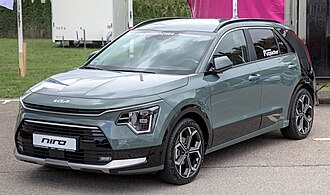
KIA Niro as a Used Car: A Smart Hybrid Choice for Everyday Driving
The KIA Niro is an interesting used-car proposition because it was designed from the beginning around electrified driving rather than being a conventional petrol car that was later adapted to use a hybrid system. Introduced in Europe in 2016, the first-generation Niro combined a 1.6-litre petrol engine with an electric motor and a relatively compact battery, giving buyers an efficient crossover with the practicality of a small family car and the smoothness of hybrid propulsion. It quickly established a reputation as a sensible alternative to conventional petrol and diesel cars, particularly for drivers who wanted lower fuel consumption without committing to a fully electric vehicle. Today, the used market offers several versions of the Niro, including the original hybrid, the Niro Plug-in Hybrid and the second-generation Niro introduced for the 2022 model year. For a used buyer, the first-generation hybrid is particularly interesting because it can deliver excellent everyday economy without requiring the owner to charge the vehicle.
Buying a used Niro is nevertheless slightly different from buying a conventional hatchback or crossover. The hybrid powertrain contains more components than a simple petrol engine, including a high-voltage battery, electric motor, inverter and dedicated transmission. That might sound intimidating, but hybrid technology is not necessarily a disadvantage when the system has been properly maintained. In fact, the Niro’s relatively mature hybrid design can make it an appealing used car because its electric assistance reduces the amount of work demanded from the petrol engine during low-speed driving. The more important question is therefore not whether a Niro has a hybrid system, but whether the particular car has been maintained correctly and whether its battery, transmission and cooling systems are functioning as they should.
What Is the KIA Niro?
The first-generation KIA Niro was developed as a compact crossover with electrification at its core. Rather than using a conventional automatic gearbox, it employs a six-speed dual-clutch transmission, with the electric motor integrated into the powertrain. The European hybrid version uses a 1.6-litre four-cylinder petrol engine and electric motor combination, with a system output of approximately 141 PS. This gives the Niro enough performance for normal family driving while keeping fuel consumption relatively low.
The second-generation Niro, introduced from 2022, retained the basic philosophy but received a much more modern interior, redesigned exterior and updated electrified powertrains. It continued to be offered as a hybrid, plug-in hybrid and, depending on market, fully electric Niro EV. For buyers looking at the used market, this creates an unusually broad range of choices. Someone who wants maximum simplicity can choose the conventional hybrid, while a driver with home charging and predictable daily mileage may prefer the plug-in version.
The Niro occupies an interesting position between a conventional hatchback and a larger SUV. Its relatively upright body provides useful passenger space without making the car excessively difficult to manoeuvre, while the elevated driving position gives the driver a little more visibility than a typical family hatchback. That combination is one of the reasons it works particularly well as an everyday family car.
Why Buy a Used KIA Niro?
Excellent Everyday Efficiency
The biggest reason to buy a Niro is fuel economy. The hybrid system allows the petrol engine to switch off frequently in slow traffic and enables electric-only movement under suitable conditions. Instead of wasting petrol while idling or relying entirely on the combustion engine during every acceleration, the Niro can recover energy during deceleration and use that energy later to assist propulsion.
Official figures vary by generation, wheel size and testing procedure, but the first-generation Niro was designed to achieve combined consumption in the region of 4–5 litres per 100 km under the relevant European test cycles. Real-world consumption depends heavily on driving conditions, but careful urban and mixed driving can still produce impressive results.
This makes the Niro particularly attractive to people who drive regularly in cities and suburban areas. A conventional diesel can be economical on a motorway, but repeated short trips and stop-start traffic are not necessarily its ideal environment. The Niro’s hybrid system is almost the opposite: low-speed traffic provides plenty of opportunities for electric assistance and regenerative braking.
No Need to Plug It In
The standard Niro hybrid is also appealing because the owner does not need access to a charging point. This is an important distinction between the hybrid and plug-in hybrid versions. A conventional hybrid continually recharges its relatively small battery through regenerative braking and energy management, so the driver simply fills the petrol tank and drives.
For people living in apartments or without dedicated parking, this can be a major advantage. The Niro provides many of the benefits associated with electrification without requiring a change in daily routine.
How Does the Niro Hybrid System Work?
The first-generation Niro combines a 1.6-litre GDI petrol engine with an electric motor and lithium-ion polymer battery. The hybrid system is paired with a six-speed dual-clutch transmission rather than the continuously variable transmission found in many competing hybrids.
This transmission choice gives the Niro a somewhat more familiar driving sensation than a traditional CVT hybrid. Under acceleration, the gearbox changes ratios in a manner similar to a conventional automatic transmission. The electric motor helps fill in the gaps in petrol-engine torque, particularly when pulling away from a standstill.
Regenerative braking is another central feature. When the driver slows down, the electric motor can operate as a generator and recover some kinetic energy. That energy is stored in the hybrid battery and subsequently used to assist acceleration. This process is particularly effective in urban driving, where repeated braking would otherwise convert much of the vehicle’s kinetic energy into heat.
What Is the Niro Like to Drive?
The Niro is designed for relaxed and efficient driving rather than excitement. Its steering is light enough for easy urban manoeuvring, and the elevated seating position makes it straightforward to position in traffic. The hybrid system is at its smoothest when the driver accelerates progressively rather than treating the car like a sports hatchback.
One of the most appealing characteristics is how quietly the Niro can operate at low speeds. When the battery has sufficient charge and conditions are suitable, the car can move under electric power with very little noise. The petrol engine starts and stops automatically, often so smoothly that the driver barely notices the transition.
At motorway speeds, the character changes somewhat. The petrol engine becomes more prominent and fuel consumption rises, particularly at high speeds. Nevertheless, the Niro remains a competent long-distance vehicle. It is better thought of as an efficient all-rounder than as a specialist city car.
What to Check Before Buying a Used Niro
Hybrid Battery
The hybrid battery is naturally one of the first things prospective buyers worry about. A high-voltage battery is expensive compared with an ordinary 12-volt car battery, but its presence should not automatically make you reject an older Niro. Hybrid batteries are designed for repeated charge and discharge cycles, and the Niro’s battery management system is designed to protect the pack from extreme states of charge.
Nevertheless, a used Niro should be inspected for warning lights or unusual behaviour. During a test drive, pay attention to whether the hybrid system operates smoothly and whether the transition between electric and petrol propulsion feels normal. A specialist inspection can provide additional reassurance by checking the battery system and stored diagnostic information.
The 12-Volt Battery
The smaller 12-volt battery should not be forgotten simply because the car is a hybrid. It supplies power to many conventional electrical systems and plays an important role in the vehicle’s startup sequence. If the car has been sitting unused for long periods, the 12-volt battery may be weak.
A used Niro with unexplained electrical warnings, intermittent starting problems or unusual dashboard messages deserves careful investigation. Some apparent hybrid-system problems can actually be associated with low auxiliary-battery voltage, although a proper diagnosis is essential rather than assuming the cause.
Dual-Clutch Transmission
The Niro’s six-speed dual-clutch transmission is one of its distinguishing technical features. During a test drive, it should shift smoothly and predictably. Pay particular attention to low-speed manoeuvres, hill starts and parking situations. Some hesitation or mechanical sensation can be characteristic of dual-clutch technology, but pronounced shuddering, slipping or harsh engagement should not be ignored.
A complete service history is especially valuable because it demonstrates that the previous owner has followed the manufacturer’s maintenance requirements.
Petrol Engine and Cooling System
The 1.6-litre GDI petrol engine is a central part of the Niro’s hybrid system and should be assessed like any other modern petrol engine. The engine should start cleanly, idle consistently and respond without hesitation when the accelerator is pressed. Look for oil leaks, coolant leaks and evidence of poor maintenance.
The cooling system is particularly important because the hybrid system contains several components that require temperature management. During the inspection, check that the engine reaches and maintains normal operating temperature and that there are no warning messages relating to the hybrid system.
A well-maintained Niro should feel mechanically cohesive. If the petrol engine, electric motor and transmission seem to be fighting each other rather than working together smoothly, the vehicle deserves further investigation before purchase.
Interior and Practicality
The Niro’s cabin is one of its understated strengths. It does not attempt to offer the enormous interior of a large SUV, but it provides enough room for a small family while maintaining compact exterior dimensions. The raised seating position makes entry and exit convenient, and the rear seats provide reasonable space for passengers.
Boot capacity is also respectable for a hybrid crossover. The first-generation hybrid offers approximately 382 litres of luggage space according to European specifications, with additional capacity available when the rear seats are folded. The plug-in hybrid has somewhat less boot space because of its larger battery pack.
When buying used, inspect the cabin for wear rather than simply judging its appearance. Check the condition of the driver’s seat, steering wheel and pedals against the claimed mileage. Test every switch, infotainment function, climate-control setting and electric window. A car that has spent years carrying children may show more interior wear than one used primarily for commuting.
Equipment and Safety
The Niro was generally well equipped for its class, although specifications vary significantly by market and trim. Depending on year and equipment level, buyers may find features such as adaptive cruise control, lane-keeping assistance, autonomous emergency braking, parking sensors, heated seats, navigation and a reversing camera.
Safety equipment should be checked carefully because not every used example has the same specification. It is worth confirming the exact equipment of an individual vehicle using its VIN or original specification documentation rather than assuming that every Niro includes the same driver-assistance systems.
Modern safety technology is one area where a newer second-generation Niro can have a significant advantage. Its more advanced driver-assistance systems and updated cabin make it feel considerably more contemporary than an early first-generation car.
Reliability and Common Ownership Concerns
The Niro’s hybrid technology can look complicated on paper, but complexity alone does not determine reliability. What matters is how the system has been engineered, how well it has been maintained and how the vehicle has been used.
The most important areas for a used buyer are the hybrid battery, transmission, petrol engine, cooling system and electronics. None should automatically be regarded as a major weakness, but any warning light or abnormal behaviour should be investigated before purchase. A diagnostic scan performed by a technician familiar with hybrid vehicles can be particularly useful.
Another consideration is that the Niro is relatively modern compared with many inexpensive used cars. That means it contains more electronic equipment than an older naturally aspirated hatchback. Features that improve comfort and safety can also become potential sources of repair costs as the vehicle ages.
Hybrid or Plug-in Hybrid?
Standard Hybrid
For most used buyers, the standard hybrid is the easiest version to recommend. It provides excellent efficiency without requiring charging infrastructure, and its driving experience works particularly well in urban and mixed conditions. If you simply want to get into the car, drive and refuel when necessary, this is the most straightforward choice.
Plug-in Hybrid
The plug-in hybrid can be a better choice if you have reliable access to home or workplace charging and most of your daily journeys are relatively short. Its larger battery allows substantially more electric driving than the conventional hybrid, reducing petrol consumption when the battery is regularly charged.
However, buying a plug-in hybrid without actually charging it defeats much of the point. If you cannot charge at home, the standard hybrid is usually the more logical purchase.
First Generation or Second Generation?
The first-generation Niro remains attractive because depreciation has made it considerably more affordable. It provides the essential hybrid concept, useful practicality and low running costs without the price of a much newer car.
The second-generation Niro is more sophisticated and visually distinctive. It has a more modern cabin, updated technology and improved electrified powertrains, but naturally commands higher prices on the used market. For buyers with a limited budget, a well-maintained first-generation car can therefore represent excellent value.
The ideal choice depends on priorities. If low purchase cost is the main concern, look for a carefully maintained first-generation hybrid. If modern technology, interior quality and a newer vehicle are more important, the second generation deserves consideration.
Advantages and Disadvantages
Advantages
The Niro’s greatest advantage is efficiency. It offers hybrid driving without requiring the owner to charge the vehicle, making it an unusually convenient electrified car. It is also practical enough for everyday family use, easy to drive in town and generally comfortable on longer journeys.
Another benefit is the familiarity of its operating principle. Drivers do not need to learn complicated charging routines or plan journeys around public charging infrastructure. The car can be driven like a normal automatic while quietly managing its petrol and electric power sources in the background.
Disadvantages
The Niro is not especially exciting to drive, and its performance is adequate rather than sporty. At motorway speeds, fuel consumption rises and the petrol engine becomes more noticeable. Rear-seat and boot space are useful but not exceptional for a crossover of this size.
Used buyers also need to consider hybrid-specific repair costs. Although the technology can be reliable, the high-voltage system and specialised components mean that a serious fault should be diagnosed by someone with appropriate hybrid expertise.
Final Verdict: Is the KIA Niro a Good Used Car?
The KIA Niro is one of the more convincing used hybrid choices for buyers who want low running costs without moving completely to an electric vehicle. The standard hybrid is particularly appealing because it combines good fuel economy with the convenience of conventional refuelling. It works especially well in urban and suburban environments, where regenerative braking and electric assistance can make a significant difference.
The most important rule when buying a used Niro is to inspect the individual car rather than relying on the model’s reputation. Look for complete service records, verify that the hybrid system operates normally, test the dual-clutch transmission carefully and investigate any warning lights or unexplained electrical behaviour. If possible, have the car inspected by a technician who understands hybrid systems before completing the purchase.
A good Niro can be a remarkably sensible used car. It is efficient without being impractical, technologically interesting without requiring the lifestyle changes of a full EV and compact enough for everyday city use. For buyers who put fuel economy and ease of ownership above outright performance, the Niro remains one of the more compelling hybrid crossovers on the second-hand market.
KIA Niro Technical Specifications
The table below summarises representative specifications for the first-generation European KIA Niro Hybrid. Exact figures can vary according to model year, trim, wheel size, market and testing procedure.
| Specification | KIA Niro Hybrid |
|---|---|
| Generation | First generation (DE) |
| European introduction | 2016 |
| Body type | Compact crossover / SUV |
| Engine | 1.6 GDI petrol + electric motor |
| Petrol engine displacement | 1,580 cc |
| Cylinders | 4, inline |
| Petrol engine power | approx. 105 PS |
| Electric motor power | approx. 43.5 PS |
| Combined system power | approx. 141 PS |
| Maximum petrol-engine torque | approx. 147 Nm |
| Hybrid battery | Lithium-ion polymer |
| Battery capacity | approx. 1.56 kWh |
| Transmission | 6-speed dual-clutch automatic |
| Drive | Front-wheel drive |
| Length | approx. 4,355 mm |
| Width | approx. 1,805 mm |
| Height | approx. 1,535 mm |
| Wheelbase | approx. 2,700 mm |
| Seating capacity | 5 |
| Boot capacity | approx. 382 litres |
| Fuel tank | approx. 43 litres |
| 0–100 km/h | approx. 11.5 seconds |
| Top speed | approx. 162 km/h |
| Combined fuel consumption* | approx. 3.8–4.4 l/100 km |
| CO₂ emissions* | approximately 88–101 g/km |
| Front suspension | MacPherson strut |
| Rear suspension | Independent multi-link |
| Brakes | Disc brakes front and rear |
| Typical tyre sizes | 205/60 R16 or 225/45 R18 |
*Figures vary according to model year, wheel size and homologation/test cycle.
Ultimately, the KIA Niro makes the most sense as a used car when its hybrid character matches your driving. If most of your journeys involve town traffic, commuting and mixed roads, it can deliver impressive economy while remaining straightforward to operate. If you spend almost all your time on high-speed motorways, the efficiency advantage becomes less dramatic, and a conventional petrol, diesel or fully electric vehicle may make more sense depending on your circumstances. For everyone in between, however, the Niro offers a particularly appealing compromise: enough space for everyday family life, genuinely useful hybrid technology and the ability to achieve low fuel consumption without ever having to plug the car into a charger.
_PHEV_Leonberg_2022_1X7A0474.jpg)