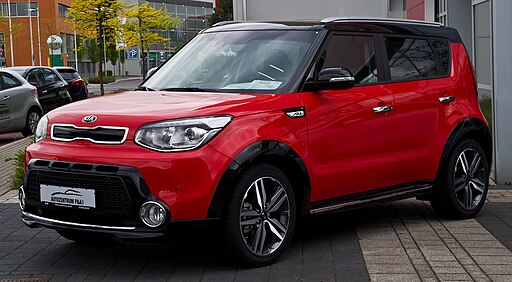
KIA Soul as a Used Car: A Quirky Crossover That Makes More Sense Than You Might Think
The KIA Soul is one of those cars that refuses to disappear into the background. Its upright body, almost square silhouette, high roof and distinctive styling have always made it instantly recognisable, but there is considerably more to the Soul than its unusual appearance. As a used car, it can be an appealing choice for buyers who want something compact on the outside, spacious on the inside and different from the endless stream of conventional hatchbacks and crossovers. The first-generation Soul arrived in Europe around 2009, while the second generation followed for 2014 and brought improvements to refinement, practicality and driving dynamics. European versions were offered primarily with 1.6-litre petrol and diesel engines, while later versions added turbocharged petrol power and, in some markets, the fully electric Soul EV.
The Soul is particularly interesting on the used market because its unconventional styling can work in the buyer’s favour. Cars that are less conventional when new do not always attract the same level of second-hand demand as mainstream models, which can make them relatively good value. At the same time, the Soul’s unusual shape has a practical purpose. The tall roof creates a generous feeling of space, the upright seating position makes entry and exit easy and the boxy rear end provides a useful luggage area. It is not a perfect car, and choosing the right engine and checking the condition carefully are important, particularly with older diesel examples, but a well-maintained Soul can be a surprisingly sensible used-car purchase.
What Is the KIA Soul?
The KIA Soul was conceived as a compact, urban-oriented crossover with a distinctive design and a versatile interior. The first generation measured approximately 4.1 metres long and 1.79 metres wide, making it relatively easy to manoeuvre in city traffic, while its tall 1.61-metre body gave occupants considerably more vertical space than the dimensions might suggest. Contemporary technical data list a wheelbase of approximately 2,550 mm and a five-seat interior.
The second-generation Soul retained the basic formula but became slightly larger and more sophisticated. The European 2014 model measured 4,140 mm long, 1,800 mm wide and 1,610 mm high, with a 2,570 mm wheelbase. Kia also increased the luggage capacity to 354 litres with the rear seats upright and up to 1,367 litres with them folded.
That combination is central to the Soul’s appeal. It is not a large SUV, but it has an interior that feels more spacious than many similarly sized hatchbacks. The tall roof means that passengers do not feel as though they are sitting inside a low car, while the upright tailgate makes loading luggage relatively straightforward. For older passengers or anyone who values easy access, the elevated seating position can also be a genuine advantage.
Why Buy a Used KIA Soul?
The Soul Is Different
One of the simplest reasons to buy a Soul is that it does not look like everything else. In a market where many small crossovers have converged on very similar proportions and styling, the Soul remains unmistakable. Its design is deliberately boxy and upright, and later versions could be ordered with contrasting roof colours, large alloy wheels and a wide selection of exterior finishes. Kia offered numerous personalisation possibilities, reinforcing the model’s character as something slightly different from an ordinary family car.
That distinctive design also tends to age relatively well. The Soul does not rely heavily on temporary styling trends, and its basic silhouette remains recognisable even on older examples. A well-kept first- or second-generation car can therefore still look interesting years after its original registration.
Excellent Use of Interior Space
The Soul’s greatest practical strength is the relationship between its exterior dimensions and interior volume. Its tall roof gives plenty of headroom, while the relatively upright seats make the cabin feel airy. The second-generation model offered approximately 1,006 mm of front headroom and 1,003 mm at the rear in the published European specification.
The boot is also more useful than its compact exterior might suggest. The second-generation model has 354 litres with the rear seats upright and 1,367 litres with the rear seats folded, making it capable of handling normal family shopping, luggage and larger objects without requiring a large SUV.
This makes the Soul particularly suitable for buyers who spend most of their time in urban or suburban environments but still occasionally need to transport bulky items. It is compact enough to park without much difficulty, yet its upright body gives it some of the practical qualities associated with larger vehicles.
Which Engine Is Best?
1.6 Petrol
The 1.6-litre petrol engine is one of the simpler choices in the Soul range and can make particular sense for drivers who do relatively low annual mileage. In the second-generation European Soul, the 1.6 GDI produced approximately 132 PS and 161 Nm, with a six-speed manual or six-speed automatic depending on specification. Kia’s published figures give a combined consumption range of approximately 6.5–7.3 litres per 100 km for manual versions, depending on wheels and equipment.
The petrol engine is particularly worth considering if most journeys are short. Modern diesel technology is at its best when the engine regularly reaches operating temperature and the car spends sufficient time travelling at higher speeds. A petrol Soul avoids some of the diesel-specific concerns associated with particulate filters and high-pressure fuel systems.
The trade-off is fuel consumption. The Soul is relatively upright and aerodynamically less efficient than a conventional hatchback, so the petrol engine may consume noticeably more fuel on motorways or when driven aggressively. Buyers who cover high annual mileage should therefore compare the petrol and diesel options carefully.
1.6 CRDi Diesel
The 1.6 CRDi is arguably the more natural match for the Soul if it is regularly used for longer journeys. The second-generation European version produced approximately 128 PS and 260 Nm, with the torque available from around 1,900 to 2,750 rpm. Kia quoted combined consumption of approximately 4.8–5.0 litres per 100 km for manual versions, making the diesel considerably more economical on paper than the petrol.
The extra torque is useful because the Soul’s upright body and relatively substantial weight mean that the diesel can feel more relaxed when overtaking or carrying passengers. It is also well suited to motorway cruising.
However, used buyers should be more cautious with diesel examples. A high-mileage car with a comprehensive service history can be an excellent purchase, but a diesel Soul that has spent most of its life doing short urban journeys may have experienced more stress than its mileage suggests. Before buying, check for warning lights, excessive smoke, poor starting, unusual turbo noises and evidence of problems with the emissions system.
First Generation or Second Generation?
First-Generation Soul
The first-generation Soul remains an interesting budget choice. It introduced the distinctive design that became the model’s trademark and provided a surprisingly practical cabin for a relatively small vehicle. European versions included 1.6-litre petrol and diesel engines, with the diesel producing around 126 PS and 255 Nm in early specifications.
Its age is now the biggest consideration. The oldest cars are approaching or exceeding 15 years, so condition matters far more than the original reputation of the model. Suspension components, exhaust systems, air-conditioning equipment, electrical components, door mechanisms and interior trim can all show the effects of age.
A carefully maintained first-generation Soul can still be appealing, especially at a low purchase price, but buyers should not expect it to behave like a much newer car.
Second-Generation Soul
The second-generation Soul is generally the better all-round used purchase if the budget permits. Kia strengthened the bodyshell, revised the suspension and improved sound insulation. The front MacPherson strut suspension was mounted on a subframe designed to improve isolation from vibration, while the rear suspension was revised for better ride comfort. Kia also stated that interior noise was reduced by approximately three decibels compared with the previous model.
The improvements are significant because they address some of the weaknesses of the original car. The second-generation Soul feels more mature, more refined and more convincing as a daily family vehicle, while retaining the distinctive design that made the original so appealing.
What to Check Before Buying a Used Soul
Engine and Service History
A complete service history is one of the most valuable things a used Soul can have. Look for regular oil changes and evidence that scheduled maintenance has been carried out rather than relying exclusively on the seller’s claims. The engine should start promptly from cold, idle consistently and respond smoothly to the accelerator.
On diesel cars, pay particular attention to smoke, turbocharger behaviour and warning lights. A test drive should include both gentle urban driving and stronger acceleration. The engine should pull progressively without obvious flat spots or sudden loss of power.
Petrol cars should be checked for rough running, oil leaks and signs of neglected maintenance. A naturally aspirated petrol engine may be simpler than a turbocharged modern unit, but it still requires proper servicing.
Clutch and Transmission
Manual Souls should be checked for clutch slip, judder and difficult gear selection. A worn clutch can be particularly noticeable when accelerating uphill or in a high gear at low engine speed. The gear lever should move cleanly through all ratios without excessive resistance.
Automatic versions should be driven both when cold and after the vehicle has warmed up. Shifts should be reasonably smooth and predictable. Hesitation, harsh engagement or unusual noises should be treated as reasons for further investigation rather than dismissed as normal behaviour.
Suspension and Steering
The Soul’s upright shape and relatively short wheelbase make suspension condition important to the driving experience. Listen for knocks when driving over potholes or speed bumps, and pay attention to whether the car remains composed through corners.
The second-generation model received suspension improvements specifically aimed at reducing harshness and improving refinement. A well-maintained example should therefore feel reasonably settled. Excessive bouncing, steering vibration or uneven tyre wear may indicate worn suspension or alignment problems.
Bodywork and Interior
The Soul’s boxy body makes its exterior panels relatively easy to inspect. Look along the sides for inconsistent reflections that could indicate previous repairs, and examine the lower edges of the doors, tailgate and wheel arches for corrosion or damage.
Inside, test everything. Check the air conditioning, electric windows, mirrors, central locking, audio system, heated seats if fitted, parking sensors and reversing camera. The Soul was available with a wide range of equipment, so the condition of the individual car is more important than simply choosing a particular trim level.
How Practical Is the Soul?
The Soul is one of those cars whose practicality becomes more obvious after spending time inside it. Its exterior footprint is compact, but the upright body provides plenty of headroom and makes loading easier than in a low hatchback. The second-generation model’s 354-litre boot is not class-leading in absolute terms, but its shape makes it useful, while folding the rear seats increases capacity dramatically.
Rear passengers benefit from the tall roof as well. The car can comfortably function as a small family vehicle, particularly for buyers who value easy access more than outright boot length. It is not a seven-seater and should not be mistaken for a large MPV, but as a five-seat compact crossover it makes good use of the available space.
The upright driving position is another practical benefit. Entry and exit require less bending than in a conventional low hatchback, and the elevated seating position provides a good view over surrounding traffic. This can make the Soul particularly pleasant for older drivers or anyone who prioritises visibility.
What Is the Soul Like to Drive?
The Soul is best described as relaxed rather than sporty. Its tall body inevitably produces more body movement than a low hatchback, and the steering is geared toward ease of use rather than sharp feedback. The car is nevertheless perfectly competent for everyday driving, and the second-generation model made noticeable progress in ride comfort and refinement.
The diesel version has a useful advantage when the car is loaded or driven on faster roads because of its strong low- and mid-range torque. The petrol model is quieter and can feel smoother when driven gently, but it requires more revs when acceleration is needed.
At motorway speeds, the Soul’s upright shape becomes more apparent. Wind noise can be more noticeable than in a streamlined hatchback, and fuel consumption can rise. Around town, however, its compact dimensions, high seating position and good visibility make it easy to live with.
Fuel Economy and Running Costs
Fuel consumption varies significantly according to engine, transmission, wheels and driving conditions. Kia’s European specifications for the 2014 Soul quote 6.5–7.3 litres per 100 km for the manual 1.6 GDI and 4.8–5.0 litres per 100 km for the manual 1.6 CRDi, with automatic versions using more fuel.
Real-world figures will naturally differ, particularly because the Soul’s boxy body creates more aerodynamic drag than a conventional hatchback. A diesel is likely to make more financial sense for drivers covering substantial motorway mileage, while a petrol model can be preferable for shorter journeys and lower annual mileage.
Ownership costs are also influenced by the condition of the individual vehicle. Tyres, brakes, suspension components and air-conditioning repairs can all become significant expenses on older examples. The cheapest Soul to buy is therefore not necessarily the cheapest Soul to own.
The Soul EV: An Interesting Used Alternative
The Soul was also produced as a fully electric vehicle, creating another option for second-hand buyers. The Soul EV’s distinctive shape and electric powertrain made it an unusual alternative to conventional compact EVs, particularly for urban driving.
A used Soul EV can be attractive if the owner has access to home charging and the car’s range is adequate for the intended journeys. However, battery health becomes a much more important consideration than it is with the petrol or diesel versions. Prospective buyers should obtain information about battery condition and charging performance and understand the limitations of an older EV before purchase.
For most buyers considering an older Soul, the petrol and diesel versions remain the simplest options. The EV is more specialised and should be selected because its electric characteristics fit the owner’s lifestyle, not simply because it is cheap.
Advantages and Disadvantages
Advantages
The Soul’s biggest strength is its combination of compact dimensions and usable interior space. It is easy to get into, easy to see out of and reasonably easy to park, yet its tall body gives passengers plenty of headroom. The distinctive styling is another major advantage for buyers who want something different from the conventional crossover crowd.
The second-generation Soul is particularly appealing because Kia improved its ride, refinement and cabin quality while preserving the model’s unique character. Its 354-litre boot and 1,367-litre maximum luggage capacity make it practical enough for many family uses.
Disadvantages
The Soul’s upright shape has consequences. Fuel economy is not always as impressive as its compact size might suggest, especially with petrol engines and at motorway speeds. It also does not handle like a conventional hatchback, and its ride can feel firm on poor surfaces, particularly with larger wheels.
Older diesel examples require careful inspection because modern diesel components can become expensive with age and neglect. Finally, the Soul’s unusual styling is not for everyone, and resale demand may be narrower than for a mainstream small crossover.
Final Verdict: Is the KIA Soul a Good Used Car?
The KIA Soul is a good used car for the buyer who understands what makes it different. It is not the fastest compact crossover, the most economical car on the motorway or the sharpest-handling model in its class. Instead, it offers something more unusual: a compact footprint, a tall and spacious cabin, easy access, practical luggage capacity and genuinely distinctive styling.
For most buyers, a well-maintained second-generation Soul is the version to target. The improvements to ride comfort, cabin refinement and practicality make it a more complete car than the first generation, while the 1.6 petrol remains a sensible option for lower-mileage drivers and the 1.6 CRDi makes more sense for those who regularly cover longer distances.
The key to buying any used Soul is condition. Check the service history, inspect the engine and transmission, test the electrical equipment and take the car on a proper road test. With diesel versions, be particularly cautious about signs of emissions-system or turbocharger problems. With any older example, remember that age-related repairs can matter more than the original model’s reliability reputation.
Ultimately, the KIA Soul is one of those used cars that rewards buyers who are willing to think outside the obvious choices. Its unconventional shape has practical benefits, its compact dimensions make everyday driving easy and its interior is considerably more useful than its small footprint suggests. If you want a used crossover that is economical enough for everyday use, spacious enough for a small family and distinctive enough to stand apart from the crowd, the Soul deserves a place on your shortlist.
KIA Soul Technical Specifications
The table below uses representative European specifications for the second-generation KIA Soul 1.6 GDI and 1.6 CRDi. Exact figures vary according to model year, transmission, wheels, trim and market.
| Specification | 1.6 GDI Petrol | 1.6 CRDi Diesel |
|---|---|---|
| Generation | Soul II | Soul II |
| European introduction | 2014 | 2014 |
| Body type | 5-door compact crossover | 5-door compact crossover |
| Seating capacity | 5 | 5 |
| Engine | 1.6 GDI petrol | 1.6 CRDi turbo diesel |
| Displacement | 1,591 cc | 1,582 cc |
| Cylinders | 4, inline | 4, inline |
| Valves | 16 | 16 |
| Maximum power | 132 PS | 128 PS |
| Maximum torque | 161 Nm | 260 Nm |
| Fuel system | Direct injection | Common-rail direct injection |
| Turbocharger | No | Yes |
| Transmission | 6-speed manual / 6-speed automatic | 6-speed manual / 6-speed automatic |
| Drive | Front-wheel drive | Front-wheel drive |
| Length | 4,140 mm | 4,140 mm |
| Width | 1,800 mm | 1,800 mm |
| Height | 1,593–1,618 mm* | 1,593–1,618 mm* |
| Wheelbase | 2,570 mm | 2,570 mm |
| Ground clearance | 143 mm | 143 mm |
| Fuel tank | 54 litres | 54 litres |
| Boot capacity | 354 litres | 354 litres |
| Boot capacity, seats folded | up to 1,367 litres | up to 1,367 litres |
| Kerb weight | approx. 1,212–1,398 kg | approx. 1,308–1,482 kg |
| 0–100 km/h | approx. 11.0 s | approx. 11.2 s |
| Top speed | up to 185 km/h | up to 180 km/h |
| Combined consumption, manual* | 6.5–7.3 l/100 km | 4.8–5.0 l/100 km |
| Combined consumption, automatic* | approx. 7.6 l/100 km | approx. 6.0 l/100 km |
| Front suspension | MacPherson strut | MacPherson strut |
| Rear suspension | Torsion beam | Torsion beam |
| Brakes | Disc brakes | Disc brakes |
*Height varies with wheel and roof-bar configuration. Consumption and performance figures are manufacturer/test-cycle figures and can vary by specification and market.
The KIA Soul is therefore a particularly interesting used-car choice for people who value practicality and personality equally. A good example can offer much of the everyday usefulness of a small SUV without the bulk of a larger crossover, while its upright design makes the cabin feel surprisingly generous. Choose the engine according to your driving pattern, inspect older diesel examples carefully and prioritise condition over equipment, and the Soul can be one of the more rewarding unconventional choices on the used market.
_%E2%80%93_Frontansicht,_17._April_2014,_D%C3%BCsseldorf.jpg)