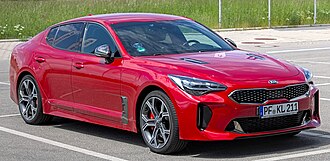
KIA Stinger as a Used Car: A Complete Buyer’s Guide
The Kia Stinger is one of those cars that becomes more interesting as a used car than it was when new. When it arrived in Europe in 2017, it was an unusual proposition: a relatively affordable Korean grand tourer with rear-wheel drive, a long bonnet, a practical fastback body and engines powerful enough to challenge much more expensive German sports sedans. Kia did not design the Stinger simply as another family car with a large engine. It was intended as a statement of what the company could build when driving enjoyment, long-distance comfort and performance were given priority. That makes it a particularly fascinating choice on the second-hand market.
The Stinger was never as common as a BMW 3 Series, Audi A5 Sportback or Mercedes-Benz C-Class, and that rarity is part of its appeal today. A used Stinger can provide an unusual combination of performance, equipment and practicality without looking like every other executive car in the car park. It also benefits from Kia’s original seven-year/150,000-kilometre European warranty, subject to the applicable conditions, which can be particularly valuable when considering younger examples. Kia itself described the Stinger as its driver-focused grand tourer, and the engineering specification certainly supports that description: longitudinal engines, rear-wheel drive or all-wheel drive, an eight-speed automatic transmission and independent suspension were all part of the formula.
However, the Stinger is not simply a larger Kia that happens to have a powerful engine. It is a performance car, and that means used buyers need to think differently about condition, tyres, brakes, transmission behaviour and previous ownership. A car that has been maintained carefully can be an outstanding second-hand purchase, while an abused example can quickly become expensive. The good news is that the Stinger’s basic engineering is impressive, and its combination of performance and everyday usability makes it one of the most intriguing used performance cars available.
What makes the Kia Stinger special?
A genuine grand tourer rather than an ordinary sedan
The Stinger occupies an unusual place in the automotive market because its shape combines the practicality of a hatchback with the proportions of a sports sedan. The long bonnet, low roofline and short-looking rear deck give it a distinctly rear-wheel-drive appearance, while the large rear hatch makes loading luggage considerably easier than in a conventional three-box sedan.
Kia developed the car in Europe and subjected it to extensive testing, including development work at the Nürburgring. The company wanted the Stinger to combine high-speed stability with everyday comfort, rather than producing a car that was only entertaining on a winding road. That philosophy remains noticeable when driving one today. The Stinger can be driven enthusiastically, but it is equally happy covering hundreds of kilometres on a motorway.
This dual personality is perhaps its greatest strength as a used car. A pure sports car can be difficult to justify as a daily driver, while a conventional executive sedan can feel ordinary. The Stinger occupies the middle ground: fast enough to be genuinely exciting, but practical enough to function as a family car.
Rear-wheel drive gives it a different character
One of the most important technical features of the Stinger is its rear-wheel-drive architecture. Kia also offered all-wheel drive on selected versions and markets, but the rear-driven layout was fundamental to the car’s character. The engine is mounted longitudinally, and power is sent to the rear wheels in RWD versions. Kia also equipped rear-wheel-drive models with a mechanical limited-slip differential, while the AWD system was designed with a rear-biased character.
For an enthusiast buying a used Stinger, this is a major advantage. The steering, chassis balance and power delivery feel fundamentally different from those of a typical front-wheel-drive family car. The driver can feel the rear axle working under acceleration, while the chassis remains stable and predictable when driven quickly.
The AWD versions make sense for drivers who regularly encounter snow, rain or poor road surfaces. They also provide additional traction when using the V6’s substantial torque. However, the rear-wheel-drive cars are arguably the purest expression of what makes the Stinger interesting.
Which engine should you choose?
2.0 T-GDi: the sensible performance option
The 2.0-litre turbocharged four-cylinder petrol engine is an excellent choice for buyers who want performance without moving all the way to the V6. European launch specifications quoted 255 PS and 353 Nm, while later specifications and individual markets can differ slightly. Kia’s technical documentation lists the 2.0 T-GDi at 245 PS in certain European specifications, illustrating why buyers should always check the exact model year and market rather than relying on a generic Stinger specification.
The four-cylinder engine provides enough performance to make the Stinger feel genuinely quick, while its lower capacity and cylinder count make it somewhat easier to live with than the V6. It is particularly appealing to buyers who want the Stinger’s chassis and design but do not necessarily need supercar-like acceleration.
A used 2.0 T-GDi should still be treated as a performance car. Turbochargers, direct fuel injection and high specific output mean that regular oil changes and correct servicing are essential. During a test drive, acceleration should be smooth and strong throughout the rev range, with no unusual smoke, hesitation or warning lights.
2.2 CRDi: the long-distance specialist
The 2.2 CRDi diesel is perhaps the most unusual engine in the Stinger range because it gives the car a completely different personality. In European launch specification, it produced 200 PS and 440 Nm, with all engines paired to an eight-speed automatic transmission.
The diesel is not the obvious choice for someone buying a Stinger for weekend entertainment, but it makes considerable sense for a driver who covers high annual mileage. Its strong torque suits motorway driving and gives the car effortless acceleration without requiring high engine speeds.
There is an important caveat, however: modern diesel technology brings additional emissions-control equipment. A used diesel Stinger that spent its life on short urban journeys should therefore be inspected carefully. The DPF, emissions system, turbocharger and fuel system all deserve attention, particularly on a higher-mileage example.
For the right owner, the diesel Stinger can be an unusually capable long-distance car. It combines the comfort and styling of a grand tourer with the fuel economy and torque characteristics of a diesel executive vehicle.
3.3 T-GDi V6: the engine that makes the Stinger legendary
For many enthusiasts, the 3.3-litre twin-turbocharged V6 is the reason to buy a Stinger at all. Kia’s European specification gives the engine 370 PS and 510 Nm, with maximum torque available from 1,300 to 4,500 rpm. The official performance figure is 0–100 km/h in 4.9 seconds for the upgraded European model, making it the fastest-accelerating Kia sold in Europe at the time.
The V6 changes the character of the Stinger completely. It is not merely quicker than the four-cylinder car; it provides the effortless thrust that makes a grand tourer feel special. There is substantial torque almost everywhere in the rev range, allowing the car to accelerate rapidly without requiring dramatic downshifts.
The obvious disadvantage is fuel consumption. A twin-turbo 3.3-litre V6 in a large, rear-wheel-drive performance car will never be an economical choice. Buyers also need to budget for larger tyres, more substantial brakes and potentially higher insurance and maintenance costs. The V6 therefore makes most sense for someone who specifically wants the performance experience rather than simply looking for inexpensive transport.
What is the Stinger like to drive?
The Stinger’s driving experience is probably its greatest selling point. It was developed with input from engineers who had experience working on high-performance vehicles, and the result is a car that feels much more sophisticated than its price when new might have suggested.
The suspension uses MacPherson struts at the front and a multi-link arrangement at the rear. Higher-performance versions were also available with electronically controlled damping, allowing the driver to alter the car’s character through the drive-mode system. Kia offered five driving modes—Eco, Comfort, Sport, Sport+ and Smart—depending on specification.
In Comfort mode, the Stinger is capable of behaving like a relaxed executive car. Select Sport and the throttle response, transmission behaviour and steering become more aggressive. Sport+ is intended for enthusiastic driving and, on appropriate versions, permits considerably more freedom from the electronic stability systems.
The result is a car with genuine range. It can commute through traffic during the week, carry passengers and luggage on holiday and then provide an entertaining drive on a suitable road at the weekend.
What should you check before buying a used Stinger?
Service history is more important than a low odometer reading
Performance cars are particularly sensitive to how they have been treated. A low-mileage Stinger is not necessarily a good Stinger if the previous owner ignored maintenance or regularly drove it hard from cold. Look for evidence of regular servicing, correct oil changes and professional maintenance.
Ask how the car was used. A vehicle that accumulated kilometres through long motorway journeys may be mechanically healthier than one that covered a fraction of the mileage through repeated short trips and enthusiastic acceleration. A detailed service history should include invoices wherever possible rather than simply a stamped service book.
A pre-purchase inspection by a mechanic familiar with performance vehicles is strongly recommended. The cost of an inspection is small compared with the potential cost of discovering a serious engine, transmission or drivetrain problem after purchase.
Check the eight-speed automatic transmission
Every Stinger engine was paired with an eight-speed automatic transmission in the European launch range. Kia designed the transmission with features intended to improve shift quality and reduce drivetrain vibration, and it offers paddle-shift control for drivers who want more involvement.
During a test drive, the gearbox should shift smoothly when cold and warm. Test gentle acceleration, hard acceleration, kickdown, reversing and low-speed manoeuvres. There should be no unexplained shuddering, severe delay or harsh engagement.
Do not be concerned simply because the gearbox changes its behaviour in Sport mode—that is normal. What matters is whether the changes are predictable and mechanically smooth.
Inspect the brakes and tyres carefully
A Stinger can consume tyres and brakes more quickly than an ordinary family car, especially if it has been driven enthusiastically. This is particularly relevant to the 3.3-litre V6, which was fitted with high-performance staggered tyres and Brembo brakes as standard in GT specification. Kia’s original specifications list 225/40 R19 front and 255/35 R19 rear tyres, along with 350 mm front and 340 mm rear Brembo discs.
Check the remaining tread depth and look for uneven wear, cracks or damage. Replacing a complete set of performance tyres can be considerably more expensive than replacing tyres on a small hatchback.
The brake discs should also be inspected for excessive scoring, corrosion or vibration. During braking from higher speeds, the car should remain stable and the steering wheel should not shake.
Examine the body and underside
The Stinger sits relatively low for a large car, so inspect the front bumper, splitter, lower bodywork and underside for damage. A car that has repeatedly been driven over steep ramps or poor roads may have picked up scratches or impact damage.
Also examine the wheels carefully. Large alloy wheels are vulnerable to potholes, and a bent wheel can cause vibration that is sometimes mistakenly attributed to tyre problems.
Is the Stinger practical enough for everyday use?
Despite its performance credentials, the Stinger is surprisingly practical. The fastback tailgate gives access to a large luggage compartment, and the rear seats can be folded to accommodate larger loads. This makes the Stinger much more versatile than a conventional sports coupe.
The long wheelbase also provides useful passenger space. Adults can sit comfortably in the front, while the rear seats are suitable for normal family use. The sloping roofline does reduce the feeling of headroom compared with an SUV, but the Stinger remains a genuine four- or five-seat car rather than a sports car with occasional rear seats.
Its biggest practical drawback is its size. At approximately 4.83 metres long, it is not a small vehicle, and parking in narrow urban spaces requires some care. A reversing camera and parking sensors are therefore highly desirable.
What are the disadvantages of owning a used Stinger?
The Stinger’s greatest weakness is not a single mechanical component but the cost of running a performance car. Fuel consumption can be significant, particularly with the V6. Tyres and brakes are more expensive than those fitted to ordinary family cars, and insurance can also be higher.
The car’s rarity can have two opposing effects. On one hand, it makes the Stinger special and gives it considerable character. On the other, some components may not be as readily available from independent specialists as parts for a BMW or Mercedes-Benz. Buyers should therefore establish the availability and cost of routine parts in their local market before committing to a particularly unusual specification.
Another consideration is depreciation. The Stinger was never a volume seller in Europe, and its discontinuation means buyers should not expect the same market liquidity as with a mainstream executive car. That is less important if you intend to keep the car for several years, but it matters if you change vehicles frequently.
Is a used Kia Stinger reliable?
The Stinger’s reliability reputation is generally encouraging, but a sensible buyer should avoid making broad assumptions. The car uses proven Kia powertrain technology, but it also combines turbocharged engines, sophisticated electronics, an eight-speed automatic gearbox, high-performance brakes and, on some versions, electronically controlled suspension and AWD.
That means maintenance is crucial. The best used Stinger is not necessarily the cheapest one—it is the example with the best history. A well-maintained V6 with a complete service record can be a much better proposition than a cheaper car with uncertain ownership history.
The original European warranty is another reason younger cars can be attractive. Kia offered the Stinger with its seven-year/150,000-kilometre warranty in Europe, subject to the manufacturer’s conditions. Buyers of newer used cars should confirm whether warranty coverage remains and whether servicing has complied with the requirements.
Which used Stinger should you buy?
For drivers who want the best combination of performance and running costs, the 2.0 T-GDi is probably the most balanced choice. It is fast enough to make full use of the Stinger’s chassis without the fuel consumption of the V6. It also preserves the fundamental qualities that make the car unusual: rear-wheel-drive dynamics, a long-distance-friendly cabin and a practical fastback body.
The 2.2 CRDi makes sense for a very different buyer. If the Stinger will cover high annual mileage, especially on motorways, its torque and efficiency can make it the most rational choice. The diesel should, however, be bought only after careful inspection of its emissions equipment and service history.
The 3.3 T-GDi is the enthusiast’s choice. If the primary reason for buying a Stinger is the driving experience, the V6 is difficult to ignore. Its 370 PS and 510 Nm provide performance that remains impressive, while the rear-wheel-drive chassis gives it a character that many modern performance cars have lost.
Final verdict: is the Kia Stinger a good used car?
The Kia Stinger is an excellent example of a car that makes more sense as a used purchase than it did as a new-car proposition. Its original price positioned it against established executive and performance cars, but depreciation can bring it into reach of buyers who would otherwise never consider a rear-wheel-drive grand tourer.
Its combination of distinctive styling, practical fastback body, comfortable interior and genuinely capable chassis makes it much more than a novelty. The 2.0 T-GDi provides a good all-round balance, the 2.2 CRDi is suited to long-distance drivers and the 3.3 T-GDi V6 turns the Stinger into a serious performance car.
The important thing is to buy carefully. Look for a complete service history, inspect the automatic transmission, check tyres and brakes, examine the underside and verify the condition of the engine and drivetrain. If the car has been properly maintained, the Stinger offers something that very few used cars can match: the practicality of an executive fastback combined with the mechanical layout and performance of a genuine driver’s car.
For someone searching for a used vehicle that feels different from the usual BMW, Audi or Mercedes choices, the Kia Stinger may be one of the most compelling alternatives available. It is fast without being intimidating, practical without being boring and luxurious without relying on a premium badge. That combination is precisely what makes the Stinger such an interesting used car.
Kia Stinger technical specifications
| Specification | 2.0 T-GDi | 2.2 CRDi | 3.3 T-GDi V6 |
|---|---|---|---|
| Body style | 5-door fastback | 5-door fastback | 5-door fastback |
| Engine type | Turbocharged 4-cylinder petrol | Turbocharged 4-cylinder diesel | Twin-turbo V6 petrol |
| Displacement | 1,998 cc | 2,199 cc | 3,342 cc |
| Typical European output | 245–255 PS* | 200 PS | 366–370 PS* |
| Maximum torque | 353 Nm | 440 Nm | 510 Nm |
| Torque range | approx. 1,400–4,000 rpm | approx. 1,750–2,750 rpm | approx. 1,300–4,500 rpm |
| Transmission | 8-speed automatic | 8-speed automatic | 8-speed automatic |
| Drivetrain | RWD or AWD, depending on market | RWD or AWD, depending on market | RWD or AWD, depending on market |
| 0–100 km/h | approx. 6.0 sec | approx. 7.7 sec | approx. 4.9 sec |
| Top speed | approx. 233–240 km/h | approx. 230 km/h | up to 270 km/h |
| Length | approx. 4,830 mm | approx. 4,830 mm | approx. 4,830 mm |
| Width | approx. 1,870 mm | approx. 1,870 mm | approx. 1,870 mm |
| Height | approx. 1,400 mm | approx. 1,400 mm | approx. 1,400 mm |
| Wheelbase | 2,905 mm | 2,905 mm | 2,905 mm |
| Fuel tank | approx. 60 litres | approx. 60 litres | approx. 60 litres |
| Front suspension | MacPherson strut | MacPherson strut | MacPherson strut |
| Rear suspension | Multi-link | Multi-link | Multi-link |
| Typical tyre size | 225/45 R18 | 225/50 R17 or 18-inch | 225/40 R19 front |
| Rear tyre, GT | — | — | 255/35 R19 |
| Performance brakes | Ventilated discs | Ventilated discs | Brembo ventilated discs |
| Seating capacity | 5 | 5 | 5 |
| Luggage capacity | approx. 406 litres* | approx. 406 litres* | approx. 406 litres* |
*Specifications vary by model year, market, drivetrain and trim. Kia’s official European documentation lists the original 2.0 T-GDi at 245 PS in some European specifications and the 3.3 T-GDi at 366 PS in later European versions, while launch material quoted 255 PS and 370 PS respectively. The 2.2 CRDi was specified at 200 PS and 440 Nm. The 3.3-litre V6 produces 510 Nm and can accelerate the Stinger to 100 km/h in 4.9 seconds in the upgraded European specification. Dimensions and the 60-litre fuel tank are based on Kia’s published technical specifications.
