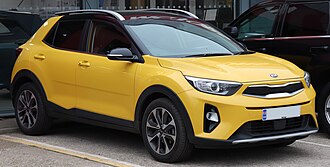
KIA Stonic as a Used Car: A Complete Buyer’s Guide
The Kia Stonic is one of the smaller members of Kia’s SUV and crossover family, positioned below the Sportage and designed primarily for drivers who want the appearance and seating position of an SUV without the dimensions and running costs of a larger vehicle. Introduced in Europe in 2017, the Stonic quickly established itself in the highly competitive B-segment crossover class, where it competes with cars such as the Renault Captur, Peugeot 2008, Nissan Juke, Volkswagen T-Cross, Seat Arona and Hyundai Kona. As a used car, it can be an especially interesting proposition for urban drivers, young families and buyers who value straightforward operation, relatively compact dimensions and a generous level of equipment.
The Stonic is not an SUV in the traditional off-road sense. It is primarily a front-wheel-drive crossover designed for paved roads, city streets and occasional trips on less-than-perfect surfaces. That distinction is important because it explains much of the car’s character. Instead of carrying the weight and mechanical complexity associated with a large four-wheel-drive vehicle, the Stonic concentrates on manoeuvrability, economy and practicality. Its relatively compact body makes it easy to park, while the elevated seating position gives the driver the sense of command that has made small crossovers so popular.
For second-hand buyers, the Stonic also has another important advantage: it is a comparatively modern car. Even the earliest European examples are now old enough to be affordable on the used market but young enough to offer contemporary safety equipment, smartphone connectivity and relatively efficient engines. Kia’s warranty policy can also be valuable when considering newer used examples, although buyers should always verify the remaining warranty and confirm that the car meets the manufacturer’s requirements.
The Kia Stonic in brief
The Stonic was developed for the European market and shares its underlying architecture with Kia’s Rio supermini, although its exterior design and higher ride height give it a distinctly different character. Kia positioned it as a compact urban crossover rather than a conventional SUV, and that philosophy is reflected in its dimensions. The original European Stonic measured approximately 4.14 metres long, making it substantially easier to manoeuvre in urban environments than a Sportage or Sorento.
The styling was deliberately youthful, with a relatively low roofline, pronounced wheel arches and a broad choice of exterior colour combinations. This was an important part of the Stonic’s appeal because buyers in the B-SUV segment often choose their vehicles as much for personality as for practicality. The interior, meanwhile, was deliberately conventional. Rather than surrounding the driver with an elaborate dashboard, Kia used a straightforward layout with physical controls for many of the frequently used functions.
That conventional approach has aged relatively well. A used Stonic may not have the visual impact of the newest generation of touchscreen-heavy crossovers, but its controls are generally easy to understand and the cabin provides a reassuringly familiar driving environment.
Why is the Stonic attractive as a used car?
Compact dimensions are a major advantage
The biggest reason to consider a used Stonic is its size. Large SUVs can be comfortable and practical, but they can also be inconvenient in cities, especially in older parking garages and narrow streets. The Stonic offers a higher driving position and crossover styling while remaining close to the dimensions of a conventional supermini.
This makes it particularly suitable for people who spend a significant amount of time in urban traffic. The relatively short body makes parking easier, while the raised seating position gives a good view over surrounding traffic. A reversing camera and parking sensors are desirable on higher-specification examples, but even without them the Stonic is less intimidating to manoeuvre than a large family SUV.
The compact dimensions also help keep running costs under control. Tyres are generally smaller and less expensive than those fitted to large SUVs, while the car’s lower weight means that modest petrol engines can provide adequate performance without having to move a substantial amount of mass.
It offers the crossover experience without excessive bulk
The Stonic is a good example of why many people do not actually need a large SUV. It provides the visual styling, driving position and sense of practicality associated with a crossover while retaining much of the easy-to-drive character of a small hatchback.
This is particularly attractive to older drivers who appreciate easier access, as well as younger motorists who want something more distinctive than a conventional supermini. The elevated seating position can make getting into the car easier, while the upright body makes the interior feel more spacious than its exterior dimensions might suggest.
Equipment can be generous
Kia has traditionally competed strongly on standard equipment, and the Stonic follows that philosophy. Depending on the year and trim, used examples can be found with features such as automatic climate control, heated seats, navigation, touchscreen infotainment, Apple CarPlay, Android Auto, cruise control, reversing cameras and various driver-assistance systems.
However, equipment varies considerably between markets and model years. This means that buyers should inspect the actual car rather than relying on an advertisement that describes the Stonic range generally. A higher trim may be worth paying extra for if it includes safety and convenience features that you would otherwise have to retrofit.
Which engine should you choose?
1.2 MPI: simple and predictable
One of the petrol engines offered in the European Stonic range was the naturally aspirated 1.2 MPI. In its original specification, this four-cylinder engine produced around 84 PS. It is not a performance-oriented engine, but its simplicity can be appealing to used-car buyers who value predictable mechanical behaviour over outright acceleration.
The 1.2 MPI makes the most sense for predominantly urban driving and for buyers who are not particularly concerned about fast acceleration. The engine has to work harder when the car is heavily loaded or travelling at motorway speeds, so drivers who frequently make long journeys may prefer one of the turbocharged alternatives.
Its main appeal is that it offers a straightforward petrol-powered ownership experience. Nevertheless, buyers should not interpret a naturally aspirated engine as maintenance-free. Oil changes, cooling-system maintenance, spark plugs and general servicing remain important.
1.0 T-GDi: the best all-rounder
The 1.0 T-GDi is arguably the most interesting engine for many used Stonic buyers. It is a three-cylinder turbocharged petrol engine that was offered with outputs around 100 or 120 PS depending on model year and market. Kia quoted 172 Nm of torque for the 120 PS version, giving the small crossover considerably more flexibility than the naturally aspirated 1.2-litre engine.
The turbocharged engine suits the Stonic particularly well because it combines compact dimensions with useful mid-range torque. In everyday driving, that means the car does not need to be revved constantly to maintain momentum. It is also a better choice for motorway journeys, where the extra torque makes overtaking and climbing gradients easier.
As with any turbocharged petrol engine, a full maintenance history is important. During a test drive, listen for unusual noises, check that acceleration is smooth and make sure there are no warning lights. A cold start is particularly useful because it can reveal problems that may be less obvious after the engine has warmed up.
1.0 T-GDi mild hybrid: attractive in newer cars
Later versions of the Stonic benefited from mild-hybrid technology, depending on market and model year. Kia’s electrified 1.0 T-GDi powertrain was designed to improve efficiency while retaining the relatively small and lightweight character of the car.
For used buyers, a mild hybrid can be attractive because it provides some of the efficiency benefits of electrification without requiring the owner to charge the vehicle. However, it also adds technical complexity. When buying one, make sure the hybrid system operates without warning messages and that the vehicle’s 12-volt and hybrid-related systems have been properly maintained.
What is the Stonic like to drive?
The Stonic’s driving character is closer to a supermini than a traditional SUV. That is generally a positive feature. Its compact dimensions and relatively low weight make it easy to position on the road, while the steering is light enough for city driving without feeling completely disconnected at higher speeds.
The suspension has to cope with the relatively tall body and higher centre of gravity, so the Stonic is not designed to be a sports car. Nevertheless, it can be enjoyable on winding roads because it is smaller and lighter than many competing compact SUVs. The driver gets a useful view of the road, while the car remains easy to place accurately.
Ride comfort depends heavily on wheel size. Cars with smaller wheels and taller tyre sidewalls are generally more forgiving over potholes and broken urban roads, while larger wheels can make the ride firmer. For a used buyer prioritising comfort and low running costs, a sensible wheel and tyre specification may actually be preferable to the largest available alloy wheels.
What should you check before buying a used Stonic?
Start with the service history
A well-documented service history is one of the most valuable things a used Stonic can have. Check that scheduled servicing was performed at the correct intervals and that the seller can provide invoices or other supporting documentation.
Mileage should be considered alongside the type of use. A higher-mileage Stonic that has spent much of its life on longer journeys may be in better mechanical condition than a low-mileage car that has only been used for short urban trips. Look for consistency between the mileage, service records, interior wear and inspection documentation.
Test the clutch and transmission
Manual Stonics should be checked for clutch slip, juddering and difficulty selecting gears. The clutch should engage progressively and the gear lever should move smoothly between ratios. If the car has an automatic or dual-clutch transmission, take extra time during the test drive to assess low-speed behaviour.
Pay particular attention when reversing, parking and pulling away from a standstill. A healthy transmission should behave predictably. Hesitation, repeated shuddering or harsh engagement should be investigated before purchase rather than dismissed as a characteristic of the vehicle.
Inspect the suspension and brakes
Small crossovers are often used in urban environments where potholes, kerbs and speed bumps can place considerable stress on suspension components. During the test drive, listen for knocking noises when crossing rough surfaces and check whether the car tracks straight under braking.
Inspect the tyres for uneven wear, particularly on the inside edges. Uneven wear can indicate alignment or suspension problems. The condition of the wheels should also be checked because alloy wheels can be damaged by potholes and kerbs.
Check the electronics
The Stonic is not as electronically complex as a large modern luxury SUV, but there is still plenty to test. Check the infotainment screen, Bluetooth, smartphone connectivity, air conditioning, electric windows, central locking, parking sensors, cameras and dashboard warning lights.
Driver-assistance equipment should also be tested. If the car is equipped with lane-keeping assistance, autonomous emergency braking or other safety systems, make sure there are no warning messages indicating that a camera or sensor needs attention.
How practical is the Stonic?
The Stonic is practical for its class, although it is important not to expect family-SUV levels of interior space. The front seats provide good room for adults, while the rear seats are best suited to children or average-sized adults on normal journeys. Tall passengers may find the rear legroom less generous than in a larger crossover.
The luggage compartment is useful for everyday shopping and small family trips. Kia’s published European specifications for the original Stonic list approximately 352 litres of boot space, increasing to around 1,155 litres with the rear seats folded. That is competitive with many small hatchbacks and crossovers, although larger B-SUVs can offer more space.
For a couple or small family, the Stonic’s boot is likely to be sufficient for everyday life. Families with pushchairs, large dogs or frequent holiday luggage should load the car before buying, because the difference between “adequate” and “genuinely spacious” becomes obvious once bulky objects are involved.
How reliable is a used Kia Stonic?
The Stonic’s relatively straightforward design is one reason it can make sense as a second-hand car. It shares components and technology with other Kia and Hyundai models, meaning it is not based on an exotic or unusually complicated mechanical concept.
Nevertheless, reliability should always be assessed at the individual-car level. Turbocharged engines, dual-clutch transmissions, mild-hybrid systems and modern electronic equipment all require appropriate maintenance. A car that has been serviced correctly can be a very different ownership proposition from an example that has been neglected.
One particularly useful advantage for buyers of newer Stonics is Kia’s long warranty policy. The original seven-year/150,000-kilometre warranty can potentially provide substantial reassurance when buying a relatively young used example, provided the vehicle remains within the applicable time and mileage limits and has met the manufacturer’s warranty conditions. Buyers should verify the exact warranty status using the vehicle identification number rather than assuming coverage remains.
Stonic versus a conventional hatchback
One question worth asking before buying any small crossover is whether you actually need an SUV-style vehicle. A conventional Kia Rio or similar B-segment hatchback can be cheaper, lighter and potentially more economical. It may also offer slightly sharper handling.
The Stonic’s advantage is the combination of a raised driving position, crossover appearance and greater perceived practicality. For many drivers, these qualities are worth paying a modest premium for. The car is also easier to enter and exit than a low hatchback, which can become surprisingly important after several years of ownership.
In other words, the Stonic should not be purchased because it is the largest car available for the money. It should be purchased because its compact crossover format fits your lifestyle.
Final verdict: is the Kia Stonic a good used car?
The Kia Stonic is one of the more sensible choices for buyers who want a small crossover without stepping into the dimensions and costs of a larger SUV. Its compact body makes it particularly well suited to urban driving, while the raised seating position and attractive styling give it the character many buyers want from a crossover. The cabin is straightforward rather than luxurious, but higher-specification cars can offer an impressive range of comfort, connectivity and safety features.
For most buyers, the 1.0 T-GDi is the engine worth looking for because it combines adequate performance with useful torque and relatively sensible fuel consumption. The naturally aspirated 1.2 MPI can make sense for buyers who prioritise simplicity and mostly drive around town, while newer mild-hybrid versions are worth considering if efficiency is a priority.
As with any used car, the individual example matters more than the model’s reputation. A complete service history, sensible mileage, healthy tyres, smooth transmission, clean dashboard and properly functioning electronics should be considered essential. Buyers should also check whether any remaining Kia warranty applies and whether all relevant recall or campaign work has been completed.
Ultimately, the Stonic is not trying to replace a large family SUV. Its real strength is that it gives drivers many of the qualities they like about SUVs while retaining the manageable size and relatively low running costs of a small car. If that combination matches your needs, a carefully selected used Kia Stonic can be a practical, economical and enjoyable companion for everyday driving.
Kia Stonic technical specifications
| Specification | Kia Stonic, early European models | Kia Stonic, later/mild-hybrid models |
|---|---|---|
| Model type | B-segment crossover | B-segment crossover |
| European introduction | 2017 | Updated from 2020 |
| Body style | 5-door crossover | 5-door crossover |
| Seating capacity | 5 | 5 |
| Drive | Front-wheel drive | Front-wheel drive |
| Length | approx. 4,140 mm | approx. 4,140 mm |
| Width | approx. 1,760 mm | approx. 1,760 mm |
| Height | approx. 1,520 mm | approx. 1,520 mm |
| Wheelbase | 2,580 mm | 2,580 mm |
| Boot capacity | approx. 352 litres | approx. 352 litres |
| Boot capacity, seats folded | approx. 1,155 litres | approx. 1,155 litres |
| Typical petrol engine | 1.2 MPI | 1.0 T-GDi |
| 1.2 MPI output | approx. 84 PS | — |
| 1.0 T-GDi output | 100–120 PS, depending on year | approx. 100–120 PS |
| 1.0 T-GDi torque | up to 172 Nm | up to 200 Nm, depending on version |
| Typical diesel engine | 1.6 CRDi, market-dependent | Generally discontinued from later European range |
| Diesel output | approx. 110 PS | — |
| Transmission | 5/6-speed manual, depending on engine/year | 6-speed manual/iMT or 7-speed DCT, depending on version |
| Mild-hybrid system | Not generally available | 48V mild hybrid on selected 1.0 T-GDi versions |
| Fuel tank | approx. 45 litres | approx. 45 litres |
| Suspension, front | MacPherson strut | MacPherson strut |
| Suspension, rear | Torsion beam | Torsion beam |
| Typical wheel sizes | 15–17 inches | 15–17 inches |
| Factory warranty when new | Up to 7 years/150,000 km, subject to conditions | Up to 7 years/150,000 km, subject to conditions |
Specifications vary by model year, engine, transmission, trim level and market. Kia’s European specifications for the original Stonic list a 4,140 mm length, 1,760 mm width, 2,580 mm wheelbase and approximately 352 litres of luggage capacity. Engine availability and outputs changed during the model’s production, so buyers should verify the exact specifications of the individual vehicle rather than relying solely on the model name.
