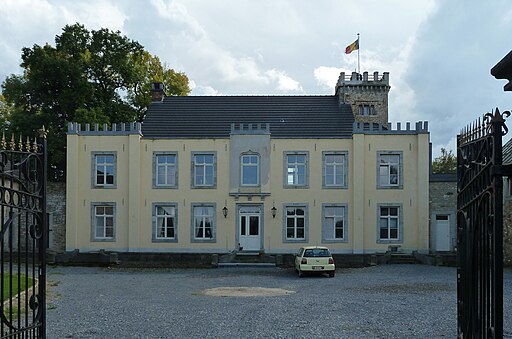
Knoppenburg, though lesser-known in mainstream historical discourse, represents a fascinating example of how small European localities embody layers of regional development, identity, and adaptation through time. Whether referring to the district of Knoppenburg in North Rhine-Westphalia, Germany, or the broader cultural connotations of the name, the story of Knoppenburg reveals much about Central European rural and urban evolution. Its roots lie deep in medieval administrative organization, feudal landholding patterns, and the shifting forces of industrialization and modern governance.
Early Settlement and Medieval Foundations
The origins of Knoppenburg can be traced back to the early medieval period, when the Rhine region was a patchwork of small lordships, ecclesiastical territories, and emerging towns. The suffix -burg suggests a fortified site or settlement, typically indicating a defensive structure or manor that served as the nucleus of local administration. The “Knoppen” element, often derived from personal names or natural features, likely referred to a family lineage or a topographical characteristic such as a hill or knoll.
During this era, Knoppenburg’s economy would have revolved around agriculture, timber, and local trade. As part of the Holy Roman Empire’s decentralized system, such settlements owed allegiance to local counts or abbeys, which shaped the region’s architecture and land use patterns. Stone churches and modest fortifications began to appear, anchoring the community in both faith and defense.
The Transformation under Feudal and Ecclesiastical Rule
By the late Middle Ages, Knoppenburg and surrounding lands were increasingly influenced by the Church and feudal lords who controlled tithes, land rents, and trade rights. The area’s proximity to larger centers like Cologne and Düsseldorf positioned it along minor trade corridors, fostering exchanges in grain, textiles, and livestock. Local monasteries and estates played a central role in maintaining agricultural production, employing serfs and tenant farmers to sustain their holdings.
The Reformation and Counter-Reformation brought significant social and spiritual upheaval to regions like Knoppenburg. Parishes were restructured, and religious identity became a defining factor in community cohesion. While some nearby territories adopted Protestantism, Knoppenburg remained largely Catholic, aligning itself with the Rhineland’s traditionalist tendencies. This continuity preserved much of its ecclesiastical architecture and ritual life.
Industrialization and the Modern Transition
The nineteenth century introduced profound transformations that reshaped Knoppenburg’s social and economic landscape. With the expansion of railway networks and the growth of industrial centers in the Ruhr region, formerly agrarian communities found themselves increasingly connected to broader markets. While Knoppenburg itself did not develop into a major industrial hub, it absorbed the influence of nearby manufacturing zones, providing labor and agricultural goods.
This period also saw significant demographic changes. Migration to urban centers reduced the rural population, but the remaining inhabitants benefited from improved infrastructure, schooling, and public administration. Local industries, such as milling, brewing, and small-scale metalwork, emerged to support both local consumption and regional trade.
The World Wars and Their Aftermath
The two world wars left deep marks on Knoppenburg’s social fabric. Many residents were conscripted or displaced, and wartime destruction affected both property and morale. Yet, the post-war period brought reconstruction and renewal. The late 1940s and 1950s saw a wave of modernization projects under the new Federal Republic of Germany, with emphasis on rebuilding homes, roads, and public buildings. Knoppenburg, like much of North Rhine-Westphalia, benefited from the “Wirtschaftswunder,” or economic miracle, which restored prosperity and stability.
During these decades, the community also became more closely integrated into the urban networks of the surrounding region. Improved transportation enabled daily commuting to larger industrial cities, gradually transforming Knoppenburg into a residential suburb while retaining its rural charm and cultural identity.
Cultural Identity and Local Traditions
Despite modernization, Knoppenburg has preserved a strong sense of cultural heritage. Local festivals, traditional crafts, and community associations remain vital expressions of regional identity. Annual fairs and religious processions reflect centuries-old traditions that connect present residents to their ancestors. Architectural conservation efforts have ensured that old farmhouses, chapels, and civic buildings remain integral parts of the local landscape.
Language and dialect also contribute to Knoppenburg’s character. The area retains traces of the Rhineland dialect, blending German linguistic patterns with historical influences from neighboring regions. Folk songs, culinary customs, and seasonal rituals continue to affirm the continuity between past and present.
Economic Life in the 21st Century
Today, Knoppenburg stands as a small yet dynamic community balancing tradition and innovation. While agriculture still plays a role, the local economy has diversified to include small enterprises, service industries, and tourism. Proximity to major urban centers allows residents to enjoy modern conveniences without sacrificing rural tranquility.
Sustainability initiatives have gained momentum, emphasizing renewable energy, ecological farming, and heritage preservation. Local councils encourage environmentally conscious development that maintains Knoppenburg’s scenic and historical character. Increasingly, visitors are drawn by its authenticity, viewing it as a microcosm of regional German life—where history, nature, and community coexist harmoniously.
The Enduring Spirit of Knoppenburg
Knoppenburg’s enduring significance lies not in grand historical events, but in the continuity of everyday life. From medieval manors to modern eco-friendly neighborhoods, it represents the enduring capacity of small European communities to adapt without losing their identity. The story of Knoppenburg is a reminder that history is not only written in capitals and cities—it thrives in the quiet rhythm of villages, the persistence of tradition, and the resilience of local people.
_v2.jpg)