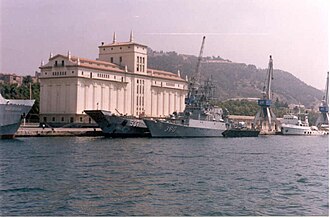
KRI Memet Sastrawiria: History, Technical Specifications, Armament, and Service in the Indonesian Navy
KRI Memet Sastrawiria (380) was a former Indonesian Navy corvette whose history connects East German naval engineering, Indonesia’s efforts to strengthen its maritime defense capabilities, and the demanding realities of operating warships across the Indonesian archipelago. Originally built for the East German Volksmarine under the name Bützow, the vessel became part of Indonesia’s fleet in 1995 and served until a serious onboard fire in August 2008 led to its decommissioning. Although the ship is no longer in active service, its story remains an interesting chapter in the development of Indonesia’s naval forces, particularly during the period when the country acquired and modernized several former East German warships.
Belonging to the Parchim-class family of corvettes, KRI Memet Sastrawiria was designed primarily for coastal operations and anti-submarine warfare. Its compact displacement, diesel propulsion system, comparatively high speed, and specialized weapons made it suitable for missions in coastal waters and maritime approaches where underwater threats could pose a significant challenge. The vessel also illustrates the practical considerations involved in transferring military equipment between countries: a ship built for one navy and one strategic environment must be adapted to the operational needs, maintenance capabilities, and weapons inventories of its new operator. Understanding KRI Memet Sastrawiria therefore requires looking beyond its dimensions and armament to examine its origins, Indonesian service history, technical design, and eventual retirement.
The Origins of KRI Memet Sastrawiria
From East German Bützow to an Indonesian Navy corvette
The story of KRI Memet Sastrawiria began in East Germany during the Cold War, when the country’s naval forces required relatively small but capable warships to protect coastal waters and counter potential submarine threats. The vessel was constructed by Peene-Werft at Wolgast, a shipbuilding center in East Germany known for producing vessels for the country’s naval service. It was launched on 12 March 1980 and entered service with the East German Volksmarine on 30 December 1981 under the name Bützow, carrying the pennant number 244. At that time, the ship belonged to the Parchim class, also associated with the East German Type 1331M project, which was developed around the needs of coastal anti-submarine warfare rather than the long-range power projection expected of much larger frigates or destroyers. The class was intended to provide a balance between speed, maneuverability, onboard sensors, and specialized weapons in a relatively compact hull, allowing its vessels to operate effectively in waters where submarine detection and rapid response were particularly important.
The political changes that transformed Europe at the end of the Cold War also created new opportunities and challenges for naval procurement. Following German reunification in 1990, former East German naval vessels became available for disposal, and several were subsequently acquired by foreign navies. Indonesia was among the countries that obtained former East German warships as part of a broader effort to strengthen its maritime forces. These acquisitions offered a way to expand the fleet with existing platforms instead of waiting for every vessel to be designed and built from the beginning. However, purchasing a used warship was only the first step in making it operational. Equipment condition, spare-parts availability, crew training, weapon compatibility, and the cost of refurbishment all affected the practical value of such acquisitions. KRI Memet Sastrawiria became part of this wider transition from a European Cold War naval environment to service in the geographically dispersed waters of Southeast Asia, where maritime patrols, coastal security, and the protection of national waters presented different operational demands.
Entry into Indonesian Navy service
After its transfer to Indonesia, the former Bützow received the name KRI Memet Sastrawiria and the pennant number 380. The ship was commissioned into the Indonesian Navy on 2 June 1995, becoming part of the group of former East German corvettes that Indonesia incorporated into its fleet during the 1990s. Its Indonesian designation reflected its new national identity and role, while its underlying hull and basic engineering remained products of the original East German design. As a member of the Indonesian Navy’s Kapitan Patimura-class group, it was associated with a fleet of small anti-submarine corvettes based on the Parchim design. These vessels were particularly relevant to a country whose territory encompasses thousands of islands and extensive sea routes, because maintaining maritime security requires a variety of platforms rather than relying exclusively on large surface combatants. Smaller corvettes can be useful for coastal patrols, presence missions, and specialized maritime tasks, although their effectiveness depends heavily on equipment condition, sensor performance, training, and the availability of logistical support. KRI Memet Sastrawiria’s entry into service consequently represented not simply a change of flag, but the adaptation of an existing military platform to Indonesia’s national maritime requirements.
The Meaning Behind the Name Memet Sastrawiria
A name connected to Indonesian naval history
The name Memet Sastrawiria is associated with the history of the Indonesian Navy and the struggle to establish and defend the country’s maritime sovereignty. Historical accounts identify Captain Memet Sastrawiria as an officer who died during the Battle of the Aru Sea on 15 January 1962, when he served aboard RI Matjan Tutul alongside Commodore Yos Sudarso. The confrontation occurred during the campaign associated with Indonesia’s effort to establish control over West Papua, then known internationally as West New Guinea. Yos Sudarso and members of his crew became important figures in Indonesian naval history because of their role in the confrontation and the sacrifices made during the operation. Naming a naval vessel after an officer connected to this event reflects a broader Indonesian military tradition of commemorating individuals whose service is regarded as significant to the nation’s history. In this context, KRI Memet Sastrawiria carried more than a numerical designation: its name connected a modern naval platform with an earlier generation of Indonesian sailors and the development of the country’s maritime identity.
A ship’s name can also serve as a reminder that naval history is shaped by people as much as by technology. Engines, radar systems, guns, and sonar equipment determine a vessel’s technical capabilities, but its operational record depends on the sailors who maintain and operate those systems under demanding conditions. For the crew of KRI Memet Sastrawiria, the name represented a connection to the institutional memory of the Indonesian Navy, while the vessel itself embodied the practical challenges of maintaining a warship acquired from another country. Although the ship originated in a different military and political environment, its service under the Indonesian flag placed it within a distinct national history. This combination of foreign-built engineering and Indonesian naval heritage makes the vessel a useful subject for anyone interested in the relationship between military commemoration, naval procurement, and the evolution of maritime defense in Southeast Asia.
Design and Characteristics of the Parchim-Class Corvette
A warship designed for coastal anti-submarine warfare
KRI Memet Sastrawiria belonged to the Parchim-class corvettes, a family of relatively small warships developed by East Germany during the late 1970s and early 1980s. The class was designed with a specific operational purpose: detecting and engaging submarines operating in coastal waters. During the Cold War, anti-submarine warfare was an important element of maritime strategy because submarines could threaten surface vessels, maritime approaches, and naval installations while remaining difficult to detect. Rather than attempting to match the size and endurance of large ocean-going combatants, the Parchim design emphasized a combination of compact dimensions, multiple diesel engines, onboard sonar, and weapons intended for underwater engagements. This specialization made the ships suitable for patrol and escort duties in regional waters, where the ability to search for submarines and respond quickly could be more important than possessing a large arsenal of long-range weapons. The design also reflected the military priorities of East Germany, whose naval forces operated within the wider strategic framework of the Warsaw Pact during the Cold War.
The Parchim-class concept was built around a relatively short hull compared with larger frigates, but the ships still carried a substantial collection of propulsion equipment, sensors, and weapons for their size. The design included three diesel engines driving three propellers, providing propulsion redundancy and the power required to achieve speeds of approximately 24.5 knots under reported specifications. Its equipment included surface and air search radar, fire-control radar, and a hull-mounted sonar system. The combination of these systems allowed a vessel to monitor its surroundings, identify potential contacts, and support the use of its weapons. Nevertheless, a ship’s actual effectiveness cannot be determined by the specifications of its original equipment alone. The condition of the machinery, reliability of electronic systems, quality of maintenance, and availability of compatible ammunition all influence performance over time. These considerations became particularly important when vessels originally built for East Germany were transferred to Indonesia and had to be integrated into a different naval organization.
Hull dimensions and displacement
The published specifications for KRI Memet Sastrawiria generally place its overall length at approximately 75.2 metres and its beam at around 9.7–9.8 metres. These dimensions gave the corvette a hull large enough to accommodate multiple engines, crew spaces, combat systems, and weapons while remaining considerably smaller than major surface combatants. The ship’s reported displacement is commonly listed at approximately 865 tonnes in standard condition and 935 tonnes at full load, although other secondary references provide lower figures. Displacement figures can differ between references because of variations in the ship’s configuration, the precise definition of standard and full-load conditions, and the particular technical record being consulted. For that reason, the higher figures associated with the commonly cited Parchim-class specifications are useful as general reference values, but should not be treated as a definitive measurement of every configuration the vessel may have carried during its career.
The hull dimensions also help explain the type of missions for which the ship was designed. A vessel approximately 75 metres long can carry dedicated naval systems and operate at useful speeds while retaining a more compact footprint than a frigate. Its size can make it suitable for regional patrol and escort tasks, but it does not eliminate the limitations associated with smaller warships. Endurance, seakeeping, onboard accommodation, fuel capacity, and the ability to operate in difficult weather all affect the range of tasks a vessel can undertake. Furthermore, a corvette designed for Cold War coastal operations does not automatically possess the same capabilities as a modern multipurpose combatant, particularly in areas such as integrated combat management, electronic warfare, and long-range missile engagement. KRI Memet Sastrawiria is therefore best understood as a specialized small surface combatant whose design reflected the requirements of its original era rather than as a direct equivalent of contemporary advanced corvettes.
Propulsion System and Performance
Three diesel engines and three propellers
One of the defining features of KRI Memet Sastrawiria was its diesel propulsion arrangement. Published specifications for the Parchim-class vessel list three M-504A diesel engines, each producing approximately 4,750 horsepower, for a combined nominal output of 14,250 horsepower. The engines drove three fixed-pitch propellers, providing the thrust needed to move the ship through coastal and regional waters. Multiple-engine arrangements can provide operational flexibility because propulsion power is distributed among several units rather than relying on a single main engine. However, the benefits depend on the condition of the engines, transmission equipment, propellers, fuel systems, and associated machinery. Maintaining an older vessel with three engines can also introduce logistical complexity, particularly when spare parts must be sourced for equipment manufactured decades earlier. The propulsion figures describe the ship’s reported design configuration; they should not be interpreted as evidence that all engines were operating at their original rated output throughout its Indonesian service.
Maximum speed and operational range
The ship’s commonly cited maximum speed was approximately 24.5 knots, equivalent to about 45.4 kilometres per hour. This level of performance was useful for a small warship expected to patrol maritime approaches, respond to developing situations, and maneuver during escort or anti-submarine operations. Its reported range was approximately 2,100 nautical miles at 14 knots, which corresponds to about 3,889 kilometres at a speed of roughly 25.9 kilometres per hour. Range and maximum speed describe different aspects of performance: maximum speed indicates the ship’s reported high-speed capability, while the range figure describes how far it could travel under a specified cruising condition. Actual endurance would vary with sea state, engine condition, fuel availability, onboard electrical demand, maintenance status, and operating profile. For a navy responsible for extensive maritime territory, the ability to balance speed and fuel efficiency is important because prolonged patrols often require economical cruising rather than continuous operation at maximum speed.
The ship’s propulsion system also illustrates a broader challenge associated with maintaining older naval platforms. A vessel can retain an impressive published speed figure on paper while experiencing a very different level of performance after decades of service. Diesel engines require regular inspection and servicing, and supporting components can deteriorate through age, vibration, corrosion, and continuous exposure to the marine environment. The availability of qualified technicians and replacement parts is therefore just as important as the original engine rating. In the case of a transferred warship, the operating navy must also ensure that maintenance procedures, technical documentation, and supply arrangements are compatible with its own logistics system. These practical considerations help explain why a vessel’s long-term military value cannot be measured solely by horsepower or maximum speed, but must also account for reliability, maintainability, and the resources required to keep it operational.
Armament and Combat Systems
The 57 mm AK-725 naval gun
The Parchim-class design included a twin-barrel 57 mm AK-725 naval gun, which was retained in the commonly reported Indonesian configuration of KRI Memet Sastrawiria. A gun of this type can provide a warship with a means of engaging surface targets and certain aerial threats, depending on the ammunition, fire-control equipment, and engagement conditions. Its twin-barrel arrangement provides two barrels within a single mounting, distinguishing it from a single-barrel gun of similar calibre. Naval guns serve a different role from missiles and underwater weapons: they can be used for engagements within their effective range and can support a variety of surface-combat or warning tasks, depending on the rules governing a particular operation. The actual usefulness of the AK-725 aboard an individual ship would have depended on the state of the mount, its associated fire-control system, the quality of maintenance, and the availability of suitable ammunition.
Close-range defense and the 30 mm AK-230
The ship’s reported Indonesian configuration also included a twin 30 mm AK-230 gun. This weapon was designed as a rapid-firing naval autocannon system, providing an additional layer of close-range defense and a capability against suitable surface or aerial targets. The 30 mm calibre complemented the larger 57 mm weapon by offering a different balance of projectile size and rate of fire. In naval operations, the purpose of multiple gun systems is not necessarily to duplicate the same capability, but to give the ship more than one option for responding to different kinds of threats. Nevertheless, these weapons were developed in a period when naval combat systems were generally less integrated than many modern systems, and their effectiveness depended heavily on sensor performance, fire-control arrangements, and the ability of the crew to maintain readiness. The AK-230’s presence is therefore an important part of the ship’s technical profile, but it should not be taken as proof of a particular engagement capability under every operational condition.
Changes to the original weapons configuration
An important distinction must be made between the original East German configuration and the ship’s later Indonesian service configuration. Secondary accounts of KRI Memet Sastrawiria list two Denel GI-2 20 mm guns among the weapons associated with its Indonesian service, alongside the retained 57 mm and 30 mm systems and two RBU-6000 anti-submarine rocket launchers. Other descriptions of the broader Parchim family list equipment associated with the original East German vessels, including short-range SA-N-5 air-defense weapons and 400 mm torpedo tubes. These differences matter because class-wide specifications are not necessarily an exact record of an individual ship’s final configuration. Naval vessels can undergo refits, lose equipment that is no longer supported, or receive replacement systems to match the operator’s available supplies and operational requirements. Consequently, it is more accurate to distinguish between weapons associated with the class generally and those reported for KRI Memet Sastrawiria in Indonesian service than to combine every item into a single definitive list.
The RBU-6000 anti-submarine rocket launcher
The RBU-6000 was one of the most distinctive systems associated with the vessel’s anti-submarine role. This launcher was developed to deliver rocket-propelled underwater weapons against submarine threats, providing a ship with a means of attacking targets detected in the water. Anti-submarine warfare is a demanding process involving detection, classification, tracking, and engagement, rather than simply firing a weapon toward a suspected target. A sonar contact must be assessed, and the crew must determine whether it represents a submarine or another underwater feature before deciding on an appropriate response. The RBU-6000 formed part of the broader weapon system intended to support this mission, while the ship’s sonar and other sensors provided information about its underwater environment. Its reported presence on KRI Memet Sastrawiria is consistent with the vessel’s original design emphasis on coastal anti-submarine operations.
Torpedoes and short-range air defense
The original Parchim-class configuration included four 400 mm torpedo tubes and short-range SA-N-5 air-defense weapons, according to secondary class histories. However, reports of the Indonesian configuration differ from descriptions of the original East German fit, and not every weapon associated with the class should automatically be attributed to KRI Memet Sastrawiria during its entire Indonesian career. Torpedo tubes provide a platform with a means of launching underwater weapons, but their practical value depends on whether suitable torpedoes are available, compatible, and maintained. Similarly, a short-range air-defense system depends on the availability of serviceable launchers, missiles, sensors, and trained personnel. The distinction between nominal equipment and operationally available equipment is particularly important when examining older ships acquired from foreign navies. For historical accuracy, the most responsible interpretation is to identify the torpedo tubes and SA-N-5 systems as features associated with the original class while acknowledging that the precise weapons retained by this individual vessel after its transfer require careful qualification.
Radar, Sonar, and Electronic Equipment
Surface and air search radar
Radar was an important component of KRI Memet Sastrawiria’s ability to monitor its maritime surroundings. Published descriptions of the Parchim-class equipment identify the MR-302, commonly known by the NATO reporting name Strut Curve, as a search radar associated with the class. Search radar helps a ship detect and track contacts at the surface and, depending on the system, in the air. This information can support navigation, maritime surveillance, situational awareness, and the initial assessment of potential threats. For a vessel conducting patrols around an archipelago, radar is particularly valuable because it can help the crew maintain awareness of nearby ships and other detectable objects, especially when visibility is limited. However, radar performance depends on several factors, including antenna condition, atmospheric conditions, sea clutter, target characteristics, and the maintenance of the electronic equipment. The presence of a particular radar model in a ship’s published specifications does not establish its condition or precise capabilities at every stage of the vessel’s service life.
Fire-control radar and target tracking
The MR-123 Vympel, also known by the NATO reporting name Muff Cob, is identified in secondary technical descriptions as a fire-control radar associated with the ship’s equipment. Fire-control systems have a different function from general search radars: they provide information used to support the accurate engagement of targets by a weapon system. By supplying tracking information, a fire-control radar can help a ship’s weapons crew determine the position and movement of a target and support the calculations required for an engagement. This role is particularly relevant to gun systems, which depend on accurate target tracking and coordinated operation between sensors and weapons. The performance of the overall system nevertheless depends on more than the radar itself, because electrical systems, weapon mounts, control equipment, and crew procedures must all work together. As with the ship’s other sensors, historical references identify the system associated with the class, but do not independently verify its operational condition immediately before the vessel was retired.
Hull-mounted sonar and anti-submarine detection
Sonar was central to the original purpose of the Parchim-class corvettes. Unlike radar, which uses electromagnetic waves to detect targets, sonar uses sound underwater to identify and assess objects and other features beneath the surface. The MG-322T is listed in secondary descriptions of the ship’s equipment as a hull-mounted sonar system. Such equipment supports the detection and tracking stage of anti-submarine warfare, enabling the crew to investigate underwater contacts and assess potential submarine activity. Sonar performance can be affected by water temperature, salinity, depth, underwater noise, seabed conditions, and the acoustic behavior of the target. These variables make underwater detection a specialized discipline that requires both technical equipment and trained personnel. A ship equipped with sonar and anti-submarine weapons is therefore a platform designed to perform a coordinated mission: sensors help locate and classify a contact, while the combat systems provide the means to respond if an engagement is authorized and operationally feasible.
Decoys and defensive measures
Some secondary descriptions also associate the Parchim-class equipment with the PK-16 decoy launcher, intended to help protect a ship by deploying countermeasures against certain threats. Decoy systems are designed to complicate an opponent’s ability to identify or track a genuine target, but their effectiveness depends on the type of threat, the characteristics of the countermeasure, and the conditions in which it is used. Such systems form part of a broader defensive approach that combines situational awareness, maneuvering, electronic or physical countermeasures, and other available protective capabilities. As with the ship’s weapons and sensors, the distinction between equipment originally fitted to the class and equipment confirmed to have remained operational on this individual vessel is important. Historical technical lists provide useful information about the design, but they should not be treated as a complete inspection record of the ship during its final years.
Operational Role in the Indonesian Navy
Maritime patrol and coastal security
During its Indonesian service, KRI Memet Sastrawiria was part of a fleet responsible for operating across waters that connect the many islands of the Indonesian archipelago. The country’s geography creates a wide range of maritime security requirements, from monitoring coastal approaches and shipping routes to responding to incidents involving vessels operating within Indonesian waters. Small corvettes can contribute to these responsibilities by providing a visible naval presence and supporting patrols in regional operating areas. Their value lies not only in their armament, but also in their ability to put a crew and a set of naval sensors at sea. The exact mission assigned to an individual vessel can change according to operational priorities, readiness, location, and available resources, so it would be inappropriate to assume that every KRI Memet Sastrawiria patrol involved anti-submarine warfare. Nevertheless, its original design provided a specialized set of capabilities that could contribute to broader maritime security tasks.
Anti-submarine warfare in a maritime archipelago
The Indonesian archipelago presents a complex underwater environment because it includes shallow coastal waters, narrow maritime passages, deeper channels, and heavily traveled sea routes. Anti-submarine warfare in such an environment requires appropriate sensors, reliable communications, trained crews, and the ability to interpret underwater contacts in the context of local conditions. A corvette like KRI Memet Sastrawiria was designed around the idea that a relatively compact warship could contribute to this mission without requiring the size and operating costs of a larger combatant. However, a ship’s ability to detect and engage a submarine depends on the performance of its sonar and weapons, as well as the availability of information from other units and surveillance systems. Anti-submarine warfare is rarely an isolated activity in modern naval operations; it can involve coordinated efforts among surface ships, aircraft, submarines, and shore-based command organizations. The Parchim-class design reflected an earlier approach to this specialized task, and its continued relevance in Indonesia depended on how its original capabilities could be maintained and adapted over time.
Fleet modernization and the challenges of older vessels
The transfer of former East German warships to Indonesia demonstrates both the opportunities and the limitations associated with acquiring used military equipment. A second-hand warship can expand a navy’s available fleet relatively quickly, but its acquisition price represents only one part of the total cost of ownership. Refurbishment, modernization, crew training, technical documentation, maintenance facilities, spare parts, and ammunition can substantially influence the long-term investment required to keep the ship operational. If a vessel’s weapons or sensors are no longer supported by the original manufacturer, the operator may have to seek alternative supply arrangements or modify the equipment. Integrating systems developed for a different navy can also require changes to procedures and maintenance practices. KRI Memet Sastrawiria’s service is therefore part of a wider story about how naval organizations balance the immediate need for operational ships with the long-term costs of maintaining aging platforms. The lessons extend beyond this particular vessel and remain relevant to any navy managing a mixed fleet of ships acquired from different countries and different technological generations.
The Final Chapter: The 2008 Fire in Lampung Waters
The incident of 18 August 2008
The final phase of KRI Memet Sastrawiria’s career came on 18 August 2008, when the vessel caught fire during a routine patrol in waters near Lampung, Indonesia. Published accounts place the incident approximately three nautical miles before Labuhan Siging. According to the available secondary reports, 44 personnel and the ship’s commander, Major Gema Eka Putra, were aboard during the incident, and those reported aboard survived without injuries. The outcome for the personnel was a significant contrast with the damage suffered by the ship itself. A serious fire aboard a naval vessel can threaten propulsion equipment, electrical systems, communications, combat equipment, and the structural integrity of compartments, while smoke and heat can make access to damaged spaces difficult. Even when everyone aboard escapes injury, the vessel may no longer be economically or technically suitable for restoration. In KRI Memet Sastrawiria’s case, the damage was reported to have been severe enough that the ship was decommissioned later in 2008.
The available accounts establish the broad sequence of events, but claims about the precise technical cause of the fire should be treated cautiously unless supported by a reliable investigation report. Fire incidents aboard ships can arise from several different circumstances, including failures in electrical equipment, machinery-related problems, fuel or lubricant leaks, and other sources of ignition. Establishing the actual cause requires evidence from the incident, an examination of the affected equipment, and a documented investigation. It would therefore be misleading to present any single technical explanation as definitively proven solely on the basis of brief secondary summaries. What can be stated with confidence from the available historical descriptions is that the incident occurred during a patrol, personnel were reported unharmed, and the resulting damage brought the ship’s operational career to an end.
Decommissioning and scuttling
Following the fire and the assessment that the damage was too severe for continued service, KRI Memet Sastrawiria was decommissioned and scuttled in the waters of Lampung in 2008, according to the published accounts of its service history. Scuttling refers to the deliberate sinking of a vessel, although the exact circumstances and procedures associated with an individual case depend on the decision made by the responsible authorities. In the case of an irreparably damaged warship, removal from service can mark the conclusion of a long sequence of operational, maintenance, and logistical decisions. A vessel that once provided propulsion, sensors, weapons, and accommodation for a naval crew becomes a reminder of the practical limits of maintaining military equipment as it ages. KRI Memet Sastrawiria’s retirement also meant that Indonesia lost one of its older small combatants, while the wider fleet continued to face the ongoing task of balancing available vessels, readiness, and modernization.
The Historical Significance of KRI Memet Sastrawiria
KRI Memet Sastrawiria is historically interesting because its career brought together several distinct periods of naval history. It was designed and built in East Germany during the Cold War, entered service under a German name, and later became part of Indonesia’s naval forces following the political changes that transformed Europe in the early 1990s. Its Indonesian service illustrates how naval equipment can move across national boundaries and acquire a new role in a different strategic environment. Its name also connected the ship with an Indonesian naval officer associated with a major historical event, giving the vessel a symbolic identity beyond its original industrial and military origins. Finally, its retirement after the 2008 fire demonstrates that even a warship with a specialized design and a substantial technical equipment list remains vulnerable to the practical challenges of damage, maintenance, and aging.
The vessel should not be remembered solely through the circumstances of its loss. Its history also offers a useful perspective on naval procurement, technical adaptation, and the demands of operating ships over several decades. A warship’s published specifications describe what its design was intended to achieve, but its real value is shaped by the people who operate it, the resources available to maintain it, and the missions it is assigned. KRI Memet Sastrawiria served in two different national naval contexts, carrying forward a design developed for Cold War coastal defense into Indonesia’s maritime environment. Although it no longer sails, its story remains relevant to readers interested in Indonesian naval history, East German shipbuilding, and the evolution of smaller anti-submarine combatants.
Technical Specifications of KRI Memet Sastrawiria
The following table summarizes the principal technical characteristics commonly associated with KRI Memet Sastrawiria and its Parchim-class design. Some published references give different displacement, draft, and armament figures, so these values should be regarded as historical reference data rather than a complete verified inventory of the ship immediately before decommissioning. The distinction between original class equipment and the configuration reported during Indonesian service is particularly important when interpreting the weapons and sensors.
| Technical specification | Details |
|---|---|
| Ship name | KRI Memet Sastrawiria |
| Pennant number | 380 |
| Original name | Bützow |
| Original pennant number | 244 |
| Operator | Indonesian Navy (TNI AL) |
| Original operator | East German Volksmarine |
| Ship type | Corvette; small anti-submarine warfare vessel |
| Class in Indonesian service | Kapitan Patimura class |
| Original design class | Parchim class |
| Project designation | Type 1331M |
| Shipbuilder | Peene-Werft, Wolgast, East Germany |
| Launch date | 12 March 1980 |
| Original commissioning | 30 December 1981 |
| Indonesian commissioning | 2 June 1995 |
| Decommissioning | 2008 |
| Final disposition | Reported scuttling in Lampung waters, 2008 |
| Length overall | Approximately 75.2 m |
| Beam | Approximately 9.7–9.8 m |
| Draft | Approximately 2.65–2.73 m in commonly cited specifications; references differ |
| Standard displacement | Approximately 865 tonnes in commonly cited Parchim-class specifications |
| Full-load displacement | Approximately 935 tonnes in commonly cited Parchim-class specifications |
| Main propulsion | 3 × M-504A diesel engines |
| Reported power output | Approximately 4,750 hp per engine; 14,250 hp combined |
| Propellers | 3 fixed-pitch propellers |
| Maximum speed | Approximately 24.5 knots |
| Reported range | Approximately 2,100 nautical miles at 14 knots |
| Main gun | 1 × twin 57 mm AK-725 mounting |
| Secondary gun | 1 × twin 30 mm AK-230 mounting |
| Additional guns | 2 × 20 mm Denel GI-2 guns reported in Indonesian-service descriptions |
| Anti-submarine weapons | 2 × RBU-6000 launchers reported |
| Torpedo armament | 4 × 400 mm tubes associated with the original class; Indonesian fit requires qualification |
| Original air-defense equipment | SA-N-5 systems listed in class descriptions; individual Indonesian configuration may differ |
| Search radar | MR-302 / Strut Curve reported in technical descriptions |
| Fire-control radar | MR-123 Vympel / Muff Cob reported in technical descriptions |
| Sonar | MG-322T hull-mounted sonar reported |
| Crew | Some secondary specifications list approximately 62 personnel |
| Primary design role | Coastal anti-submarine warfare |
| Final operational status | Retired; not in active naval service |
Note: Specifications are compiled from secondary historical and technical references. They may describe the original class, a general class configuration, or the vessel during a particular period of its career. They should not be interpreted as confirmation that every listed system remained fitted and operational in 2008.
Conclusion
KRI Memet Sastrawiria (380) occupies a distinctive place in the history of the Indonesian Navy because its career reflected the changing nature of naval procurement and maritime defense across two different eras. Built in East Germany as Bützow, the vessel entered service with the Indonesian Navy in 1995 and brought a specialized anti-submarine warfare design into a maritime environment characterized by extensive coastlines, numerous islands, and important shipping routes. Its diesel propulsion system, approximately 24.5-knot maximum speed, search and fire-control radar, sonar, and reported combination of naval guns and anti-submarine weapons made it a representative example of the compact corvettes developed for Cold War coastal defense. Its service also illustrates the practical complexities of operating foreign-built equipment, particularly when a ship must be maintained and adapted to a new navy’s technical and logistical requirements.
The fire of 18 August 2008 ended the vessel’s career after several years under the Indonesian flag, and the subsequent decommissioning and scuttling brought its operational history to a close. Nevertheless, the ship remains a valuable subject for historical research because it connects East German shipbuilding, Indonesia’s acquisition of former foreign naval vessels, and the continuing challenge of maintaining aging warships. Studying KRI Memet Sastrawiria provides a broader understanding of how naval platforms acquire new identities, how their technical capabilities are shaped by the needs of different operators, and why a warship’s legacy extends beyond its weapons and machinery. Its story is ultimately one of engineering, adaptation, service, and the changing requirements of maritime security.
