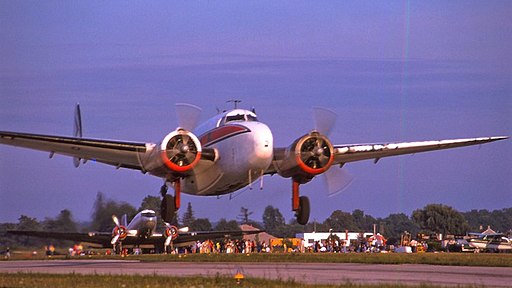
Lockheed Model 18 Lodestar
The Lockheed Model 18 Lodestar stands as a versatile and enduring aircraft that left an indelible mark on aviation during the mid-20th century. Introduced in the late 1930s, the Lodestar was initially designed as a civilian airliner, featuring a sleek low-wing design and twin Wright R-1820 Cyclone radial engines. With the capacity to carry 6 to 18 passengers, the Lodestar was favored for its spacious and luxurious interior, making it an ideal choice for early commercial air travel. However, its significance extended beyond the civilian realm, as the aircraft found itself pressed into military service during World War II, serving admirably in roles such as transport, reconnaissance, and training.
During its military tenure, the Lockheed Model 18 Lodestar took on various designations, including the C-56 and C-60. Its adaptability and reliability made it a workhorse for the Allied forces. Post-war, the Lodestar continued its legacy in civilian aviation, contributing to the post-war boom in air travel. Its enduring design and performance made it a favorite among operators seeking a dependable and versatile aircraft. With over 600 aircraft built across various configurations, the Lockheed Model 18 Lodestar remains a symbol of Lockheed’s commitment to producing aircraft that could seamlessly transition between civilian and military roles, leaving a lasting impact on the history of aviation.
Lockheed Model 18 Lodestar parameters
The Lockheed Model 18 Lodestar was a twin-engine transport aircraft with various configurations for both civilian and military use. Here are some key parameters for the Model 18 Lodestar:
- Crew: 2-3 (pilot, co-pilot, and navigator or radio operator)
- Passenger Capacity: Typically configured for 6 to 18 passengers
- Length: 49 feet 8 inches (15.14 meters)
- Wingspan: 65 feet 6 inches (19.96 meters)
- Height: 11 feet 5 inches (3.48 meters)
- Empty Weight: Approximately 12,500 pounds (5,670 kilograms)
- Max Takeoff Weight: Approximately 17,500 pounds (7,938 kilograms)
- Engines: Two Wright R-1820 Cyclone radial engines
- Cruise Speed: Approximately 250 miles per hour (402 kilometers per hour)
- Range: Approximately 1,600 miles (2,574 kilometers)
- Service Ceiling: 24,000 feet (7,315 meters)
- First Flight: February 21, 1939
- Entered Service: 1939
- Number Built: Over 600 aircraft (all variants)
These parameters showcase the Lockheed Model 18 Lodestar’s design as a versatile and reliable twin-engine transport aircraft, suitable for various roles including passenger transport, cargo hauling, and military applications during and after World War II.
History of the Lockheed Model 18 Lodestar
The Lockheed Model 18 Lodestar, introduced in the late 1930s, holds a significant place in aviation history as a versatile twin-engine transport aircraft. Originally designed as a civilian airliner, the Model 18 gained prominence during World War II when it was adapted for military use. The aircraft’s durable and adaptable design made it suitable for various roles, including transport, reconnaissance, and training. The Lodestar featured a sleek, low-wing design, and its spacious interior could accommodate up to 18 passengers in a luxurious configuration. Powered by twin radial engines, the Lodestar was known for its reliability and performance, contributing to its success both in the civilian and military sectors.
During World War II, the Lockheed Model 18 Lodestar served with distinction in multiple roles, including transport missions and as the C-56 and C-60 in military transport configurations. Its civilian variants found favor with airlines for post-war air travel, marking the beginning of a post-war boom in commercial aviation. The Model 18 played a crucial role in connecting remote locations and served as a workhorse for various operators around the world. The Lockheed Model 18 Lodestar remains an enduring symbol of the pre- and post-war era, embodying Lockheed’s commitment to producing reliable and adaptable aircraft during a pivotal period in aviation history.
