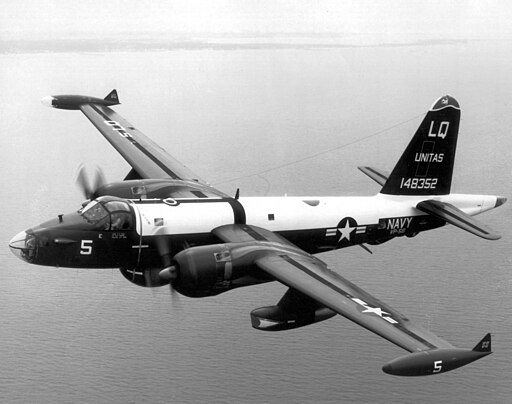
Lockheed P-2 Neptune
The Lockheed P-2 Neptune, a versatile maritime patrol aircraft, played a significant role in naval aviation during the mid-20th century. Developed in the late 1940s by Lockheed Corporation, the P-2 Neptune was designed primarily for anti-submarine warfare (ASW) and maritime patrol missions. Its distinctive twin-engine configuration, low-wing design, and long-range capabilities made it a formidable asset for reconnaissance and surveillance operations over vast expanses of ocean.
Equipped with advanced radar systems, magnetic anomaly detectors (MAD), and sonobuoys, the P-2 Neptune was capable of detecting and tracking enemy submarines with remarkable accuracy. Its versatility extended beyond ASW, as it could also be configured for search and rescue missions, maritime reconnaissance, and even aerial firefighting. With a crew of up to ten personnel, including pilots, sensor operators, and aircrew, the Neptune could effectively cover large areas of ocean while maintaining constant vigilance against potential threats.
Throughout its operational service, the P-2 Neptune underwent several variants and upgrades to enhance its capabilities and address evolving operational requirements. These upgrades included improved avionics systems, more powerful engines, and enhanced sensor suites, ensuring that the aircraft remained relevant in the ever-changing landscape of naval warfare. Despite being retired from active duty in many air forces around the world, the legacy of the Lockheed P-2 Neptune endures, with several examples preserved in museums and private collections, serving as a testament to its enduring contribution to maritime aviation.
Armament Lockheed P-2 Neptune
The armament of the Lockheed P-2 Neptune, a maritime patrol aircraft, typically included a variety of weapons and ordnance suitable for anti-submarine warfare (ASW) and maritime interdiction missions. While specific configurations may have varied depending on mission requirements and operational theaters, the P-2 Neptune was typically equipped with:
- Depth Charges: Depth charges were one of the primary weapons used by the P-2 Neptune for ASW missions. These anti-submarine weapons were dropped from the aircraft and detonated at a predetermined depth, creating a powerful underwater shockwave to damage or destroy submarines.
- Torpedoes: The P-2 Neptune could carry lightweight torpedoes, such as the Mk 46 torpedo, for engaging and neutralizing submerged submarines. These torpedoes were typically launched from underwing pylons or bomb bays.
- Mines: In some configurations, the P-2 Neptune may have been equipped with naval mines for maritime interdiction missions. These mines could be deployed from the aircraft to create underwater obstacles or defensive perimeters.
- Rockets: The P-2 Neptune may have been equipped with rocket pods containing unguided rockets, such as the 5-inch High Velocity Aircraft Rocket (HVAR), for engaging surface targets. These rockets provided the aircraft with a stand-off capability to strike hostile surface vessels.
- Guns: While less common, some variants of the P-2 Neptune may have been equipped with machine guns or cannon for self-defense or strafing ground targets. These weapons were typically mounted in nose or tail turrets, providing the aircraft with a limited air-to-air and air-to-ground capability.
Overall, the armament of the Lockheed P-2 Neptune was tailored to its role as a maritime patrol and anti-submarine warfare aircraft, providing it with the capability to detect, track, and neutralize submarine and surface threats in maritime environments.
Dimensions of the Lockheed P-2 Neptune
The Lockheed P-2 Neptune, a maritime patrol aircraft, has the following dimensions:
- Length: Approximately 27.8 meters (91 feet 2 inches).
- Wingspan: Approximately 30.2 meters (99 feet 0 inches).
- Height: Approximately 8.2 meters (27 feet 0 inches).
These dimensions provide the P-2 Neptune with the necessary size and wingspan to accommodate its payload of sensors, mission equipment, and armament, while also allowing it to operate effectively in maritime environments.
