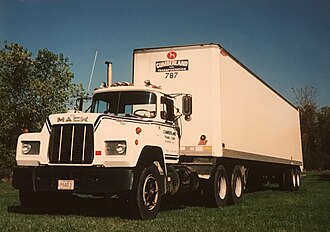
Few commercial trucks have left a mark on the transportation industry quite like the Mack R Series. For decades, the R Model was one of the most recognizable heavy-duty trucks on North American roads, construction sites, quarries, industrial facilities, and municipal fleets. Introduced during the 1960s and produced in various forms for several decades, the R Series became synonymous with durability, reliability, and practical engineering. It was not merely another truck model in the lineup of Mack Trucks; it became the company’s flagship conventional truck and one of the most successful heavy-duty commercial vehicles ever built.
The Mack R Series earned a reputation that extended far beyond sales figures. It became a cultural icon within the trucking industry, admired by owner-operators, fleet managers, mechanics, and truck enthusiasts alike. While many truck models enjoyed brief periods of popularity before being replaced by newer designs, the R Model remained in production for decades, proving that a well-engineered vehicle can transcend changing trends and technological shifts.
Its longevity was no accident. The R Series was developed during a period when trucking companies demanded vehicles capable of handling increasingly demanding workloads. Freight volumes were rising, highway networks were expanding, and industries required dependable transportation solutions that could operate under difficult conditions day after day. Mack responded with a truck that combined proven engineering with rugged construction, creating a machine capable of thriving in virtually every sector of heavy transportation.
Today, decades after its introduction, the Mack R Series remains one of the most beloved trucks in commercial vehicle history. Restored examples appear at truck shows, working examples continue operating in specialized roles, and countless drivers still regard it as one of the finest heavy-duty trucks ever built.
The Origins of the Mack R Series
A New Generation of Conventional Trucks
By the early 1960s, the trucking industry was undergoing significant change. New highway systems, larger freight networks, and increasingly demanding customers required trucks that were more capable, efficient, and durable than previous generations. Although Mack already had a strong reputation for building robust commercial vehicles, the company recognized the need for a modern conventional truck that could serve a broad range of applications.
The result was the R Series, introduced in 1965. It replaced several earlier models and quickly became the cornerstone of Mack’s conventional truck lineup. Unlike cabover designs that prioritized compact dimensions, the R Series embraced a traditional long-hood layout that offered advantages in maintenance accessibility, driver comfort, cooling efficiency, and overall serviceability.
From the beginning, the truck was designed with versatility in mind. It needed to function equally well as a highway tractor, dump truck, construction vehicle, tanker, refuse truck, and municipal service vehicle. This flexibility would become one of the defining reasons for its extraordinary success.
Meeting Industry Needs
The R Series arrived at the perfect moment. Freight transportation was expanding rapidly throughout North America, and operators required vehicles capable of handling greater workloads while maintaining reasonable operating costs. The Mack R Model offered exactly that combination.
Its robust chassis, dependable powertrains, and adaptable configurations allowed customers to tailor the vehicle to specific operational requirements. Whether hauling freight across thousands of miles or carrying heavy aggregates from a quarry, the R Series demonstrated remarkable capability.
Design Philosophy Behind the R Model
Simplicity as a Strength
One of the most important aspects of the Mack R Series was its straightforward design philosophy. Rather than pursuing unnecessary complexity, Mack engineers focused on creating a truck that would be reliable, durable, and easy to maintain.
Every component was selected with longevity in mind. The frame rails were heavily reinforced, suspension systems were built to withstand severe loads, and driveline components were engineered for years of continuous service. This approach reflected Mack’s long-standing philosophy that commercial vehicles should prioritize dependability above all else.
For fleet operators, reliability translates directly into profitability. A truck that spends less time in the repair shop spends more time generating revenue. The R Series earned its reputation largely because it consistently delivered this reliability.
Built for Real-World Conditions
Unlike vehicles developed primarily in testing facilities, the R Model was designed around the realities of commercial transportation. Engineers understood that trucks would be exposed to rough roads, extreme weather, heavy loads, and demanding schedules.
As a result, the R Series incorporated numerous practical design elements. Components were accessible for maintenance, structural parts were overbuilt where necessary, and systems were engineered to function reliably even under adverse conditions.
This emphasis on practicality became one of the defining characteristics of the truck and contributed significantly to its enduring popularity.
Exterior Styling and Distinctive Appearance
Instantly Recognizable
The Mack R Series possessed one of the most recognizable silhouettes in trucking history. Its long hood, upright grille, squared-off cab, and muscular proportions created a commanding presence that immediately communicated strength and capability.
At the front sat Mack’s distinctive grille design, often accompanied by the iconic bulldog ornament mounted atop the hood. For many drivers, this bulldog became a symbol of reliability and toughness, reflecting the qualities associated with Mack trucks themselves.
The design was neither flashy nor overly stylized. Instead, it projected confidence through functional simplicity. Every aspect of the truck’s appearance suggested durability and purpose.
A Timeless Design
One reason the R Model remained visually relevant for so many years was its balanced design. Unlike vehicles heavily influenced by short-lived styling trends, the R Series emphasized clean lines and practical proportions.
Even today, restored examples look remarkably modern compared to many contemporaries from the same era. This timeless appearance has helped preserve the truck’s popularity among enthusiasts and collectors.
Cab Design and Driver Experience
Comfort Meets Functionality
The cab of the Mack R Series represented a significant improvement over many earlier heavy trucks. While modern drivers may find its accommodations relatively basic, the cab was considered comfortable and practical for its time.
Drivers benefited from improved visibility, logical control placement, and a more spacious environment than many competing models offered. The seating position provided good road visibility, while large windows enhanced situational awareness.
Long-haul operators particularly appreciated sleeper cab configurations that allowed them to rest during extended journeys. These options helped make the R Series suitable for both regional and long-distance freight operations.
Durability Inside and Out
Interior materials were chosen for longevity rather than luxury. Commercial trucking places immense demands on vehicle interiors, and Mack understood that durability was essential.
Dashboards, controls, seats, and trim components were designed to withstand years of continuous use. Many surviving R Models still retain original interior elements, demonstrating the quality of construction that characterized the series.
The Legendary Mack Engines
Heart of the R Series
The engine options available for the Mack R Series played a major role in its success. Mack had long been known for producing its own powerplants, and the R Model benefited from several generations of highly respected diesel engines.
Popular engine families included Thermodyne, Maxidyne, and later E6 engines. These powerplants became famous for their combination of durability, fuel efficiency, and strong low-end torque.
Unlike passenger vehicles, commercial trucks depend heavily on torque rather than horsepower. The ability to move heavy loads efficiently from low engine speeds is critical for productivity, and Mack engines excelled in this area.
The Maxidyne Revolution
Perhaps no engine had a greater impact on the R Series than the Maxidyne. Introduced by Mack Trucks, this innovative engine concept emphasized a broad torque curve that reduced the need for constant shifting.
Traditional heavy trucks often required drivers to shift frequently to maintain engine performance. The Maxidyne’s wide power band allowed operators to remain in gear longer, simplifying driving and improving efficiency.
This innovation became one of Mack’s defining technological achievements and contributed significantly to the popularity of the R Series.
Transmission Technology
Mack’s Integrated Approach
Mack distinguished itself from many competitors by producing both engines and transmissions. This allowed engineers to design powertrains as integrated systems rather than collections of components sourced from multiple manufacturers.
The R Series commonly featured Mack’s Maxitorque transmissions, which became renowned for durability and operational efficiency. These gearboxes complemented the characteristics of Mack engines, creating highly effective powertrain combinations.
Built for Heavy Work
Whether operating on highways, construction sites, or logging roads, the transmission systems used in the R Series were engineered to handle severe workloads. Drivers appreciated their robustness, while fleet managers valued their longevity and low maintenance requirements.
Applications Across Countless Industries
Long-Haul Freight
One of the most common roles for the Mack R Series was long-distance freight transportation. Highway tractors equipped with sleeper cabs and powerful diesel engines became familiar sights throughout North America.
The truck’s reliability made it particularly attractive to owner-operators who depended on consistent performance to earn a living.
Construction and Aggregate Transport
Construction companies embraced the R Model because of its strength and versatility. Dump truck variants became especially popular in construction, mining, and aggregate industries.
The truck’s robust chassis allowed it to handle heavy payloads on rough terrain without compromising durability.
Refuse Collection
Many municipalities and waste management companies selected the R Series for refuse collection operations. These applications subjected vehicles to constant stopping, starting, and heavy loading cycles, conditions that the R Model handled exceptionally well.
Logging and Forestry
Forestry operations presented some of the harshest environments in commercial transportation. Logging roads, heavy loads, and remote locations demanded rugged equipment.
The Mack R Series developed a strong following among logging operators because it could withstand these challenging conditions while maintaining dependable performance.
Municipal Services
Snowplows, utility trucks, road maintenance vehicles, and other municipal equipment frequently utilized the R Model chassis. Its adaptability allowed local governments to configure vehicles for a wide variety of public service roles.
Why Mechanics Loved the R Series
A truck’s reputation is often shaped not only by drivers but also by the mechanics responsible for maintaining it. The Mack R Series earned widespread respect within the maintenance community because of its accessibility and straightforward design.
Engine compartments provided relatively easy access to key components, reducing repair times and simplifying routine maintenance. Systems were designed with practicality in mind, allowing technicians to diagnose and repair issues efficiently.
Many mechanics considered the R Model one of the most serviceable heavy-duty trucks ever built, a reputation that further enhanced its appeal among fleet operators.
Global Reach and Export Success
Although primarily associated with North America, the Mack R Series achieved success in international markets as well. Export versions operated in numerous countries where rugged construction and reliability were highly valued.
Mining operations, infrastructure projects, and industrial enterprises around the world employed Mack trucks in demanding environments. The R Series proved capable of adapting to a wide range of climates and operating conditions, further strengthening its reputation.
Evolution Through the Decades
One of the most remarkable aspects of the Mack R Series was its longevity. While many truck models undergo complete redesigns every decade, the R Model remained fundamentally recognizable throughout its production life.
Mack continuously updated the truck with improved engines, transmissions, safety features, and comfort enhancements while preserving the core design that customers trusted. This evolutionary approach allowed the company to modernize the vehicle without alienating its loyal customer base.
As emissions regulations, safety standards, and market expectations changed, the R Series adapted accordingly, demonstrating the flexibility of its original design.
The End of Production and Continuing Legacy
Eventually, changing regulations, evolving customer expectations, and advances in truck technology led to the gradual replacement of the R Series by newer Mack models. However, its influence did not disappear.
Many design principles pioneered or perfected in the R Model continued to shape future Mack products. The emphasis on durability, integrated powertrains, and practical engineering remained central to the company’s philosophy.
Even after production ended, thousands of R Series trucks remained in service. Some continue working today, a testament to the durability that made them famous.
Collectors and Enthusiast Communities
The Mack R Series enjoys a passionate following among truck enthusiasts. Restored examples appear regularly at truck shows, transportation museums, and historical exhibitions.
Collectors appreciate the truck’s historical significance, mechanical simplicity, and iconic appearance. For many former drivers, owning or restoring an R Model represents an opportunity to preserve a piece of trucking history.
The availability of parts and the truck’s robust design have helped support an active restoration community, ensuring that many examples will continue operating for years to come.
Conclusion
The Mack R Series occupies a unique position in the history of commercial transportation. More than simply a successful truck model, it became an industry benchmark for durability, reliability, and versatility. Over the course of several decades, it served countless industries, transported millions of tons of cargo, and earned the respect of drivers, mechanics, and fleet operators around the world.
Built by Mack Trucks, the R Model demonstrated that practical engineering and robust construction can create a vehicle capable of transcending generations. Its combination of powerful engines, dependable transmissions, rugged chassis design, and timeless styling ensured its place among the greatest commercial trucks ever built.
Today, the Mack R Series remains an enduring symbol of American trucking—a machine that helped build roads, transport goods, support industries, and keep economies moving. Its legacy continues not only through preserved examples and enthusiastic collectors but also through the influence it has had on every generation of heavy-duty trucks that followed.
Technical Specifications Table – Mack R Series
| Parameter | Specification |
|---|---|
| Manufacturer | Mack Trucks |
| Model Series | Mack R Series |
| Vehicle Type | Conventional heavy-duty truck |
| Production Start | 1965 |
| Production End | Various derivatives produced into the 2000s |
| Cab Layout | Conventional cab with long hood |
| Drive Configurations | 4×2, 6×4, 6×6 |
| Engine Families | Thermodyne, Maxidyne, ENDT, E6 diesel engines |
| Fuel Type | Diesel |
| Horsepower Range | Approximately 170–400+ hp depending on model |
| Torque Range | Up to 1,460+ lb-ft depending on engine |
| Transmission Options | Mack Maxitorque manual transmissions and others |
| Braking System | Air brakes |
| Steering | Hydraulic power steering |
| Suspension Types | Multi-leaf spring, heavy-duty vocational suspensions |
| Sleeper Cab Availability | Yes |
| Typical GVWR | Application dependent, often 30,000–80,000+ lbs |
| Primary Applications | Freight, construction, logging, refuse, municipal service |
| Notable Feature | Legendary durability and versatility |
| Signature Engine Technology | Maxidyne diesel engine system |
| Signature Transmission | Mack Maxitorque |
| Export Markets | Numerous international markets |
| Successor Models | Later Mack conventional truck series |
| Historical Reputation | One of the most successful heavy-duty trucks in Mack history |
