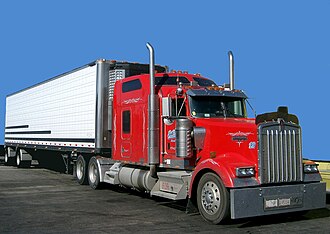
Few commercial vehicles have achieved the legendary status of the Kenworth W900. In an industry where practicality often outweighs style, the W900 has managed to become both a hardworking commercial machine and a cultural icon. For more than six decades, this long-nosed conventional truck has represented everything many drivers admire about American trucking: power, durability, freedom, and unmistakable road presence.
The Kenworth W900 is not merely a truck. It is a symbol deeply embedded in North American transportation history. From hauling freight across vast interstate highways to appearing in movies, television shows, music videos, and truck shows, the W900 has become one of the most recognizable heavy-duty trucks ever produced. Even as modern aerodynamic trucks dominate fleets due to fuel-efficiency requirements, the W900 continues to maintain a loyal following among owner-operators and trucking enthusiasts who appreciate its timeless design and exceptional customization possibilities.
Its longevity is remarkable. Introduced in 1961, the W900 remained in production for more than sixty years, making it one of the longest-running truck models in commercial vehicle history. During that time, it evolved through numerous updates, technological improvements, engine changes, and regulatory adaptations while preserving the classic appearance that drivers have loved for generations.
This article explores the complete story of the Kenworth W900, including its history, design evolution, performance characteristics, popularity among truckers, technological development, cultural impact, and the reasons why it continues to be celebrated as one of the greatest trucks ever built.
The Origins of the Kenworth W900
The Trucking Industry of the Early 1960s
To understand the significance of the W900, it is important to examine the trucking environment that existed when the model first appeared. During the late 1950s and early 1960s, North America’s transportation infrastructure was rapidly expanding. Interstate highway systems were transforming freight movement, and trucking companies needed vehicles capable of handling longer distances, heavier loads, and increasingly demanding operating conditions.
Kenworth had already established a strong reputation for producing premium heavy-duty trucks. The company focused on durability, driver comfort, and engineering excellence. Unlike some manufacturers that emphasized mass production, Kenworth built trucks that often felt more customized and refined.
When engineers began developing the W900, their objective was straightforward: create a truck that could withstand harsh working conditions while offering superior serviceability and driver appeal.
Launch of the W900
The W900 officially debuted in 1961 as a replacement for the Kenworth 900 series. The new model introduced a wider cab, which is reflected in the “W” designation. This wider cab significantly improved interior comfort and driver ergonomics.
From the beginning, the truck featured a long conventional hood layout. This design placed the engine ahead of the cab, allowing easier maintenance access and improved cooling performance. The configuration also created the imposing profile that would later become one of the truck’s most famous characteristics.
Truck operators quickly appreciated the W900’s rugged construction, reliability, and ability to handle heavy-duty applications across diverse industries.
Design Evolution Through the Decades
W900A: Establishing the Legend
One of the most significant early variants was the W900A, introduced in the late 1960s. This model incorporated updated styling elements while maintaining the robust engineering that customers expected.
The W900A featured:
- Distinctive grille design
- Improved dashboard layout
- Enhanced driver visibility
- Updated electrical systems
- Better overall ergonomics
For many trucking enthusiasts, the W900A represents the classic image of a vintage American semi-truck. Its combination of chrome accents, square proportions, and long hood established a visual identity that remains admired today.
W900B: Modernization Without Losing Character
In 1982, Kenworth introduced the W900B. This revision brought substantial improvements while preserving the truck’s recognizable appearance.
Key changes included:
- Higher-mounted cab
- Improved cooling systems
- Larger radiator capacity
- Better visibility
- Updated suspension options
The W900B became one of the most successful variants in the model’s history. Thousands were sold across North America, and many remain operational today.
The truck demonstrated Kenworth’s ability to modernize a proven platform without sacrificing the classic styling that drivers valued.
Aerocab and Driver Comfort Improvements
As long-haul trucking became increasingly demanding, driver comfort emerged as a critical factor. Kenworth responded by introducing the Aerocab version.
The Aerocab offered:
- Raised roof options
- Increased interior space
- Larger sleeper compartments
- Better storage solutions
- Improved aerodynamics
These enhancements helped transform the W900 from a purely functional work vehicle into a comfortable long-distance living space.
W900L: The Long-Hood King
Among all W900 variants, the W900L may be the most famous. The “L” stands for long hood, and this version extended the hood by approximately 10 inches compared with the standard W900.
The W900L quickly became a favorite among owner-operators.
Reasons for its popularity included:
- Distinctive appearance
- Enhanced customization opportunities
- Greater visual balance with large sleepers
- Increased prestige within trucking culture
Many truck enthusiasts consider the W900L the ultimate expression of traditional American trucking design.
Engineering Excellence
Chassis Construction
One of the reasons the W900 achieved legendary status is its exceptional chassis durability.
Kenworth engineered the truck with heavy-duty frame rails capable of handling demanding applications such as:
- Long-haul freight transport
- Heavy hauling
- Logging operations
- Construction work
- Specialized transport
The robust frame construction allowed operators to configure the truck according to specific business needs.
Suspension Systems
Throughout its production history, the W900 was available with multiple suspension options.
Popular configurations included:
- Air-ride suspensions
- Mechanical suspensions
- Vocational-duty systems
- Heavy-haul setups
These options enabled operators to optimize ride quality, load handling, and durability.
Steering and Handling
Despite its large size, the W900 earned praise for its steering characteristics.
Drivers often reported:
- Predictable handling
- Stable highway performance
- Comfortable ride quality
- Good directional control
Although modern aerodynamic trucks may offer tighter turning capabilities, many drivers still appreciate the confident feel of the W900 on the open road.
Engine Options Over the Years
The Era of Massive Diesel Engines
The W900’s reputation is closely tied to the powerful diesel engines that powered it.
Over the decades, buyers could choose engines from manufacturers such as:
- Cummins
- Caterpillar
- Detroit Diesel
- PACCAR
These engines delivered the high torque required for heavy-duty transportation.
Caterpillar Power
For many enthusiasts, the combination of a W900 and a Caterpillar engine represented the pinnacle of trucking.
Popular Caterpillar engines included:
- 3406B
- 3406C
- 3406E
- C15
- C16
These engines became legendary for their durability and immense pulling power.
Cummins Performance
Cummins engines were equally popular among W900 operators.
Notable options included:
- N14
- ISX
- X15
Cummins powerplants provided strong fuel economy, reliability, and extensive service support throughout North America.
PACCAR Engines
In later years, PACCAR engines became increasingly common.
Benefits included:
- Modern emissions compliance
- Fuel efficiency
- Advanced diagnostics
- Integrated electronic controls
These engines helped keep the W900 competitive in an evolving industry.
Driver Comfort and Interior Features
A Truck Designed for Life on the Road
Long-haul truck drivers often spend weeks away from home. As a result, comfort becomes more than a luxury—it becomes a necessity.
Kenworth recognized this reality and continuously improved the W900’s interior.
Features frequently included:
- Air-ride seats
- Premium upholstery
- Advanced climate control
- High-quality insulation
- Ergonomic controls
These enhancements reduced driver fatigue during long trips.
Sleeper Configurations
The W900 became famous for its extensive sleeper options.
Available configurations ranged from compact sleepers to large studio-style living spaces.
Depending on the setup, drivers could enjoy:
- Full-size beds
- Refrigerators
- Microwaves
- Storage cabinets
- Entertainment systems
For owner-operators, these features transformed the truck into a mobile home.
Dashboard Evolution
The dashboard evolved significantly over the decades.
Early models featured simple analog gauges, while later versions incorporated:
- Digital displays
- Engine diagnostics
- Navigation systems
- Electronic monitoring systems
- Advanced driver information centers
Despite technological upgrades, Kenworth maintained an intuitive layout that drivers appreciated.
Why Owner-Operators Love the W900
Personal Identity on Wheels
For many owner-operators, a truck is more than a business asset. It is an extension of personal identity.
The W900 offers extensive customization possibilities, including:
- Chrome accessories
- Custom paint schemes
- Unique lighting packages
- Specialized bumpers
- Custom interiors
Few trucks provide the same level of visual personalization.
Pride of Ownership
Many drivers describe owning a W900 as a source of pride.
The truck’s iconic status means it often attracts attention at:
- Truck stops
- Industry events
- Truck shows
- Highway rest areas
Its distinctive appearance creates an emotional connection that many modern fleet trucks cannot replicate.
Long-Term Durability
The W900 is also admired for its longevity.
Many examples remain operational after:
- One million miles
- Two million miles
- Multiple engine rebuilds
This durability contributes to strong resale values and long service lives.
Cultural Impact
Hollywood and Television Appearances
The W900’s dramatic appearance has made it a frequent choice for filmmakers.
Its long hood, chrome grille, and commanding stance create an unmistakable visual presence on screen.
The truck has appeared in numerous:
- Feature films
- Television programs
- Documentaries
- Commercials
These appearances have helped solidify its legendary reputation.
Truck Shows and Competitions
Truck shows across North America often feature meticulously restored or customized W900 models.
Owners invest enormous amounts of time and money into:
- Polished chrome
- Detailed paintwork
- Custom interiors
- Performance enhancements
Many award-winning show trucks are based on the W900 platform.
Symbol of American Trucking
Perhaps no truck better represents the image of the American highway than the W900.
When people imagine a classic big rig crossing vast open landscapes, the vehicle they picture often resembles a W900.
Its silhouette has become synonymous with long-distance trucking itself.
Challenges in the Modern Era
Fuel Efficiency Demands
As fuel costs increased and environmental regulations became stricter, aerodynamic trucks gained popularity.
Compared with streamlined modern tractors, the W900’s traditional design creates greater aerodynamic drag.
This can lead to:
- Higher fuel consumption
- Increased operating costs
- Reduced fleet efficiency
For large fleet operators, these factors became increasingly important.
Emissions Regulations
Modern emissions standards required substantial engineering changes.
Manufacturers had to incorporate technologies such as:
- Exhaust gas recirculation
- Diesel particulate filters
- Selective catalytic reduction
These systems increased complexity and development costs.
Competition from New Designs
New truck models emphasized:
- Improved aerodynamics
- Lower operating costs
- Advanced safety systems
- Enhanced efficiency
As a result, many large fleets shifted toward more modern platforms.
Nevertheless, the W900 maintained a loyal customer base that valued tradition and customization.
The End of an Era
Production Conclusion
After more than six decades of production, Kenworth eventually announced plans to conclude W900 production.
The decision reflected changing industry realities, including:
- Regulatory requirements
- Manufacturing considerations
- Evolving customer demands
- Market shifts toward aerodynamic vehicles
The announcement generated strong reactions throughout the trucking community.
Legacy Preservation
Even as production winds down, the W900’s legacy remains secure.
Thousands of examples continue operating across North America.
Many are being:
- Restored
- Preserved
- Customized
- Collected
Their enduring popularity ensures that future generations will continue to appreciate the truck’s significance.
What Makes the W900 Special?
Timeless Design
Many vehicles become outdated after a few years. The W900 remained visually appealing for decades.
Its design achieved a rare balance between:
- Functionality
- Proportion
- Presence
- Simplicity
This timelessness is a major reason for its enduring appeal.
Mechanical Character
Drivers often describe the W900 as having character.
The combination of:
- Large displacement diesel engines
- Long hood configuration
- Traditional gauges
- Mechanical feedback
creates a driving experience that feels distinct from modern automated vehicles.
Emotional Connection
Perhaps the most important reason for the W900’s success is the emotional connection it creates.
For many drivers, the truck represents:
- Independence
- Professional pride
- Tradition
- Personal achievement
Few commercial vehicles inspire such strong loyalty.
Conclusion
The Kenworth W900 stands among the most influential trucks ever produced. Introduced in 1961 and continuously refined over more than sixty years, it became a benchmark for durability, style, and driver satisfaction. While countless truck models have come and gone, the W900 maintained a unique position within the industry by combining proven engineering with a timeless aesthetic that transcended changing trends.
Its long hood, commanding presence, powerful engines, and extensive customization possibilities made it a favorite among owner-operators and trucking enthusiasts. At the same time, its robust construction and dependable performance earned the respect of businesses that relied on it for demanding transportation tasks.
The trucking industry continues to evolve toward greater efficiency, automation, and environmental responsibility. Yet the W900 remains a reminder of an era when trucks were designed not only to move freight but also to express personality and pride. Whether seen hauling cargo across interstate highways, displayed at a truck show, or preserved as a collector’s vehicle, the Kenworth W900 continues to symbolize the enduring spirit of North American trucking.
Technical Specifications Table
| Parameter | Kenworth W900 (Typical Configuration) |
|---|---|
| Manufacturer | Kenworth |
| Production Start | 1961 |
| Vehicle Class | Class 8 Heavy-Duty Truck |
| Configuration | Conventional Long-Hood Tractor |
| Drive Configurations | 4×2, 6×4, 8×4 (application dependent) |
| Engine Options | PACCAR, Cummins, Caterpillar (historically) |
| Horsepower Range | Approximately 350–625 hp |
| Torque Range | Up to 2,050 lb-ft or more |
| Transmission Options | Manual, Automated Manual |
| Fuel Type | Diesel |
| Cab Types | Day Cab, Aerocab, Studio Sleeper |
| Sleeper Sizes | Various configurations up to 86 inches and beyond |
| Wheelbase Range | Highly customizable |
| Front Axle Capacity | Up to 22,000 lbs (depending on specification) |
| Rear Axle Capacity | Up to 46,000 lbs or higher |
| GVWR | Up to 80,000 lbs and beyond (configuration dependent) |
| Brake System | Air Brakes |
| Suspension Types | Air Ride, Mechanical, Heavy-Haul |
| Steering | Hydraulic Power Steering |
| Hood Type | Aluminum Long Hood |
| Primary Markets | North America |
| Main Applications | Long-Haul, Heavy Haul, Construction, Logging, Specialized Transport |
| Notable Variant | W900L Long Hood |
| Reputation | Iconic American Heavy-Duty Truck |
