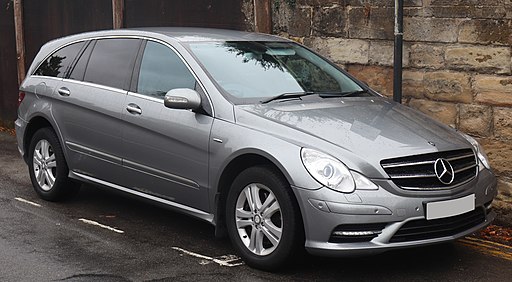
Mercedes-Benz R-Class as a Used Car: A Complete Buyer’s Guide
The Mercedes-Benz R-Class is one of the more unusual cars to emerge from Mercedes-Benz during the 2000s. It combined the spaciousness of a large MPV with the driving position and four-wheel-drive technology associated with an SUV, while adding the comfort and equipment expected from a premium Mercedes-Benz. Sold primarily as the W251 from 2006 to 2013, the R-Class was available with powerful petrol and diesel engines, automatic transmission, six- or seven-seat configurations and, on many versions, 4MATIC all-wheel drive. It was never a conventional family car, and its unusual proportions meant that it struggled to find a large audience when new. That relative lack of popularity, however, has created an interesting situation on the used market: an R-Class can now provide an enormous amount of space, performance and equipment for relatively modest money. The important qualification is that its purchase price does not tell the whole story. These are complicated, heavy premium cars, and an inexpensive R-Class with deferred maintenance can quickly become much more expensive than a better-maintained example.
Mercedes-Benz R-Class: Model History
The R-Class was introduced in 2006 and was developed around an extended version of the platform used by the contemporary M-Class. The original concept was a large luxury sports-tourer rather than a conventional MPV. Early versions were offered with six seats, arranged in three rows of two, while later versions adopted a more conventional seven-seat 2-3-2 configuration. Standard-wheelbase and long-wheelbase versions were available, with the latter providing even more interior and luggage space. The original range included the R 320 CDI diesel, R 350 petrol and R 500 V8, all with seven-speed automatic transmissions and, in the initial range, 4MATIC all-wheel drive.
The range evolved considerably during its production life. The R 280 CDI was introduced as a less expensive diesel alternative, while the R 300 CDI subsequently replaced it. The R 320 CDI eventually became the R 350 CDI after the model was revised, with the later diesel offering substantially more power. Petrol versions included the R 350 and R 500, while the extraordinary R 63 AMG sat at the top of the range with a 6.2-litre naturally aspirated V8. The R-Class received a facelift around 2010, bringing revised styling and updated engines and equipment. Because the model changed significantly during its relatively short production run, buyers should always check the exact engine, model year and drivetrain rather than assuming that all R-Class vehicles have the same mechanical specification.
Why Buy a Used Mercedes-Benz R-Class?
Exceptional Interior Space
The R-Class’s strongest argument as a used car is its combination of passenger space and road-going comfort. The standard-wheelbase version is already almost five metres long, while the long-wheelbase model stretches significantly farther. The result is a cabin with enough room for several adults and substantial luggage, without the commercial-van character of an ordinary people carrier. Later seven-seat versions can be particularly useful for families because the second and third rows provide genuine passenger accommodation rather than treating the rearmost seats as occasional emergency seating.
The long-wheelbase version is particularly interesting for buyers who regularly travel with a large family or several passengers. It provides additional legroom and luggage flexibility, while the individual seating arrangement gives the vehicle a more luxurious feel than many conventional seven-seaters. The standard-wheelbase car is easier to manoeuvre and park, however, so buyers should consider where the vehicle will actually be used. The R-Class is already a large car, and choosing the longer body simply because it offers more space can make everyday urban use noticeably less convenient.
Comfort and Long-Distance Ability
The R-Class is fundamentally a long-distance vehicle. Its substantial wheelbase, sophisticated suspension and well-insulated cabin make it particularly suited to motorway journeys, while the diesel V6 offers considerable torque. The combination of automatic transmission and, on many versions, permanent 4MATIC all-wheel drive gives the car a relaxed character in poor weather and on long trips. Contemporary used-car reviews have praised its comfortable ride, quiet cabin and high standard of fit and finish, although the car’s handling is more ponderous than that of a conventional saloon.
That distinction is important. The R-Class may have “sport” in its original marketing description, but it should not be mistaken for a large sports car. Its considerable weight and tall body mean that it is happiest when driven smoothly. The benefit is that passengers can enjoy a comfortable, stable ride over long distances. For a buyer who values effortless cruising, space and all-weather traction more than sharp cornering, the R-Class can still make a great deal of sense.
Choosing the Right Engine
The 3.0-Litre V6 Diesel
For many used buyers, the 3.0-litre V6 diesel is the most obvious R-Class engine to consider. Depending on model year and version, it appeared as the R 280 CDI, R 320 CDI, R 300 CDI and R 350 CDI. The early R 320 CDI produced approximately 221 hp and 510 Nm, while later R 350 CDI versions were substantially more powerful. The engine’s large torque output suits the heavy R-Class extremely well, allowing the car to accelerate confidently even with several passengers aboard.
The engine is not without weaknesses, however. The OM642 V6 diesel is known for oil-cooler seal deterioration, with earlier engines particularly susceptible to leaks. The oil cooler is located in the V of the engine, making access labour-intensive. Carbon deposits can also contribute to problems with the intake swirl mechanism, while injector-seal deterioration can produce carbon buildup around the injectors. These are not reasons to automatically reject a diesel R-Class, but they are reasons to insist on a thorough inspection and evidence of proper servicing.
A diesel R-Class that has been used for long motorway journeys can be a very capable high-mileage vehicle, provided maintenance has been consistent. Buyers should nevertheless budget for age-related diesel repairs. A low purchase price should never be used as justification for ignoring the engine’s service history.
Petrol V6 Engines
The R 350 petrol was fitted with the M272 V6 during much of the earlier production period, producing around 272 hp in later specifications. It offers smooth, refined performance and avoids some of the complications associated with an ageing diesel emissions system. However, fuel consumption is considerably higher, and the size and weight of the R-Class mean that a petrol version can be expensive to operate if driven frequently.
The M272 also has a particularly important issue that buyers should investigate. Mercedes-Benz documented premature wear of the balance-shaft sprocket on certain early M272 engines, especially units produced before the relevant production changes in 2006. Wear can affect camshaft timing and cause warning lights and rough running, while a major repair requires substantial engine work. The production date and engine serial number therefore matter greatly when considering an early R 350.
V8 and AMG Versions
The R 500 and R 63 AMG are fascinating cars, but they should be approached as specialist purchases rather than inexpensive family transport. The R 500 was offered with V8 power, while the R 63 AMG used a 6.2-litre naturally aspirated V8 producing 375 kW, or approximately 510 hp.
The performance of the R 63 is remarkable for a vehicle of this size, but fuel consumption, tyres, brakes, suspension components and specialist maintenance can make ownership considerably more expensive than that of a normal R-Class. An R 500 or R 63 can be an interesting enthusiast vehicle, but the buyer needs a very different maintenance budget from someone purchasing an R 280 CDI or R 320 CDI.
Common Problems When Buying a Used R-Class
Airmatic Suspension
Air suspension is one of the R-Class’s most appealing features because it contributes significantly to the vehicle’s comfort and allows the suspension to maintain the correct ride height. Unfortunately, an ageing air-suspension system can also become one of the most expensive areas of the car to repair. Air struts, the compressor, valve block, sensors and associated wiring can all deteriorate with age.
A used R-Class should therefore be inspected after it has been parked for several hours and again after starting. The vehicle should sit level rather than noticeably sagging at one corner. Listen to the compressor and make sure the car reaches the correct ride height without excessive running time. Warning messages relating to Airmatic should never be dismissed as minor electrical issues. Specialist sources identify air-suspension failures as a significant potential problem on W251 cars.
Engine and Diesel-System Problems
A cold start can reveal considerably more than a short test drive. Listen for rattles, knocking or unusual ticking, watch for excessive exhaust smoke and check whether the engine settles quickly into a smooth idle. On OM642 diesel cars, inspect the engine valley and surrounding areas for oil contamination and examine the injector area for signs of carbon buildup. The OM642 has also been subject to documented service information concerning intermittent ticking noises in some W251 applications.
Modern diagnostic equipment should be used before purchase. Stored fault codes relating to emissions systems, turbocharger operation, intake components or engine sensors can provide valuable information even when the dashboard is currently free of warning lights. A diagnostic inspection is particularly important because repairing a complex diesel engine can cost a significant proportion of the vehicle’s market value.
Electronics and Comfort Equipment
The R-Class was equipped with a substantial amount of electronic equipment for its era. Depending on specification, buyers may encounter powered seats, heated and ventilated seats, electric tailgates, powered mirrors, parking sensors, navigation, premium audio and various driver-assistance features. Every item should be tested.
The electric tailgate and powered door systems deserve particular attention, while faults with steering-wheel controls, mirrors and other electrical components have been documented among W251 problem areas. Wiring associated with the Airmatic system can also cause faults. The general rule is simple: do not assume that an electrical feature is inexpensive to repair simply because it appears to be a minor convenience.
Transmission and 4MATIC
The seven-speed automatic transmission is a defining part of the R-Class experience. It suits the car’s relaxed character extremely well, but buyers should check its behaviour carefully. Changes should be smooth, engagement of Drive and Reverse should not involve excessive delay, and there should be no persistent shuddering or harsh shifting.
The 4MATIC system is another major advantage, especially for drivers who regularly encounter snow or wet roads. The original R-Class used permanent four-wheel drive, with the system normally distributing torque equally between the front and rear axles. However, four-wheel drive adds mechanical components and therefore potential maintenance requirements. Check for unusual drivetrain noises, vibration and evidence of neglected fluid servicing.
Bodywork, Brakes and Suspension
The R-Class’s large size and weight mean that suspension and braking components can wear considerably faster than those on a small family car. Inspect the brake discs and pads carefully and look for vibration when braking from motorway speeds. Uneven tyre wear can indicate alignment or suspension problems, while knocking over rough roads can point toward worn bushes, joints or other suspension components.
Body corrosion is generally less central to the buying decision than mechanical condition, but older examples should still be inspected carefully. Check the wheel arches, lower doors, tailgate, underside and suspension mounting areas. A car that has spent years in a region with heavy winter road salt deserves particularly close inspection underneath.
What to Check Before Buying
The most valuable document when buying an R-Class is a complete maintenance history. Look for evidence of regular engine servicing, automatic-transmission maintenance, suspension repairs and replacement of known wear components. Ask whether major engine or suspension work has already been completed and, where possible, obtain invoices rather than relying on verbal assurances.
The vehicle should be inspected both cold and warm, driven on urban roads and at motorway speeds, and connected to professional diagnostic equipment. Test all seats and their adjustment mechanisms, the climate control, electric tailgate, mirrors, windows, parking sensors and infotainment system. If the vehicle has Airmatic, leave it parked for several hours and check its ride height before the test drive.
Buyers should also verify the vehicle’s recall history. W251 cars were subject to various recalls and service campaigns, including issues affecting early diesel crankshaft-position sensors and fuel filters on certain OM642-powered vehicles. A Mercedes-Benz dealer or specialist can check the VIN for outstanding campaigns.
Is the Mercedes-Benz R-Class a Good Used Car?
The Mercedes-Benz R-Class is a particularly interesting used car because its greatest weakness when new—its unusual concept—can become an advantage years later. It offers the space of a large people carrier, the traction of an SUV and the comfort of a premium touring car, while its relatively low demand has made used examples much more affordable than many similarly spacious Mercedes-Benz models.
That does not make every R-Class a sensible purchase. The vehicle is complicated, heavy and expensive to repair when several systems begin reaching the end of their service life at the same time. Airmatic suspension, OM642 diesel components, early M272 petrol engines, automatic transmission, 4MATIC and extensive electronics all need to be considered. The purchase price should therefore be only one part of the ownership calculation.
For most buyers, a well-maintained V6 diesel with a documented service history is the most natural fit for the R-Class’s character. The petrol V6 can make sense for lower-mileage drivers, while the V8 and AMG models are better regarded as specialist enthusiast cars. Regardless of engine, condition is more important than mileage alone. A carefully maintained R-Class can provide exceptional long-distance comfort and practicality, but a neglected example can turn its low purchase price into a very expensive false economy.
Mercedes-Benz R-Class Technical Specifications
The following table summarises representative W251 specifications. Exact figures vary by model year, engine, wheelbase and market; the R-Class range changed substantially during its production period.
| Specification | R 320 CDI | R 350 | R 500 |
|---|---|---|---|
| Generation | W251 | W251 | W251 |
| Production | 2006–2009 | 2006–2013 | 2006–2010, depending on market |
| Engine | 3.0-litre V6 turbo diesel | 3.5-litre V6 petrol | 5.0/5.5-litre V8 petrol, depending on year |
| Engine family | OM642 | M272 | M113/M273 |
| Cylinders | 6 | 6 | 8 |
| Maximum power | Approx. 221 hp | Approx. 272 hp | Approx. 306–388 hp |
| Maximum torque | Approx. 510 Nm | Approx. 350 Nm | Approx. 460–530 Nm |
| Transmission | 7-speed automatic | 7-speed automatic | 7-speed automatic |
| Drivetrain | 4MATIC AWD | 4MATIC AWD | 4MATIC AWD |
| Representative standard-wheelbase length | 4,925 mm | 4,925 mm | 4,925 mm |
| Width | Approx. 1,930 mm | Approx. 1,930 mm | Approx. 1,930 mm |
| Height | Approx. 1,665 mm | Approx. 1,665 mm | Approx. 1,665 mm |
| Standard-wheelbase | 2,980 mm | 2,980 mm | 2,980 mm |
| Seating | 6–7, configuration-dependent | 6–7, configuration-dependent | 6–7, configuration-dependent |
| Fuel type | Diesel | Petrol | Petrol |
| Air suspension | Available / specification-dependent | Available / specification-dependent | Available / specification-dependent |
| Character | Long-distance touring | Smooth all-rounder | High-performance luxury |
The R-Class also included other important variants, including the R 280 CDI, R 300 CDI, R 350 CDI and R 63 AMG. Consequently, the table should be treated as a representative technical overview rather than a specification for every W251 sold.
Final Thoughts
The Mercedes-Benz R-Class is an unusual used-car choice, but that is precisely what makes it interesting. Few vehicles combine its enormous cabin, six- or seven-seat practicality, powerful engines, automatic transmission and available 4MATIC system in such a distinctive package. For long-distance family travel, it can be considerably more comfortable and spacious than many SUVs, while the long-wheelbase versions offer an impressive amount of interior room.
The key is to approach the R-Class as an ageing premium vehicle rather than as a cheap family car. Its purchase price may be surprisingly low, but suspension, engine, drivetrain and electronic repairs can still reflect the car’s original luxury positioning. A comprehensive inspection, professional diagnostic scan and documented maintenance history are therefore essential.
A good R-Class can be an exceptionally comfortable and practical used Mercedes-Benz. A neglected one can become a financial burden. The difference lies not in the badge, but in the condition of the particular car you are considering.
