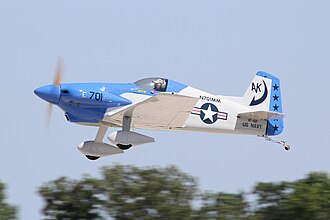
Mustang Aeronautics Midget Mustang: The Tiny Homebuilt With Big Performance
The Mustang Aeronautics Midget Mustang is one of the most distinctive aircraft to emerge from the American homebuilt-aircraft movement. Small, sleek and unmistakably sporty, the single-seat Midget Mustang was created for pilots who wanted the excitement of an air-racing machine in an aircraft that could be built in a home workshop. Originally designed by David Long, a Piper Aircraft engineer, the airplane first flew in 1948 and was initially known as the Long Midget. Over the following decades, the design passed through several owners and developers before becoming associated with Mustang Aeronautics. Its compact dimensions, all-metal construction, relatively simple systems and impressive performance made it a memorable example of postwar experimental aviation.
The Midget Mustang is also an important aircraft in the history of the homebuilt movement because it demonstrated how amateur builders could create machines with genuinely high-performance characteristics without relying on mass-produced factory aircraft. Designed during the era when air racing was an important source of inspiration for sport-aircraft designers, the Midget Mustang was exceptionally small, with a wingspan of only about 18 feet 6 inches and a length of approximately 16 feet 5 inches. Depending on engine and configuration, examples could achieve speeds that were extraordinary for such a compact aircraft. The later MM-1-125 specification, for example, was published with a 135 hp Lycoming engine and a maximum speed of approximately 225 mph.
The Origins of the Midget Mustang
David Long’s Air-Racing Idea
The story of the Midget Mustang begins in 1948, when David Long developed a small aircraft intended for air racing. Long was an engineer at Piper Aircraft, and the design reflected the practical engineering culture of the period as well as the fascination with racing aircraft that was widespread in American aviation after the Second World War. The first aircraft, known as the Pea Shooter, was built by Long for a friend who wanted to compete in the Cleveland Air Race. The design subsequently became known as the Long Midget.
The Midget Mustang did not immediately become a dominant racing aircraft, but its compact appearance and flying qualities attracted considerable attention. The airplane’s significance ultimately developed in a slightly different direction from that originally intended. Rather than becoming a mass-produced racing machine, it became a desirable homebuilt sport aircraft. Builders were attracted to the combination of small size, relatively straightforward construction and high performance, while pilots appreciated the aircraft’s responsive handling and distinctive appearance.
The prototype’s racing career nevertheless established the basic character of the design. The Midget Mustang was small enough to minimize frontal area and weight while providing sufficient wing area for practical flight. Its low-wing configuration and clean aluminum airframe gave it the appearance of a miniature high-speed racing machine. The aircraft’s proportions also made it immediately recognizable among the increasingly diverse collection of homebuilt aircraft appearing at American fly-ins during the 1950s and 1960s.
From Long Midget to Midget Mustang
David Long died only a few years after the aircraft was created, and the design subsequently changed hands. In 1955, Bert Wilcut acquired the rights and tooling and renamed the aircraft the Midget Mustang. Wilcut attempted to develop the aircraft commercially, but the resources required for larger-scale production proved difficult to obtain. The rights were eventually acquired by Robert Bushby, who became one of the most important figures in the subsequent history of the design.
Bushby’s involvement transformed the Midget Mustang from an interesting individual aircraft into a significant homebuilt design. He refined the construction approach, incorporated 2024-T3 aluminum alloy, and developed plans that could be purchased by amateur builders. His own Midget Mustang, powered by a 90 hp Continental engine, became an important demonstration of the design’s potential. Bushby’s work also eventually led to the development of the larger, two-seat Mustang II, which first flew in 1966 and became another well-known homebuilt aircraft.
A Tiny All-Metal Sportsplane
Compact Dimensions and Clean Aerodynamics
One of the first things that stands out about the Midget Mustang is its remarkably small size. The commonly cited MM-1-125 specification gives a length of 16 feet 5 inches, a wingspan of 18 feet 6 inches, and a wing area of only 68 square feet. For comparison, these dimensions are dramatically smaller than those of many conventional two-seat light aircraft. The Midget Mustang is essentially a single-seat aircraft built around the principle that a small airframe can deliver impressive performance when weight and aerodynamic drag are carefully controlled.
The wing is a low-wing cantilever design, eliminating the external bracing associated with older aircraft and helping create the clean appearance required for a racing-oriented machine. The all-metal construction is primarily based on aluminum, particularly 2024-T3 alloy in the later development of the design. This approach allowed the Midget Mustang to remain relatively light while providing a strong structure suitable for aerobatic and high-performance recreational flying within the aircraft’s approved operating limitations.
The compact fuselage also contributes to the aircraft’s character. There is room for only one pilot, and virtually every part of the airframe appears to have been designed around minimizing unnecessary size and weight. The result is an aircraft with an unusually high ratio of performance to physical dimensions. It looks small even beside many other homebuilt aircraft, yet its published performance figures put it firmly in the high-performance category.
Aluminum Construction
The Midget Mustang’s all-metal construction is one of its most important technical characteristics. Homebuilt aircraft of the period were often associated with a mixture of steel tubing, wood and fabric, but Long’s design took a different route. Later versions refined the use of aluminum construction, giving builders a relatively modern structure that could be fabricated using techniques suitable for experienced amateur aircraft builders.
This approach also helped establish the design’s long-term reputation. Mustang Aeronautics and historical accounts describe the Midget Mustang as a durable design that has remained in the homebuilt community for decades. EAA’s aircraft-building resources continue to list the MM-1 as a low-wing, single-seat aircraft with aluminum construction and both plans and kit-building heritage.
The construction process was not necessarily intended to be effortless. Like many plans-built aircraft, the Midget Mustang demanded careful metalworking, accurate assembly and a serious commitment from the builder. Historical descriptions have put construction time at roughly 1,000 hours, although the actual duration naturally depends on builder experience, workshop facilities, available components and the degree of completion of purchased parts.
Engines and Performance
The 85 hp Version
The Midget Mustang evolved around several engine choices. One important early configuration was the MM-1-85, associated with an approximately 85 hp Continental engine. This version reflected the aircraft’s original lightweight philosophy and offered substantial performance from relatively modest power. Bushby’s prototype flew in 1959, and a group of MM-1-85 aircraft was subsequently produced in the early 1960s.
Historical construction information gives the original 85 hp configuration a maximum speed of approximately 185 mph, a cruise speed around 170 mph, a stall speed near 57 mph, and a rate of climb of approximately 1,500 feet per minute. These figures illustrate the fundamental appeal of the design: even the lower-powered version could deliver speed that placed it well above the typical performance of many recreational aircraft of comparable vintage.
The aircraft’s small dimensions were crucial to achieving this performance. An 85 hp engine in a conventional four-seat airplane would produce relatively modest speeds, but the Midget Mustang carried only one pilot and a very small airframe. Reducing empty weight and aerodynamic drag meant that comparatively little engine power was needed to achieve a high rate of acceleration and useful cruising speed.
The MM-1-125
The later MM-1-125 represented a more powerful development, using a 135 hp Lycoming O-290-D2. Published Jane’s-derived specifications give the MM-1-125 an empty weight of approximately 590 pounds, a gross weight of 900 pounds, a maximum speed of 225 mph, and a cruise speed of approximately 165 mph. The same reference gives a 375-mile range, a 19,000-foot service ceiling and a climb rate of approximately 2,200 feet per minute.
These numbers need to be understood as specifications for a particular configuration rather than universal figures for every Midget Mustang. Homebuilt aircraft are unusually variable because individual builders can select different engines, propellers, equipment, landing-gear arrangements and finishing methods. Later examples have reportedly used engines ranging from roughly 85 hp to 150 hp, with corresponding differences in weight and performance.
Nevertheless, the MM-1-125 demonstrates what made the design famous. With a 135 hp engine pushing an aircraft weighing less than 1,000 pounds at maximum gross weight, the power-to-weight ratio was substantial. That combination allowed the Midget Mustang to function as a genuine high-performance sport aircraft rather than merely an attractive small touring machine.
The Midget Mustang and Air Racing
Built With Racing in Mind
Air racing was central to the Midget Mustang’s origins. David Long created the aircraft specifically for the racing environment, and the original machine competed during the late 1940s. Although the design was only moderately successful in direct racing competition, the characteristics that made it interesting to racers also made it attractive to recreational pilots.
The racing environment placed a premium on speed, acceleration, low weight and aerodynamic cleanliness. The Midget Mustang embodied all four principles. It was physically tiny, had a relatively small frontal area and avoided unnecessary structural complexity. As individual owners modified their aircraft, some racing examples reached approximately 181 mph in competition, while later configurations could achieve substantially higher speeds.
The aircraft therefore became part of the colorful culture surrounding American air racing and experimental aviation. Unlike a factory-produced aircraft, each homebuilt Midget Mustang could reflect its builder’s priorities. One owner might emphasize lightweight construction, another might install a more powerful engine, while another might concentrate on careful aerodynamic finishing. This individualization was one of the defining characteristics of the homebuilt movement.
A Racing Spirit in a Sport Aircraft
Even when used outside competition, the Midget Mustang retained its racing character. Pilots were attracted to the idea of flying a small, fast aircraft that demanded active involvement rather than providing the relatively sedate experience of a conventional touring aircraft. The aircraft’s reputation for good handling and attractive lines helped it remain popular after its original racing purpose had faded.
EAA accounts from the homebuilt community demonstrate the continuing fascination with the type. Builders and owners have described the Midget Mustang as an aircraft with particularly clean lines and a strong visual identity. EAA’s aircraft-building guide describes the MM-1 as “fast and very pretty,” while its history within the organization includes multiple examples receiving recognition at major aviation events.
Landing Gear and Variants
Conventional Tailwheel Configuration
The standard Midget Mustang uses a tailwheel landing gear arrangement, with most examples employing fixed landing gear. This configuration is consistent with the aircraft’s lightweight, traditional sport-aircraft character. It also contributes to the airplane’s compact appearance, with the fuselage sitting low to the ground when parked.
A notable alternative was the GG tricycle-gear modification, which changed the aircraft’s ground-handling arrangement and gave it a more conventional nosewheel appearance. Another development, the Graham Super Midget, incorporated manually retractable landing gear. These variants illustrate the freedom available within the homebuilt community to adapt the basic design to individual requirements.
Builder Modification
Perhaps the most fascinating aspect of the Midget Mustang is that no two examples necessarily have exactly the same character. Although plans provide the basic design, homebuilt aircraft can acquire decades of modifications as they pass between owners. Engine changes, landing-gear modifications, different canopies, revised instrumentation and aerodynamic improvements can all alter an individual aircraft.
One particularly notable example was the work of Jim Butler, whose Midget Mustangs became renowned in the EAA community for their craftsmanship. EAA’s historical account describes Butler’s aircraft receiving features including retractable landing gear and folding wings, demonstrating how far a skilled builder could develop the basic concept while retaining the essential Midget Mustang identity.
The Connection With the Mustang II
From One Seat to Two
The Midget Mustang’s influence extends directly into the Mustang II, the two-seat aircraft developed by Robert Bushby. Bushby began developing a larger two-seat version of the Midget Mustang concept in the early 1960s, and the resulting Mustang II prototype first flew in July 1966. The two designs share a family resemblance and developmental lineage, although the Mustang II is substantially larger and designed around two occupants.
The relationship between the two aircraft is an important part of the Midget Mustang story. The original single-seat airplane demonstrated the potential of the basic configuration, while the Mustang II adapted those ideas to the requirements of a practical two-seat aircraft. The larger design subsequently became an important homebuilt type in its own right.
This progression also illustrates a recurring theme in experimental aviation: successful designs often become foundations for new aircraft rather than remaining static. The Midget Mustang was not merely a finished product; it became a starting point for further experimentation and development.
Mustang Aeronautics and the Modern Midget Mustang
A Design That Refused to Disappear
The Midget Mustang eventually entered the modern era under Mustang Aeronautics, which acquired the rights to the design in 1992. Mustang Aeronautics continued to market the aircraft for homebuilding, preserving the basic concept while offering updated options. The company also became associated with the Mustang II, allowing both aircraft to remain part of the same family of experimental aircraft.
By the early 2010s, published sources recorded approximately 435 Midget Mustangs built, although production figures for homebuilt aircraft should always be treated cautiously because completed aircraft can emerge from plans over many decades and records may not capture every example. The continuing availability of plans and kits helped keep the design visible among experimental-aircraft enthusiasts.
The design’s longevity is perhaps its most impressive achievement. An aircraft conceived by David Long in 1948 remained recognizable more than half a century later, with its fundamental airframe concept still attractive to builders. EAA has continued to feature Midget Mustangs among the notable designs of the homebuilt movement, reflecting the type’s enduring presence in experimental aviation.
Why the Midget Mustang Remains Special
The appeal of the Mustang Aeronautics Midget Mustang lies in its extraordinary combination of size, speed and simplicity. It is difficult to look at the airplane without noticing how much performance has been packed into such a small airframe. With a wingspan under 19 feet and a single-seat cockpit, it occupies very little physical space, yet versions equipped with appropriately powerful engines can achieve speeds that rival or exceed those of much larger aircraft.
Its historical importance is equally compelling. The Midget Mustang emerged during a period when American aviation was experimenting with new forms of personal flying after the Second World War. The design captured the spirit of air racing while adapting it to the growing homebuilt movement. Instead of remaining an obscure prototype, it evolved into a plans-built aircraft that generations of enthusiasts could construct, modify and fly.
The design’s connection with Robert Bushby and the later Mustang II gives it an additional place in experimental-aircraft history. The Midget Mustang effectively became the foundation for a broader family of aircraft, demonstrating that a successful homebuilt design could evolve while retaining its original character.
Technical Specifications of the Mustang Midget Mustang
Because the Midget Mustang is a homebuilt aircraft available in multiple engine and landing-gear configurations, published specifications vary considerably. The table below uses the MM-1-125 specification associated with the 135 hp Lycoming O-290-D2, with additional context where appropriate. The figures are based primarily on Jane’s-derived data reproduced in aircraft reference sources.
| Specification | Midget Mustang MM-1-125 |
|---|---|
| Aircraft type | Single-seat homebuilt sport / aerobatic aircraft |
| Designer | David Long |
| Manufacturer / marketer | Mustang Aeronautics |
| Original designation | Long Midget |
| First flight | 1948 |
| Crew | 1 |
| Configuration | Low-wing cantilever monoplane |
| Construction | All-metal, primarily aluminum |
| Primary material | 2024-T3 aluminum in later construction |
| Engine | Lycoming O-290-D2 |
| Engine type | Four-cylinder opposed piston engine |
| Engine power | 135 hp (101 kW) |
| Length | 16 ft 5 in (5.00 m) |
| Wingspan | 18 ft 6 in (5.64 m) |
| Height | 4 ft 6 in (1.37 m) |
| Wing area | 68 sq ft (6.32 m²) |
| Empty weight | 590 lb (268 kg) |
| Gross weight | 900 lb (408 kg) |
| Maximum speed | 225 mph (362 km/h) |
| Cruise speed | 165 mph (265 km/h) |
| Range | 375 miles (603 km) |
| Service ceiling | 19,000 ft (5,790 m) |
| Rate of climb | 2,200 ft/min (11.2 m/s) |
| Landing gear | Normally fixed tailwheel |
| Alternative gear | Tricycle and retractable configurations have been developed |
| Typical construction time | Approximately 1,000 builder hours |
| Production / completed aircraft | Approximately 435 recorded by 2011 |
The specifications demonstrate why the Midget Mustang has such a strong reputation among experimental-aircraft enthusiasts. Its 900-pound gross weight and 135 hp engine produce a power-to-weight ratio that is substantial for a recreational aircraft, while its tiny wing and fuselage keep the overall airframe exceptionally compact. The published 225 mph maximum speed should not be assumed to apply to every Midget Mustang, since individual aircraft can differ substantially in engine installation, propeller selection, empty weight and aerodynamic finish.
Conclusion
The Mustang Aeronautics Midget Mustang is a remarkable example of what the American homebuilt-aircraft movement made possible. Conceived by David Long in 1948 as a small air-racing machine, the design evolved through several owners and eventually became one of the recognizable single-seat aircraft of the experimental-aircraft community. Robert Bushby’s involvement was especially important because he refined the design for amateur construction and established the lineage that eventually produced the larger Mustang II.
What makes the Midget Mustang memorable is not simply its speed. Its real achievement is the way it combines high performance with remarkably small dimensions. The aircraft is barely five metres long, has a wingspan of less than six metres and carries only one person, yet the MM-1-125 specification is associated with a 135 hp engine and a published maximum speed of 225 mph. That contrast between physical size and performance is at the heart of the aircraft’s enduring appeal.
The Midget Mustang also represents an important period in American aviation history. It emerged when air racing, amateur aircraft construction and personal aviation were developing together, and it benefited from a community willing to experiment with engines, landing gear and aerodynamic improvements. Individual builders transformed the basic plans into highly finished aircraft, and some examples became celebrated for their craftsmanship and competition achievements.
More than seven decades after David Long’s original aircraft first flew, the Midget Mustang remains an unusually charismatic homebuilt. It is small enough to look almost miniature beside conventional aircraft, but its performance, construction and history give it a significance far beyond its dimensions. As a link between postwar air racing, the early EAA homebuilt movement and the later Mustang II, the Midget Mustang occupies a distinctive place in the story of experimental aviation.
.jpg)