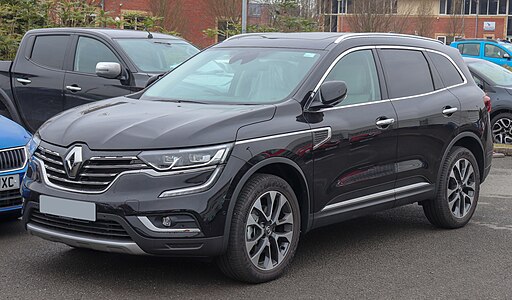
Renault Koleos faults
Common Renault Koleos Faults
Below is an organized overview of known issues affecting various Koleos model years. Each entry includes details on symptoms, root causes, and any recall actions where applicable.
Suspension and Steering
- Lower front suspension arm prone to fracture under braking on 2011 models, risking wheel trapping inside the arch and accidents. Renault recalled many 2011 units in 2013 to replace the faulty arm.
- Excessive play in the steering wheel and difficulty turning on 2015–2016 models, caused by wear in tie-rod ends, ball joints or power-steering pump failures, which undermines handling precision.
Transmission and Drivetrain
- Slipping gears, jerking or shuddering during shifts and hesitation under acceleration reported on 2012–2013 models. Causes include worn clutch plates, low transmission fluid, faulty sensors or CVT belt degradation, often leading to costly repairs if left unaddressed.
Engine and Performance
- Rough idling, misfires and loss of power in 2009–2010 models linked to clogged fuel injectors, faulty ignition coils or engine control unit glitches, resulting in poor driveability.
- Overheating incidents in 2010–2011 models due to coolant leaks from deteriorated hoses, failing water pumps or sticking thermostats. Regular cooling-system inspections can prevent damage.
- Oil leaks from worn gaskets, seals or cracked oil pans. Leaks often manifest as oil spots under the car or a burning smell, risking low lubrication and engine damage if ignored.
Electrical and Electronics
- Unresponsive infotainment touchscreens, random dashboard warning lights, power-window failures and starter-motor issues, particularly in 2016–2018 models. Faulty wiring, degraded sensors and software bugs are common culprits.
Brake System
- Squeaking or grinding noises, soft brake pedal feel and uneven stopping power on 2014–2017 models. Additionally, electric handbrake mechanisms may stick or fail to release, sometimes leaving the parking lights illuminated continuously.
Fuel System
- Fuel leaks and pump failures reported on 2013–2014 models, leading to reduced fuel economy and stalls shortly after engine start. Pressure testing and line inspections are recommended to locate and repair leaks promptly.
HVAC (Heating, Ventilation, Air Conditioning)
- Uneven cabin temperatures, weak airflow and strange vent noises caused by faulty blend-door actuators, refrigerant leaks or compressor faults. Issues typically surface in high-mileage or older vehicles.
Door Lock and Key Fob
- Difficulty locking/unlocking remotely due to drained fob batteries, defective key electronics or jammed actuators inside the door trim. Replacing the fob battery or actuator and reprogramming may resolve the fault.
Bodywork, Paint and Rust
- Peeling paint, chipping finishes and early rust formation around wheel arches and the undercarriage, especially on 2014–2015 models. Regular cleaning, waxing and prompt rust-spot repairs can slow corrosion.
Notable Recalls
- Bonnet latch failure on 2021–2023 models can allow the bonnet to detach at speed, creating a safety hazard. Dealers will repair this free of charge.
- Lower suspension arm fracture risk on 2011 Koleos units led to a recall in 2013; verify any used 2011 model has had this repair done before purchase.
Renault Koleos as a used car
The Renault Koleos stands out in the compact SUV segment as a stylish and well-equipped choice, offering a comfortable ride, generous interior space, and a competitive package of features. As a used car, it presents an appealing combination of value, comfort, and versatility—especially for families and commuters seeking an affordable all-rounder. This article dives deep into the Koleos’s specifications, generation differences, engine options, reliability pointers, and buying considerations to help you make an informed decision when hunting for a pre-owned unit.
Overview of Renault Koleos Generations
First Generation (2007–2016)
The inaugural Koleos arrived in 2007, sharing its underpinnings with Nissan’s X-Trail but carving a more refined, European-styled niche. Early models featured a compact footprint, straightforward cabin design, and optional all-wheel drive. Facelifts in 2011 and 2014 brought subtle exterior tweaks, upgraded infotainment, and improved materials, but the overall package remained largely consistent.
Second Generation (2016–Present)
Launched in 2016 and underpinned by the Renault–Nissan CMF platform, the current Koleos embodies a more mature, upscale character. It boasts a longer wheelbase, sculpted bodywork, a chrome-heavy grille, and an interior that rivals premium rivals in ergonomics and finish. European markets saw diesel-dominated choices, while petrol engines and advanced driver-assist systems became widely available.
Engine Options and Performance
Petrol Engines
- 2.5-litre naturally aspirated I4 (First Gen): 170 PS, 226 Nm. Smooth and reliable, yet thirsty in urban driving (10–12 L/100 km).
- 1.3-litre turbocharged I4 (Second Gen): 160 PS, 270 Nm. Balance of performance and efficiency, returning 6.8 L/100 km on the WLTP cycle.
- 2.0-litre turbocharged I4 (selected markets): 225 PS, 300 Nm. Sportier response, best reserved for early high-spec trims.
Diesel Engines
- 2.0-litre dCi I4 (First Gen): Ranging from 127 PS to 175 PS. Peak torque of up to 380 Nm. Renowned for longevity but sensitive to neglect in oil-change intervals.
- 1.7-litre dCi I4 (Second Gen): 150 PS, 320 Nm. Modern particulate filter-equipped unit achieving 5.2 L/100 km.
- 2.0-litre dCi I4 (Second Gen): 177 PS, 380 Nm. Smoother operation, brisk acceleration, and WLTP-rated 6.0 L/100 km.
All-Wheel Drive System
True all-wheel drive (4Control 4WD) is standard or optional depending on trim. It employs a multi-plate coupling managed by the HDC (Hill Descent Control) module, seamlessly sending torque to the rear axle when front wheel slip exceeds thresholds.
Trim Levels and Features
Trim availability varies by market, but below is a representative breakdown:
Expression
- Keyless entry, 17-inch alloys
- Single-zone climate control
- Basic infotainment with Bluetooth and USB
- Halogen headlights
Dynamique
- 18-inch alloys, LED daytime running lights
- Dual-zone automatic climate control
- 7-inch touchscreen with navigation
- Heated front seats
Signature
- 19-inch alloys, full LED headlights
- Bose® premium audio
- Leather upholstery, panoramic sunroof
- Advanced driver assists: blind-spot warning, adaptive cruise control
Common Issues and Reliability
Suspension and Steering
Early Koleos units sometimes develop excessive play in front lower arms or tie-rod ends, manifesting as clunks over bumps or vague steering feel. Regular inspections and replacing worn bushes can restore crisp handling.
Transmission
CVT units fitted to many petrol variants can suffer belt slippage or judder after 80,000–100,000 km, especially under heavy city use. Look for hesitation on acceleration and ensure the transmission oil has been serviced on schedule (every 60,000 km).
Electrical Glitches
Infotainment hangs, dashboard warning lamp anomalies, and intermittent central-locking failures are reported in high-mileage models. Software updates at dealerships often cure these faults. Check for any outstanding technical service bulletins before purchase.
Corrosion and Bodywork
Although build quality is generally good, wheel arches and lower sills on pre-2014 models can exhibit early paint bubbling and surface rust. Inspect these areas and underfloor sections, particularly if the vehicle spent time in coastal or salted-road regions.
Technical Specifications by Model Year
Dimensions and Weight
| Specification | First Gen (2014 facelift) | Second Gen (2016) |
|---|---|---|
| Length | 4,490 mm | 4,670 mm |
| Width (excluding mirrors) | 1,870 mm | 1,860 mm |
| Height | 1,660 mm | 1,680 mm |
| Wheelbase | 2,670 mm | 2,705 mm |
| Boot Capacity | 450 L (to parcel shelf) | 579 L |
| Kerb Weight | 1,560–1,720 kg | 1,630–1,780 kg |
Powertrain Specifications
| Engine | Output | Torque | Transmission |
|---|---|---|---|
| 2.0 dCi (First Gen) | 175 PS @ 4,000 | 380 Nm | 6-speed manual / CVT |
| 1.7 dCi (Second Gen) | 150 PS @ 4,000 | 320 Nm | X-Tronic CVT |
| 1.3 TCe (Second Gen) | 160 PS @ 5,500 | 270 Nm | 6-speed manual / CVT |
Fuel Economy
- First Gen 2.0 dCi: 5.8–6.5 L/100 km combined.
- Second Gen 1.7 dCi: 5.2 L/100 km combined (WLTP).
- Second Gen 1.3 TCe: 6.8 L/100 km combined (WLTP).
Buying Guide for Used Koleos
What to Inspect
- Suspension joints and undercarriage for wear and corrosion.
- Transmission behavior: ensure smooth shifts with no belt-slip judder.
- Electronic functions: test infotainment, electric windows, parking sensors.
- Cooling system: check hoses, water pump, and radiator for leaks.
Maintenance History and Service Records
A full service book stamped at regular intervals is crucial. Diesel engines demand oil and filter changes every 15,000 km or 12 months, along with timely fuel-filter replacements. Confirm any CVT fluid service and software update logs.
Value Retention and Depreciation
Koleos values tend to drop sharply in the first three years (up to 40%), then stabilize. Second-hand pricing varies by engine type and wheel-drive configuration—diesel AWD models hold value best among high-mileage buyers.
Ownership Costs and Running Expenses
Insurance and Taxation
Insurance premiums are mid-range for the segment, though higher trim levels and larger engines command steeper policies. Diesel models may incur additional tax costs where emissions-based levies apply.
Fuel and Maintenance Costs
- Diesel variants: 5.2–6.5 L/100 km, translating to €70–€90 monthly fuel spend for typical commuters.
- Scheduled services: €250–€350 per visit, rising to €400–€600 when timing belts and water pumps require replacement at 120,000 km.
Conclusion
As a used SUV, the Renault Koleos blends comfort, space, and technology with competitive ownership costs. Selecting the right generation, engine, and trim—and thoroughly checking for suspension wear, transmission health, and service history—ensures you land a dependable machine. Whether you prioritize the punchy diesel’s range or the petrol’s ease of ownership, the Koleos offers a compelling proposition for buyers seeking practicality without sacrificing on refinement.
