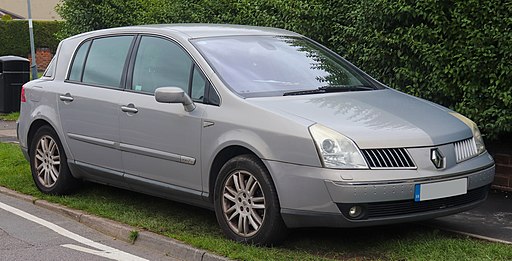
Renault Vel Satis faults
Engine and Emission System Faults
Overheating and Cylinder-Head Gasket Failure
- Symptoms: Rapid coolant loss, white smoke from exhaust, overheated warning on dash.
- Cause: Cracked or warped cylinder head gasket, often on early V6 and 2.2 dCi models.
- Remedy: Full gasket replacement, head skim and pressure test; cooling-system flush and new thermostat.
Turbocharger and Intercooler Issues (Diesel Models)
- Symptoms: Loss of boost, whistling or grinding noises under acceleration, limp-home mode.
- Cause: Worn turbo bearings, oil-feed blockage, or brittle intercooler hoses.
- Remedy: Pressure-test and replace cracked hoses/clamps; rebuild or fit a remanufactured turbo core.
EGR Valve Carbon Build-Up
- Symptoms: Rough idle, poor mid-range pull, soot-laden exhaust or engine-warning lamp.
- Cause: Soot-laden exhaust‐gas recirculation valve sticking open/closed.
- Remedy: Remove and chemically decarbonize or fit a new EGR assembly; consider an oil catch-can upgrade.
Damper (Harmonic Balancer) Pulley Failure
- Symptoms: Loud rattling from front of engine, serpentine‐belt slip, AC compressor failure.
- Cause: Internal rubber isolator in pulley disintegrates.
- Remedy: Replace damper pulley and serpentine belt; inspect ancillary‐belt tensioner.
Transmission and Clutch Faults
Automatic Gearbox (BVA/EDC) Harsh Shifts or Slip
- Symptoms: Jerks under acceleration, delayed down-shifts, gearbox-warning light.
- Cause: Worn clutch packs, degraded fluid, or mechatronic-valve faults.
- Remedy: Renew transmission fluid and filter; if fault persists, dismantle mechatronic unit or rebuild valve body.
Clutch Premature Wear (6-Speed Manual)
- Symptoms: Slipping under load, high biting-point, judder on take-off.
- Cause: Soft-material pressure plate and dual-mass-flywheel fatigue.
- Remedy: Replace clutch-and-flywheel kit with uprated single-mass flywheel if heavy-use vehicle.
Synchromesh Ring Wear
- Symptoms: Gear-grind into first or second, stiff or crunchy selection.
- Cause: Hardened synchro brass wears on high-mileage cars.
- Remedy: Synchro-ring renewal or full gearbox rebuild; check and adjust shift linkage.
Electrical and Electronics Faults
Instrument-Cluster Display Glitches
- Symptoms: Blank or flickering gauges, sporadic warning lights, frozen trip computer.
- Cause: Cold solder joints and failing capacitors on the cluster’s PCB.
- Remedy: Reflow solder on cluster board or fit a refurbished instrument module.
Central-Locking & Keycard Reader Failures
- Symptoms: Doors won’t lock/unlock, boot release inoperative, rapid keycard battery drain.
- Cause: Worn RF-antenna ring around steering column or faulty reader contacts.
- Remedy: Replace keycard-reader module; update body-ECU software to latest revision.
Window-Regulator and Motor Breakdowns
- Symptoms: Door windows drop under their own weight or refuse to move.
- Cause: Stripped gears in regulators or seized guide rails.
- Remedy: Install new OE-spec regulator assemblies; lubricate channels and clean earth points.
Battery Drain and Alternator Overload
- Symptoms: Flat battery after short rest, warning buzzer, dimming lights.
- Cause: Parasitic draw from poorly programmed body-control modules or failing alternator diodes.
- Remedy: Perform parasitic-draw test; reprogram ECUs and replace alternator if diode‐bridge faulty.
Suspension, Steering and Brake Faults
Front Wheel Bearing and Hub Assembly Wear
- Symptoms: Low-speed growl when cornering, knocking over bumps.
- Cause: Water ingress and loss of grease seals.
- Remedy: Replace complete hub units with sealed bearings; check ABS sensor rings.
Anti-Roll-Bar Link and Bushing Deterioration
- Symptoms: Clunks over road joints, loose steering feel.
- Cause: Rubber bush fatigue and corroded link studs.
- Remedy: Renew links and bushes in matched pairs; apply anti-seize to mounting bolts.
Steering-Knuckle Fatigue (Early Models)
- Symptoms: Steering vagueness, knocking under torque steer.
- Cause: Insufficiently braced knuckle casting prone to crack.
- Remedy: Retrofit reinforced knuckles under service-campaign parts bulletin.
Brake-Caliper Seizure
- Symptoms: Pull to one side under heavy braking, uneven pad wear.
- Cause: Corroded slider pins or sticking piston seals.
- Remedy: Recondition calipers, renew seals and pins; fit new pads and discs if required.
Body, Interior and HVAC Faults
Headliner Sag and Trim-Clip Failures
- Symptoms: Drooping roof-lining, rattles from doors or dash.
- Cause: Deteriorated foam backing and brittle plastic clips.
- Remedy: Re-glue headliner with high-temp adhesive; replace interior-trim fasteners and add foam-damping tape.
Door-Seal and Sunroof Water Leaks
- Symptoms: Wet footwells, mildew smell, water dripping onto occupants.
- Cause: Perished rubber seals or blocked sunroof drains.
- Remedy: Renew seals, clear drainage channels and treat carpet with anti-bacterial spray.
Blower-Motor Resistor Burn-Out
- Symptoms: HVAC fan works only on highest speed or not at all.
- Cause: Resistor-coil overheating and connector corrosion.
- Remedy: Fit new resistor pack and clean chassis-earth and bulkhead connectors.
Climate-Control Display & Sensor Glitches
- Symptoms: No backlight on climate unit at night, bizarre temperature readings.
- Cause: Failed display-PCB solder joints or damaged cabin temperature sensor.
- Remedy: Reflow display soldered joints or replace the climate-control module and sensor assembly.
Renault Vel Satis as a used car
The Renault Vel Satis occupies a unique place in automotive history as a luxury five-door hatchback that challenged traditional executive saloon conventions. Launched in 2002, it combined avant-garde styling with a roomy cabin, advanced equipment and a smooth ride. On the used-car market today, it offers striking value for buyers seeking an executive experience at a mainstream price point.
Design and Positioning
The Vel Satis was conceived to out-class conventional sedans through bold proportions and an elevated driving position. Its tall greenhouse, slim pillars and wraparound windscreen deliver exceptional visibility, while its wide doors and low sill height ensure effortless ingress and egress. A long wheelbase paired with a short front overhang contributes to both visual drama and a spacious rear seat environment.
Technical Specifications
Engine Options
| Engine Variant | Displacement | Power (hp) | Torque (Nm) | 0–100 km/h (s) |
|---|---|---|---|---|
| 2.0 16V petrol | 1,998 cc | 140 | 190 | 10.0 |
| 3.0 V6 petrol | 2,979 cc | 210 | 271 | 8.5 |
| 2.2 dCi diesel | 2,179 cc | 150 | 320 | 9.8 |
| 3.0 dCi diesel | 2,993 cc | 177 | 350 | 8.7 |
All engines feature double overhead camshafts and four valves per cylinder. Diesel variants employ common-rail direct injection and variable-geometry turbocharging for broad low-down thrust.
Transmission and Drivetrain
| Transmission Type | Available Engines |
|---|---|
| 6-speed manual | 2.0 petrol, 2.2 dCi |
| 5-speed automatic | 3.0 petrol, 3.0 dCi (initial models) |
| 6-speed automatic (DP0) | 3.0 dCi (post-2005 models) |
Power is delivered to the front wheels via a reinforced transaxle. The optional automatic gearbox offers smooth shift logic and manual shift gates on higher-spec models.
Dimensional Data
| Dimension | Measurement |
|---|---|
| Overall length | 4,684 mm |
| Overall width | 1,846 mm |
| Overall height | 1,612 mm |
| Wheelbase | 2,800 mm |
| Boot capacity | 560 L (seats up) / 1,995 L (seats down) |
| Kerb weight | 1,625 – 1,950 kg |
Generous wheelbase and careful packaging yield rear-legroom on par with luxury rivals, while the hatchback tailgate ensures versatile cargo loading.
Performance and Fuel Economy
The petrol 2.0-litre returns approximately 8.2 litres per 100 km in mixed driving, while the V6 petrol consumes around 10.5 litres per 100 km. Diesel variants achieve 6.9–7.5 litres per 100 km, combining strong mid-range torque with respectable long-distance economy. Highway cruising in the 3.0 dCi is accomplished with minimal noise intrusion and relaxed engine speeds.
Equipment and Comfort
Safety and Driver Aids
The Vel Satis came well equipped from launch:
- Six airbags including front, side and curtain units
- Anti-lock braking system with electronic brakeforce distribution
- Traction control and optional electronic stability programme
- Adaptive xenon headlights with self-leveling and cornering illumination
Infotainment and Connectivity
Depending on trim level, equipment highlights include:
- Integrated navigation with 7-inch colour screen and voice guidance
- Bose premium sound system with eight speakers and subwoofer
- Bluetooth hands-free telephony and USB audio interface
- Dual-zone automatic climate control with air-quality sensor
Ownership Costs and Maintenance
Buying a used Vel Satis delivers luxury at mainstream servicing costs. Timing belts and water pumps should be replaced every 120,000 km, while automatic-gearbox fluid changes at 60,000 km protect shift quality. Brake pads and discs are shared with larger Renault models, keeping parts prices competitive. The aluminium-intensive suspension arms and multi-link rear setup require periodic bush-and-ball-joint checks but seldom demand major intervention.
Buying Guide for a Used Vel Satis
- Verify full service history, particularly timing-belt replacements at the 100–120k mark.
- Inspect underbody rails and suspension mounts for corrosion in salt-belt regions.
- Test automatic and manual gearboxes for smooth engagement and absence of judder.
- Check climatronic functions and adaptive headlight operation for proper sensor performance.
- Confirm infotainment and navigation modules power up correctly and pair with mobile devices.
Conclusion
The Renault Vel Satis remains a compelling proposition for buyers seeking executive-class space, comfort and features without steep depreciation. Its blend of refined powertrains, comprehensive equipment and flexible hatchback architecture make it stand out on the used market. Equipped with the technical specifications and buying pointers above, prospective owners can approach the Vel Satis with confidence and secure a truly distinctive used-car experience.
