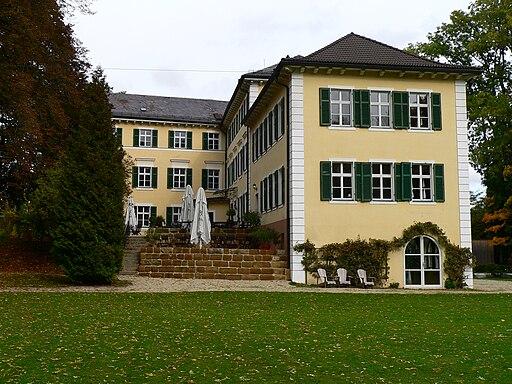
Schloss Burgellern is one of those places that feels both deeply rooted and surprisingly refined. Set in Upper Franconia near Bamberg, it belongs to a region where history is not something kept behind glass, but something woven into villages, hillsides, and everyday life. The castle’s charm does not come from dramatic cliffside views or intimidating fortifications. Instead, it comes from balance: the balance between aristocratic ambition and rural calm, between architectural elegance and the grounded character of Franconia itself. Schloss Burgellern feels like a residence designed not for war, but for presence, continuity, and the subtle art of making power look effortless.
What makes it especially compelling is that it does not shout for attention. It stands with the confidence of a building that has been important for centuries and does not need to prove it. That quiet confidence is part of the magic. You can sense immediately that Schloss Burgellern belongs to a long story of noble estates, church influence, and regional culture, where landownership and local identity mattered as much as politics in distant capitals.
A Franconian Castle with a Different Purpose
Schloss Burgellern is not a medieval fortress in the traditional sense. While the site has older roots, the castle’s identity is strongly tied to the later era when aristocratic residences became more about representation than defense. In this period, castles were no longer primarily designed to withstand siege. They were designed to express order, taste, and social hierarchy through architecture. Schloss Burgellern reflects this shift beautifully.
The building’s overall impression is one of harmony. It carries the aesthetics of a residence meant to host, to impress guests, and to anchor a noble presence in the region. This gives it a different emotional atmosphere compared to castles built for conflict. Instead of feeling tense or defensive, Schloss Burgellern feels composed. It invites you to imagine a world of ceremonies, estate management, and cultivated lifestyle rather than military urgency.
This is not a small difference. It changes the way you experience the building. You are not looking for battlements and escape routes. You are noticing symmetry, proportions, courtyards, and the way architecture can communicate authority without a single weapon in sight.
The Setting: Upper Franconia’s Calm as a Frame
One of the most underrated aspects of Schloss Burgellern is its setting. Upper Franconia has a distinctive atmosphere: rolling hills, quiet villages, and a landscape that feels lived-in rather than staged. This is not Bavaria in the postcard sense of dramatic alpine peaks. It is a gentler, more intimate Bavaria, where beauty is found in small details and long continuity. Schloss Burgellern fits perfectly into this environment.
The castle feels like a natural extension of the region rather than an imported statement. Its presence enhances the landscape instead of overpowering it. That harmony is one of the reasons it leaves such a strong impression. You can stand near the building and feel that it belongs to its surroundings in a way many grand residences do not. It feels less like a monument dropped into the countryside and more like the architectural center of a long-established local world.
Layers of History Without Losing Coherence
Many historic castles feel like patchworks. They were expanded, repaired, rebuilt, and modernized so many times that their identity becomes fragmented. Schloss Burgellern, however, has a coherence that makes it unusually satisfying to explore. Even though it has passed through centuries of change, it still feels like a unified place rather than a collection of unrelated additions.
This coherence is part of its elegance. The building communicates a clear sense of purpose: to be a dignified residence, a seat of influence, and a lasting symbol of status. Even if the details changed over time, the overall character remained stable. That stability gives Schloss Burgellern a strong personality. It feels like a castle that always knew what it wanted to be.
This is one of the reasons it resonates so well with visitors. You do not need deep architectural knowledge to feel the logic of the place. The design reads clearly. It guides your attention without confusing you, and it creates an experience that feels both grand and approachable.
The Castle as a Social Stage
Schloss Burgellern was never only about private living. Castles of this type were social machines. They existed to host, to negotiate, to display refinement, and to reinforce the status of the people who lived there. The rooms, halls, and courtyards were designed not only for comfort but for performance.
This idea of the castle as a stage is key to understanding its atmosphere. You can sense that certain spaces were meant for formal encounters, while others were meant for everyday routines. The building was a world of hierarchy, where architecture helped organize social life. Even today, when you walk through such a place, you can feel that invisible structure. The castle seems to direct movement and attention, creating a subtle sense of order that modern buildings often lack.
At the same time, the castle’s refinement suggests that life here was not only about authority. It was also about culture. A residence like Schloss Burgellern would have been a center for regional taste, reflecting the artistic and intellectual currents of its era. Even in a rural setting, such castles acted as bridges between local life and the broader cultural world.
Franconian Identity in Stone
Schloss Burgellern is also a powerful example of Franconian identity. Franconia has always had a distinct character within Bavaria, shaped by its history, its dialects, and its relationship to neighboring regions. The castles and estates of Franconia often feel different from the more flamboyant royal architecture associated with southern Bavaria. They tend to be more restrained, more grounded, and more closely tied to the land. Schloss Burgellern fits this perfectly.
Its elegance is not theatrical. It does not try to overwhelm you with excessive ornament. Instead, it presents itself with dignity and proportion. That restraint feels very Franconian. It suggests a culture where prestige is expressed through stability and refinement rather than extravagance. The castle becomes a kind of architectural portrait of the region: confident, cultivated, and quietly proud.
A Place That Has Adapted Rather Than Frozen
One of the most impressive things about Schloss Burgellern is that it has not become a lifeless relic. Many historic residences survive only by becoming museums, and while museums can be valuable, they can also strip a place of its living atmosphere. Schloss Burgellern’s continued relevance comes from its ability to adapt.
A castle that remains connected to hospitality, events, and modern cultural use retains something essential. It stays human. It stays practical. It keeps the feeling that it is meant to be inhabited rather than merely observed. That sense of life is one of the reasons Schloss Burgellern feels warm rather than distant. Even if you are visiting as a guest, you do not feel like you are intruding on a dead past. You feel like you are entering a place that still has purpose.
This adaptability also reflects a broader truth about European heritage. The buildings that survive best are the ones that continue to matter. Schloss Burgellern matters because it has found ways to remain part of the region’s cultural fabric, not only as a historic site but as a functional space.
The Experience of Visiting: Calm, Texture, and Atmosphere
Visiting Schloss Burgellern is less about ticking off highlights and more about absorbing atmosphere. The experience is shaped by calm. Unlike crowded tourist castles, this one tends to feel more intimate, more personal, and more connected to its surroundings. You notice textures: stone, wood, the way light falls across walls, the way courtyards create sheltered space.
There is also a particular kind of emotional tone here. The castle does not feel like a monument to conquest. It feels like a monument to continuity. It suggests a world where power was maintained not through dramatic battles but through long-term control of land, relationships, and reputation. That kind of history can feel surprisingly modern, because it reminds you that influence is often built slowly, through systems rather than spectacle.
This atmosphere makes Schloss Burgellern especially appealing to visitors who enjoy quiet discovery. It is a place that rewards attention. The longer you stay, the more you sense its layers. You begin to imagine not only the grand moments but the ordinary ones: staff moving through corridors, guests arriving, seasonal rhythms shaping estate life, and the steady passage of time.
Schloss Burgellern and the Bamberg Region
The castle’s location near Bamberg adds another layer of significance. Bamberg is one of Germany’s most historically rich cities, known for its architecture, its ecclesiastical history, and its cultural depth. Schloss Burgellern exists within that broader historical landscape. It is part of a network of sites that reflect the region’s long connection to noble and church influence.
This connection matters because it helps explain why the castle feels so refined. The Bamberg area has long been a cultural crossroads, shaped by trade, religious power, and artistic development. Schloss Burgellern reflects that world. It is not an isolated rural manor; it is part of a historically sophisticated region where architecture and cultural identity were deeply intertwined.
For visitors, this means Schloss Burgellern can be experienced not as a single destination but as part of a larger journey through Franconia’s layered past. It complements Bamberg’s urban beauty with a more rural, aristocratic perspective. Together, they reveal a region that has always balanced city culture with countryside tradition.
Why Schloss Burgellern Still Captivates
Schloss Burgellern captivates because it represents a different kind of castle story. It is not a tale of dramatic siege warfare or royal fantasy. It is a story of local influence, cultural refinement, and the quiet power of continuity. The castle feels like a place where history unfolded in measured steps, through generations of estate life rather than sudden catastrophe.
That makes it surprisingly relatable. It reminds you that the past was not always extreme. Much of it was steady, structured, and deeply tied to everyday routines. Schloss Burgellern offers a window into that world without needing exaggeration. It is beautiful because it feels real.
.jpg)