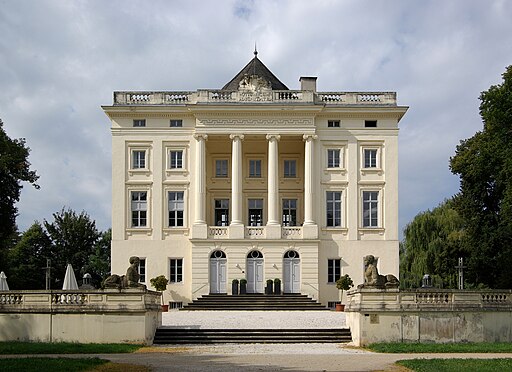
Schloss Monaise, a refined and elegant neoclassical villa located on the outskirts of Trier, Germany, is one of the region’s most distinctive architectural treasures. Unlike medieval fortresses or baroque palaces, this residence embodies Enlightenment-era aesthetics—symmetry, harmony, and restraint—while reflecting the cultural and political sophistication of late 18th-century Europe. Nestled between the Moselle River and gentle vineyard slopes, Schloss Monaise today stands as a symbol of aristocratic aspiration, architectural innovation, and the enduring beauty of the Trier landscape.
The Origins of Schloss Monaise
The story of Schloss Monaise begins in the 1770s, when the estate was commissioned by Philipp Franz Wilderich von Walderdorff, a high-ranking aristocrat and last prince-bishop of Speyer. Seeking a private retreat outside Trier, he desired a residence that would embody the intellectual spirit and refined tastes of the Enlightenment. The name “Monaise” is derived from the French expression Mon Aise, meaning “my comfort,” a fitting description for a leisure villa designed for relaxation, social gatherings, and cultivated living.
The villa was part of a broader trend among European nobility to build country estates inspired by classical antiquity and the ideals of balance and clarity. Schloss Monaise became a testament to this shift, blending elegance with carefully considered functionality.
Architectural Style and Influences
Schloss Monaise is a masterpiece of neoclassical architecture, a style that drew heavily on ancient Greek and Roman principles. Its design is attributed to Francois Ignace Mangin, a French architect known for his adherence to classical symmetry and proportion.
Key architectural characteristics include:
-
A strictly symmetrical façade, emphasizing order and balance
-
Clean lines and minimal ornamentation, replacing the exuberance of Rococo and Baroque forms
-
A central domed roof, giving the villa a sense of vertical emphasis and grandeur
-
Tall windows, inviting abundant natural light and enhancing the harmony between interior and exterior spaces
-
A three-part layout, consisting of a central pavilion framed by two lower wings
The exterior, with its pale pastel tones and refined detailing, exudes quiet sophistication rather than dramatic opulence.
Interior Design and Features
Although smaller than many other European palaces, Schloss Monaise’s interior was carefully arranged to support leisure, social interaction, and comfort.
Notable interior features include:
-
A central rotunda, under the dome, serving as the architectural heart of the villa
-
Decorative stucco work, showcasing neoclassical motifs such as garlands, medallions, and geometric patterns
-
Elegant reception rooms, ideal for musical performances, intimate gatherings, and cultural conversation
-
Fine parquet floors, emphasizing craftsmanship and luxury
-
A dining hall, designed for private soirées and aristocratic entertainment
The design reflects Enlightenment-era ideals of rationality and beauty, where architecture served both practical and aesthetic purposes.
The Villa’s Setting and Surrounding Landscape
Schloss Monaise was placed deliberately in a picturesque location along the Moselle, allowing its residents to benefit from:
-
Serene river views, enhancing the retreat-like atmosphere
-
Proximity to vineyards, reflecting the region’s rich winemaking traditions
-
Gently rolling meadows, offering space for leisurely walks and carriage rides
The surrounding estate originally included landscaped gardens and auxiliary buildings used for servants, agriculture, and estate management. While not all original landscaping survives, the villa’s placement still strikes a harmonious balance with its environment.
Historical Significance and Changing Ownership
Throughout its lifetime, Schloss Monaise passed through various owners and endured significant historical upheavals.
During the French Revolutionary Wars and subsequent Napoleonic occupation, aristocratic properties in the region faced confiscation and repurposing. The villa was no exception, experiencing changes that reflected the political turbulence of the era.
In the centuries that followed, Schloss Monaise served different functions—sometimes as a private residence, other times adapted for commercial or cultural use. Despite these transformations, it retained its architectural integrity due to periodic restoration efforts and growing awareness of its historical importance.
Restoration and Preservation Efforts
By the 20th century, Schloss Monaise required extensive conservation. Structural deterioration, weather damage, and changing uses had taken a toll on both interior and exterior elements.
Restoration initiatives focused on:
-
Stabilizing the central dome and roof structure, ensuring long-term preservation
-
Repairing stucco and façade elements, restoring the villa’s neoclassical elegance
-
Conserving interior detailing, including fresco fragments and wooden finishes
-
Modernizing infrastructure, allowing the building to function as a contemporary venue while retaining historical authenticity
These efforts successfully revived Schloss Monaise and prevented the loss of a rare neoclassical landmark in the Trier region.
Modern Use and Visitor Experience
Today, Schloss Monaise functions primarily as an event venue and cultural attraction. Its unique architecture and serene ambiance make it a popular setting for:
-
Weddings and private celebrations
-
Concerts and cultural programs
-
Culinary events, often highlighting local wines
-
Photography sessions, thanks to its symmetry and scenic surroundings
Visitors can admire the exterior year-round, while interior access is typically available during events or scheduled tours. The villa’s proximity to Trier makes it an appealing stop for travelers exploring the Moselle Valley.
Symbolism and Cultural Value
Schloss Monaise represents a departure from medieval fortification and baroque splendor, embracing instead a philosophy rooted in intellect, order, and refined living. It captures a moment in European history when art and architecture were inspired by rediscovery of classical ideals and the pursuit of personal well-being.
For the Trier region, the villa stands as a unique architectural expression—one that contrasts yet complements the city’s Roman monuments, medieval churches, and early modern residences.
Conclusion
Schloss Monaise remains a rare jewel of neoclassical architecture in western Germany. Its graceful proportions, historical depth, and idyllic setting create an atmosphere of timeless charm. Whether admired from afar along the Moselle or explored during a special event, the villa invites visitors to experience the elegance and quiet sophistication of the Enlightenment era.
