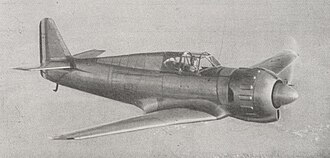
Bloch MB.150 – The Forgotten Foundation of French Fighter Development
When discussions turn toward fighter aircraft of the Second World War, attention almost always gravitates toward famous names such as the Supermarine Spitfire, Messerschmitt Bf 109, North American P-51 Mustang, or Mitsubishi A6M Zero. These legendary aircraft have become symbols of the conflict and dominate aviation history. Hidden behind these icons, however, are numerous lesser-known designs that played an equally fascinating role in shaping military aviation. Among them stands the Bloch MB.150, an aircraft whose significance extends well beyond the number of examples produced. Although the original MB.150 prototype itself never entered large-scale operational service in its earliest form, it served as the foundation for an entire family of French fighters that defended France during the dramatic opening phase of the Second World War.
The Bloch MB.150 represented a critical moment in French aviation engineering. It embodied the ambitious efforts of France to modernize its fighter force during the turbulent political and technological environment of the 1930s. While its development encountered numerous delays and technical obstacles, these setbacks ultimately contributed valuable engineering lessons that influenced improved variants such as the MB.151, MB.152, MB.155, and MB.157. Examining the MB.150 therefore reveals not simply the story of a single airplane but also the evolution of an entire fighter lineage that reflected both the strengths and weaknesses of French aircraft production before the German invasion of 1940.
The Strategic Situation Facing France
Following the First World War, France possessed one of Europe’s most experienced aviation industries. During the Great War, French manufacturers had produced thousands of aircraft and established internationally respected engineering expertise. However, the postwar years brought shrinking defense budgets, changing political priorities, and economic uncertainty. While aircraft technology advanced rapidly throughout the world, procurement decisions in France often proceeded slowly. By the early 1930s, many frontline fighters still reflected design philosophies originating in the late 1920s. Meanwhile, neighboring countries aggressively pursued faster, stronger, and more heavily armed monoplane fighters capable of dramatically outperforming older biplanes.
French military planners understood that modernization was unavoidable. Air combat doctrine increasingly emphasized speed, firepower, enclosed cockpits, retractable landing gear, and all-metal construction. These innovations transformed fighter aircraft from relatively simple machines into highly sophisticated weapons. Consequently, the French Air Ministry initiated several competitions encouraging manufacturers to develop a new generation of interceptors capable of defending national airspace against increasingly capable foreign bombers and fighters.
Within this atmosphere of rapid technological transition, Marcel Bloch’s company emerged as one of the leading competitors. Bloch had already established himself as a talented aircraft designer, and his engineering teams embraced modern construction techniques while attempting to satisfy demanding military requirements. Their response to the Air Ministry’s specifications would eventually become the MB.150.
Marcel Bloch and the Rise of a Modern Aircraft Manufacturer
Marcel Bloch, who would later become widely known as Marcel Dassault after the Second World War, possessed remarkable engineering talent combined with entrepreneurial determination. His company rapidly expanded during the 1930s, producing military aircraft that reflected the increasingly modern direction of aviation technology. Bloch’s philosophy emphasized robust engineering, structural strength, and continuous refinement through iterative development. Rather than treating each aircraft as a completely isolated project, his teams sought to establish platforms that could evolve through improved engines, revised armament, and aerodynamic refinements.
This philosophy proved especially important in the development of the MB.150. Instead of abandoning the aircraft when early testing revealed shortcomings, Bloch engineers systematically identified weaknesses and implemented modifications. The resulting evolution transformed what initially appeared to be a disappointing prototype into an entire family of operational fighters. In many respects, the MB.150 demonstrated that aircraft development rarely follows a perfectly linear path. Successful military aircraft often emerge through repeated redesign rather than flawless initial execution.
The Design Philosophy Behind the MB.150
The MB.150 was conceived as a modern single-seat interceptor featuring all-metal construction, a low-wing monoplane layout, retractable landing gear, and an enclosed cockpit. These characteristics represented the cutting edge of fighter design during the mid-1930s. The aircraft also employed a powerful radial engine, reflecting French confidence in radial powerplants for durability and battle damage resistance. Compared with inline engines, radials offered mechanical simplicity and could sometimes survive damage that would disable liquid-cooled alternatives.
Engineers focused considerable attention on structural robustness. The fuselage employed stressed-skin construction designed to maximize strength while minimizing unnecessary weight. The wing incorporated space for machine guns and later cannon armament, recognizing that future aerial combat would demand greater firepower than earlier generations of fighters carried. The cockpit provided improved pilot visibility compared with many contemporary aircraft, although later variants refined canopy design even further.
Aerodynamically, the aircraft sought to balance speed with stability. French doctrine valued interception capability but also appreciated predictable handling characteristics that would assist pilots during combat maneuvers. Consequently, the MB.150 emphasized controllability alongside outright performance. Although this philosophy occasionally sacrificed maximum speed compared with some foreign contemporaries, it reflected practical operational considerations.
A Difficult Birth: Prototype Development
Perhaps no aspect of the MB.150’s history illustrates the complexity of aircraft engineering better than its troubled prototype program. The initial aircraft encountered numerous difficulties before it even achieved its first successful flight. Early construction issues, aerodynamic concerns, and engine integration problems delayed progress considerably. The prototype reportedly required extensive modifications before it could leave the ground successfully, illustrating how ambitious design goals sometimes exceeded available engineering knowledge or manufacturing precision.
Once airborne, flight testing revealed additional shortcomings. Performance fell short of expectations, cooling arrangements required improvement, and aerodynamic efficiency needed refinement. Such issues were hardly unique during the era. Numerous famous aircraft—including several later celebrated as outstanding fighters—underwent substantial redesign before achieving operational maturity. The MB.150 followed this familiar developmental pattern, although its lengthy refinement process unfortunately coincided with an increasingly urgent international security situation.
French authorities desired immediate production of modern fighters as political tensions escalated across Europe. Every month spent correcting technical deficiencies reduced the time available for manufacturing improved aircraft before war became inevitable. Consequently, engineers faced intense pressure to solve problems rapidly without compromising reliability.
Engineering Improvements and Evolution
Rather than abandoning the project after disappointing prototype evaluations, Bloch engineers introduced a remarkable series of refinements. Wing geometry underwent modification, engine installations improved airflow, cooling systems received redesign, and structural details evolved continuously. These incremental changes collectively transformed the aircraft into a far more capable platform.
The improved variants eventually incorporated more powerful engines, enhanced armament arrangements, revised landing gear mechanisms, and superior manufacturing techniques. Each modification reflected careful analysis of flight test results rather than arbitrary experimentation. Engineers measured aerodynamic behavior, assessed structural loads, and evaluated pilot feedback before implementing successive improvements.
This engineering process highlights one of the most fascinating aspects of aviation development. Aircraft rarely achieve perfection through revolutionary innovation alone. Instead, excellence frequently emerges through dozens or even hundreds of comparatively modest improvements, each contributing incremental gains in performance, reliability, maintainability, or survivability. The MB.150 family represents an excellent example of this cumulative engineering philosophy.
The Transition to the MB.151 and MB.152
The original MB.150 directly inspired the production-oriented MB.151 and MB.152. Although outwardly similar, these aircraft incorporated numerous improvements addressing deficiencies discovered during prototype evaluation. More powerful engines significantly enhanced performance, while revised armament increased combat effectiveness against both bombers and fighters.
The MB.152, in particular, became one of France’s principal frontline fighters during the Battle of France in 1940. Pilots appreciated its rugged construction and respectable firepower, although operational experience revealed continuing limitations regarding range, climb rate, and engine performance at higher altitudes. Nevertheless, without the extensive developmental work invested in the original MB.150, these operational variants could never have reached production.
Thus, even though aviation enthusiasts often overlook the MB.150 itself, its influence extended directly into aircraft that actively defended French skies during one of Europe’s darkest military campaigns.
Armament Considerations
One of the defining characteristics of late-1930s fighter development involved rapidly increasing firepower. Earlier fighters commonly carried two synchronized machine guns, but advances in bomber construction demanded heavier weapons capable of inflicting decisive structural damage. The MB.150 family therefore incorporated flexible armament options including machine guns and, in later variants, powerful 20 mm cannon.
Engineers carefully balanced ammunition capacity, weight distribution, structural reinforcement, and wing design. Installing heavier weapons required stronger wing structures while maintaining aerodynamic efficiency. Every kilogram added to the aircraft influenced climb rate, maneuverability, and maximum speed. Consequently, weapon integration represented a sophisticated engineering challenge extending far beyond simply mounting additional guns.
Although the prototype configuration evolved throughout testing, the MB.150 established the basic internal architecture that later enabled production fighters to field significantly improved offensive capability.
Performance in Context
Judging the MB.150 fairly requires understanding the extraordinary pace of aviation progress during the late 1930s. Aircraft introduced only two or three years apart often displayed dramatically different performance. Engine horsepower increased rapidly, aerodynamic research advanced continuously, and manufacturing techniques improved almost yearly. As a result, designs appearing highly competitive when initially conceived sometimes seemed outdated before entering full production.
The MB.150 occupied precisely this challenging transitional period. When originally designed, its specifications reflected modern thinking. By the time prolonged development concluded, however, international competitors had introduced even more advanced fighters. Germany’s Messerschmitt Bf 109 continued evolving rapidly, Britain’s Hawker Hurricane and Supermarine Spitfire entered service, while several other nations accelerated fighter modernization programs.
Therefore, evaluating the MB.150 solely through numerical performance comparisons risks overlooking its developmental significance. Historically, its greatest contribution lay not in dominating performance charts but in establishing engineering foundations for improved successors.
Industrial Challenges
Aircraft development extends beyond engineering drawings. Successful military aviation depends equally upon industrial capacity, supply chains, skilled labor, and efficient production organization. France faced considerable challenges in each of these areas during the late 1930s. Nationalization of portions of the aviation industry introduced organizational complexities while manufacturers simultaneously attempted to expand production dramatically.
The MB.150 program experienced delays not only because of technical problems but also because manufacturing processes themselves required refinement. Producing sophisticated all-metal aircraft demanded precision tooling, consistent quality control, and experienced workers. Every modification introduced during testing necessitated corresponding changes to production methods, further complicating schedules.
These industrial realities significantly influenced France’s overall fighter strength before the outbreak of war. Even excellent aircraft designs cannot contribute meaningfully unless factories produce them efficiently and in sufficient numbers.
Pilot Impressions and Handling Characteristics
Reports concerning aircraft derived from the MB.150 generally described sturdy construction and reassuring handling at moderate speeds. Pilots appreciated the aircraft’s structural strength, which inspired confidence during demanding maneuvers. Visibility proved adequate for interception duties, while cockpit ergonomics reflected contemporary standards.
Nevertheless, several operational limitations persisted. Engine performance occasionally disappointed compared with expectations, particularly at higher altitudes where air combat frequently occurred. Maintenance crews also encountered challenges associated with engine reliability and component accessibility. These issues illustrated the complex interaction between design ambition, manufacturing capability, and operational reality.
Despite imperfections, many pilots respected the aircraft’s durability. Survivability often depends not solely upon speed but also upon structural integrity and the ability to withstand combat damage long enough for pilots to return safely. In this respect, the MB.150 lineage earned considerable respect.
The Battle of France and Operational Legacy
Although the original MB.150 prototype never became the principal production model, its descendants fought courageously during the German invasion of France in May and June 1940. French pilots operating MB.151 and MB.152 fighters engaged German bombers and escorts under extraordinarily difficult strategic circumstances. Despite facing overwhelming operational challenges, they achieved numerous aerial victories while defending French territory.
Unfortunately, the broader strategic situation limited the ultimate impact of these efforts. Germany combined superior operational coordination, concentrated air power, and rapid ground offensives that overwhelmed French defensive planning. Aircraft performance represented only one component within a much larger military system involving logistics, communications, doctrine, and industrial production.
Consequently, the MB.150’s historical reputation became overshadowed by France’s defeat rather than recognized for its engineering contributions. Modern historians increasingly acknowledge that many French aircraft displayed considerable technical merit despite the unfavorable strategic environment in which they operated.
Influence on Later French Aviation
The engineering experience accumulated during MB.150 development continued influencing French aircraft design long after the original prototype disappeared from active consideration. Structural solutions, aerodynamic lessons, manufacturing improvements, and engine installation techniques informed subsequent Bloch projects. Even interrupted by war and occupation, the accumulated knowledge survived within the engineering community.
Following the Second World War, Marcel Bloch—by then Marcel Dassault—would establish one of the world’s most respected aerospace companies. Although postwar jet aircraft differed fundamentally from piston-engine fighters, the engineering discipline cultivated during earlier projects remained invaluable. The iterative development philosophy demonstrated throughout the MB.150 program foreshadowed Dassault’s later reputation for continuously refining aircraft families across multiple generations.
Why the MB.150 Deserves Greater Recognition
History often celebrates aircraft that achieved spectacular operational success while overlooking those whose principal contribution lay in enabling future designs. The Bloch MB.150 belongs firmly within this overlooked category. Without its extensive prototype testing, engineering revisions, and developmental experimentation, France’s frontline Bloch fighters would likely have entered service later or with significantly reduced effectiveness.
The aircraft also illustrates broader truths about technological innovation. Progress rarely occurs through perfect initial concepts. Instead, advancement depends upon identifying weaknesses, accepting temporary setbacks, and implementing disciplined improvements. The MB.150 embodies precisely this engineering process. Every redesign reflected accumulated knowledge rather than failure, transforming an imperfect prototype into the ancestor of a capable fighter family.
For aviation historians, the MB.150 therefore represents more than a technical curiosity. It serves as an excellent case study demonstrating how military requirements, industrial capacity, engineering creativity, and geopolitical urgency interact during periods of rapid technological change.
Conclusion
The Bloch MB.150 occupies a unique position within aviation history. It was neither the fastest fighter of its era nor the most widely produced. Instead, its significance lies in the developmental pathway it created. Conceived during an era of extraordinary technological transformation, it introduced modern design concepts that evolved into operational aircraft defending France during the opening stages of the Second World War.
Its story reminds us that technological progress is rarely straightforward. Delays, redesigns, and engineering challenges often conceal valuable innovation rather than failure. The MB.150 demonstrated remarkable adaptability through continuous refinement, ultimately generating an entire family of fighters whose influence exceeded that of the original prototype itself.
Today, the aircraft deserves recognition not merely as an obscure French prototype but as an important milestone in the evolution of modern military aviation. It represents the determination of engineers striving to overcome technical obstacles under mounting international pressure and stands as a testament to the creativity and resilience of the French aerospace industry during one of the most demanding periods in its history.
Technical Specifications Summary
| Specification | Bloch MB.150 (Prototype) |
|---|---|
| Role | Single-seat fighter prototype |
| Manufacturer | Société des Avions Marcel Bloch |
| Designer | Marcel Bloch and engineering team |
| Country of Origin | France |
| First Flight | 1937 |
| Crew | 1 pilot |
| Configuration | Low-wing all-metal monoplane |
| Landing Gear | Retractable tailwheel configuration |
| Engine | Gnome-Rhône 14-cylinder air-cooled radial engine (prototype configuration) |
| Power Output | Approximately 940 hp (prototype) |
| Maximum Speed | Approximately 434 km/h (270 mph) |
| Range | Approximately 600 km |
| Service Ceiling | Approximately 10,000 m (32,800 ft) |
| Armament | Prototype configuration varied during development; later family members carried machine guns and 20 mm cannon |
| Primary Operators | Prototype testing only; design led directly to MB.151 and MB.152 production fighters |
| Notable Legacy | Foundation of the Bloch MB.150 fighter family used during the Battle of France |
