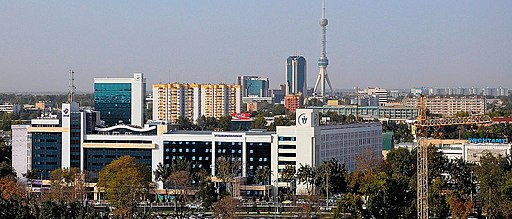
Tashkent Tower
The Tashkent Tower, also known as the Television Tower of Tashkent, stands proudly as an emblem of Uzbekistan’s capital city, dominating the skyline with its majestic presence. Rising to an impressive height of 375 meters (1,230 feet), it ranks among the tallest structures in Central Asia. Designed by architects Terziev, Sharpatyi, Abdullayev, and Shchusev, the tower’s sleek and modern design reflects the nation’s aspirations for progress and development since its completion in 1984.
Constructed atop the Komsomolskaya Hill, the Tashkent Tower serves as a multifunctional structure, encompassing telecommunications facilities, observation decks, and tourist attractions. Its primary function as a telecommunications hub facilitates broadcasting and communication services across Tashkent and beyond. Additionally, visitors can ascend the tower to enjoy panoramic views of the cityscape from its observation decks, offering a unique perspective on Tashkent’s urban landscape and surrounding natural beauty.
The Tashkent Tower holds significant cultural and symbolic importance for the people of Uzbekistan, serving as a beacon of national pride and unity. As a landmark synonymous with the city’s identity, it has become a popular destination for tourists and locals alike, symbolizing the nation’s progress and modernization. Beyond its practical utility, the tower’s soaring silhouette against the skyline serves as a reminder of Uzbekistan’s rich history and its aspirations for a bright and prosperous future.
Using Tashkent Tower
Standing tall atop Komsomolskaya Hill, the Tashkent Tower is an architectural masterpiece that defines the skyline of Uzbekistan’s capital city. Rising majestically to a height of 375 meters (1,230 feet), it commands attention with its sleek design and towering presence. Designed by a team of renowned architects, the tower’s modern aesthetic symbolizes Uzbekistan’s aspirations for progress and development since its completion in 1984.
Functioning as more than just a telecommunications hub, the Tashkent Tower offers visitors a unique opportunity to marvel at panoramic views of Tashkent and its surroundings from its observation decks. Tourists and locals alike flock to the tower to enjoy the breathtaking vistas of the cityscape and the majestic mountains in the distance. Beyond its practical utility, the Tashkent Tower serves as a cultural landmark and a symbol of national pride, embodying Uzbekistan’s rich history and promising future.
Parameters Tashkent Tower
Here are some key parameters of the Tashkent Tower:
- Height: The Tashkent Tower stands at an impressive height of 375 meters (1,230 feet), making it one of the tallest structures in Central Asia.
- Location: Situated atop Komsomolskaya Hill in Tashkent, the capital city of Uzbekistan, the tower enjoys a strategic position overlooking the urban landscape.
- Architectural Design: Designed by architects Terziev, Sharpatyi, Abdullayev, and Shchusev, the tower features a modern and sleek design that reflects Uzbekistan’s aspirations for progress and development.
- Construction: The construction of the Tashkent Tower was completed in [insert year], marking it as a prominent landmark in the city’s skyline.
- Function: Primarily serving as a telecommunications tower, the Tashkent Tower houses broadcasting and communication facilities that facilitate the transmission of radio and television signals across Tashkent and its surrounding areas.
- Observation Decks: The tower features observation decks that allow visitors to ascend and enjoy panoramic views of Tashkent’s urban landscape and the surrounding natural scenery.
- Symbolism: As a prominent symbol of Tashkent and Uzbekistan, the Tashkent Tower holds cultural and symbolic significance, representing the nation’s progress, modernization, and unity. It has become a popular tourist attraction and a symbol of national pride for Uzbekistan.
