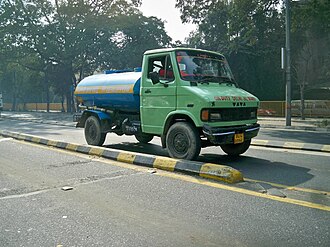
Tata 407 – The Legendary Light Commercial Truck That Revolutionized Indian Transportation
The Tata 407 is widely regarded as one of the most influential light commercial vehicles ever produced in India. Introduced by Tata Motors during an era when the country’s logistics and transportation industries were rapidly expanding, the Tata 407 transformed the commercial vehicle market by offering a combination of durability, affordability, versatility, and dependable performance that few competitors could match. For decades, this truck has served as the backbone of countless businesses, transporting agricultural products, construction materials, consumer goods, industrial equipment, and essential supplies across cities, villages, highways, and remote rural roads. Its ability to perform consistently under demanding operating conditions has made it a trusted companion for fleet operators, entrepreneurs, government organizations, and small business owners alike.
Unlike many commercial vehicles designed primarily for one specific purpose, the Tata 407 was engineered to accommodate an exceptionally wide range of industries and applications. From cargo transportation and refrigerated logistics to mobile workshops, municipal services, ambulances, school buses, and specialized utility vehicles, the adaptable chassis has allowed body builders to create countless configurations tailored to individual business needs. Its practical engineering, low maintenance costs, fuel-efficient diesel engines, and extensive service network have contributed significantly to its enduring popularity throughout India and numerous international markets.
More than just a commercial truck, the Tata 407 represents an important milestone in the evolution of India’s automotive industry. It demonstrated that a domestically manufactured commercial vehicle could compete successfully with international alternatives while meeting the unique demands of local operating conditions. This comprehensive guide explores every major aspect of the Tata 407, including its history, engineering philosophy, design, engines, transmission systems, driving characteristics, maintenance requirements, reliability, commercial applications, ownership experience, and technical specifications.
The History of the Tata 407
The Tata 407 made its debut in 1986, entering a market that required a modern, reliable, and economically efficient light commercial truck capable of supporting India’s rapidly expanding economy. At that time, businesses increasingly required vehicles that could transport larger payloads than compact pickups while remaining considerably more affordable and maneuverable than heavy-duty trucks. Tata Motors recognized this opportunity and developed a vehicle that perfectly balanced payload capacity, operating efficiency, ease of maintenance, and affordability.
The launch of the Tata 407 proved highly successful. Businesses quickly appreciated its rugged chassis, dependable diesel engine, excellent fuel economy, and ability to withstand poor road conditions that were common throughout many regions. Over the years, Tata Motors continuously refined the model by introducing improved engines, enhanced cabins, better ergonomics, updated safety equipment, cleaner emissions technology, and modern styling while preserving the qualities that originally made the truck so popular.
As India’s transportation infrastructure evolved, so too did the Tata 407. Successive updates ensured compliance with increasingly strict emission regulations while improving driver comfort and operational efficiency. Despite these technological advancements, the truck retained its reputation for mechanical simplicity and long-term durability, characteristics that remain highly valued by commercial operators.
Design Philosophy
The Tata 407 was designed with practicality as its guiding principle. Every engineering decision prioritized durability, ease of maintenance, cost-effectiveness, and operational versatility. Unlike passenger vehicles where aesthetics often influence purchasing decisions, commercial buyers focus on reliability, productivity, and total cost of ownership. Consequently, the Tata 407 features a straightforward design that emphasizes function above unnecessary styling complexity.
The truck’s robust ladder-frame chassis provides exceptional structural strength while accommodating numerous body configurations. Compact overall dimensions allow excellent maneuverability through congested city streets, crowded markets, industrial areas, and rural roads. At the same time, the chassis is sufficiently strong to support substantial payloads throughout years of demanding commercial service.
Exterior Design
Although appearance is secondary for commercial vehicles, the Tata 407 presents a clean, purposeful design that reflects its utilitarian character. The front fascia incorporates large headlights for improved nighttime visibility, a simple grille for efficient engine cooling, and durable bumpers capable of withstanding the minor impacts frequently encountered during loading operations and urban deliveries.
Large side mirrors provide excellent rearward visibility while reducing blind spots, an essential safety feature for vehicles frequently operating in crowded environments. Wide-opening doors facilitate easy entry and exit during repeated delivery stops, while the elevated driving position offers drivers a commanding view of surrounding traffic.
Body panels are designed for durability and economical repair. Commercial operators appreciate components that can be replaced quickly and inexpensively following minor damage, minimizing vehicle downtime and reducing maintenance costs.
Interior Comfort and Ergonomics
While earlier commercial vehicles often sacrificed comfort in favor of simplicity, the Tata 407 gradually evolved into a considerably more driver-friendly workplace. Modern variants feature improved seating, better dashboard layouts, enhanced ventilation, practical storage compartments, and more effective insulation against engine and road noise. These improvements reflect the understanding that commercial drivers frequently spend long hours behind the wheel, making comfort an important contributor to productivity and safety.
The cabin emphasizes practicality rather than luxury. Durable materials resist wear from daily commercial use while remaining easy to clean. Controls are positioned logically within easy reach, allowing drivers to operate essential functions without unnecessary distraction. Large instrument clusters provide clear visibility of speed, engine temperature, fuel level, warning indicators, and other important operating information.
Storage compartments accommodate delivery documentation, mobile devices, tools, beverages, and personal belongings. Depending on variant and market, additional features such as power steering, air conditioning, power windows, infotainment systems, and improved seating may also be available.
Engine Options and Performance
The Tata 407 has been equipped with several diesel engine options throughout its long production history. Diesel power has consistently remained the preferred choice because commercial applications demand strong low-end torque, excellent fuel economy, and long-term durability rather than high-speed performance. The engines are engineered to deliver dependable operation under heavy loads while maintaining economical operating costs.
Modern versions feature common-rail direct injection technology, turbocharging, improved combustion efficiency, and advanced electronic engine management systems that optimize performance while complying with contemporary emission standards. These technologies improve both fuel efficiency and power delivery, allowing the truck to carry heavier loads with reduced fuel consumption.
Torque is available across a broad engine speed range, enabling smooth acceleration from low speeds even when transporting substantial payloads. This characteristic proves particularly valuable when climbing steep inclines, navigating congested urban traffic, or operating on uneven rural roads.
Transmission Systems
The Tata 407 primarily utilizes manual transmissions specifically designed for commercial service. These gearboxes are valued for their durability, mechanical simplicity, and relatively low maintenance requirements. Carefully selected gear ratios provide sufficient flexibility for both city deliveries and highway transportation while maximizing fuel efficiency under varying load conditions.
Manual transmissions also provide drivers with direct control over engine performance, an advantage when operating on steep terrain or carrying heavy cargo. Smooth gear engagement and durable synchronizers contribute to long service life when properly maintained.
Payload Capacity and Versatility
One of the Tata 407’s greatest strengths is its remarkable adaptability. The vehicle serves as the foundation for numerous body styles including flatbeds, enclosed cargo vans, refrigerated trucks, tipper bodies, municipal utility vehicles, water tankers, ambulances, school buses, mobile workshops, food distribution units, and specialized industrial equipment carriers.
The robust chassis supports significant payloads while maintaining predictable handling characteristics. This flexibility enables businesses to customize the vehicle according to their operational requirements without compromising structural integrity or reliability.
Its relatively compact dimensions also make the truck particularly well suited for urban logistics, where maneuverability often proves just as important as cargo capacity.
Driving Characteristics
The Tata 407 provides stable, predictable handling appropriate for commercial applications. Steering systems are designed to remain manageable even during low-speed maneuvering, while the relatively short turning radius allows confident navigation through narrow streets, crowded loading zones, and industrial facilities.
Suspension tuning prioritizes load-carrying capability over passenger-car comfort. Leaf springs effectively support heavy cargo while maintaining chassis stability under varying payload conditions. When unloaded, ride quality may feel firm, but this characteristic ensures optimal performance once cargo is added.
Braking systems have evolved significantly throughout the truck’s production history. Modern variants benefit from improved braking components and enhanced safety technologies that contribute to more consistent stopping performance under commercial operating conditions.
Fuel Efficiency and Operating Costs
Fuel economy represents one of the Tata 407’s most significant advantages. Businesses operating commercial vehicles closely monitor operating expenses because fuel often represents one of the largest ongoing costs. Tata Motors has continuously refined engine technology to maximize efficiency while maintaining dependable performance.
Routine maintenance is generally straightforward and affordable. Widely available spare parts, extensive service networks, and mechanically accessible engine compartments reduce maintenance expenses while minimizing downtime. Fleet operators frequently report that properly maintained Tata 407 trucks remain economically productive throughout many years of continuous operation.
The vehicle’s reputation for low operating costs has contributed substantially to its commercial success across multiple industries.
Reliability and Durability
Reliability has long been the defining characteristic of the Tata 407. Designed specifically for demanding commercial environments, the truck is engineered to withstand heavy payloads, poor road surfaces, long operating hours, and challenging weather conditions. Its reinforced ladder-frame chassis resists structural fatigue, while durable driveline components provide dependable long-term performance.
Many Tata 407 trucks accumulate several hundred thousand kilometers of service while continuing to operate effectively. Regular maintenance, timely replacement of wear components, and responsible operation significantly extend vehicle lifespan, making the truck an attractive long-term investment for businesses.
Safety Features
Earlier versions of the Tata 407 emphasized structural strength and driver visibility, reflecting commercial vehicle standards of their era. More recent models incorporate additional safety technologies including improved braking systems, stronger cabin structures, enhanced lighting, better mirrors, seat belts, and, depending on variant, anti-lock braking systems.
Excellent outward visibility remains one of the truck’s greatest safety advantages. The elevated seating position, expansive windshield, and large side mirrors help drivers maintain awareness of pedestrians, cyclists, and surrounding traffic during daily operations.
Commercial Applications
The Tata 407 serves an exceptionally diverse range of industries. Logistics companies utilize enclosed cargo versions for parcel delivery and retail distribution. Agricultural businesses transport produce, livestock feed, fertilizers, and farming equipment. Construction companies rely on flatbeds and tipper bodies for moving building materials and machinery. Municipal governments employ specialized variants for sanitation, water distribution, emergency response, and infrastructure maintenance.
Healthcare organizations use ambulance conversions, while educational institutions operate school bus variants based on the same dependable chassis. Mobile workshops, food service vehicles, and utility maintenance trucks further demonstrate the platform’s extraordinary versatility.
Maintenance Tips for Long-Term Ownership
Engine Care
Regular oil and filter changes remain essential for maintaining engine reliability. High-quality lubricants reduce wear while preserving efficient engine operation throughout extended service intervals.
Cooling System Maintenance
Periodic inspection of radiators, coolant hoses, thermostats, and water pumps helps prevent overheating during demanding commercial operation, particularly in hot climates or when carrying maximum payloads.
Brake Inspection
Routine examination of brake linings, hydraulic systems, drums, discs, and brake fluid ensures dependable stopping performance while reducing the likelihood of unexpected failures.
Suspension and Tires
Heavy commercial use accelerates wear on suspension components and tires. Frequent inspections, proper tire inflation, wheel alignment, and replacement of worn bushings or springs contribute significantly to safe and economical operation.
Advantages of the Tata 407
The Tata 407 offers numerous advantages including dependable reliability, low operating costs, fuel-efficient diesel engines, versatile chassis configurations, extensive service support, affordable replacement parts, durable construction, excellent payload capability, manageable dimensions for urban driving, and strong resale value. These strengths have allowed the truck to remain highly competitive despite decades of changing commercial transportation requirements.
Potential Limitations
Despite its many strengths, the Tata 407 does have certain limitations. Ride comfort when unloaded may feel firm due to heavy-duty suspension design. Older variants naturally lack the sophisticated driver assistance technologies available in modern commercial vehicles. Noise and vibration levels may also be higher than those found in premium international competitors. Nevertheless, these compromises are generally considered acceptable given the truck’s affordability, reliability, and low operating expenses.
Buying a Used Tata 407
Purchasing a used Tata 407 can provide excellent value for businesses seeking dependable commercial transportation at a reasonable price. Buyers should inspect maintenance records, engine condition, transmission performance, suspension wear, chassis corrosion, braking systems, electrical equipment, and evidence of previous accident repairs. Because commercial vehicles often experience intensive daily use, documented maintenance history is frequently more important than mileage alone.
A professional mechanical inspection before purchase can identify hidden issues and provide a realistic assessment of future maintenance requirements, helping buyers make informed investment decisions.
The Legacy of the Tata 407
Few commercial vehicles have influenced India’s transportation industry as profoundly as the Tata 407. Its introduction fundamentally changed expectations regarding affordability, durability, versatility, and operating efficiency within the light commercial segment. Generations of business owners have depended upon the truck to support economic growth, distribute essential goods, and connect rural communities with expanding urban markets.
Even as newer commercial vehicles incorporate increasingly sophisticated technologies, the Tata 407 continues to symbolize practical engineering focused on reliability and productivity. Its enduring popularity demonstrates that well-executed mechanical simplicity remains highly valuable within demanding commercial environments.
Conclusion
The Tata 407 has earned its legendary reputation through decades of dependable commercial service across an extraordinary range of industries and operating conditions. Its combination of rugged construction, efficient diesel engines, adaptable chassis, economical ownership costs, widespread service support, and proven reliability has made it one of the most successful light commercial trucks ever produced by Tata Motors.
Whether transporting agricultural products across rural highways, delivering goods through crowded cities, supporting construction projects, or serving as the foundation for specialized utility vehicles, the Tata 407 consistently demonstrates the qualities businesses value most: durability, versatility, efficiency, and long-term dependability. For fleet operators, entrepreneurs, and commercial vehicle enthusiasts alike, the Tata 407 remains an enduring benchmark in the history of light commercial transportation.
Technical Specifications Summary
| Specification | Details |
|---|---|
| Manufacturer | Tata Motors |
| Model | Tata 407 |
| Production Introduced | 1986 |
| Vehicle Class | Light Commercial Vehicle (LCV) |
| Body Configurations | Flatbed, Box Truck, Chassis Cab, Tipper, Refrigerated, Bus, Ambulance |
| Drive Layout | Rear-Wheel Drive (4×2) |
| Frame Type | Heavy-duty Ladder Frame |
| Engine Type | Turbocharged Diesel (generation dependent) |
| Fuel System | Direct Injection / Common-Rail (modern models) |
| Engine Displacement | Approximately 3.0 liters (varies by version) |
| Power Output | Approximately 75–100 hp (variant dependent) |
| Torque | Approximately 250–300 Nm (variant dependent) |
| Transmission | 5-Speed Manual |
| Front Suspension | Semi-Elliptical Leaf Springs |
| Rear Suspension | Heavy-duty Leaf Springs |
| Braking System | Hydraulic Brakes with Vacuum Assistance (ABS on selected models) |
| Payload Capacity | Approximately 2.25–2.5 tonnes (configuration dependent) |
| Fuel Type | Diesel |
| Primary Applications | Cargo Transport, Agriculture, Construction, Distribution, Municipal Services |
| Main Strengths | Reliability, Fuel Economy, Low Maintenance Cost, Versatility, Strong Service Network |
