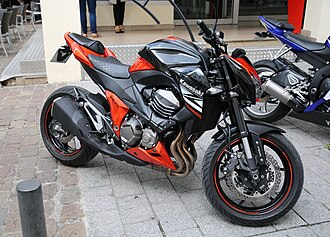
Kawasaki Z800: The Complete Guide to Kawasaki’s Muscular Middleweight Naked Motorcycle
The Kawasaki Z800 is one of the most recognizable naked motorcycles of the modern era, representing an important milestone in the evolution of Kawasaki’s legendary Z family. Introduced in 2013 as the successor to the highly successful Z750, the Z800 was developed to deliver stronger performance, sharper styling, improved chassis dynamics, and a more premium riding experience while maintaining the practicality that had made its predecessor such a commercial success. Rather than simply increasing engine capacity, Kawasaki redesigned almost every aspect of the motorcycle to create a machine that felt more refined, more aggressive, and more engaging in every riding situation. The result was a motorcycle capable of satisfying experienced riders while remaining approachable enough for those moving into the middleweight performance category.
The Z800 entered a highly competitive market segment populated by increasingly sophisticated naked motorcycles. Manufacturers were introducing machines that combined supersport-derived engines with upright ergonomics, offering the excitement of sportbike performance without the discomfort associated with aggressive riding positions. Kawasaki responded by creating a motorcycle that not only matched its rivals in terms of performance but also established a distinctive personality through bold styling, strong mid-range power, excellent build quality, and remarkable versatility. The motorcycle quickly gained popularity across Europe, Asia, and many other global markets, becoming one of Kawasaki’s best-selling naked motorcycles during its production years.
Unlike motorcycles designed exclusively for racetrack performance, the Z800 was engineered with public roads in mind. Every component, from the engine to the suspension and ergonomics, was optimized to provide an enjoyable riding experience in everyday conditions. Whether navigating urban traffic, commuting to work, exploring winding mountain roads, or embarking on weekend adventures, the Kawasaki Z800 consistently demonstrated that balanced engineering often provides more satisfaction than extreme specifications. Today, it continues to enjoy a loyal following among enthusiasts who appreciate its unique blend of performance, reliability, comfort, and unmistakable streetfighter character.
The History and Development of the Kawasaki Z800
The Kawasaki Z800 was officially introduced in 2013 as the replacement for the Z750, one of the company’s most successful middleweight motorcycles. Rather than performing a simple displacement increase, Kawasaki engineers extensively redesigned the motorcycle to improve nearly every aspect of its performance. The engine capacity increased from 748 cc to 806 cc, providing stronger torque and improved acceleration while maintaining the smooth, refined characteristics that riders appreciated in the earlier model.
The development process also focused heavily on improving chassis performance. Kawasaki redesigned the frame, optimized weight distribution, strengthened the swingarm, refined the suspension, and upgraded the braking system. These changes resulted in a motorcycle that felt significantly more stable during aggressive riding while remaining comfortable during everyday use. The styling was also dramatically revised, embracing Kawasaki’s evolving Sugomi-inspired design language with sharper lines, muscular proportions, and an aggressive stance that immediately distinguished the motorcycle from its competitors.
Several versions of the Z800 were offered depending on market requirements. In Europe, Kawasaki also introduced a restricted version compatible with licensing regulations, allowing newer riders to access the motorcycle while remaining within legal power limits. This strategy expanded the motorcycle’s appeal without compromising its overall identity.
Design and Styling
The Evolution of Kawasaki’s Sugomi Philosophy
Perhaps the most immediately recognizable feature of the Kawasaki Z800 is its striking appearance. The motorcycle embraces Kawasaki’s Sugomi design philosophy, emphasizing aggressive bodywork, compact proportions, and an appearance suggesting controlled power even while stationary. Every angle contributes to the motorcycle’s muscular presence, from the sharply sculpted fuel tank to the compact tail section and angular front headlight assembly. Rather than hiding its mechanical components beneath extensive bodywork, the Z800 proudly exposes its engine and frame, reinforcing its identity as a true naked motorcycle.
The styling represents a significant departure from traditional standard motorcycles. Complex body panels blend seamlessly with exposed mechanical components, creating a modern industrial aesthetic that has aged remarkably well. The large fuel tank gives the motorcycle visual mass, while the minimal rear bodywork contributes to a lightweight appearance. Even years after production ended, the Z800 remains one of the most visually distinctive motorcycles in its class.
Attention to detail is evident throughout the motorcycle. The engine covers, exhaust routing, radiator shrouds, wheels, and frame all contribute to the overall design rather than appearing as isolated components. Kawasaki succeeded in creating a motorcycle where engineering and styling complement one another, resulting in an appearance that continues attracting enthusiasts around the world.
Ergonomics and Rider Comfort
Although the Kawasaki Z800 appears highly aggressive, its riding position remains remarkably practical. The wide handlebars provide excellent leverage, allowing riders to maneuver confidently in urban traffic while maintaining precise control during spirited riding. The seat offers generous support for both rider and passenger, and the footpeg position balances sporty cornering capability with long-distance comfort.
The upright seating position reduces pressure on the rider’s wrists and shoulders compared with supersport motorcycles, making the Z800 considerably more comfortable during daily use. Excellent visibility further enhances rider confidence, especially in busy traffic conditions. Kawasaki carefully designed the motorcycle so that experienced riders could enjoy aggressive cornering while newer owners would still find it approachable and comfortable.
The 806cc Inline-Four Engine
At the heart of the Kawasaki Z800 lies an 806 cc liquid-cooled DOHC inline-four engine that defines the motorcycle’s character. Developed specifically for the Z800 rather than borrowed directly from a supersport model, this powerplant emphasizes broad torque, smooth power delivery, and impressive real-world performance. Rather than concentrating maximum power at extremely high engine speeds, Kawasaki tuned the engine to produce strong acceleration throughout the rev range, allowing riders to enjoy exciting performance without constantly operating near the redline.
The inline-four configuration provides outstanding refinement. Engine vibration remains minimal, throttle response is predictable, and the power delivery feels linear from low engine speeds through to maximum performance. This smoothness makes the motorcycle enjoyable during commuting while still delivering exhilarating acceleration when the rider opens the throttle on open roads.
Performance Characteristics
The Z800 produces a level of performance ideally suited to enthusiastic street riding. Strong mid-range torque allows effortless overtaking and rapid acceleration without frequent gear changes, while the engine continues pulling confidently into higher revs when ridden aggressively. Unlike some motorcycles that feel either too tame or excessively intimidating, the Z800 strikes an excellent balance by delivering substantial performance that remains accessible to a wide range of riders.
Power is delivered through a smooth six-speed transmission featuring closely spaced gear ratios that maximize acceleration while maintaining relaxed highway cruising. Clutch operation remains light enough for frequent city riding, reducing fatigue during heavy traffic. Together, the engine and transmission create a riding experience characterized by refinement, flexibility, and genuine excitement.
Frame and Chassis
The Kawasaki Z800 utilizes a high-strength steel backbone frame designed specifically to complement the motorcycle’s increased engine performance. Engineers carefully optimized chassis rigidity to improve cornering stability while preserving enough flexibility to maintain ride comfort over imperfect road surfaces. Weight distribution was also refined, contributing to predictable steering response and improved rider confidence.
Despite weighing more than some competitors, the motorcycle disguises its mass effectively once in motion. Centralized weight distribution allows the Z800 to change direction confidently while maintaining reassuring stability during high-speed riding. Riders quickly appreciate the motorcycle’s balanced handling characteristics, which encourage smooth, flowing cornering rather than abrupt or nervous responses.
Suspension
Confidence-Inspiring Ride Quality
The suspension system consists of a 41 mm inverted front fork paired with Kawasaki’s horizontal back-link rear suspension. Compared with the previous generation Z750, the upgraded suspension provides improved front-end feedback, better stability under braking, and more consistent performance across a wider variety of road conditions.
The suspension tuning favors real-world riding rather than uncompromising racetrack stiffness. Urban roads, highways, and winding mountain routes are handled comfortably while maintaining sufficient control for enthusiastic cornering. Adjustable rear preload allows riders to compensate for passenger weight or touring luggage, increasing the motorcycle’s versatility.
Braking System
The Kawasaki Z800 features dual front disc brakes with powerful multi-piston calipers complemented by a rear hydraulic disc. Braking performance is progressive, predictable, and confidence inspiring. Rather than producing abrupt initial bite, the system allows riders to modulate braking force accurately under varying conditions, improving safety during everyday riding.
Many markets offered ABS-equipped versions that further enhanced rider confidence during emergency braking situations and poor weather conditions. Combined with the stable chassis and refined suspension, the braking system contributes significantly to the motorcycle’s reputation as a balanced and enjoyable middleweight naked motorcycle.
The Everyday Riding Experience
The Kawasaki Z800 excels because it combines multiple personalities within a single motorcycle. During weekday commuting, its comfortable ergonomics, smooth engine, and predictable handling reduce rider fatigue while making urban transportation enjoyable. On weekends, the same motorcycle transforms into an engaging performance machine capable of delivering thrilling acceleration and rewarding cornering dynamics on scenic roads.
This versatility remains one of the Z800’s defining strengths. It neither demands the compromises associated with dedicated supersport motorcycles nor sacrifices excitement in pursuit of comfort. Instead, it successfully balances performance, practicality, refinement, and character in a way that continues attracting riders long after production concluded. It is precisely this combination of attributes that has secured the Kawasaki Z800’s reputation as one of the finest middleweight naked motorcycles ever produced.
“`html
Reliability and Long-Term Ownership
One of the Kawasaki Z800’s strongest qualities is its outstanding reliability. Kawasaki has long been recognized for producing durable inline-four engines, and the Z800 continues that tradition with remarkable success. The 806 cc powerplant was engineered to withstand thousands of kilometers of everyday riding while maintaining smooth performance and consistent power delivery. Rather than pushing the engine to the absolute limits of its mechanical capabilities, Kawasaki tuned it to provide an ideal compromise between performance, durability, and rideability. This conservative engineering approach allows owners to enjoy spirited riding without constantly worrying about mechanical reliability.
Many long-term owners report exceptionally high mileage with minimal unscheduled repairs, provided routine maintenance is performed according to Kawasaki’s recommended service schedule. It is not uncommon to find well-maintained Z800 motorcycles exceeding 80,000 or even 100,000 kilometers while still running smoothly. The engine’s internal components are known for their durability, and the robust transmission handles both relaxed commuting and aggressive riding without complaint. Combined with Kawasaki’s proven manufacturing quality, these characteristics have established the Z800 as one of the most dependable motorcycles in the middleweight naked category.
The motorcycle’s electrical system has also proven reliable over time. While no motorcycle is completely immune to age-related electrical issues, the Z800 generally avoids the widespread electronic problems that occasionally affect more complex modern machines. Riders who keep connectors clean, maintain the battery, and protect the motorcycle from prolonged outdoor exposure typically experience years of trouble-free ownership.
Routine Maintenance
Routine servicing is relatively straightforward, making the Z800 practical for both professional workshop servicing and experienced home mechanics. Regular engine oil and oil filter changes remain the most important maintenance tasks, helping protect the highly refined inline-four engine. Air filter replacement, spark plug inspection, coolant replacement, brake fluid changes, and chain lubrication should all be completed according to Kawasaki’s maintenance schedule to maximize reliability and performance.
Valve clearance inspections are required at specified intervals to ensure the engine continues operating efficiently. Although these inspections require more time than basic maintenance procedures, the Z800’s engine is generally known for maintaining stable valve clearances over long periods. Proper chain maintenance is equally important because the motorcycle’s strong torque output places considerable stress on the final drive during aggressive acceleration.
Owners should also inspect suspension components, wheel bearings, steering head bearings, brake pads, tires, and electrical connections during regular maintenance. These inspections not only improve safety but also help prevent small issues from developing into expensive repairs later.
Common Issues
The Kawasaki Z800 is considered highly reliable, but buyers should still inspect used motorcycles carefully. The majority of concerns involve normal wear rather than significant design flaws. Fork seals may eventually require replacement after many years of riding, while chains, sprockets, brake components, and suspension bushings naturally wear over time. Cosmetic scratches are also common because naked motorcycles are often used as everyday transportation.
Some motorcycles have been heavily modified by previous owners. Aftermarket exhaust systems, lighting modifications, fuel controllers, and cosmetic accessories should be inspected carefully to ensure proper installation. Poorly executed electrical modifications can create unnecessary problems even on an otherwise dependable motorcycle. Whenever possible, buyers should prioritize motorcycles with complete service histories and professionally installed accessories.
Fuel Economy and Ownership Costs
Despite producing well over 100 horsepower, the Kawasaki Z800 remains surprisingly economical during normal riding. Kawasaki’s fuel injection system delivers precise fuel metering, allowing respectable fuel consumption when ridden responsibly. Riders who commute daily often appreciate that the motorcycle combines exciting performance with practical operating costs, making it far more affordable than many larger displacement alternatives.
Insurance costs typically remain reasonable for experienced riders, particularly when compared with fully faired supersport motorcycles. Replacement parts are widely available thanks to the motorcycle’s popularity, and numerous aftermarket manufacturers produce high-quality alternatives for common wear items such as brake pads, filters, chains, sprockets, and tires. These factors contribute to affordable long-term ownership without compromising reliability or performance.
Touring Capability
Although the Kawasaki Z800 was designed primarily as a naked street motorcycle, it performs surprisingly well as a lightweight touring machine. Its upright riding position, broad seat, smooth inline-four engine, and stable chassis make extended journeys enjoyable, particularly when appropriate touring accessories are installed. Riders frequently equip the motorcycle with taller windscreens, luggage systems, heated grips, tank bags, and comfort seats to improve long-distance capability.
The engine’s strong mid-range torque allows effortless highway cruising without constant downshifting, while the six-speed transmission keeps engine speeds comfortable during extended travel. The fuel tank provides respectable touring range, reducing the frequency of fuel stops during longer journeys. Although the motorcycle lacks the extensive wind protection of dedicated sport-touring models, many owners successfully use the Z800 for multi-day adventures throughout Europe and beyond.
Customization and Aftermarket Support
The Kawasaki Z800 enjoys excellent aftermarket support thanks to its popularity among enthusiasts. Many owners personalize their motorcycles to improve performance, comfort, appearance, or practicality. Popular upgrades include aftermarket exhaust systems, adjustable brake and clutch levers, LED lighting, frame sliders, radiator guards, tail tidy kits, upgraded mirrors, comfort seats, and touring luggage.
Performance-oriented riders often install suspension upgrades, braided stainless-steel brake lines, high-performance brake pads, and premium tires to further enhance handling characteristics. Cosmetic customization is equally common, with many owners adding carbon-look accessories, custom graphics, colored wheels, and protective engine covers. These modifications allow riders to create motorcycles that reflect their personal preferences while preserving the aggressive character of Kawasaki’s Z family.
Kawasaki Z800 Compared with Competitors
Kawasaki Z800 vs Yamaha FZ8
The Yamaha FZ8 represents one of the Z800’s closest rivals. Both motorcycles feature inline-four engines, upright ergonomics, and strong street performance. The Yamaha is often praised for its refined engine response, while the Kawasaki is recognized for its bold styling, muscular torque delivery, and aggressive visual presence. Riders seeking a motorcycle with strong personality frequently gravitate toward the Z800.
Kawasaki Z800 vs Triumph Street Triple
The Triumph Street Triple offers lighter weight and exceptional agility thanks to its three-cylinder engine and compact chassis. In comparison, the Kawasaki Z800 provides greater stability, stronger high-speed performance, and the distinctive character of a larger inline-four engine. Choosing between the two often depends on whether the rider prioritizes nimble handling or muscular acceleration.
Kawasaki Z800 vs Honda CB650F
Honda’s CB650F focuses on smooth refinement and approachable handling, making it an excellent everyday motorcycle. The Z800 delivers noticeably stronger acceleration, more aggressive styling, and a more substantial road presence. Riders seeking greater excitement without entering the liter-bike category often find the Kawasaki particularly appealing.
Buying a Used Kawasaki Z800
The Kawasaki Z800 remains one of the most desirable used middleweight naked motorcycles. Prospective buyers should prioritize motorcycles with complete maintenance records, original service documentation, and evidence of responsible ownership. Cosmetic condition can reveal much about previous care, but mechanical inspection remains far more important than minor scratches or cosmetic imperfections.
A thorough inspection should include evaluation of the frame, steering bearings, suspension, brake system, clutch, gearbox, cooling system, tires, chain, sprockets, electrical equipment, and charging system. A test ride should confirm smooth engine operation, clean throttle response, stable steering, consistent braking, and accurate gear selection. Because the Z800 is fundamentally robust, purchasing a well-maintained example often provides many additional years of dependable ownership.
The Legacy of the Kawasaki Z800
The Kawasaki Z800 occupies an important place in the evolution of Kawasaki’s naked motorcycle lineup. It successfully bridged the gap between the earlier Z750 and the later Z900 while introducing more aggressive styling, stronger performance, and significantly improved refinement. The motorcycle demonstrated Kawasaki’s commitment to producing street motorcycles that combined excitement with practicality rather than focusing exclusively on maximum performance.
Its influence remains visible in later Z-series motorcycles, particularly through the continued emphasis on muscular styling, broad torque delivery, and everyday usability. Many enthusiasts continue to regard the Z800 as one of the best-balanced naked motorcycles Kawasaki has ever produced, praising its ability to satisfy commuters, weekend riders, and experienced enthusiasts alike.
Conclusion
The Kawasaki Z800 remains an outstanding example of thoughtful motorcycle engineering. It combines a powerful and reliable inline-four engine with aggressive styling, predictable handling, comfortable ergonomics, and practical everyday usability. Rather than forcing riders to choose between comfort and excitement, the motorcycle successfully delivers both qualities in equal measure.
Whether used for commuting through busy cities, exploring winding mountain roads, touring across countries, or simply enjoying weekend rides, the Z800 consistently proves itself to be one of the most capable and enjoyable motorcycles in the middleweight naked category. Its lasting popularity demonstrates that genuine versatility, dependable engineering, and engaging performance remain timeless qualities that continue attracting riders long after production has ended.
Kawasaki Z800 Technical Specifications
| Specification | Details |
|---|---|
| Model | Kawasaki Z800 |
| Production Years | 2013–2016 |
| Engine Type | Liquid-cooled, 4-stroke, DOHC, Inline Four |
| Displacement | 806 cc |
| Bore × Stroke | 71.0 × 50.9 mm |
| Compression Ratio | 11.9:1 |
| Maximum Power | 113 hp (83 kW) @ 10,200 rpm |
| Maximum Torque | 83 Nm @ 8,000 rpm |
| Fuel System | Electronic Fuel Injection (DFI) |
| Cooling System | Liquid Cooling |
| Ignition | Digital Electronic Ignition |
| Transmission | 6-speed Manual |
| Final Drive | Chain |
| Frame | High-tensile Steel Backbone Frame |
| Front Suspension | 41 mm Inverted Fork |
| Rear Suspension | Horizontal Back-link Monoshock |
| Front Brake | Dual 310 mm Petal Discs |
| Rear Brake | 250 mm Petal Disc |
| Front Tire | 120/70 ZR17 |
| Rear Tire | 180/55 ZR17 |
| Wheelbase | 1,445 mm |
| Seat Height | 834 mm |
| Ground Clearance | 150 mm |
| Fuel Tank Capacity | 17 Liters |
| Curb Weight | Approximately 229 kg |
| Top Speed | Approximately 235 km/h |
| Average Fuel Consumption | 18–22 km/L (depending on riding conditions) |
| Instrument Panel | Analog Tachometer with Digital LCD Display |
| Available Versions | Standard and ABS (market dependent) |
| Riding Character | Powerful, stable, versatile, aggressive middleweight naked motorcycle |
