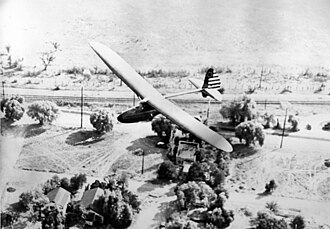
Bowlus BA-100 Baby Albatross: The Affordable Sailplane That Brought Soaring to More Pilots
The Bowlus BA-100 Baby Albatross occupies a special place in the history of American soaring because it was designed around a deceptively simple idea: make a capable sailplane affordable enough for ordinary enthusiasts to build and fly. Introduced in the late 1930s, the Baby Albatross was created by Hawley Bowlus, one of the most accomplished American sailplane designers of his generation. At a time when high-performance gliders could be expensive, difficult to construct and largely confined to experienced enthusiasts, Bowlus deliberately pursued a simpler and less costly aircraft. The result was a graceful single-seat glider with a high-mounted wing, an open cockpit, a wooden fuselage pod, a tubular metal tail boom and fabric-covered flying surfaces. Its approximately 44-foot wingspan and roughly 150-square-foot wing area gave it respectable soaring capability, while its relatively low empty weight made it practical for recreational pilots. The design became known as the “Baby Albatross” partly because of its relationship in appearance and dimensions to the German Grunau Baby and partly because Bowlus recognized the value of associating his affordable new aircraft with the reputation of his earlier Senior Albatross.
The Origins of the Baby Albatross
The story of the BA-100 is closely connected to the economic realities of American aviation during the Great Depression. Hawley Bowlus had already established himself as an important figure in aircraft construction and sailplane design, and his earlier Bowlus-du Pont Senior Albatross represented a much more ambitious approach to soaring. The Senior Albatross was an impressive aircraft, but it was expensive: Smithsonian records note that only four examples were sold at $2,500 apiece. Bowlus recognized that a sophisticated sailplane would have limited appeal if only a small number of pilots could afford one, so his next design deliberately sacrificed some performance in favor of affordability and easier construction.
The earliest known Baby Albatross drawing dates from February 1936, suggesting that Bowlus had begun developing the concept around 1935. The aircraft eventually emerged as a high-wing, strut-braced monoplane with a distinctive pod-and-boom configuration. Rather than reproducing the more elaborate structure of a high-performance sailplane, Bowlus created an aircraft that could be manufactured in components and assembled by an amateur builder. This approach was central to the Baby Albatross’s identity. It was not merely a sailplane that happened to be available as a kit; it was deliberately designed with the homebuilder in mind from the beginning.
Making Soaring Affordable
The economics of the Baby Albatross were one of its most important innovations. Contemporary information indicates that the aircraft was offered for roughly $750 in ready-to-fly form, while amateur builders could obtain it as a kit for approximately $385. Other surviving museum records give slightly different prices depending on the period and configuration, but the important point is the dramatic reduction compared with the cost of Bowlus’s earlier high-performance sailplanes. The Smithsonian notes that the Baby Albatross kit cost about one-fifth as much as the $2,500 Senior Albatross.
The kit system was particularly clever because it allowed builders to spread the expense over time. Bowlus supplied components that were approximately 85 percent completed, leaving the amateur to perform final assembly and finishing work. Critical operations requiring specialized jigs and precise alignment were therefore carried out professionally, while tasks that could reasonably be completed by an experienced homebuilder were left to the customer. The approach reduced both the cost and the technical barrier to entry, helping make the aircraft accessible to enthusiasts who might otherwise never have owned a sailplane.
A Distinctive Pod-and-Boom Design
The Baby Albatross is instantly recognizable because of its unusual fuselage. The pilot sits in a small molded-plywood cockpit pod, while the tail is connected to the main fuselage by a slender aluminum boom. This pod-and-boom arrangement reduced the amount of conventional fuselage structure that an amateur builder needed to fabricate and assemble.
The wings and tail surfaces were primarily wooden structures covered with aircraft fabric. The wings were braced by external struts, while the tail boom was made from aluminum. According to the Smithsonian, the first 65 Baby Albatross aircraft used a 17ST aluminum tube for the boom. Later examples adopted a boom formed from 2024-T3 aluminum sheet, with the seam riveted together; the Douglas plant in Santa Monica manufactured these later components.
This combination of traditional and modern materials was characteristic of the aircraft. Wood remained highly practical for the wings and tail because it was familiar to aircraft builders and could be worked with relatively conventional tools. Aluminum was used where a lightweight, straight and durable boom offered a major construction advantage. The resulting structure was simple without being crude.
The Pilot’s Cockpit
The cockpit was deliberately uncomplicated. The Baby Albatross was a single-seat glider with an open cockpit, reflecting the recreational and training environment in which many aircraft of the period operated. There was no engine, of course, so the pilot’s attention was devoted entirely to soaring, launching, navigation and aircraft control.
The open cockpit also gave the aircraft a distinctive character. Modern gliders generally emphasize streamlined enclosed cockpits, sophisticated instruments and highly refined aerodynamic efficiency. The Baby Albatross belonged to an earlier generation in which the physical sensation of soaring was much more immediate. The pilot was exposed to the airflow and could experience thermals, ridge lift and changing conditions in a particularly direct way.
Wing Design and Soaring Performance
The Baby Albatross had a wingspan of approximately 44 feet 6 inches and a wing area of around 150 square feet. Its aspect ratio was about 13.2, a useful figure for a sailplane of its period. The long, relatively slender wing allowed the aircraft to achieve a respectable glide ratio without requiring the complex structures used by later high-performance gliders. The National Soaring Museum lists a maximum glide ratio of approximately 20:1, while the Smithsonian gives approximately 19:1 under its published test conditions.
A glide ratio of roughly 20:1 means that, in still air under appropriate conditions, the aircraft could theoretically travel about 20 units horizontally for every unit of altitude lost. That was respectable performance for an inexpensive sailplane of the late 1930s and helped explain why the Baby Albatross became more than simply a basic training glider.
The aircraft’s low wing loading was another important characteristic. With an empty weight around 300 pounds and a maximum gross weight of approximately 505 pounds, it was remarkably light. The National Soaring Museum gives a wing loading of approximately 3.3 pounds per square foot.
No Engine, No Problem
The absence of an engine was not a limitation in the way it might appear to a modern general-aviation pilot. A sailplane is designed around the principle that altitude is its energy reserve. The aircraft gains height through aerotow, winch launch or other launch methods and then uses rising air to remain aloft.
For the Baby Albatross, this meant that the pilot’s skill mattered enormously. Finding thermals, exploiting ridge lift and managing airspeed were central to successful soaring. A well-flown aircraft could remain airborne considerably longer than a simple glide from launch altitude would suggest.
Historical records show that the Baby Albatross was capable of impressive cross-country flights despite its modest specifications. The National Soaring Museum notes that the type was flown on numerous flights exceeding 250 miles.
Construction for the Amateur Builder
Perhaps the most remarkable feature of the BA-100 was not its performance but the thought that went into making it buildable. Bowlus understood that the homebuilder was not simply a customer; the builder was part of the manufacturing process.
The factory completed difficult operations in advance, allowing purchasers to receive components that were already substantially fabricated. This meant that an amateur could assemble the major sections without having to reproduce every specialized manufacturing step. Builders still had significant work to perform, including covering, finishing and painting, but the most demanding alignment and fabrication tasks had been reduced.
The Smithsonian describes this approach as one in which the factory handled the precise alignment of parts requiring time-consuming jigs while builders assembled the major components and completed fabric, varnish and paint work. Even items such as the canopy and windshield could be left for the individual builder to adapt to their intended style of flying.
Why the Simplicity Mattered
The Baby Albatross’s simplicity was not just about reducing purchase price. It also made the aircraft easier to understand. A builder could see how the structure worked and gain a detailed knowledge of the machine through the construction process.
That philosophy would become increasingly important in the development of amateur-built aviation. The idea that an enthusiast could build a genuine aircraft in a workshop and then take it soaring was enormously appealing. The Baby Albatross was one of the early American designs to demonstrate that this could be commercially viable.
The aircraft’s construction also explains why the BA-100 is historically important beyond its relatively small production numbers. It represents a bridge between professionally designed sailplanes and the later culture of widespread homebuilt aircraft construction.
The Missing Spoilers
One unusual characteristic of the original Baby Albatross was its lack of dedicated glide-path control devices such as spoilers. Bowlus deliberately omitted them to simplify construction. The decision reduced the complexity of the wing and made the aircraft easier to manufacture, but it also meant that pilots had fewer options for controlling their descent angle during approaches. Some aircraft were subsequently modified with spoilers by their owners.
This is a fascinating example of the compromises built into the design. From an engineering perspective, adding spoilers could improve landing control, but doing so would increase construction complexity. Bowlus was designing for affordability, and every additional system potentially worked against that objective.
The decision illustrates the broader philosophy behind the BA-100: it was not intended to be the ultimate sailplane. Instead, it was intended to provide a good balance of cost, performance, simplicity and buildability.
Handling Characteristics and Lessons Learned
The Baby Albatross was successful, but historical accounts also identify handling issues, particularly in pitch control. The National Soaring Museum describes problems associated with the all-flying horizontal tail, including hinge friction, control-system elasticity and the location of the tail’s rotation axis. These factors could contribute to undesirable pitch-control behaviour and pilot-induced oscillation.
The issue became the subject of later analysis by aerodynamicist Irv Culver. Recommendations included moving the hinge axis forward, adding a down spring to the pitch control and reducing friction at the hinge. These modifications reportedly improved the aircraft’s handling.
The episode is significant because it illustrates the difference between designing an aircraft on paper and accumulating operational experience with it. A lightweight sailplane can have excellent soaring performance and still reveal handling characteristics that require careful attention. The Baby Albatross’s later history therefore includes not only admiration for its simplicity but also the lessons learned from decades of actual flying.
Production and the Impact of World War II
Production of the Baby Albatross began in the late 1930s and continued until the disruption caused by the Second World War. Sources differ slightly in how they count production, partly because some records refer to kits delivered, while others refer to components or completed aircraft. The Museum of Flight reports that as many as 176 kits were delivered, with only around 50 believed to have been completed, while the National Soaring Museum and San Diego Air & Space Museum give a figure of approximately 156 kits delivered.
Whatever precise figure is used, the important fact is that the BA-100 achieved a meaningful level of distribution for a specialized sailplane sold primarily to enthusiasts during the Depression-era and pre-war period.
World War II effectively ended the original production program. The rights later passed to Laister-Kauffmann in 1944, but that company went out of business before beginning production.
The interruption prevented the Baby Albatross from developing into a much larger production program, but enough examples survived for the aircraft to become an enduring part of American soaring history.
Famous Pilots and a Long Afterlife
The Baby Albatross was flown by a number of notable soaring enthusiasts. The National Soaring Museum lists pilots including Dick Johnson, Richard Schreder and Joe Lincoln among those who owned and flew the type.
The aircraft also remained useful long after its original production era. Examples survived into the post-war period and continued to fly for decades. One Museum of Flight example, constructed in 1940, was flown in the Pacific Northwest for many years. After a ground-loop accident damaged its left wing in 1949, the aircraft was repaired in Vancouver, British Columbia, in 1952. It was later acquired by aviation writer and designer Peter M. Bowers, who flew it until 1967. The Museum of Flight eventually acquired the aircraft in 1980.
Another important example is preserved by the Smithsonian National Air and Space Museum. That aircraft, registration NX18979, has a particularly distinctive appearance and provides a tangible connection with the early years of American recreational soaring.
The Baby Albatross Legacy
The enduring appeal of the Bowlus BA-100 comes from its combination of simplicity and genuine soaring capability. It was inexpensive enough to target ordinary enthusiasts, simple enough to be assembled by amateurs and capable enough to provide meaningful cross-country soaring performance.
In many ways, the Baby Albatross anticipated principles that became central to experimental aviation: keep the structure understandable, make construction achievable, minimize unnecessary systems and allow the builder to become an active participant in the aircraft’s creation.
Its appearance is also part of its charm. The long wooden wings, narrow boom and small cockpit give the aircraft an unmistakable pre-war character. It looks delicate, but its history demonstrates that it was capable of substantial cross-country flying and could remain in service for decades.
The BA-100 is therefore more than an old glider preserved in museums. It represents a particular moment in aviation history when soaring was developing rapidly but remained an activity accessible to relatively few people. Hawley Bowlus attempted to change that by applying practical engineering and clever manufacturing economics to the problem.
Conclusion
The Bowlus BA-100 Baby Albatross was a product of both aviation ambition and economic reality. Hawley Bowlus had already demonstrated that he could design sophisticated sailplanes, but with the Baby Albatross he pursued a different objective: bring useful soaring performance within reach of more pilots.
Its wooden wings, fabric covering, molded-plywood cockpit pod and aluminum tail boom were chosen not simply because they were traditional materials, but because they made sense for an aircraft intended to be built by enthusiasts. The partially completed kit system further reduced the burden on homebuilders and helped transform the BA-100 into one of the better-known American amateur-built sailplanes of its era.
The aircraft’s approximately 20:1 glide ratio, low wing loading and 44-foot-plus wingspan gave it capabilities that went well beyond those of a simple training glider. Its later handling issues revealed some of the challenges associated with its unconventional control arrangement, but these did not erase the design’s larger achievements.
Today, surviving Baby Albatross aircraft preserve an important chapter in the history of soaring. They represent a time when a determined designer could look at an expensive sport, simplify the technology and create an aircraft that allowed more people to participate. The BA-100 may be small and relatively slow by modern standards, but its influence and historical character are much larger. It remains a beautiful example of practical aircraft design—and a reminder that some of aviation’s most important advances come not from pursuing maximum performance, but from making flight accessible to more people.
Bowlus BA-100 Baby Albatross Technical Specifications
The following figures summarize specifications published by the Smithsonian National Air and Space Museum, National Soaring Museum and other aviation museums. Minor differences occur between sources and individual surviving aircraft.
| Specification | Bowlus BA-100 Baby Albatross |
|---|---|
| Aircraft type | Single-seat sailplane / glider |
| Designer | Hawley Bowlus |
| Manufacturer | Bowlus Sailplane Company |
| Country of origin | United States |
| Introduction | 1938 |
| First flight | 1937–1938, depending on source/convention |
| Crew | 1 |
| Configuration | High-wing, strut-braced monoplane |
| Fuselage | Wooden cockpit pod with aluminum tail boom |
| Wing construction | Wooden structure, fabric covered |
| Tail construction | Wooden surfaces, fabric covered |
| Tail boom | Aluminum tube / later 2024-T3 aluminum construction |
| Wingspan | 44 ft 6 in (13.56 m) |
| Length | 18 ft 11 in (5.77 m) |
| Wing area | 150 sq ft (13.94–14 m²) |
| Aspect ratio | Approximately 13.2 |
| Empty weight | Approximately 300–312 lb (136–141 kg) |
| Maximum gross weight | Approximately 505 lb (229 kg) |
| Wing loading | Approximately 3.3 lb/sq ft |
| Maximum glide ratio | Approximately 19:1 to 20:1 |
| Rate of sink | Approximately 135 ft/min (0.69 m/s) |
| Published maximum speed | Approximately 62–65 mph (100–105 km/h) |
| Typical construction method | Factory-prepared kit / amateur assembly |
| Powerplant | None |
| Primary role | Recreational and cross-country soaring |
| Production | Approximately 156 kits delivered, with figures varying by source |
| Notable feature | Affordable pod-and-boom sailplane designed for amateur builders |
