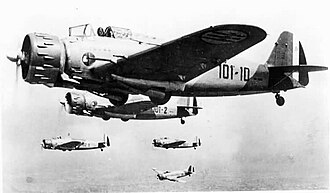
Breda Ba.65: Italy’s Ambitious Ground-Attack Aircraft of the 1930s
The Breda Ba.65 was one of the most distinctive Italian ground-attack aircraft of the 1930s and early Second World War. Developed by Società Italiana Ernesto Breda as the successor to the Ba.64, it represented an ambitious attempt to create a modern all-metal monoplane capable of performing several demanding missions, including ground attack, reconnaissance and, at least in conception, fighter and bomber duties. The aircraft first flew in September 1935 and was selected almost immediately for service with the Regia Aeronautica’s assault formations. Its cantilever low-wing configuration, retractable landing gear, enclosed cockpit and substantial bomb and machine-gun armament made it appear considerably more advanced than many of the biplanes still serving in Italy at the time. Yet the Ba.65 also embodied a fundamental problem that would affect several Italian combat aircraft of the period: a relatively heavy airframe combined with engines that struggled to provide sufficient performance. The result was an aircraft with considerable theoretical capability but difficult handling and a mixed operational record. Nevertheless, the Ba.65 became Italy’s principal dedicated ground-attack aircraft and saw combat during the Spanish Civil War and the Second World War, particularly in North Africa. Its story provides an important insight into the challenges of developing specialized attack aircraft during a period when military aviation was changing extraordinarily quickly.
The Origins of the Breda Ba.65
The Ba.65 was developed as a direct successor to the Breda Ba.64, another Italian attempt to create a multirole assault aircraft. The Ba.64 had been designed around the Italian concept of an aeroplano da combattimento, an aircraft expected to combine elements of fighter, bomber and reconnaissance work. In practice, however, the Ba.64 proved underpowered and developed a poor reputation, including problems associated with its landing gear and structural details. The Italian Air Force’s historical account records five fatal accidents involving the Ba.64 during 1936 and 1937, and the type was subsequently withdrawn from operational use.
Rather than abandon the concept, Breda’s designers Antonio Parano and Giuseppe Panzeri used the experience gained with the Ba.64 to develop a substantially more capable aircraft. The Ba.65 retained the general philosophy of a low-wing monoplane, but the new aircraft was larger, more powerful and more heavily armed. It was constructed entirely from metal and featured a retractable main landing gear, giving it a much cleaner appearance than many contemporary Italian aircraft.
The prototype flew in September 1935. The timing was significant because military aviation was entering a period of rapid transformation. Monoplanes were replacing biplanes in frontline service, enclosed cockpits were becoming increasingly common and engines were growing rapidly in power. The Ba.65 therefore represented a serious attempt to bring Italy’s assault-aircraft concept into the new technological era.
A Purpose-Built Assault Aircraft
The Ba.65’s mission was broader than simply dropping bombs. Its designers intended it to operate at low altitude against ground targets while retaining enough speed and armament to defend itself. This was a demanding combination because ground attack required a strong airframe, substantial payload capacity and good low-level handling, while defensive capability required speed and maneuverability.
The aircraft’s armament reflected this compromise. Standard configurations carried two 12.7 mm and two 7.7 mm Breda-SAFAT machine guns mounted in the wings, while bombs could be carried internally and externally. The internal bomb bay was an important feature because it allowed the aircraft to carry its principal bomb load without placing all of the weapons externally and increasing drag.
The Ba.65 was therefore a sophisticated machine for its period. Its problem was not a lack of ambition. Rather, its ambitions placed considerable demands on its airframe and engine.
Design and Construction
The Ba.65 was a single-engine, low-wing cantilever monoplane with an all-metal structure. The main landing gear retracted rearward into the engine nacelle and wing structure, reducing aerodynamic drag during flight. The cockpit was enclosed, another feature that distinguished the aircraft from many older Italian military types.
The wings had a relatively large area of 23.5 square metres, while the fuselage was long and substantial enough to accommodate the pilot, fuel, armament and bomb equipment. The aircraft’s dimensions and weight were significant for a single-engine machine. The Italian Air Force gives the K14-powered version a length of 9.75 metres, a wingspan of 11.90 metres, an empty weight of 2,251 kilograms and a maximum take-off weight of 3,215 kilograms.
These figures help explain some of the aircraft’s later reputation. A ground-attack aircraft necessarily has to carry considerable structural strength and military equipment, but every additional kilogram increases the demands placed on the engine and wings. The Ba.65’s designers were trying to combine a strong airframe, substantial weapons, fuel capacity and useful speed into a single-engine package.
The Problem of Weight
Weight became one of the central issues in the Ba.65 story. The aircraft was considerably heavier than the light biplanes that had preceded it, yet the engines available for the early production aircraft did not always provide the power needed to turn that weight into strong performance.
The first production aircraft used the Gnome-Rhône K-14, an air-cooled radial engine producing approximately 700 horsepower. This engine was manufactured under licence in Italy by Isotta Fraschini. Later production moved to the much more powerful Fiat A.80 RC.41, rated at approximately 1,000 horsepower.
The move to the Fiat engine represented an important attempt to address the performance problem. Yet increasing engine power also brought additional weight and did not automatically solve every aerodynamic or handling issue. The Ba.65 was an example of how difficult it could be to balance the competing demands of a specialized combat aircraft.
Engine Development
The Ba.65’s two principal engines are central to understanding its development. The early K-14 installation provided approximately 700 horsepower, while later aircraft used the 1,000-horsepower Fiat A.80 RC.41. The change substantially improved the aircraft’s available power and allowed later versions to achieve higher performance.
The K-14-powered aircraft listed by the Aeronautica Militare had a maximum speed of 389 km/h and a maximum range of approximately 850 kilometres. These figures were respectable for a large attack aircraft of the mid-1930s, but the Ba.65’s weight and handling characteristics limited its effectiveness in some roles.
The Fiat-powered Ba.65 was considerably faster in some published specifications, with figures around 430 km/h commonly associated with the single-seat configuration. This improvement brought the aircraft closer to the performance expected from contemporary combat aircraft, although it still faced serious limitations compared with newer fighters entering service by the beginning of the Second World War.
Why the Fiat A.80 Mattered
The adoption of the Fiat A.80 was an important step because the original 700-horsepower engine left the Ba.65 struggling with its relatively high weight. The more powerful engine gave the aircraft a substantially better power-to-weight ratio.
However, the engine change illustrates a broader problem faced by many aircraft designers in the 1930s. Airframe technology was advancing quickly, but engines did not always develop at exactly the same pace. A design that looked highly promising on paper could become disappointing if its selected engine failed to deliver enough power.
The Ba.65 therefore became increasingly dependent on engine development. Its later performance was significantly better than that of the earliest aircraft, but the fundamental characteristics of the airframe remained.
Operational Debut in Spain
The Ba.65 received its first combat experience during the Spanish Civil War. Thirteen Series I aircraft equipped the 65a Squadriglia of the Aviazione Legionaria, the Italian expeditionary air force supporting Franco’s Nationalists. These aircraft were powered by the Gnome-Rhône engine and entered combat during operations over the Santander front in August 1937.
The Spanish conflict became an important testing ground for aircraft and tactics from several countries. Italy used the conflict to gain operational experience with fighters, bombers and attack aircraft, while Germany and the Soviet Union similarly introduced and evaluated equipment.
The Ba.65 was used for ground-attack missions and later participated in operations during the Battle of Teruel and the Aragon Offensive. During 1938, its role expanded to include dive-bombing attacks, and it also participated in the Battle of the Ebro. Fiat-powered Ba.65s joined the units during the later stages of the Spanish campaign.
What Spain Revealed
The Spanish Civil War demonstrated both the usefulness and limitations of the Ba.65. As a dedicated ground-attack aircraft, it could deliver weapons against positions and concentrations of enemy forces. Its substantial armament made it dangerous to lightly protected ground targets.
At the same time, the aircraft was vulnerable in an increasingly contested air environment. By the late 1930s, fighter aircraft were becoming substantially faster, and an attack aircraft operating at low altitude could not depend solely on its own guns for protection.
The Spanish experience therefore provided valuable operational lessons, but it did not transform the Ba.65 into the ideal assault aircraft its designers had envisioned.
The Ba.65 and the Regia Aeronautica
The Ba.65 was adopted by the Regia Aeronautica as its principal dedicated assault aircraft. The Italian Air Force states that it was conceived as the successor to the Ba.64 and was selected in 1935 to equip the 5th Assault Brigade. Approximately 265 examples were produced according to the Aeronautica Militare, although other historical sources give a lower total of 218 depending on how production batches and variants are counted.
The discrepancy in production totals is worth noting because wartime aircraft records can vary significantly. Different sources may count prototypes, trainer variants, licence-built aircraft or incomplete airframes differently. For a historical article, it is therefore preferable to identify the figures as source-dependent rather than presenting one number as unquestionably definitive.
Operationally, the Ba.65 became particularly associated with the North African and Middle Eastern theatres. Its ability to carry bombs and machine-gun ammunition made it suitable for attacking ground targets, but the harsh environment and increasingly capable Allied fighters placed considerable demands on the aircraft and its crews.
The Problems of Handling and Training
The Ba.65 developed a poor reputation among some Italian crews. The Aeronautica Militare specifically attributes this partly to the aircraft’s complexity, size and weight combined with inadequate preparation of crews who had been accustomed to evaluating aircraft primarily through aerobatic performance.
This is an important detail because it shows that aircraft performance cannot be judged solely by technical specifications. A machine can have adequate speed, weapons and range yet still be difficult to operate effectively if its handling characteristics are poorly understood or if pilots are not trained for its particular mission.
The Ba.65 was designed as a specialized attack aircraft, not simply as a fighter with bombs. Ground attack imposed different demands on pilots. Low-level flight, weapons delivery, navigation near the ground and exposure to ground fire all required specialized skills.
The 1938 Accident Problem
The Italian Air Force records that there were eight fatal accidents involving Ba.65s in 1938. This serious accident rate contributed to growing concern over the aircraft. By 1939, Italy decided to reduce the aircraft to a single-seat configuration.
The decision to remove the second crew position was not simply an attempt to improve combat effectiveness. Reducing the crew could also reduce weight and simplify the aircraft. In a machine already struggling with weight and power, removing unnecessary equipment could have a meaningful effect.
This transformation illustrates how operational experience could force designers and air forces to reconsider an aircraft’s original concept. The Ba.65 had initially been associated with a two-seat multirole philosophy, but wartime realities increasingly favored a specialized single-seat attack aircraft.
The Single-Seat Ba.65
The single-seat configuration became the principal operational form of the Ba.65. By eliminating the second crew position, the aircraft could devote more of its available weight to fuel, weapons or structural requirements while simplifying its operational role.
The aircraft’s armament remained formidable for a single-engine machine. Two 12.7 mm and two 7.7 mm Breda-SAFAT machine guns provided forward firepower, while bombs could be carried internally and on external racks. This made the Ba.65 capable of attacking both soft ground targets and positions requiring heavier explosive effects.
Nevertheless, the aircraft’s combat effectiveness declined as the war progressed. The technology of ground attack was changing rapidly, and dedicated attack aircraft were increasingly expected to combine armor, firepower, speed and maneuverability. The Ba.65 could not easily keep pace with newer designs.
Service in North Africa
North Africa became one of the most important theatres for the Ba.65 during the Second World War. The aircraft’s ground-attack mission suited the operational environment, where mobile armies depended heavily on roads, supply columns, artillery positions and concentrations of vehicles.
Yet the North African battlefield was also unforgiving. Aircraft operating at low altitude were exposed to anti-aircraft fire, while enemy fighters could attack them during or after their missions. The Ba.65’s relatively modest performance compared with modern fighters reduced its ability to escape once intercepted.
The aircraft’s operational story in North Africa therefore reflects the broader problem of many pre-war attack aircraft: designs that had appeared modern in 1935 were increasingly vulnerable by 1940 and 1941.
Exports and Foreign Operators
The Ba.65 was not used exclusively by Italy. A total of 55 aircraft were exported, with operators including Iraq, Chile and Portugal. These export examples are important because they demonstrate that the aircraft’s reputation was not entirely negative. Foreign air forces saw sufficient value in its combination of payload, armament and performance to purchase it.
Chile purchased 20 aircraft, including single-seat and dual-control machines, while Portugal acquired 10 aircraft powered by Fiat engines. Iraq also operated Ba.65s and used them during the Anglo-Iraqi War of 1941.
Foreign service extended the Ba.65’s story beyond the Italian military. These aircraft operated under different training systems and tactical doctrines, providing further evidence of the versatility of the basic design.
The Iraqi Experience
The Iraqi Ba.65s are particularly notable because they were involved in combat during the 1941 Anglo-Iraqi War. Iraq’s use of the aircraft demonstrated that, despite its limitations, the Ba.65 could still serve as a useful ground-attack platform when employed under appropriate circumstances.
The aircraft’s relatively heavy armament and bomb capacity gave it a useful strike capability. However, as with the Italian aircraft, its effectiveness was heavily dependent on the presence of enemy air opposition and the quality of tactical employment.
Decline and Retirement
By the early 1940s, the Ba.65 was becoming increasingly obsolete. The Italian Air Force attempted to extend its useful life through modifications and weight reduction. According to the Aeronautica Militare, around 1941 some aircraft were lightened by removing equipment, opening the bomb bay and reducing armament.
These modifications reveal the fundamental challenge facing the design. Rather than introducing an entirely new airframe, the air force attempted to extract additional usefulness from aircraft already available. Removing equipment could reduce weight and improve performance, but such measures could not fully compensate for the rapid development of fighter and attack aircraft elsewhere.
The definitive retirement decision was made in April 1943, bringing the Ba.65’s Italian career to an end.
The Ba.65’s Historical Significance
The Breda Ba.65 is important because it illustrates the difficult transition from interwar aviation to modern air warfare. In 1935, its all-metal monoplane construction, retractable landing gear, enclosed cockpit and substantial armament made it a forward-looking aircraft. Yet within only a few years, those characteristics were no longer enough to guarantee effectiveness.
Its career also illustrates the importance of matching aircraft design to doctrine. Italy’s concept of a versatile assault aircraft required the Ba.65 to perform several roles, but the resulting machine became relatively heavy and complex. The aircraft was neither a lightweight fighter nor a dedicated heavy bomber. It occupied a difficult middle ground.
At the same time, dismissing the Ba.65 simply as a failure would overlook its genuine achievements. It was Italy’s principal dedicated ground-attack aircraft, saw combat in two major conflicts and was exported to several foreign air forces. It provided Italy with an operational assault capability at a time when the doctrine and technology of ground attack were still developing.
Conclusion
The Breda Ba.65 was an ambitious aircraft born during one of the most important technological transitions in aviation history. Developed as the successor to the Ba.64, it embraced the modern features of the mid-1930s: an all-metal structure, low-wing cantilever layout, retractable landing gear, enclosed cockpit and substantial armament. Yet its relatively heavy airframe placed considerable demands on its engines, and the early 700-horsepower K-14 installation was not sufficient to give the aircraft the performance its designers wanted. The later 1,000-horsepower Fiat A.80 improved matters, but could not completely overcome the aircraft’s fundamental limitations.
The Ba.65 nevertheless became an important part of Italian military aviation. It fought in the Spanish Civil War, served with the Regia Aeronautica in the Second World War and became particularly associated with ground-attack operations in North Africa. Foreign operators including Iraq, Chile and Portugal also employed the aircraft, demonstrating that its combination of payload and armament had genuine practical value.
Its operational difficulties, including a serious accident record, eventually led to changes in configuration and tactics. The aircraft was reduced to a single-seat arrangement, and later examples were lightened by removing equipment and reducing armament. By 1943, however, the Ba.65 had reached the end of its useful military life.
The Breda Ba.65 is therefore best remembered as an aircraft of transition. It looked modern when it appeared, but the pace of aviation development meant that its advantages quickly eroded. Its story demonstrates how difficult it was to create an aircraft that combined speed, payload, armament, structural strength and good handling in a single-engine package. It also reminds us that an aircraft’s historical importance does not depend on whether it was universally successful. The Ba.65 played a real role in the development of Italian ground-attack aviation and provided valuable operational experience during the years immediately preceding and following the outbreak of the Second World War.
For students of military aviation, the Ba.65 is particularly revealing because it sits between two generations: the flexible multirole aircraft of the 1930s and the increasingly specialized, heavily protected attack aircraft that emerged during the Second World War. Its strengths, weaknesses and eventual retirement all reflect the extraordinary speed at which combat aviation evolved during those years.
Breda Ba.65 Technical Specifications
The following table gives representative specifications for the Ba.65, with the principal dimensional and performance figures based on the K-14-powered aircraft listed by the Aeronautica Militare. Later Fiat A.80-powered aircraft differed in engine power and performance, and published sources sometimes give different figures depending on the exact variant being described.
| Specification | Breda Ba.65 |
|---|---|
| Aircraft type | Ground-attack / assault aircraft |
| Manufacturer | Società Italiana Ernesto Breda |
| Country of origin | Italy |
| Designers | Antonio Parano and Giuseppe Panzeri |
| First flight | September 1935 |
| Primary operator | Regia Aeronautica |
| Other operators | Iraq, Chile, Portugal, Spain |
| Configuration | Low-wing cantilever monoplane |
| Construction | All-metal |
| Crew | 1 in later single-seat configuration; 2 in earlier versions |
| Engine, early aircraft | 1 × Isotta Fraschini K.14 |
| K.14 power | Approximately 700 hp (522 kW) |
| Engine, later aircraft | 1 × Fiat A.80 RC.41 |
| Fiat A.80 power | Approximately 1,000 hp (746 kW) |
| Length | 9.75 m (32 ft 0 in), K-14 data |
| Wingspan | 11.90 m (39 ft 0 in), K-14 data |
| Height | 2.98 m (9 ft 9 in) |
| Wing area | 23.50 m² (253 sq ft) |
| Empty weight | 2,251 kg (4,962 lb), K-14 data |
| Maximum take-off weight | 3,215 kg (7,088 lb), K-14 data |
| Maximum speed | 389 km/h (242 mph), K-14 data |
| Later Fiat-powered speed | Approximately 430 km/h (267 mph), source/configuration dependent |
| Maximum range | Approximately 850 km (528 mi), K-14 data |
| Armament | 2 × 12.7 mm and 2 × 7.7 mm Breda-SAFAT machine guns |
| Bomb load | Internal and external bomb carriage; approximately 400 kg commonly cited for early configurations |
| Landing gear | Retractable main undercarriage |
| Primary role | Ground attack |
| Secondary roles | Reconnaissance, bombing and multirole assault |
| Production period | 1935–1939 |
| Production total | Approximately 218–265, depending on source and counting method |
| Italian retirement decision | April 1943 |
| Combat service | Spanish Civil War and Second World War |
