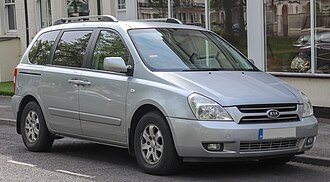
KIA Carens as a Used Car: Is This Practical MPV Still Worth Buying?
The KIA Carens is one of those used cars that can be easy to overlook in a market dominated by SUVs and crossovers. Yet for buyers who value interior space, flexible seating, sensible running costs and family practicality more than image, the Carens can make a surprisingly strong second-hand proposition. Depending on the year, buyers will encounter several generations and a broad selection of petrol and diesel engines, so the exact version matters considerably when assessing reliability, comfort and ownership costs. The second-generation Carens, sold in Europe from the mid-2000s into the early 2010s, offered five- or seven-seat configurations and engines including 1.6 and 2.0-litre petrol units and 2.0 CRDi diesel power. The later generation, introduced for Europe in 2013, became more modern and refined, with a 1.7 CRDi diesel and 1.6-litre petrol among its principal engines.
For a used-car buyer, however, the important question is not simply whether the Carens is a good car. It is whether a particular Carens has been maintained properly and whether its engine, gearbox and equipment match the way you intend to use it. A well-maintained example can be an extremely useful family vehicle, while a neglected diesel with a complicated history can quickly turn its low purchase price into an expensive ownership experience. The Carens therefore deserves to be considered as a practical used MPV rather than simply as a cheap seven-seater.
What Is the KIA Carens?
The KIA Carens was developed primarily as a compact family MPV, with an emphasis on passenger accommodation and adaptable interior space. Unlike a large van-based people carrier, it is relatively easy to drive in everyday traffic and does not feel excessively bulky on narrow roads. The second-generation model measured approximately 4,545 mm long and 1,820 mm wide, while the later generation became slightly shorter and lower at around 4,525 mm long, 1,805 mm wide and 1,605 mm high.
One of the Carens’ strongest characteristics is its interior flexibility. Depending on specification, the car could accommodate up to seven people, and the rear seats were designed to fold to create a substantially larger luggage area. On the later model, published specifications give approximately 536 litres of normal luggage capacity and up to 1,694 litres with the rear seating folded, although capacity varies according to seating configuration and measurement method. Independent testing also demonstrates how useful the square, accessible luggage area can be in practical use.
Generations to Consider
For a used buyer, the most relevant European versions are the second-generation Carens from roughly 2006 onward and the fourth-generation model introduced in 2013. The older car has the advantage of being inexpensive and mechanically relatively straightforward in some configurations, but age is now a major consideration. A car that is 15–20 years old can suffer from worn suspension, corrosion, tired interiors and accumulated electrical or mechanical problems even if its basic engine remains healthy.
The 2013-onward Carens is generally the more attractive choice if the budget permits. Kia’s European specifications included a 1.7-litre diesel producing either 115 PS or 136 PS, together with a 1.6-litre petrol producing 135 PS at launch. The 136 PS 1.7 CRDi developed 330 Nm, giving the relatively large family car useful low- and mid-range pulling power.
Why Buy a Used KIA Carens?
The main argument for buying a Carens is simple: practicality. A conventional hatchback or compact SUV may be easier to sell later, but it is unlikely to provide the same combination of passenger capacity and flexible luggage space for the money. The Carens makes particular sense for families who regularly carry children, grandparents, luggage, bicycles, shopping or other bulky objects. The ability to fold the rear seats can transform it from a people carrier into a useful load carrier without requiring the exterior dimensions of a large van.
Another advantage is the driving position. The relatively upright body gives the driver good visibility and makes getting into the vehicle easier than in many low-slung passenger cars. The later Carens also has a relatively long 2,750 mm wheelbase, which helps create a spacious cabin while keeping the vehicle manageable in urban environments.
The car can also offer good value in the used market because MPVs are less fashionable than SUVs. This can work in the buyer’s favour. A buyer who is more interested in interior volume, equipment and condition than badge prestige may be able to obtain considerably more practical vehicle for the same money than they would with a fashionable crossover.
Petrol or Diesel?
Petrol Engines
A petrol Carens can be an appealing option for drivers who do relatively low annual mileage or mainly make short journeys. Older versions were offered with 1.6 and 2.0-litre petrol engines, with the 2.0 CVVT producing around 145 PS and the 1.6 CVVT around 126 PS in later versions of the second generation. Published specifications put the 1.6-litre version at around 7.2 litres per 100 km in combined testing, although real-world consumption will depend heavily on load, traffic and driving style.
The advantage of petrol is that there is no diesel particulate filter or diesel-specific fuel-system hardware to worry about. That does not make every petrol Carens trouble-free, but it can make an older, high-mileage example easier to justify for an owner who does not need diesel economy. The trade-off is higher fuel consumption, particularly when the vehicle is heavily loaded or driven mainly around town.
Diesel Engines
Diesel is arguably the more natural match for the Carens because of its size and intended use. The older 2.0 CRDi produced about 140 PS and 305 Nm, while the later 1.7 CRDi was available with 115 or 136 PS, with the stronger version producing 330 Nm.
That torque makes a noticeable difference when the car is carrying several passengers or climbing hills. A diesel Carens can feel relaxed on motorways and long-distance trips, where its gearing and torque suit steady cruising. However, buyers should be more careful about service history. Diesel engines with turbochargers, particulate filters and high-pressure fuel systems can become expensive when neglected, particularly at higher mileages. A diesel is therefore best chosen when the car’s previous use and maintenance history make sense, rather than simply because diesel fuel consumption looks attractive on paper.
What to Check Before Buying
Engine and Service History
The most important item is the maintenance history. Look for evidence of regular servicing rather than relying solely on a seller’s verbal assurances. A high-mileage car with invoices, consistent servicing and a sensible previous owner can be a much better purchase than a low-mileage example with gaps in its history.
On a diesel, inspect the engine carefully for excessive smoke, unusual turbo noises, uneven running and warning lights. During a test drive, acceleration should be smooth and predictable. The car should not suddenly lose power under load, and there should be no obvious signs of overheating or cooling-system problems.
Clutch and Gearbox
Manual versions should be checked for clutch slip, judder and difficult gear selection. A clutch that engages very high or allows the engine speed to rise without corresponding acceleration may be nearing the end of its life. Automatic versions deserve an equally careful test drive, with attention paid to hesitation, harsh shifts and delayed engagement.
Remember that gearbox condition is particularly important on an older family car because the purchase price can be modest while transmission repairs remain expensive.
Suspension, Brakes and Steering
The Carens’ practical design means many examples have spent their lives carrying heavy loads and several passengers. Consequently, suspension components deserve careful inspection. Listen for knocks over uneven roads and check whether the vehicle feels stable and controlled rather than loose or floaty.
Brakes should operate smoothly without vibration, pulling or excessive pedal travel. Tyre wear can also provide clues: uneven wear may indicate alignment, suspension or steering issues rather than simply old tyres.
Interior and Electrical Equipment
The cabin should be inspected almost as carefully as the mechanical components. Test the air conditioning, heating, electric windows, central locking, lights, infotainment system, parking sensors and every available switch. Seven-seat vehicles are particularly prone to having rear seats and folding mechanisms used frequently, so make sure every seat locks, folds and returns to its intended position.
A family MPV can also suffer considerable interior wear. Scratched plastics, damaged upholstery and worn carpets do not necessarily mean the car is mechanically bad, but they can reveal how heavily it was used and help you judge whether the asking price is appropriate.
Is the KIA Carens Reliable?
The answer depends heavily on generation, engine and maintenance. It would be misleading to label every Carens as either exceptionally reliable or unreliable. The basic mechanical package can provide long service, but the oldest cars are now old enough that condition is more important than the model’s original reputation.
The second-generation Carens has the benefit of relatively conventional mechanical architecture, but age-related problems should be expected. The 2.0 CRDi, for example, uses common-rail injection and a variable-geometry turbocharger, so it is more complex than a simple naturally aspirated petrol engine.
The later 1.7 CRDi is more modern and efficient, but the same general rule applies: regular maintenance matters enormously. Buyers should not confuse Kia’s historically strong value proposition with immunity from normal wear and tear. At this age, even a fundamentally reliable vehicle can require substantial expenditure on suspension, brakes, clutch components, air conditioning or diesel emissions equipment.
Fuel Economy and Running Costs
Fuel economy varies significantly between engines and generations. For the older Carens, published combined figures range from roughly 7.2 litres per 100 km for a 1.6 petrol to around 6.1 litres per 100 km for the 2.0 CRDi in certain specifications, while heavier urban use can produce considerably higher real-world figures.
The later diesel can be particularly economical on longer journeys, but buyers should calculate total ownership costs rather than concentrating only on fuel. A cheap diesel that requires an expensive repair can easily erase several years of fuel savings. Insurance, tyres, servicing, road tax where applicable and age-related repairs should all be included when comparing a Carens with a petrol alternative.
How Does the Carens Drive?
The Carens is designed for comfort and practicality rather than sporty handling. Its upright seating position and MPV body make it feel different from a conventional hatchback, but that is part of its appeal. Steering is generally more about ease of use than feedback, while the suspension is intended to deal with family loads and imperfect roads without becoming excessively harsh.
The later model is the more convincing all-rounder. Its dimensions remain relatively compact for a seven-seat vehicle, while the 2,750 mm wheelbase contributes to useful cabin space. On the motorway, a healthy diesel Carens can be a particularly sensible long-distance family vehicle, combining good visibility, substantial luggage capacity and enough torque for overtaking without constant gear changes.
The Biggest Advantages and Disadvantages
Advantages
The Carens’ greatest strength is the amount of usable space it offers for the money. Seven seats, flexible rear seating, a large potential luggage area and an upright cabin make it extremely practical. The later generation is also considerably more modern than the older model, while diesel versions provide useful torque and good long-distance economy.
Another advantage is that the model tends to appeal to rational buyers rather than enthusiasts, which can translate into attractive used prices. If you are buying with your head rather than your heart, the Carens can make a great deal of sense.
Disadvantages
The biggest drawback is age. Most used examples available today are no longer new cars with predictable maintenance costs, and the oldest versions can require substantial refurbishment. The diesel engines are also more complex than their petrol counterparts, while a fully loaded seven-seater can feel underpowered with the smaller engine options.
The Carens also does not offer the same image or resale appeal as a popular SUV. That matters if you change cars frequently, although it can be a benefit when purchasing used because depreciation has already done much of its work.
Final Verdict: Should You Buy a Used KIA Carens?
A used KIA Carens is worth considering if your priorities are space, practicality and value rather than style or driving excitement. The model is particularly attractive to families who genuinely need seven seats or frequently transport bulky items. The 2013-onward generation is the version to target if your budget allows, while older cars can be worthwhile when they have exceptional maintenance records and are priced appropriately.
The key is to buy the individual car, not simply the badge. A well-maintained Carens with documented servicing, a healthy engine and gearbox, good suspension and functioning equipment can be a remarkably useful family car. Conversely, a neglected example can quickly become a false economy. Before purchasing, arrange a proper inspection, check the service history, test every major system and budget for age-related maintenance.
For buyers who approach the Carens with realistic expectations, it remains one of those unfashionable used cars that can quietly do an excellent job. It offers the space of a much larger vehicle without becoming unnecessarily huge, and its ability to switch between passenger and cargo duties remains genuinely useful. In an era when used-car buyers often pay a premium for SUV styling, the Carens can be a refreshing reminder that practicality is sometimes more valuable than fashion.
KIA Carens Technical Specifications
Because specifications vary considerably by generation, engine and market, the table below uses representative European versions rather than suggesting that every used Carens has identical figures.
| Specification | Carens II 1.6 CVVT | Carens II 2.0 CVVT | Carens II 2.0 CRDi | Carens III/IV-era 1.7 CRDi 136 |
|---|---|---|---|---|
| Approx. model years | 2010–2013 | 2006–2013 | 2006–2013 | 2013 onward |
| Engine | 1.6 petrol | 2.0 petrol | 2.0 diesel turbo | 1.7 diesel turbo |
| Displacement | 1,591 cc | 1,998 cc | 1,991 cc | 1,685 cc |
| Cylinders | 4 | 4 | 4 | 4 |
| Power | 126 PS | 145 PS | 140 PS | 136 PS |
| Torque | 157 Nm | 189 Nm | 305 Nm | 330 Nm |
| Transmission | 5-speed manual | 5-speed manual / 4-speed auto | 6-speed manual / 4-speed auto | 6-speed manual or automatic, depending on version |
| Drive | Front-wheel drive | Front-wheel drive | Front-wheel drive | Front-wheel drive |
| Length | 4,545 mm | 4,545 mm | 4,545 mm | 4,525 mm |
| Width | 1,820 mm | 1,820 mm | 1,820 mm | 1,805 mm |
| Height | approx. 1,720 mm | approx. 1,720 mm | approx. 1,720 mm | 1,605 mm |
| Wheelbase | approx. 2,700 mm | approx. 2,700 mm | 2,700 mm | 2,750 mm |
| Seats | 5/7 depending on version | 5/7 depending on version | 7 | 5/7 depending on version |
| Boot capacity | approx. 322–1,650 l | approx. 322–1,650 l | up to approx. 2,106 l depending on configuration | approx. 536–1,694 l |
| Fuel | Petrol | Petrol | Diesel | Diesel |
| Typical combined consumption* | approx. 7.2 l/100 km | approx. 8.1 l/100 km | approx. 6.1 l/100 km | varies by version and test cycle |
*Official/test-cycle figures vary by model year, transmission, market and test methodology, and should not be treated as guaranteed real-world consumption.
In short, the KIA Carens is not the obvious choice, and that is precisely why it can be interesting as a used car. If you find a carefully maintained example at the right price, its combination of passenger space, flexible seating and sensible dimensions can make it considerably more useful than many fashionable alternatives. The best purchase is likely to be the newest, best-documented car your budget allows, with engine choice determined by your actual driving pattern rather than by fuel economy figures alone.
