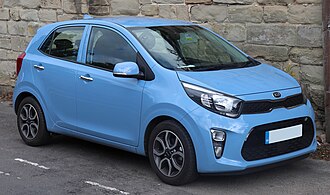
KIA Picanto as a Used Car: A Small Car That Can Be a Big Bargain
The KIA Picanto is one of those cars that can be easy to underestimate. From the outside, it is unmistakably a small city car, and in a market increasingly dominated by large SUVs and crossovers, a tiny hatchback can seem almost old-fashioned. Yet that is precisely what makes the Picanto interesting as a used car. It was designed around a simple and increasingly valuable idea: keep the dimensions compact, keep the running costs low and make as much use as possible of the available interior space. The result is a car that can be exceptionally convenient in towns and cities while still being perfectly capable of longer journeys when required. The third-generation Picanto, introduced in Europe in 2017, continued this philosophy with a five-door body, four- or five-seat configurations, petrol engines, front-wheel drive and a choice of manual or, depending on engine, automatic transmission.
A used Picanto also has another important advantage: it does not require a particularly complicated ownership formula. There is no diesel engine to worry about in the European third-generation range, no large battery pack and no heavy four-wheel-drive system. Instead, most examples use relatively small naturally aspirated petrol engines, with the 1.0-litre three-cylinder and 1.25-litre four-cylinder being the main choices, while the more powerful 1.0 T-GDI turbo arrived later. That does not mean every Picanto is automatically trouble-free, because age, maintenance and previous use still matter enormously, but it does make the model an attractive proposition for buyers searching for an affordable second-hand car with predictable day-to-day running costs.
What Is the KIA Picanto?
The Picanto is KIA’s smallest conventional passenger car and belongs to the A-segment city-car class. Its basic mission is very different from that of a larger family hatchback. Rather than offering enormous boot space or effortless motorway performance, it concentrates on manoeuvrability, low weight, inexpensive running and efficient use of space.
The third-generation model is only 3,595 mm long and 1,595 mm wide, excluding the mirrors, with a 2,400 mm wheelbase. Despite those compact dimensions, KIA managed to provide a surprisingly useful cabin and a luggage compartment measuring 255 litres according to the European VDA measurement. Folding the rear seats increases luggage capacity to approximately 1,010 litres.
That is an important part of the Picanto’s appeal. A small car does not necessarily have to feel cramped, and the Picanto’s relatively tall body and upright packaging give it a more spacious character than its exterior footprint suggests. Its five-door configuration is also considerably more convenient than the three-door layouts that were once common among small city cars.
Why Buy a Used KIA Picanto?
Excellent Urban Car
The most obvious reason to buy a Picanto is that it is exceptionally well suited to urban driving. Its short length makes parallel parking and tight manoeuvres considerably easier than they are in a typical family crossover, while the relatively upright driving position provides good visibility around the car. Narrow streets, crowded car parks and short journeys are precisely the environments in which the Picanto feels most at home.
The light weight is another advantage. Even the third-generation versions with larger engines remain relatively light, which means that the car does not require a great deal of power to feel responsive around town. The steering is easy to operate at low speeds, and the small turning circle makes U-turns and parking manoeuvres straightforward.
For someone who spends most of the week driving through a city, the Picanto can therefore be more convenient than a much larger and more expensive crossover. It takes up less road space, is easier to park and generally costs less to run.
Low Running Costs
Small petrol engines are naturally attractive when fuel and maintenance costs matter. The third-generation 1.0-litre MPI engine produces 67 PS and 96 Nm, while the 1.25-litre MPI produces 84 PS and 122 Nm. KIA’s European specifications gave the 1.0 MPI a combined consumption figure as low as 4.0 litres per 100 km in a four-seat configuration under the applicable test cycle, while the five-seat version was quoted at around 4.4 litres per 100 km without Idle Stop & Go.
Real-world consumption will naturally be higher or lower depending on traffic, temperature, driving style and wheel size, but the general principle remains: a small petrol engine in a lightweight city car is an economical combination. Insurance and tyre costs can also be relatively modest, while routine servicing is generally less intimidating financially than maintaining a large SUV or premium car.
Which Engine Should You Choose?
1.0 MPI: The Sensible Choice
The naturally aspirated 1.0 MPI is arguably the most logical Picanto engine for buyers who want simplicity and low running costs. It is a three-cylinder petrol engine with 998 cc displacement, producing 67 PS and 96 Nm. It uses multi-point fuel injection rather than direct injection and is paired with a five-speed manual gearbox in the European third-generation specification.
Its performance is not impressive on paper. KIA quoted approximately 14.3 seconds for 0–100 km/h in the five-speed manual version and a top speed of around 161 km/h. But numbers like these need to be interpreted in context. A Picanto is not intended to be a motorway sports car, and around town the engine has enough performance for normal traffic.
The main weakness appears when the car is fully loaded or travelling at high speed. Overtaking requires more planning, and climbing long motorway gradients may require frequent downshifts. For predominantly urban use, however, the 1.0 MPI can be an excellent match.
1.25 MPI: The Better All-Rounder
The 1.25-litre naturally aspirated engine is a particularly attractive choice if the Picanto will regularly be used outside the city. It is a four-cylinder unit producing 84 PS and 122 Nm, and the extra power makes a noticeable difference when accelerating onto motorways or carrying several passengers.
It remains a relatively simple naturally aspirated petrol engine, but it gives the car a greater margin of performance than the 1.0. KIA’s published figures list a manual 1.25 version with a top speed of approximately 173 km/h and 0–100 km/h acceleration in around 12 seconds. The engine was also available with a four-speed automatic transmission, although the automatic is naturally less economical and less responsive than the manual.
For a buyer who wants one Picanto to cover both city and occasional long-distance driving, the 1.25 MPI is arguably the sweet spot.
1.0 T-GDI: The Fun Option
The 1.0 T-GDI changed the character of the Picanto considerably. With turbocharging and direct injection, it produces 100 PS and 172 Nm, making it the most powerful engine offered in the model when introduced. KIA quoted 0–100 km/h in approximately 10.1 seconds and a top speed of 180 km/h.
This version is much more convincing on faster roads and can make the Picanto genuinely enjoyable to drive. The strong torque available from 1,500 rpm also means that the driver does not need to rev the engine as aggressively as with the naturally aspirated units.
The downside is increased mechanical complexity. A used turbocharged direct-injection engine deserves particularly careful inspection and a strong service history. If low purchase and ownership costs are the priority, the naturally aspirated engines remain easier to recommend. If driving enjoyment matters, however, the T-GDI is the most interesting version in the range.
What Is the Picanto Like to Drive?
The Picanto’s driving experience is strongly influenced by its size and weight. It feels light, nimble and easy to place on the road, particularly in town. The steering is relatively quick and light, and the short body makes it simple to judge where the corners of the car are.
KIA also paid attention to handling when developing the third-generation model. The company introduced torque vectoring by braking as a function of the electronic stability-control system, designed to reduce understeer during harder cornering and improve stability.
That does not transform the Picanto into a hot hatch, but it contributes to a more secure feeling when the car is driven enthusiastically. The biggest limitation is ride comfort on poor roads. Short-wheelbase city cars can be more sensitive to potholes and sharp bumps than larger vehicles, and the effect can be more pronounced on examples fitted with larger wheels and lower-profile tyres.
On the motorway, the Picanto remains capable but its limitations become clearer. The 1.0 MPI can feel strained during fast acceleration, while wind and road noise are more noticeable than in a larger hatchback. The 1.25 and T-GDI versions are better suited to frequent motorway use.
What to Check Before Buying a Used Picanto
Engine and Service History
A complete maintenance history is always valuable, but it is particularly important when buying a small car that may have spent most of its life making short journeys. The engine should start cleanly from cold, settle into a stable idle and respond smoothly to throttle inputs.
Take the car for a proper test drive rather than simply moving it around a dealership forecourt. Listen for unusual rattles or vibrations, check for warning lights and look for evidence of oil or coolant leaks. With the 1.0 T-GDI, pay particular attention to turbocharger behaviour and make sure the engine delivers power smoothly across the rev range.
Small cars are sometimes treated as disposable by previous owners, which can mean servicing is delayed simply because the vehicle is inexpensive. Do not assume that a cheap car is mechanically simple enough to survive indefinitely without maintenance.
Clutch and Gearbox
The five-speed manual gearbox is straightforward, but the clutch should still be checked carefully. It should engage progressively without excessive judder, slipping or strange noises. Test the car in a higher gear at low engine speed and accelerate firmly; if the engine revs rise without a corresponding increase in road speed, clutch wear may be present.
The four-speed automatic is an older-style transmission compared with modern multi-speed automatics. It should nevertheless shift predictably and without severe jolts or unexplained delays. Test it both when cold and after the car has reached operating temperature.
Suspension, Brakes and Steering
A Picanto spends much of its life in environments full of speed bumps, potholes and kerbs, so suspension components deserve careful attention. Listen for knocking noises over rough roads and check whether the car remains stable when braking.
The steering should feel precise without excessive play, while the car should track straight when you briefly relax your grip on a level road. Uneven tyre wear can indicate alignment or suspension problems.
Brake discs and pads are relatively inexpensive compared with those of a large vehicle, but an older Picanto can still accumulate several small repair needs. Inspect the tyres carefully as well. Cheap or mismatched tyres can significantly reduce the handling and braking performance of such a lightweight car.
Interior and Practicality
Surprisingly Useful Cabin
The Picanto’s cabin is one of its strongest features. Although the exterior is tiny, the upright design provides respectable headroom and allows the driver and front passenger to sit comfortably. KIA’s technical data for the third-generation model list more than one metre of front headroom and approximately 960 mm of rear headroom.
The rear seats are obviously less generous than those of a larger family car, but they are perfectly usable for children and smaller adults. The five-door layout makes access substantially easier than in a three-door city car.
The dashboard design also improved considerably over previous generations. Depending on trim, buyers can find touchscreen infotainment, smartphone integration, heated seats, reversing cameras and various driver-assistance features. KIA specifically highlighted Android Auto, Apple CarPlay and, on some versions, wireless smartphone charging when the third-generation Picanto was introduced.
Boot Space
A 255-litre boot may not sound enormous, but it is a strong figure for an A-segment car. The squared-off body makes the available space reasonably easy to use, and folding the rear seats increases the capacity to approximately 1,010 litres.
This is one of the areas where the Picanto can surprise buyers. It may be tiny from the outside, but for shopping, small luggage and everyday errands it can be considerably more practical than its dimensions suggest.
Safety and Equipment
Modern Picantos can be surprisingly well equipped for such a small car. Depending on year and trim, buyers may encounter features such as autonomous emergency braking, lane-departure-related assistance, reversing cameras, parking sensors, cruise control, touchscreen infotainment and smartphone connectivity.
KIA strengthened the third-generation body structure and added additional safety technology, including Autonomous Emergency Braking on applicable specifications. The manufacturer also stated that the new structure increased torsional rigidity compared with the previous model.
However, used buyers should always verify the actual equipment of the individual vehicle. Safety systems and convenience features vary by market, model year and trim level, so a high-specification advertisement should not be taken as proof that every desirable feature is present.
Fuel Economy and Running Costs
Fuel economy is naturally one of the Picanto’s strongest arguments. The small engines and low vehicle weight mean that the car does not need much fuel when driven gently. KIA’s period specifications quote approximately 4.4 litres per 100 km for a five-seat 1.0 MPI manual without Idle Stop & Go and around 4.5 litres for the 1.25 MPI manual, although exact figures vary with equipment and test configuration.
Real-world consumption will depend on driving style. Short urban journeys during winter can produce considerably higher figures, while gentle mixed-road driving can be very economical. The T-GDI can also be efficient when driven sensibly, but its greater performance makes it easier to use more fuel.
Running costs extend beyond fuel. The Picanto’s small tyres, modest engine capacity and relatively simple mechanical layout can help keep routine expenses under control. This is one reason the model can be particularly attractive to young drivers, commuters and households looking for a second car.
First, Second or Third Generation?
The first-generation Picanto is now a very inexpensive used car, but age is its biggest drawback. These cars can make sense for buyers on an extremely tight budget, provided they have been properly maintained and inspected for corrosion and mechanical wear.
The second-generation Picanto is arguably one of the most attractive budget choices. It improved the basic formula while remaining compact, efficient and relatively simple. Buyers can find 1.0 and 1.25 petrol engines and, depending on market and year, other configurations. The key advantage is that many examples are now old enough to be inexpensive but not so old that age-related deterioration automatically dominates the ownership experience.
The third generation is the most sophisticated choice. Its improved cabin, larger boot, stronger body structure and modern technology make it the best all-rounder, although prices are naturally higher. For someone looking for a long-term used car rather than the cheapest possible transport, it is the generation I would target first.
Advantages and Disadvantages
Advantages
The Picanto’s biggest strengths are its compact dimensions, low running costs and surprisingly useful interior. It is exceptionally easy to manoeuvre and park, making it ideal for cities. The five-door body provides much better everyday usability than older three-door city cars, while the 255-litre boot of the third-generation model is genuinely practical for its class.
Another advantage is choice. Buyers can select a simple naturally aspirated 1.0, a more powerful 1.25 or the much quicker turbocharged 1.0 T-GDI. This allows the same basic car to suit very different driving styles.
Disadvantages
The Picanto is still a small car, and there is no getting around that fact. Rear passenger space is limited compared with a family hatchback, and motorway driving can become tiring because of noise and the limited performance of the smaller engine.
Ride comfort can also be compromised by poor roads and larger wheels, while the 1.0 MPI requires patience when the car is fully loaded. The turbocharged T-GDI is more enjoyable but introduces additional complexity, and an older automatic version is unlikely to deliver the smoothness or efficiency of a modern multi-speed transmission.
Final Verdict: Is the KIA Picanto a Good Used Car?
The KIA Picanto is an excellent example of why a used car does not need to be large to be useful. Its greatest virtue is that it focuses on the jobs a small car actually needs to perform. It is easy to park, inexpensive to run, simple to manoeuvre and surprisingly spacious considering its tiny exterior dimensions.
For most buyers, the naturally aspirated 1.0 MPI is the sensible choice if the car will spend most of its time in town, while the 1.25 MPI is the better all-rounder for drivers who regularly travel outside urban areas. The 1.0 T-GDI is the enthusiast’s option, providing a level of performance that makes the Picanto genuinely entertaining without sacrificing its city-car dimensions.
The most important consideration when shopping for one is condition. A well-maintained Picanto with a documented history is much more attractive than a cheaper example that has been neglected. Check the engine, clutch, gearbox, suspension, brakes, tyres and electrical equipment, and take time to inspect the underside and bodywork of older cars.
Ultimately, the Picanto makes sense because it does not try to be something it is not. It is not an SUV, it is not a long-distance luxury car and it is not a substitute for a large family hatchback. It is a small, practical and economical city car, and it performs that role extremely well. For a buyer who wants inexpensive transport without making every journey feel like a compromise, a good used KIA Picanto can be one of the smartest choices in the small-car market.
KIA Picanto Technical Specifications
The following table summarises representative European specifications for the third-generation KIA Picanto introduced in 2017. Exact figures vary according to engine, transmission, seating configuration, wheels, trim and model year.
| Specification | 1.0 MPI | 1.25 MPI | 1.0 T-GDI |
|---|---|---|---|
| Generation | Picanto III | Picanto III | Picanto III |
| European introduction | 2017 | 2017 | Late 2017 |
| Body type | 5-door hatchback | 5-door hatchback | 5-door hatchback |
| Seating capacity | 4 or 5 | 5 | 4 or 5 |
| Engine | 1.0 MPI petrol | 1.25 MPI petrol | 1.0 T-GDI petrol |
| Displacement | 998 cc | 1,248 cc | 998 cc |
| Cylinders | 3, inline | 4, inline | 3, inline |
| Valves | 12 | 16 | 12 |
| Maximum power | 67 PS | 84 PS | 100 PS |
| Maximum torque | 96 Nm | 122 Nm | 172 Nm |
| Fuel system | Multi-point injection | Multi-point injection | Direct injection |
| Turbocharger | No | No | Yes |
| Transmission | 5-speed manual | 5-speed manual / 4-speed automatic | 5-speed manual |
| Drive | Front-wheel drive | Front-wheel drive | Front-wheel drive |
| Length | 3,595 mm | 3,595 mm | 3,595 mm |
| Width | 1,595 mm | 1,595 mm | 1,595 mm |
| Height | 1,485 mm | 1,485 mm | 1,485 mm |
| Wheelbase | 2,400 mm | 2,400 mm | 2,400 mm |
| Ground clearance | 141 mm | 141 mm | 141 mm |
| Fuel tank | 35 litres | 35 litres | 35 litres |
| Boot capacity | 255 litres | 255 litres | 255 litres |
| Boot, rear seats folded | 1,010 litres | 1,010 litres | 1,010 litres |
| Approx. kerb weight | 953 kg | 976–983 kg | 988–993 kg |
| 0–100 km/h | 14.3 s | 12.0 s manual | 10.1 s |
| Top speed | 161 km/h | 173 km/h manual | 180 km/h |
| Combined consumption* | approx. 4.0–4.4 l/100 km | approx. 4.5–4.6 l/100 km | varies by specification |
| Front suspension | MacPherson strut | MacPherson strut | MacPherson strut |
| Rear suspension | Torsion beam | Torsion beam | Torsion beam |
| Typical tyre sizes | 165/65 R14, 175/65 R14, 185/55 R15 | 185/55 R15 | 185/55 R15 / 195/45 R16 |
*Manufacturer/test-cycle figures; actual consumption depends on model year, equipment, wheels, traffic, weather and driving style. KIA’s published European data list 4.0 l/100 km for a four-seat 1.0 MPI configuration and approximately 4.4 l/100 km for a five-seat 1.0 MPI without Idle Stop & Go.
A used KIA Picanto is therefore a particularly strong choice for anyone who values simplicity, manoeuvrability and low ownership costs over sheer size. The third-generation model is especially compelling because it combines the traditional strengths of a city car with a surprisingly modern cabin, useful luggage capacity and a broader range of technology than many buyers would expect from such a small vehicle. Find one with a good service history, choose the engine according to your driving pattern and resist the temptation to buy purely on the lowest price, and the Picanto can provide years of inexpensive and remarkably convenient motoring.
