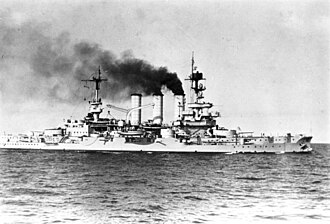
SMS Hessen: From Imperial German Battleship to Radio-Controlled Target Ship
SMS Hessen was one of the last pre-dreadnought battleships built for the Imperial German Navy and one of the most remarkable survivors of Germany’s early twentieth-century naval expansion. Commissioned in 1905, she entered service at a moment when the traditional battleship was already approaching a technological crossroads. Within only a few years, the appearance of HMS Dreadnought would transform the meaning of naval power, leaving ships such as Hessen increasingly obsolete as first-line combatants. Yet unlike many of her contemporaries, Hessen did not disappear into the scrapyard after the First World War. Instead, she served the German Navy for decades, first as a battleship and training vessel, and later as a highly unusual radio-controlled target ship.
Her career eventually carried her through three distinct German naval eras. She began under Kaiser Wilhelm II in the Kaiserliche Marine, survived the First World War, became one of the older battleships retained by the postwar Reichsmarine, and was finally transformed into a sophisticated target vessel for the Kriegsmarine. After Germany’s defeat in 1945, the ship was taken over by the Soviet Union, renamed Tsel, and continued operating as a target ship in the Baltic. Her ultimate survival into the 1950s made Hessen one of the longest-lived German battleships of her generation and an extraordinary example of how an obsolete warship could repeatedly be given a new purpose.
The Construction of SMS Hessen
The Final Pre-Dreadnought Battleship Class
Hessen belonged to the Deutschland class, the final class of pre-dreadnought battleships constructed by Germany. The five ships of the class—Deutschland, Hannover, Pommern, Schlesien, and Schleswig-Holstein—were developed from the preceding Braunschweig-class design. They represented the culmination of a battleship concept that was already being challenged by rapid advances in naval artillery and propulsion.
The ships were designed around a conventional pre-dreadnought arrangement: a relatively small number of large-caliber guns formed the main battery, while a substantial collection of medium and light weapons provided additional firepower. This philosophy had dominated battleship design for decades, but it was already approaching its technological limit when Hessen was being constructed.
Hessen was laid down at Germaniawerft in Kiel on 15 April 1902. She was launched on 18 September 1903 and commissioned on 19 May 1905. Her construction placed her among the last generation of German battleships completed before the dreadnought revolution.
The name Hessen referred to the German state and historic region of Hesse, continuing the Imperial German Navy’s practice of naming battleships after German territories, dynasties, and historical entities. The choice was particularly appropriate for a ship intended to represent the power and unity of the German Empire’s rapidly expanding fleet.
Design and Armament
Hessen was a large vessel by the standards of her day, measuring about 127.6 meters overall and 22.2 meters across the beam. Her maximum displacement was approximately 14,200 metric tons, while her normal displacement was somewhat lower. She was propelled by three vertical triple-expansion steam engines driving three shafts. The machinery produced roughly 17,000 horsepower and gave her a top speed of approximately 18.5 to 18.6 knots. At an economical speed of 10 knots, she could travel around 4,800 nautical miles.
The ship’s protection was substantial for a pre-dreadnought. Her main armored belt reached approximately 240 mm at its thickest point, while the main gun turrets received armor up to roughly 280 mm. The armored deck was approximately 40 mm thick. This combination was intended to protect the ship’s machinery, ammunition magazines, and other vital spaces from the artillery of contemporary battleships.
The principal weakness of the design was not its armor or construction quality but the pace of technological development. A battleship armed with 28 cm guns and traveling at around 18.6 knots was formidable in 1905, but the same ship looked much less impressive once battleships with ten or twelve heavy guns and significantly improved fire-control systems became available.
The Main Battery
The main armament consisted of four 28 cm guns, mounted in two twin turrets—one forward and one aft. This was a powerful battery by pre-dreadnought standards and represented the standard German approach to capital-ship artillery immediately before the dreadnought era.
The secondary battery consisted of fourteen 17 cm guns, providing a substantial volume of fire against cruisers, destroyers, and other targets. In addition, Hessen carried twenty 8.8 cm guns, four machine guns, and six 45 cm torpedo tubes.
The arrangement demonstrates the philosophy of battleship design before 1906. Naval architects believed that a capital ship needed different weapons for different engagement ranges and target types. The 28 cm guns were intended for the heaviest targets, the 17 cm weapons for cruisers and lighter warships, and the smaller guns for torpedo boats and destroyers.
HMS Dreadnought would demonstrate the limitations of this approach. Her concentrated battery of ten 12-inch guns meant that a dreadnought could deliver far more heavy-caliber fire at long range than a pre-dreadnought like Hessen. The difference was so significant that historians generally treat the pre-dreadnought and dreadnought generations as separate eras of battleship development.
Peacetime Service in the Kaiserliche Marine
Joining the High Seas Fleet
Hessen was commissioned on 19 September 1905 according to the operational chronology maintained by German naval historians, and on 4 March 1906 she joined the 2nd Battleship Squadron. Her early career consisted primarily of training, exercises, cruises, and fleet maneuvers.
These activities were fundamental to the German naval program. The Kaiserliche Marine was still a relatively young force compared with Britain’s Royal Navy, and its commanders placed enormous emphasis on developing a highly trained fleet. Battleships needed to practice coordinated maneuvering, gunnery, signaling, navigation, formation keeping, and damage control. Fleet exercises allowed officers to test tactical concepts under conditions approximating wartime operations.
During the summer of 1906, Hessen cruised to Norway and participated in landing-operation exercises at Eckernförde. She subsequently took part in autumn fleet exercises and further North Sea training. In 1907 she operated in both the North and Baltic Seas, while later cruises took her farther afield. Her 1908 summer cruise reached the Canary Islands, and in 1909 she visited El Ferrol in Spain. Further Norwegian cruises followed in 1910.
These voyages show that Hessen was more than a floating collection of guns. Her crew needed experience in extended operations, navigation, logistics, and operating as part of a large fleet. The overseas cruises also served the diplomatic purpose of demonstrating Germany’s growing maritime capabilities.
Accidents During Fleet Training
The routine of fleet exercises could nevertheless be dangerous. In the autumn of 1911, Hessen collided with the Danish steamer Askesund, sinking the merchant vessel. The incident demonstrated the hazards of operating large formations of warships and civilian shipping in relatively confined waters.
The following year brought another serious accident. During a simulated torpedo attack in the summer of 1912, Hessen rammed and sank the German torpedo boat G110. The incident was a grim reminder that realistic exercises could themselves produce casualties and material losses, particularly when large battleships and fast torpedo craft maneuvered at speed.
Such accidents were not unique to Hessen. Early twentieth-century navies routinely conducted exercises that pushed ships and crews hard, often under conditions of poor visibility, high speed, and complex tactical formations. Training was essential, but it could never completely eliminate the risks of operating powerful vessels in close proximity.
The Dreadnought Revolution
Obsolescence Before the War
Hessen entered service only months before the naval world changed forever. In 1906, Britain launched HMS Dreadnought, a battleship whose design rendered the previous generation of mixed-battery capital ships obsolete in relative terms.
The fundamental innovation was concentration. Instead of relying on a small number of heavy guns supplemented by numerous medium weapons, Dreadnought carried a large battery of heavy guns that could all contribute to long-range engagements. Her turbine machinery also gave her excellent speed.
Germany responded by constructing its own dreadnoughts, beginning with the Nassau class. The new ships were larger, more heavily armed, and increasingly sophisticated. Hessen remained a capable battleship, but she could no longer be considered a first-line unit in a future confrontation between modern fleets.
Her continued existence nevertheless had value. The German Navy possessed only a limited number of dreadnoughts at the outbreak of the First World War, and older battleships could still perform guard duties, training missions, and operations in areas where the risk from modern enemy capital ships was lower.
SMS Hessen During the First World War
Wartime Mobilization
When war began in 1914, Hessen was mobilized and assigned to the 2nd Battleship Squadron of the High Seas Fleet. Her role was largely secondary compared with the modern dreadnoughts and battlecruisers that formed the core of Germany’s offensive fleet.
She nevertheless participated in wartime operations and maintained an active presence in the North and Baltic Seas. The German fleet needed older ships for coastal defense, patrols, training, and supporting operations. Hessen’s heavy armor and 28 cm guns still gave her substantial combat power against many targets, even though she was no longer competitive with the latest battleships.
Her wartime career was also shaped by Germany’s strategic circumstances. The High Seas Fleet was generally cautious about exposing its older units unnecessarily. Britain possessed overwhelming numerical naval strength, and German commanders had to preserve their capital ships for operations where their presence could make a meaningful difference.
The Final Wartime Years
By the middle years of the war, the limitations of the older pre-dreadnoughts were increasingly obvious. Mines, submarines, aircraft, and modern dreadnoughts all represented serious dangers, while the German Navy faced shortages of trained personnel and increasing demands for ships in other roles.
In December 1916, Hessen was used as a target ship in the Baltic and was decommissioned on 12 December. This marked the end of her active career as an operational battleship.
Her withdrawal was part of a broader pattern. Germany’s older capital ships were gradually being removed from frontline service and redirected toward training and auxiliary duties. The era in which Hessen had been a modern battleship was definitively over.
The Remarkable Second Life of SMS Hessen
Return to Service in the Reichsmarine
Unlike many former Imperial German battleships, Hessen survived the postwar settlement. Germany was permitted to retain a small number of older battleships for the new Reichsmarine, and Hessen was among those vessels.
She was recommissioned on 5 January 1925, beginning a second major period of service. Between 1925 and 1934 she participated in fleet exercises, training cruises, and visits abroad. Her voyages included Norway, Spain, the Atlantic, Portugal, Scandinavia, and the Mediterranean.
The contrast with her Imperial career was remarkable. The German Navy of the 1920s was not the enormous battle fleet envisioned by Tirpitz. The Treaty of Versailles imposed strict limitations on Germany’s naval strength, making every retained major warship valuable for training and representation.
Hessen became one of the principal older vessels of the Reichsmarine. She provided crews with experience aboard a large capital ship and helped preserve Germany’s institutional knowledge of fleet operations.
A Veteran of the Weimar Republic
Her numerous voyages during the 1920s and early 1930s demonstrate that the Reichsmarine was still capable of conducting substantial training cruises despite its treaty restrictions. Hessen visited Spain, Portugal, the Canary Islands, Norway, Sweden, the Baltic, and the Mediterranean.
These cruises had a diplomatic dimension as well. A German battleship visiting foreign ports provided an opportunity for naval diplomacy while demonstrating that Germany retained a functioning maritime service despite the restrictions imposed after the First World War.
By the early 1930s, however, Hessen was approaching thirty years of age. Newer vessels were replacing the remaining pre-dreadnoughts, and the ship was finally decommissioned at Wilhelmshaven on 12 November 1934.
Transformation Into a Radio-Controlled Target Ship
An Extraordinary Conversion
The most unusual chapter of Hessen’s career began in 1935, when she was selected for conversion into a radio-controlled target ship. Reconstruction began on 11 April 1935 and continued until the ship entered operational target service in 1937.
The conversion fundamentally changed her appearance and function. Her guns, much of her superstructure, and her original machinery were removed. Two funnels and the masts were taken away, leaving a dramatically simplified hull. A new bow was fitted, extending the ship by approximately 11.7 meters.
Most importantly, her propulsion system was replaced by a remotely controlled turbine installation. The ship could therefore be operated without a crew aboard during target exercises. For longer transfers, however, a crew of about 80 could remain aboard.
This transformation was technologically significant. A battleship launched in 1903 had been converted into a remotely controlled naval training instrument in the age of radio communication and increasingly sophisticated fire-control systems.
Training the Kriegsmarine
Beginning in 1937, Hessen served as a target for major Kriegsmarine warships. Her first recorded operational use as a target was on 30 August 1937, when the light cruiser Leipzig conducted exercises involving the ship.
The value of such a target was enormous. A stationary target could teach crews how to fire a gun, but a moving target could provide realistic training in range estimation, tracking, fire control, and maneuvering. Because Hessen could be operated remotely, German warships could practice against a realistic moving target without placing a large target crew directly in danger.
Her sturdy construction also allowed her to absorb repeated punishment. Although her superstructure was frequently damaged during exercises, these were generally minor or secondary damages that did not prevent her from continuing her role.
In this sense, Hessen received a second military life that was perfectly suited to the technological environment of the 1930s. The ship was no longer capable of fighting as a battleship, but her hull could be used to improve the effectiveness of the new generation of German warships.
Survival Through the Second World War
One of the most remarkable aspects of Hessen’s history is that she survived the Second World War despite serving in a role that deliberately exposed her to naval gunfire.
The ship continued operating as a target vessel for the Kriegsmarine between 1937 and 1945. Unlike many German warships, she was not destroyed by Allied aircraft, submarines, mines, or surface combat during the conflict. Her survival was partly a consequence of her unusual role: she was not an operational frontline warship and therefore did not routinely expose herself to enemy combat.
When Germany collapsed in 1945, Hessen remained afloat. Her long career had now carried her from the era of Kaiser Wilhelm II through two world wars and into the final days of Nazi Germany.
The Soviet Years
From Hessen to Tsel
The end of the Second World War did not end Hessen’s career. As part of the redistribution of German naval assets, the Soviet Union took possession of the former German target ship.
On 2 January 1946, Hessen departed Wilhelmshaven and sailed to Libau, arriving six days later. On 3 June 1946 she was renamed Tsel. Her control vessel, Blitz, was also taken over and renamed Wystrel.
The Soviets continued to use Tsel as a target ship in the Baltic Fleet. This was an appropriate continuation of the vessel’s unusual career. Although her identity had changed, her basic purpose remained the same: she was a large, durable platform that could be used to train naval crews in realistic live-fire exercises.
The fact that the Soviet Navy continued operating the ship demonstrates just how useful the basic hull remained. A vessel conceived in Imperial Germany had survived two world wars and could still provide practical training value to the navy of a former enemy.
The Final Fate
Tsel remained in Soviet service into the postwar period and was eventually withdrawn in the mid-1950s, with sources generally placing her final disposal around that period. She was ultimately broken up, bringing to an end a career that had lasted roughly half a century from her original construction.
Her survival was extraordinary. Most battleships of the pre-dreadnought era had been scrapped during or shortly after the First World War. Hessen, by contrast, continued to serve in one form or another for decades, eventually becoming a Soviet naval training asset.
Why SMS Hessen Is Historically Important
A Survivor of Three Naval Eras
Hessen is significant because her career crossed several distinct phases of naval history. She was designed in the pre-dreadnought age, served during the First World War, survived into the treaty-bound Reichsmarine, was rebuilt for the technologically advanced Kriegsmarine, and finally served the Soviet Baltic Fleet.
Few ships provide such a clear illustration of naval evolution. The weapons and machinery that made Hessen a modern battleship in 1905 had little relevance by the 1930s. Yet the hull itself remained useful because it could be adapted to completely different technological purposes.
From Battleship to Training Instrument
Perhaps the most interesting lesson from Hessen’s career is that military usefulness does not necessarily disappear when a weapon becomes obsolete. Her original combat role vanished, but her physical characteristics remained valuable.
As a battleship, she offered armor, guns, machinery, and endurance. As a training ship, she provided accommodation and a realistic platform for fleet exercises. As a target ship, her greatest asset was her ability to survive repeated hits while being controlled remotely.
Her conversion therefore represents a fascinating form of technological recycling. Instead of simply dismantling an obsolete battleship, German naval planners turned her into a tool for preparing crews to operate the much more modern warships that had replaced her.
Technical Specifications of SMS Hessen
| Specification | Details |
|---|---|
| Ship name | SMS Hessen |
| Type | Pre-dreadnought battleship; later training ship and radio-controlled target ship |
| Class | Deutschland class |
| Builder | Germaniawerft, Kiel |
| Keel laid | 15 April 1902 |
| Launched | 18 September 1903 |
| Commissioned | 19 May 1905 |
| Decommissioned as battleship | 12 December 1916 |
| Recommissioned | 5 January 1925 |
| Decommissioned | 12 November 1934 |
| Target-ship conversion | 1935–1937 |
| Target-ship service | 1937–1945 |
| Soviet name | Tsel |
| Length | Approximately 127.6 m |
| Beam | Approximately 22.2 m |
| Maximum displacement | Approximately 14,218 metric tons |
| Draft | Approximately 8.21 m |
| Propulsion, original | 3 vertical triple-expansion steam engines |
| Propeller shafts | 3 |
| Power | Approximately 17,000 shp |
| Maximum speed | Approximately 18.5–18.6 knots |
| Range | Approximately 4,800 nautical miles at 10 knots |
| Main armament | 4 × 28 cm guns |
| Secondary armament | 14 × 17 cm guns |
| Light armament | 20 × 8.8 cm guns |
| Machine guns | 4 |
| Torpedo armament | 6 × 45 cm torpedo tubes |
| Maximum belt armor | Approximately 240 mm |
| Main turret armor | Up to approximately 280 mm |
| Deck armor | Approximately 40 mm |
| Typical wartime crew | Approximately 700–750 personnel |
| Pre-war role | Fleet battleship and training vessel |
| World War I role | Battleship and later target vessel |
| Interwar role | Reichsmarine training ship |
| 1935–1937 conversion | Radio-controlled target ship |
| Post-1945 role | Soviet target ship |
| Final fate | Withdrawn and scrapped in the 1950s |
Technical figures refer primarily to the ship in her original battleship configuration. The later target-ship conversion substantially altered her machinery, superstructure, armament, dimensions, and crew requirements, so specifications for the 1937–1945 vessel should not be treated as identical to those of the original SMS Hessen.
Conclusion
SMS Hessen was much more than an obsolete battleship that happened to survive. Her career was an extraordinary journey through changing technologies, governments, and naval doctrines. Built as one of Germany’s final pre-dreadnought battleships, she entered service in 1905 just before the arrival of HMS Dreadnought transformed the battleship concept. She nevertheless remained useful through the First World War, survived the severe restrictions imposed on Germany after 1918, and served throughout much of the Reichsmarine’s interwar existence.
Her most remarkable transformation came in the 1930s. Instead of being scrapped, Hessen was rebuilt as a radio-controlled target ship, losing the guns and machinery that had once defined her identity and gaining a new role as a training instrument for the modern German fleet. She survived the Second World War in this unusual capacity and was subsequently taken over by the Soviet Union, renamed Tsel, and used as a target ship in the Baltic for several more years.
Few German warships demonstrate so clearly that a vessel’s useful life can extend far beyond its original purpose. Hessen began life as a symbol of Imperial Germany’s naval ambitions and ended it as a remotely controlled training target operated by the Soviet Navy. Her story is therefore not simply about the rise and fall of the pre-dreadnought battleship; it is about adaptation, technological change, and survival. From coal-fired steam power and 28 cm guns to radio control and postwar Soviet exercises, Hessen remained relevant by repeatedly becoming something different from what her designers had originally intended.
