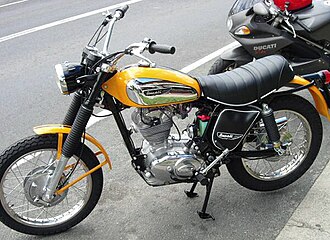
Ducati 250 Scrambler: The Classic Italian Motorcycle That Defined an Era
The Ducati 250 Scrambler is one of the motorcycles that helped establish the meaning of the word “Scrambler” long before the term became a major modern motorcycle category. Introduced in 1962 at the request of American Ducati importer Joe Berliner, the 250 Scrambler was created for riders who wanted something more versatile than a conventional road motorcycle but less specialized than a dedicated off-road machine. Ducati took its lightweight single-cylinder engineering, added a taller riding position, wider handlebars, larger tires and a purposeful chassis, and created a motorcycle that could move comfortably between paved roads, dirt tracks and informal competition. What began as a motorcycle developed largely with the American market in mind eventually became an important part of Ducati’s identity in Europe as well. Ducati’s own heritage archive describes the 250 Scrambler as an “icon of freedom and versatility,” noting that the model was developed at the request of Berliner and that its wide-crankcase evolution introduced in 1968 contributed significantly to its commercial success.
The importance of the 250 Scrambler goes well beyond its engine size. It belongs to the era when Ducati’s single-cylinder motorcycles represented some of the company’s most interesting engineering work. Behind the simple appearance was a sophisticated air-cooled four-stroke engine using overhead-camshaft technology and bevel-gear drive, an arrangement that had become closely associated with Ducati’s engineering philosophy. The motorcycle also demonstrated an unusual combination of Italian road-racing influence and American dirt-track culture. It was lightweight, mechanically distinctive and visually simple, yet capable enough to be used in a remarkably broad range of situations. Today, the Ducati 250 Scrambler is valued not only as a classic motorcycle but as an important link between Ducati’s early sporting singles and the modern Scrambler family that eventually returned to the marketplace decades later.
The Origins of the Ducati 250 Scrambler
An American Idea Becomes a Ducati
The story of the Ducati 250 Scrambler begins not in Bologna but in the United States. During the early 1960s, American motorcycle culture was developing in directions that differed considerably from the European market. Dirt-track racing, desert riding and other forms of informal off-road competition were becoming increasingly popular, and American riders wanted motorcycles that could combine road-going practicality with the ability to handle loose surfaces.
Joe Berliner, whose Berliner Motor Corporation was Ducati’s American importer, recognized this opportunity. Ducati’s existing 250 cc motorcycles offered a suitable mechanical foundation, but Berliner wanted something specifically adapted to the American appetite for dirt-track-style motorcycles. According to Ducati’s historical account, the resulting machine was conceived as a “dirt track” motorcycle: essentially a road bike modified so that it could deal with off-road terrain.
The resulting formula was remarkably straightforward. The motorcycle received a relatively upright riding position, high handlebars, more suitable tires and a chassis capable of dealing with rougher terrain. The engine remained a sophisticated Ducati single, preserving the performance and mechanical character that separated it from simpler utility motorcycles. The concept proved successful enough to develop into an entire family of Scrambler models, eventually covering 250, 350 and 450 cc versions.
This early American influence is essential to understanding the character of the Ducati 250 Scrambler. It was not conceived as a modern adventure motorcycle, and it was not intended to replace a motocross machine. Instead, it was an adaptable motorcycle for riders who wanted to explore beyond the paved road while still enjoying the characteristics of a lightweight Italian road bike.
Evolution of the 250 Scrambler
From Narrow-Case to Wide-Case Engine
The 250 Scrambler changed considerably during its production life. The earliest motorcycles used Ducati’s “narrow-case” single-cylinder engine, derived from the architecture used in the company’s existing road models. Over time, Ducati progressively refined the Scrambler, improving its chassis, equipment and mechanical specification.
One of the most important changes arrived in 1968, when the 250 Scrambler adopted the wide-crankcase engine. Ducati’s official heritage material identifies this version as a major development and notes that the wide-case engine was shared across the 250, 350 and 450 cc models. The revised engine and chassis combination contributed to the model’s commercial success and is generally regarded as one of the most desirable forms of the classic Scrambler.
The wide-case motorcycle also benefited from years of experience gained with Ducati’s racing machines. The frame was modified around the wider engine mounting arrangement, while the chassis became stronger and more refined. The result was a motorcycle that maintained the fundamental simplicity of the original Scrambler but possessed a more mature and capable character.
The later 250 Scrambler is therefore more than a single specification. A 1962 motorcycle and a 1970s wide-case example share the same fundamental concept, but they represent different stages of Ducati’s development. For collectors and historians, this distinction is extremely important when identifying an individual motorcycle or evaluating its originality.
Changes During the 1970s
Ducati continued making smaller changes throughout the life of the model. Carburetion evolved, the styling was revised and various components were updated. According to period specification records, the motorcycle used Dell’Orto carburetors during much of its production, with later examples receiving different induction equipment. The electrical system also evolved, with later motorcycles eventually adopting electronic ignition.
The final production period is particularly interesting because Ducati’s factory production of overhead-camshaft singles ended in 1974, while remaining examples and licensed production extended the Scrambler’s availability beyond the official factory production period. MotoTrans in Spain produced motorcycles under license, and later examples used Spanish-built engines and components.
This means that two motorcycles both described as Ducati 250 Scramblers can have meaningful differences in their mechanical details, ignition systems, carburetion and manufacturing origin. For anyone researching one of these motorcycles today, the year and exact specification are therefore just as important as the model name.
The Ducati 250 Scrambler Engine
A Classic Ducati Single
At the center of the 250 Scrambler is its 248.6 cc single-cylinder engine. The later wide-case specification used a bore of 74 mm and a stroke of 57.8 mm, with air cooling and a compression ratio of approximately 9.2:1. Published specifications commonly give around 19 horsepower at 7,500 rpm for the later version.
What makes the engine special is not simply its displacement or power output. Ducati’s single-cylinder engines were technically sophisticated for their era, using an overhead camshaft driven by bevel gears. This distinctive arrangement became one of the visual and mechanical signatures of classic Ducati singles. Instead of relying on the simpler valve mechanisms found on many competing small motorcycles, Ducati pursued an architecture with clear links to its sporting ambitions.
The engine was also designed to be relatively compact and light. With only one cylinder, the motorcycle avoided the weight and complexity associated with larger multi-cylinder engines, while the five-speed gearbox gave the rider enough flexibility to make effective use of the available power.
The result was not a motorcycle designed for high-speed highway touring. Its strengths were responsiveness, manageable weight and mechanical character. The 250 Scrambler could be ridden energetically without requiring enormous speeds, which is part of the reason these motorcycles remain enjoyable to enthusiasts today.
Carburetion and Ignition
Fuel delivery changed during the production run. Later specification references list a Dell’Orto SS1 27D carburetor for 1967–1969 motorcycles, followed by a Dell’Orto VHB26BD for 1970–1972 machines and an Amal 27 mm carburetor on later examples.
Ignition technology followed a similar evolutionary path. Earlier motorcycles used points and coil or earlier magneto arrangements depending on the year, while later motorcycles incorporated electronic ignition. These changes are important because they can affect the way a surviving motorcycle starts, idles and responds to throttle inputs.
For a modern owner, the carburetor and ignition system are among the areas that deserve particular attention. A correctly restored Ducati single can have wonderfully crisp mechanical character, but an old motorcycle with worn ignition components, incorrect jetting or air leaks can behave very differently from the machine Ducati intended.
Chassis and Scrambler Character
A Lightweight Tubular Frame
The 250 Scrambler’s frame was built around a tubular steel structure designed to provide sufficient strength without adding unnecessary mass. The engine and chassis worked together as a relatively simple package, and the single-cradle layout gave the motorcycle a recognizable classic appearance.
Suspension was provided by a telescopic fork at the front and a swingarm with twin shocks at the rear. Later specifications list a 35 mm Marzocchi hydraulic telescopic fork and adjustable Marzocchi rear shocks.
This arrangement was particularly well suited to the Scrambler concept. The motorcycle did not need the enormous suspension travel associated with a modern enduro bike; instead, it needed enough compliance to cope with rough roads and dirt tracks while remaining stable and predictable on pavement.
The riding position was another important part of the design. High, wide handlebars gave the rider considerable leverage and created an upright posture. This was useful on loose surfaces but equally beneficial when maneuvering through city streets or narrow country roads.
Large Spoked Wheels
The traditional wire-spoked wheels contributed significantly to the motorcycle’s appearance and function. Later 250 Scrambler specifications commonly list a 19-inch front wheel and an 18-inch rear wheel, with period Pirelli tires in relatively substantial sizes.
The large front wheel was particularly useful on uneven terrain. It could roll over bumps and obstacles more naturally than a smaller wheel, while the narrow overall motorcycle remained relatively easy to control.
The wheels also contribute to the timeless appearance of the Ducati. Bright chrome, black mechanical components and colorful bodywork gave the Scrambler a visual personality that was very different from the more conservative road motorcycles of the period.
What Made the Ducati 250 Scrambler Special?
The Four-in-One Philosophy
One of the most interesting aspects of the early Scrambler concept was its versatility. Contemporary descriptions presented the motorcycle as something approaching a four-in-one machine, capable of adapting to different forms of riding with changes to components such as handlebars, sprockets and exhaust equipment.
That philosophy captures the appeal of the motorcycle perfectly. The 250 Scrambler was not trying to be the best road racer, dirt bike or commuter. Instead, it attempted to be good enough at all of them to give its owner a single motorcycle capable of handling a wide range of activities.
This was particularly relevant to American riders in the 1960s, but the concept eventually translated well to Europe. Ducati notes that although the motorcycle was initially intended exclusively for the American market, it arrived in Italy in 1969 and quickly became associated with the culture and lifestyle of the late 1960s.
The result was a motorcycle that developed an identity far beyond its technical specifications. It became associated with youth, freedom, leisure and the idea of escaping ordinary roads.
The Ducati 250 Scrambler and Italian Motorcycle Culture
From Utility to Cultural Icon
The Ducati 250 Scrambler’s transformation from a practical American-market idea into an Italian cultural icon is perhaps its most fascinating achievement. Ducati’s motorcycles had traditionally been associated strongly with engineering and sporting performance, but the Scrambler added another dimension: lifestyle.
Its bright colors, chrome fuel tank details, high bars and simple proportions gave it an immediately recognizable personality. Ducati’s heritage archive notes that different engine sizes were associated with specific color schemes, reinforcing the visual identity of the Scrambler range.
The motorcycle also arrived at a particularly important moment in European culture. The late 1960s were characterized by changing attitudes toward mobility, recreation and personal freedom. The Scrambler fitted naturally into this environment because it looked adventurous without being intimidating and sporty without requiring racing ability.
That combination helped the 250 Scrambler become more than another motorcycle in Ducati’s catalog. It became part of the visual language of an era.
Ducati 250 Scrambler as a Classic Today
Why Collectors Still Want One
Today, the Ducati 250 Scrambler is appreciated for several reasons. Its historical significance is considerable, its production history is fascinating and its mechanical design represents one of the classic eras of Ducati engineering.
The motorcycle is also relatively approachable compared with larger classic Ducati models. Around 132 kg dry in later specifications, it is light enough to maneuver easily, while its approximately 770 mm seat height makes it considerably more accessible than many modern adventure motorcycles.
Its modest performance is actually part of its charm. A 250 Scrambler does not require a rider to travel at extreme speeds to appreciate its character. The experience comes from the sound and feel of the single-cylinder engine, the physical connection with the mechanical components and the way the lightweight chassis responds to changes in direction.
For collectors, originality is especially important. Correct tank colors, badges, exhaust components, carburetors, wheels and engine details can distinguish a historically valuable motorcycle from one that has simply been customized to resemble a classic Scrambler.
Riding the Ducati 250 Scrambler
Character Over Speed
A well-sorted 250 Scrambler is best understood as a motorcycle designed around enjoyment rather than outright performance. Its approximately 19 horsepower is modest by contemporary standards, but the combination of relatively low weight, a five-speed gearbox and a responsive single-cylinder engine makes the motorcycle engaging at ordinary road speeds.
The riding position provides excellent visibility and control, while the large front wheel gives the motorcycle a stable feel on imperfect roads. On a winding country road, the 250 Scrambler can be more enjoyable than a much faster motorcycle simply because the rider can use a greater proportion of its available performance.
The engine’s mechanical character is equally important. The bevel-driven camshaft produces a distinctive Ducati identity, while the single-cylinder layout gives the machine a direct and uncomplicated feel. There is no need for enormous horsepower when the objective is simply to enjoy the rhythm of riding.
Ducati 250 Scrambler Technical Specifications
The following table summarizes commonly published specifications for the later wide-case Ducati 250 Scrambler. Because the model evolved considerably from 1962 through its later production years, early narrow-case motorcycles can differ in engine, chassis and equipment details.
| Specification | Ducati 250 Scrambler |
|---|---|
| Model | Ducati 250 Scrambler / 250 SCR |
| Production era | 1962–1974 factory production; later licensed examples |
| Class | On/off-road scrambler |
| Engine | Air-cooled four-stroke single-cylinder |
| Valve arrangement | SOHC, 2-valve |
| Camshaft drive | Bevel gear |
| Displacement | 248.6 cc |
| Bore × stroke | 74 × 57.8 mm |
| Compression ratio | Approx. 9.2:1 |
| Maximum power | Approx. 19 hp |
| Peak power | Approx. 7,500 rpm |
| Fuel system | Dell’Orto / Amal carburetor, depending on year |
| Ignition | Points and coil; later electronic ignition |
| Starting system | Kick starter |
| Clutch | Wet multi-plate |
| Transmission | 5-speed |
| Final drive | Chain |
| Frame | Tubular steel single-cradle |
| Front suspension | Marzocchi telescopic fork |
| Rear suspension | Swingarm with twin Marzocchi shocks |
| Front brake | 180 mm drum |
| Rear brake | 160 mm drum |
| Front tire | 3.50 × 19 |
| Rear tire | 4.00 × 18 |
| Wheelbase | Approx. 1,380 mm |
| Overall length | Approx. 2,120 mm |
| Overall width | Approx. 940 mm |
| Overall height | Approx. 1,150 mm |
| Seat height | Approx. 770 mm |
| Dry weight | Approx. 132 kg |
| Fuel capacity | Approx. 11 litres |
Final Thoughts
The Ducati 250 Scrambler deserves its reputation as one of the defining motorcycles of Ducati’s single-cylinder era. Its origins were unusual: an American importer recognized the potential for a Ducati that could combine road use with dirt-track capability, and the Italian manufacturer turned that idea into an entire family of motorcycles. The result was a machine that blended Italian engineering with American motorcycle culture in a way few motorcycles of the period managed to achieve.
Technically, the 250 Scrambler was equally compelling. Its bevel-driven overhead-camshaft single-cylinder engine gave it a mechanical identity that remains unmistakably Ducati, while the tubular chassis, Marzocchi suspension, spoked wheels and upright riding position created a remarkably versatile motorcycle. The transition to the wide-case engine in 1968 was an especially important stage in the model’s development and helped establish the version that many enthusiasts regard as the definitive classic 250 Scrambler.
Perhaps the most important achievement of the Ducati 250 Scrambler was that it demonstrated motorcycles could be about much more than transportation or competition. It represented freedom, exploration and individuality at a time when motorcycle culture was changing rapidly. Ducati’s modern Scrambler family eventually revived that same philosophy, but the original 250 remains the machine that helped establish the idea in the first place.
More than half a century later, the Ducati 250 Scrambler still possesses an unusual ability to attract attention. It is not overwhelmingly powerful, technologically modern or especially complicated. Instead, its appeal comes from balance: a charismatic single-cylinder engine, a lightweight chassis, useful off-road ability, distinctive Italian styling and an important place in Ducati history. For anyone interested in classic motorcycles, the 250 Scrambler is therefore much more than an old Ducati. It is a snapshot of an era when manufacturers were experimenting with new ideas and riders were discovering new ways to use motorcycles—and it remains one of the clearest expressions of Ducati’s original Scrambler philosophy.
