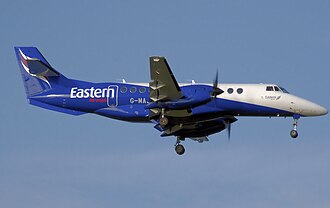
British Aerospace Jetstream 41: The Story, Design, Performance, and Legacy of a British Regional Airliner
The British Aerospace Jetstream 41 is a fascinating chapter in the history of regional aviation. Developed in the United Kingdom during a period of major change in the airline industry, this twin-engine turboprop was designed to connect smaller cities, regional airports, and remote communities with an efficient, comfortable, and dependable aircraft. Although its production career was relatively short, the Jetstream 41 represented an ambitious attempt by British Aerospace to expand its successful Jetstream family into a larger and more competitive segment of the regional airliner market. With a pressurized cabin, a modernized flight deck, five-bladed propellers, and seating for approximately 29 passengers, the aircraft offered a practical balance between capacity and operating flexibility. Today, the Jetstream 41 remains of interest to aviation enthusiasts, historians, pilots, and travelers who appreciate the engineering and character of classic turboprop aircraft.
The Origins of the British Aerospace Jetstream 41
From the Handley Page Jetstream to British Aerospace
The story of the Jetstream 41 begins with the original Jetstream design developed by Handley Page during the 1960s. The initial aircraft was conceived as a compact, pressurized turboprop commuter airliner intended to serve smaller regional routes. Although the original Jetstream encountered technical and commercial difficulties, the basic concept had considerable potential. Following the collapse of Handley Page, the Jetstream design and associated manufacturing responsibilities continued under Scottish Aviation, which developed improved versions of the aircraft.
The Jetstream family subsequently became part of the British aerospace industry’s broader corporate structure. Scottish Aviation was eventually absorbed into the organization that helped form British Aerospace, and the new company recognized that the Jetstream name still had value in the regional aviation market. British Aerospace went on to develop the Jetstream 31 and Jetstream 32, which became successful small regional aircraft serving airlines in Europe, North America, Australia, and elsewhere. These aircraft generally accommodated fewer than 20 passengers, leaving an opportunity for a larger model that could serve routes with stronger demand while retaining the advantages of turboprop propulsion.
The Jetstream 41 was conceived to fill that gap. Rather than simply enlarging the existing aircraft, British Aerospace undertook a substantial redesign. The result retained the general philosophy of the Jetstream family but introduced a new fuselage, a larger wing, more powerful engines, and an improved flight deck. The aircraft was intended to compete with other regional turboprops such as the Embraer EMB 120 Brasilia, Saab 340, and Dornier 328. These aircraft were designed for the same broad market: airlines seeking to operate frequent services between smaller airports without the fuel consumption and infrastructure requirements associated with larger jetliners.
Development and First Flight
The Jetstream 41 development program emerged in the late 1980s. British Aerospace presented the concept as a stretched regional aircraft capable of carrying roughly 30 passengers while maintaining the operational advantages of a relatively compact turboprop. The prototype was rolled out at Prestwick, Scotland, on 27 March 1991, and the first flight took place on 25 September 1991. This milestone marked the beginning of a testing and certification program intended to demonstrate that the new aircraft could meet the demanding requirements of commercial regional aviation.
The aircraft received European certification in November 1992 and subsequently gained certification in the United States in April 1993. The first production delivery went to Manx Airlines on 25 November 1992. The early customers included regional operators that needed to provide reliable services across short and medium-distance routes, particularly where passenger volumes were insufficient to justify larger aircraft. The Jetstream 41’s introduction reflected a period when regional aviation was becoming increasingly important, with airlines seeking to expand their networks by linking secondary cities and smaller communities to major transportation hubs.
Design and Engineering Features
A Completely New Fuselage
Although the Jetstream 41 was developed from the Jetstream 31 and 32 family, its fuselage was not simply an enlarged version of the earlier aircraft. British Aerospace designed a new fuselage that was approximately 16 feet longer than that of the Jetstream 31. The extension consisted of a section added forward of the wing and another section behind it. This approach created additional cabin space while allowing engineers to reconsider the aircraft’s internal arrangement and structural design.
The longer fuselage gave the Jetstream 41 enough room for a passenger cabin with a typical capacity of 29 people. Its three-abreast seating arrangement, with two seats on one side of the aisle and one on the other, was a familiar feature of the Jetstream family. This configuration offered passengers a relatively spacious experience compared with many other small regional aircraft, while also allowing airlines to board and disembark travelers efficiently. The cabin was pressurized, making the aircraft suitable for operations at higher altitudes and helping to improve passenger comfort on longer regional sectors.
The stretched fuselage also required careful attention to structural strength, weight distribution, and aerodynamic balance. Increasing the length of a small aircraft can affect handling characteristics, loading limitations, and performance, so the Jetstream 41 involved considerably more engineering work than a straightforward cabin extension might suggest.
Wing Design and Baggage Capacity
One of the important design changes was the development of a larger wing with an increased span and redesigned ailerons and flaps. The wing was mounted below the fuselage rather than passing through the cabin floor structure in a way that would create an obstruction in the aisle. This arrangement helped provide a more continuous cabin floor and contributed to the aircraft’s practical interior layout.
The wing-root fairings were also enlarged, creating additional space for baggage storage. This was particularly valuable for regional airlines, whose passengers often traveled with luggage and whose routes could involve a mixture of business, leisure, and essential transportation. Baggage capacity is an important factor in the commercial success of a regional aircraft because a cabin full of passengers is not necessarily profitable if the aircraft cannot carry the associated baggage and other payload.
The aircraft’s low-wing configuration also gave it a distinctive appearance. Combined with its high-mounted engines, relatively compact landing gear, and cruciform tail, the Jetstream 41 had a recognizable silhouette that distinguished it from many competing turboprops.
Engines and Propellers
The Jetstream 41 was powered by two AlliedSignal TPE331-14 turboprop engines, a development of the Garrett TPE331 family. Early aircraft used engines producing approximately 1,500 shaft horsepower, while later production examples were equipped with uprated versions delivering around 1,650 shaft horsepower each. The additional power helped improve takeoff performance, climb capability, and payload flexibility.
Each engine drove a five-bladed constant-speed propeller. Compared with older propeller arrangements, the five-bladed configuration contributed to the aircraft’s modern appearance and was intended to provide effective propulsion while helping manage vibration and noise characteristics. The engines were installed in nacelles designed with increased ground clearance, an important consideration for an aircraft expected to operate from a wide range of regional airports.
Turboprop engines were well suited to the Jetstream 41’s mission. At the relatively short distances commonly flown by regional airliners, turboprops can offer attractive fuel efficiency compared with jet aircraft, particularly when operating at moderate speeds and altitudes. They can also provide useful performance from airports with shorter runways, although actual capability depends on temperature, elevation, aircraft weight, runway conditions, and other operational factors.
Flight Deck and Avionics
The Jetstream 41 featured an improved flight deck with an electronic flight instrument system, commonly known as EFIS. This was a significant modernization compared with the more traditional instrumentation found in earlier regional aircraft. Electronic displays could provide pilots with a clearer presentation of flight information and reduce reliance on numerous individual mechanical instruments.
The flight deck redesign also included a revised windscreen arrangement. Together, the updated cockpit and other changes reflected British Aerospace’s effort to make the aircraft more competitive in a market where airlines increasingly valued modern avionics, reduced pilot workload, and compatibility with contemporary operating procedures.
The Jetstream 41 was notable for being the first turboprop aircraft certified to both the Joint Aviation Requirements JAR-25 and the United States Federal Aviation Regulations FAR-25 standards. These certification frameworks covered important aspects of transport-category aircraft design and airworthiness, demonstrating the manufacturer’s intention to market the aircraft internationally.
Passenger Cabin and Regional Airline Operations
A Practical 29-Seat Aircraft
The Jetstream 41’s cabin was designed around a typical capacity of 29 passengers, although exact configurations could vary depending on the operator and interior layout. The three-abreast seating arrangement was one of its defining characteristics. Passengers seated on the single-seat side of the aisle could enjoy a degree of personal space, while the two-seat side retained a familiar arrangement for traveling companions.
The aircraft’s size made it well suited to routes where demand was too low for a larger regional jet or turboprop but sufficiently strong to justify more capacity than a 19-seat commuter aircraft could provide. It could be used for frequent scheduled services, connecting flights, feeder operations, and regional links between cities that were not efficiently connected by road or rail.
The pressurized cabin was particularly useful for an aircraft of this size. Pressurization allowed the Jetstream 41 to operate at altitudes where weather and atmospheric conditions could be more favorable, while maintaining a comfortable cabin environment for passengers. As with other turboprops, however, the aircraft’s operating altitude and speed were influenced by route length, weather, payload, and the performance characteristics of its engines.
The Importance of Regional Connectivity
Regional aircraft such as the Jetstream 41 have historically played an important role in maintaining links between smaller communities and major transportation centers. A route carrying fewer than 30 passengers per flight might not be viable with a larger aircraft, but it could still be essential for local economies, business travel, tourism, healthcare access, and connections to international services.
The Jetstream 41 was designed during a period when airlines were examining how to serve these markets more efficiently. Its capacity sat between smaller commuter aircraft and larger regional airliners, offering operators the flexibility to match aircraft size with passenger demand. This was particularly useful on routes with variable traffic levels or airports where larger aircraft were less practical.
Performance and Operating Characteristics
Speed, Range, and Altitude
The Jetstream 41 was designed for efficient regional travel rather than high-speed intercontinental operations. Its maximum speed was approximately 340 mph, or 295 knots, while its economical cruising speed was around 299 mph, or 260 knots. These figures placed it firmly within the performance range expected of a regional turboprop.
Depending on the specific production standard, payload, weather, and fuel reserves, the aircraft’s published range was approximately 774 nautical miles, or 891 statute miles. This made it suitable for a wide variety of domestic and short international routes. The aircraft’s service ceiling was approximately 26,000 feet, allowing it to operate above much of the lower-altitude weather encountered on regional flights.
The later, more powerful engine configuration and increased maximum takeoff weight improved the aircraft’s payload and range capabilities. Nevertheless, the Jetstream 41’s real-world performance depended heavily on operational conditions. A fully loaded aircraft departing from a high-altitude airport on a hot day would not necessarily achieve the same performance as a lightly loaded aircraft operating from a cool, sea-level airport.
Takeoff, Landing, and Short-Route Flexibility
One of the key attractions of turboprop regional aircraft is their ability to serve airports that may not have the infrastructure or passenger demand required by larger airliners. The Jetstream 41’s design was intended to support this role, although it was not an ultra-short-field aircraft in the same category as some specialized commuter types.
Its twin-engine configuration provided redundancy and useful performance for commercial airline operations. The combination of turboprop engines, a relatively compact airframe, and a pressurized cabin made the aircraft a versatile option for regional networks. Airlines could use it on routes involving multiple airports, frequent departures, and relatively short flight times.
The aircraft’s five-bladed propellers, improved wing, and uprated engines were all part of an effort to balance performance with operating economy. While the Jetstream 41 could not compete with modern regional jets in speed, it offered a different value proposition: efficient movement of a modest number of passengers over distances where speed was less important than frequency and cost control.
Commercial History and Production
A Short Production Career
Despite the technical strengths of the Jetstream 41, its commercial career was shorter than British Aerospace had hoped. The aircraft entered service in the early 1990s, but the global economic environment at that time was challenging for the airline industry. Regional airlines faced pressure from fluctuating passenger demand, financing constraints, competition among manufacturers, and the need to keep operating costs low.
British Aerospace had initially anticipated a stronger production rate, but sales did not develop as expected. In January 1996, the Jetstream 41 became part of Aero International (Regional), a marketing consortium involving British Aerospace, ATR, Aérospatiale, and Alenia. The goal was to improve the aircraft’s commercial position and strengthen the marketing of regional aircraft through cooperation among major European aerospace organizations.
The consortium arrangement, however, did not reverse the Jetstream 41’s commercial difficulties. In May 1997, British Aerospace announced that production would be terminated. Sources commonly report that 100 production aircraft were delivered, while British Aerospace’s heritage records identify a total of 104 completed aircraft, including four prototypes. The final aircraft left the production process after the program had formally ended, reflecting the difference between production-aircraft counts and total airframes completed.
Airlines and International Service
The Jetstream 41 was operated by a variety of regional airlines around the world. Early customers included Manx Airlines and Loganair, while the type also found a place in the fleets of operators in North America, Africa, Asia, Australia, and other regions. Trans States Airlines became one of the most prominent operators, using the aircraft in regional airline service in the United States.
The aircraft’s international career demonstrated the versatility of the design. It could be adapted to different route networks, airline operating practices, and regional market conditions. Some examples were also used in specialized roles, including government and utility operations. Over time, the aircraft changed hands between operators, and some airframes were retired, preserved, or converted for nonstandard missions.
The Jetstream 41 Legacy
Why the Aircraft Still Matters
The Jetstream 41 occupies an interesting position in aviation history. It was neither a mass-market success nor an unsuccessful engineering experiment. Instead, it was a technically capable aircraft introduced into a difficult commercial environment. Its design incorporated several useful improvements over the Jetstream 31, including a larger cabin, a redesigned wing, stronger engines, improved avionics, and greater baggage capacity.
For aviation enthusiasts, the Jetstream 41 remains appealing because it represents the final stage of a distinctive British regional-aircraft lineage. Its compact proportions, unusual three-abreast cabin, and characteristic turboprop sound make it memorable to passengers and observers. For historians, it illustrates the challenges faced by aircraft manufacturers attempting to compete in a crowded regional aviation market during the 1990s.
The type also provides an example of how an aircraft’s operational life can extend well beyond its production period. Even after manufacturing ended, existing Jetstream 41s continued to serve regional routes and specialist roles. Their longevity depended on maintenance support, parts availability, operator requirements, and the economics of keeping older aircraft in service.
Conclusion
The British Aerospace Jetstream 41 was an ambitious regional turboprop designed to offer more capacity and capability than the smaller Jetstream 31 while retaining the efficiency and flexibility of the Jetstream concept. Its all-new fuselage, larger wing, powerful TPE331 engines, five-bladed propellers, pressurized cabin, and modernized flight deck made it a sophisticated aircraft for its time. Although production ended in 1997 after a relatively limited number of aircraft had been completed, the Jetstream 41 established a lasting place in the history of regional aviation.
Its story highlights an important lesson in aircraft development: technical merit alone does not guarantee commercial success. Market conditions, airline finances, competition, production economics, and changing travel patterns can be just as influential as engineering quality. Nevertheless, the Jetstream 41 remains an impressive example of British aerospace design and a reminder of the important role that small regional airliners have played in connecting communities across the world.
Technical Specifications of the British Aerospace Jetstream 41
The following table summarizes commonly published specifications for the Jetstream 41. Figures may vary slightly depending on the aircraft’s production standard, engine rating, configuration, and reference source.
| Specification | British Aerospace Jetstream 41 |
|---|---|
| Aircraft type | Twin-engine regional turboprop airliner |
| Manufacturer | British Aerospace |
| Country of origin | United Kingdom |
| First flight | 25 September 1991 |
| Introduction to service | 25 November 1992 |
| Production period | 1992–1997 |
| Total completed airframes | 104, including prototypes, according to BAE Systems Heritage |
| Typical passenger capacity | 29 passengers |
| Flight crew | 2 pilots; typically 1 cabin crew member |
| Length | 19.25 m / 63 ft 2 in |
| Wingspan | Approximately 18.3 m / 60 ft |
| Height | Approximately 5.74 m / 18 ft 10 in |
| Wing area | Approximately 32.4–32.6 m² |
| Engines | 2 × AlliedSignal TPE331-14 turboprops |
| Engine power | Approximately 1,500 shp initially; later 1,650 shp each |
| Propellers | Five-bladed constant-speed propellers |
| Maximum takeoff weight | Approximately 10,886 kg / 24,000 lb |
| Empty weight | Approximately 6,350–6,416 kg |
| Maximum speed | Approximately 295 knots / 340 mph / 547 km/h |
| Economical cruise speed | Approximately 260 knots / 299 mph / 482 km/h |
| Service ceiling | Approximately 26,000 ft / 7,925 m |
| Published range | Approximately 774 nautical miles / 891 miles / 1,433 km |
| Typical mission | Regional passenger and feeder services |
| Wing configuration | Low-wing monoplane |
| Landing gear | Retractable tricycle landing gear |
| Flight deck | Electronic Flight Instrument System-equipped cockpit |
| Primary competitors | Embraer EMB 120 Brasilia, Saab 340, Dornier 328 |
