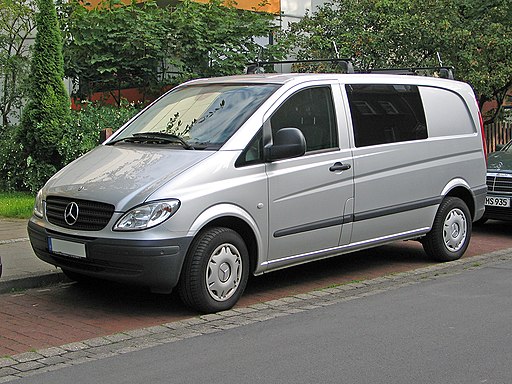
Mercedes-Benz Vito as a Used Car: What You Need to Know Before Buying
The Mercedes-Benz Vito occupies an interesting position in the used-vehicle market. It is a commercial van by design, but many versions have been configured as crew vans, minibuses or comfortable passenger carriers, making the Vito an alternative to both conventional vans and large MPVs. Its reputation is built around practicality, strong diesel engines, generous load capacity and the ability to cover high mileages, but buying a used Vito requires a different approach from buying an ordinary family car. Previous commercial use, heavy loads, high annual mileage, corrosion and neglected servicing can all have a significant effect on the condition of an individual vehicle. The Vito has also evolved considerably through its generations, so the year, engine and drivetrain are particularly important when comparing cars on the used market.
Mercedes-Benz Vito Generations
The Vito first appeared in the mid-1990s as Mercedes-Benz’s answer to the growing market for medium-sized vans. The first-generation W638 was followed by the W639 in 2003, while the W447 arrived in 2014 and continues in updated form. These generations differ substantially in their engines, transmissions, dimensions, equipment and driving characteristics, so it is not particularly useful to treat every Vito as the same vehicle. The W639, for example, is now an older van in which corrosion and general wear deserve considerable attention, whereas a later W447 can offer much more modern safety and comfort equipment but also introduces newer diesel-emissions technology and greater mechanical complexity. The used market contains everything from basic panel vans that spent their lives carrying tools to passenger-oriented versions that have had a considerably easier existence.
For buyers on a tighter budget, older W639 models can look especially attractive because their purchase prices are often relatively modest compared with newer vans. However, the cheapest Vito is rarely the cheapest one to own. A van with extensive rust, tired suspension, worn injectors, a problematic transmission or evidence of years of commercial abuse can require repairs that quickly exceed the difference between a cheap example and a properly maintained one. The W447 generally provides a more modern driving experience, but its higher purchase price needs to be balanced against the cost of modern diesel systems, electronics and optional equipment. The most important principle when shopping for a used Vito is therefore simple: buy the condition and history rather than merely buying the badge or the lowest mileage figure.
Why Buy a Used Mercedes-Benz Vito?
The Vito’s greatest strength is versatility. A panel van can provide substantial cargo capacity for tradespeople and businesses, while Tourer, Crew Van and related passenger versions can transport several people without giving up the basic advantages of a van platform. Depending on the generation and body configuration, buyers can choose from different lengths and roof arrangements, and the Vito is available with various seating and load-carrying configurations. Older Vito panel vans could offer load volumes of approximately 4.65 to 6.49 cubic metres, while payload depended on body configuration; this makes the vehicle substantially more useful for bulky loads than an ordinary estate car.
Another attraction is the Vito’s road manners. Although it remains a van, it is relatively easy to drive and, particularly in newer generations, can feel much closer to a large passenger vehicle than to a basic commercial truck. The elevated driving position gives good visibility, while the relatively compact dimensions compared with a full-size van make urban work less intimidating. A properly maintained diesel engine also provides the low-speed torque that is useful when the vehicle is loaded. For owners who use their vehicle for work during the week and family or leisure activities at weekends, a passenger-oriented Vito can therefore serve several purposes without needing separate vehicles.
Choosing the Right Engine
Diesel Engines
Diesel engines dominate the used Vito market, and for good reason: the vehicle’s size, weight and intended working environment make strong low-speed torque particularly valuable. Older W639 examples can be found with four-cylinder CDI engines as well as the more powerful 3.0-litre V6 CDI, while later W447 models introduced newer four-cylinder diesel technology. The W639 generation used engines including the 2.1-litre CDI family and 3.0-litre V6, while W447 versions have included several generations of four-cylinder diesels.
For most buyers, a four-cylinder diesel offers a sensible balance between performance, consumption and running costs. The larger V6 provides substantially stronger performance and makes a heavily loaded Vito feel more effortless, but its additional mechanical complexity and potential repair costs should be taken seriously on an older vehicle. Engine choice should also reflect how the van will be used. Someone carrying heavy equipment every day or towing regularly may appreciate the additional torque of a stronger engine, while a lightly loaded Vito used primarily for local journeys may not benefit enough to justify the extra expense.
Modern W447 versions use newer emissions-control systems, and buyers should understand that a later diesel is not automatically mechanically simpler just because it is newer. Depending on the model and year, equipment can include diesel particulate filters, selective catalytic reduction and AdBlue systems. These technologies help meet modern emissions standards but introduce additional components that need to function correctly. Current W447 specifications, for example, use common-rail diesel engines with turbocharging and SCR/DPF emissions equipment.
Manual or Automatic?
A manual gearbox can be attractive to buyers who want a mechanically straightforward used vehicle, but an automatic transmission can make a Vito significantly more pleasant in traffic and during long journeys. Whichever transmission is fitted, the most important consideration is service history and behaviour during a test drive. A gearbox should engage gears smoothly, without excessive hesitation, vibration, slipping or unexplained noises. On older automatic-equipped vehicles, evidence of appropriate transmission servicing is particularly valuable because gearbox repairs can be expensive compared with the market value of an ageing Vito.
Common Problems When Buying a Used Vito
Rust and Bodywork
Corrosion should be near the top of every used-Vito inspection checklist, particularly with older W639 examples. A commercial van can spend years working in environments where the body is exposed to moisture, road salt, dirt and repeated loading damage, and cosmetic rust can conceal more serious deterioration. Inspect the wheel arches, door edges, sills, underside, floor, suspension mounting areas and seams carefully. Structural corrosion is considerably more serious than surface bubbling because it can affect the vehicle’s safety and make repairs disproportionately expensive. Used-Vito buying guides also identify corrosion around structural and suspension mounting areas as a particularly important issue.
Do not restrict the inspection to the exterior. Open the rear doors and inspect the cargo floor, look beneath carpets and panels where possible, and check whether previous repairs have been carried out professionally. A freshly painted section is not necessarily evidence of a good repair; it may simply be an attempt to conceal corrosion before a sale. Evidence of consistent body maintenance is much more reassuring than an apparently perfect exterior on a vehicle with an uncertain history.
Engines and Injectors
Diesel engines can cover very high mileages when properly maintained, but high-mileage commercial use means that buyers should inspect carefully for signs of wear. Difficult cold starting, excessive smoke, uneven idling, loss of power and unusual mechanical noises deserve investigation. On some older diesel Vitos, injector sealing problems can lead to carbon deposits around the injectors, a fault that is easier and cheaper to address when identified early.
A proper diagnostic scan is worthwhile before buying a Vito, particularly a later model. It can reveal stored faults that are not immediately obvious during a short test drive. The engine should ideally be inspected from cold as well as after reaching operating temperature. A seller who has already warmed the engine before your arrival is not necessarily hiding a problem, but a buyer should understand why the engine is warm and, if possible, arrange a cold-start inspection.
Suspension, Brakes and Steering
A Vito is frequently used with heavy loads, so suspension components can experience substantially more stress than those of an ordinary passenger car. During a test drive, listen for knocks over uneven roads and pay attention to steering behaviour, vibrations and uneven tyre wear. Inspect shock absorbers, springs, bushes and joints, while also checking the condition of the brake discs and pads. Excessive wear is not surprising on a high-mileage commercial vehicle, but the cost of bringing several worn systems back to a good standard should be reflected in the purchase decision.
Tyres can also tell an interesting story. Uneven wear may indicate alignment, suspension or steering problems rather than simply old tyres. Because a Vito can carry considerable weight, it is particularly important to use tyres with the correct load rating and specification for the vehicle.
Interior and Equipment
The interior condition can reveal how a Vito was actually used. A van with a heavily worn driver’s seat, steering wheel, pedals and door trim may have covered considerably more distance than the odometer suggests, although wear alone is not proof of mileage tampering. In a passenger-oriented version, inspect every seat, sliding-door mechanism and electrical feature. Air conditioning, electric windows, central locking, parking sensors, infotainment systems and dashboard displays should all be tested rather than assumed to work.
Passenger versions can make excellent family and leisure vehicles because of their space and flexible seating, while panel vans are particularly useful for tradespeople and businesses. Buyers considering a camper conversion should also inspect previous conversion work carefully. Non-factory wiring, drilled bodywork, additional heating systems and poorly installed insulation can create problems that are much harder to diagnose than ordinary mechanical wear.
Fuel Consumption and Running Costs
Fuel consumption varies substantially with engine, body length, transmission, drivetrain, payload and driving conditions. A lightly loaded four-cylinder diesel can be relatively economical for a vehicle of this size, but carrying heavy equipment, towing or spending most of the time in urban traffic will naturally increase consumption. Four-wheel-drive versions can also consume more fuel than comparable two-wheel-drive models.
Running costs extend well beyond fuel. A Vito uses relatively large tyres and braking components, and commercial use can accelerate wear. Older examples may require attention to corrosion, suspension and diesel injection components, while newer models can have more sophisticated emissions-control systems. The correct maintenance budget therefore depends heavily on the age and specification of the individual vehicle. The cheapest approach is usually preventive maintenance: replacing worn components before they cause secondary damage and keeping the engine, transmission and emissions systems properly serviced.
What to Check Before Buying
Before purchasing a used Mercedes-Benz Vito, obtain as much documented history as possible and compare the paperwork with the vehicle’s physical condition. Check the VIN, service records, previous inspection documentation and evidence of major repairs. Ask how the van was used, whether it regularly carried heavy loads, whether it was used for towing and whether it spent most of its life in urban or motorway driving. These details can explain apparently high mileage and help distinguish a well-maintained working vehicle from one that has simply been worn out.
A professional inspection is especially worthwhile with an older Vito. The inspection should cover the body and structural corrosion, engine, cooling system, turbocharger, injectors, gearbox, clutch, suspension, brakes, steering, electrical systems and emissions equipment. A diagnostic scan should accompany the mechanical inspection. Spending money on an inspection before buying is considerably easier to justify than discovering major faults after completing the purchase.
Is the Mercedes-Benz Vito a Good Used Vehicle?
The Mercedes-Benz Vito can be a very useful used vehicle when its strengths match the buyer’s needs. It offers the practicality of a medium van without the size of a full-size commercial vehicle, while passenger versions can provide substantial space for families, businesses and leisure activities. Later W447 models also offer significantly more modern engines, transmissions, safety equipment and comfort than the earliest Vitos.
At the same time, the Vito should never be bought purely because it is a Mercedes-Benz or because the advertised price appears attractive. Commercial vehicles often have demanding working lives, and an apparently inexpensive example can require considerable investment if corrosion, drivetrain wear or neglected servicing is discovered. The safest approach is to choose a vehicle with transparent history, inspect it thoroughly and budget for age- and mileage-related maintenance.
For buyers who need genuine load-carrying ability, flexible seating or a durable platform for work and leisure, a well-maintained Mercedes-Benz Vito remains a compelling used-vehicle proposition. The key is to judge each example as an individual vehicle. Mileage, engine specification and age provide useful context, but body condition, maintenance history and evidence of responsible previous ownership ultimately tell you much more about whether a particular Vito is worth buying.
Mercedes-Benz Vito Technical Specifications
Because the Vito has been produced across several generations and in numerous configurations, there is no single set of specifications that applies to every model. The following table gives representative specifications for two commonly encountered diesel configurations and should therefore be treated as a reference rather than a specification for every Vito.
| Specification | Vito W639 116 CDI | Vito W447 114 CDI |
|---|---|---|
| Generation | W639 | W447 |
| Approx. production period | 2003–2014 | 2014–present, depending on version |
| Engine | 2.1-litre 4-cylinder diesel | 2.0-litre 4-cylinder diesel |
| Fuel system | Common-rail diesel | Common-rail diesel |
| Turbocharging | Yes | Yes |
| Typical power | Approx. 163 hp | Approx. 136 hp in current specification |
| Typical torque | Approx. 360 Nm | 330 Nm |
| Drive | Rear-wheel drive on representative W639 | Rear-wheel drive or front-wheel drive depending on version |
| Transmission | Manual / automatic depending on model | Manual / automatic depending on model |
| Body lengths | Multiple | Multiple |
| Seating | Configuration-dependent | Configuration-dependent |
| Gross vehicle weight | Configuration-dependent | Approximately 3,100–3,200 kg in cited versions |
| Fuel tank | Configuration-dependent | 57–70 litres depending on version |
| Maximum braked trailer load | Configuration-dependent | Up to 2,000 kg in cited versions |
| Example current W447 dimensions | — | 5,140 mm long × 1,928 mm wide × 1,910 mm high |
| Example W447 wheelbase | — | 3,200 mm |
The W447 figures above reflect current versions and can differ substantially from earlier W447 models; Mercedes-Benz has changed engines, transmissions, dimensions and equipment during the generation’s production life. For example, current 114 CDI specifications list a 1,950 cc diesel producing 136 hp and 330 Nm, while a current 119 CDI uses the same basic displacement but produces 190 hp and 440 Nm.
Final Thoughts
The Mercedes-Benz Vito is best understood as a working vehicle that can also be an excellent passenger and leisure machine, rather than as a conventional family car wearing a Mercedes badge. Its practicality, load capacity, flexible configurations and strong diesel engines are genuine advantages, but the used market contains large differences in condition because many Vitos have spent their lives in demanding commercial service. A careful inspection, verified history and realistic maintenance budget are therefore essential.
For an older Vito, rust and structural condition should be investigated before becoming distracted by equipment or engine choice. For a newer Vito, attention should also be paid to emissions systems, electronics and the complexity that comes with modern diesel technology. Find a well-maintained example with a documented history and the Vito can be a remarkably capable used vehicle; choose solely on price, and the savings can disappear surprisingly quickly.
