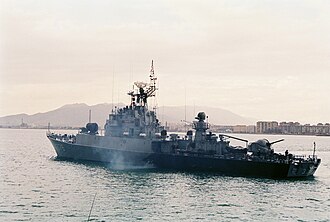
KRI Wiratno (379): History, Technical Specifications, Armament, and Indonesian Naval Service
KRI Wiratno (379) is a Parchim-class corvette that became part of the Indonesian Navy following the end of the Cold War. Originally built in East Germany under the name Perleberg, the vessel was designed to perform anti-submarine warfare missions, particularly in coastal waters and relatively restricted maritime environments. After transferring to Indonesia, it received the name KRI Wiratno and the pennant number 379, joining a group of former East German warships that helped strengthen Indonesia’s naval inventory during the 1990s. The vessel’s history illustrates the international movement of military technology, the continuing value of specialized naval platforms, and the challenges involved in maintaining older combatants across decades of service.
The importance of KRI Wiratno extends beyond its individual technical specifications. Its original design emerged from the strategic competition of the Cold War, when European navies placed considerable emphasis on protecting coastal approaches and countering submarines. Smaller anti-submarine corvettes provided a practical solution for navies that needed specialized underwater detection and engagement capabilities without the expense of deploying larger destroyers or frigates for every mission. Although Indonesia’s maritime environment differs considerably from the Baltic Sea, the vessel’s combination of propulsion, guns, sonar, and anti-submarine weapons offered capabilities that could contribute to the country’s wider maritime defense responsibilities.
Indonesia’s acquisition of former East German vessels also reflected the practical realities of naval procurement. Building a new fleet requires substantial investment, industrial capacity, and time, whereas purchasing existing ships can provide additional hulls relatively quickly. However, used warships also bring maintenance obligations, aging machinery, potential difficulties obtaining spare parts, and the need to adapt equipment to a new operating environment. KRI Wiratno therefore represents both an opportunity created by geopolitical change and a reminder that the long-term value of a warship depends on much more than its purchase price.
This article examines KRI Wiratno (379) from its origins as the East German corvette Perleberg to its Indonesian naval career, exploring its historical background, design, propulsion, weapons, sensors, operational purpose, and significance within Indonesia’s fleet. It also summarizes the vessel’s commonly reported technical specifications in a dedicated table and identifies the distinctions between original class equipment and later Indonesian-service configurations. Because published sources sometimes disagree about technical measurements, crew numbers, and armament, specifications should be treated as reported reference values rather than proof that every system remained fitted and operational throughout the ship’s career.
What Is KRI Wiratno (379)?
KRI Wiratno is a corvette of the Parchim-class family, known in Indonesian naval service as the Kapitan Pattimura class. The designation KRI stands for Kapal Republik Indonesia, meaning Ship of the Republic of Indonesia, while the number 379 serves as the vessel’s pennant number. Before joining the Indonesian Navy, the ship operated under the East German Navy, or Volksmarine, as Perleberg, bearing pennant number 243. Its original commissioning date is commonly reported as 19 September 1981, while its entry into Indonesian service is associated with 19 September 1994.
The vessel was developed primarily for anti-submarine warfare, a naval mission concerned with detecting, tracking, and potentially engaging hostile submarines. Such operations require an integrated combination of sensors, weapons, trained personnel, and reliable machinery. Sonar helps a ship detect underwater contacts, while weapons such as anti-submarine rocket launchers are intended to engage a target once sufficient information is available. The ship’s guns provide additional combat capability against suitable surface and aerial targets, although its original design was not intended to give it the extensive multirole capabilities of a modern large frigate.
KRI Wiratno’s comparatively compact dimensions made it suitable for the coastal and nearshore missions associated with its design. Commonly reported specifications give the vessel a length of approximately 75.2 meters, a beam of 9.78 meters, and a standard displacement of about 865 tonnes. Its reported maximum speed is around 24.5 knots, supported by a propulsion arrangement consisting of three M-504A diesel engines and three propellers. These characteristics reflect the priorities of a ship intended to combine useful speed, underwater warfare equipment, and a relatively economical hull size.
Although the ship originated in a European naval environment, its Indonesian career placed it within a very different strategic setting. Indonesia is an archipelagic country whose maritime responsibilities extend across numerous islands, coastal regions, straits, and important shipping routes. A corvette cannot independently secure such a vast area, but it can contribute to a broader network of ships, aircraft, shore installations, and naval personnel. KRI Wiratno’s historical significance therefore lies in its contribution as one component of a larger fleet, as well as in the unusual journey that took it from East German service to Southeast Asian waters.
Historical Background of KRI Wiratno
Construction in East Germany
KRI Wiratno was originally constructed at Peene-Werft, a shipyard located in Wolgast, East Germany. Its original name was Perleberg, and it entered service with the Volksmarine on 19 September 1981. The vessel was part of the Parchim-class program, developed to provide East Germany with compact surface combatants capable of conducting anti-submarine operations in coastal waters. The shipbuilding program reflected the strategic conditions of the Cold War, when the possibility of conflict between NATO and Warsaw Pact forces shaped naval planning across Europe.
The Baltic Sea was an important area of strategic competition because it contained major maritime approaches, naval bases, commercial routes, and access points connecting Northern and Central Europe. Submarines could threaten surface vessels and shipping, making underwater detection and anti-submarine weapons valuable components of coastal defense. Smaller corvettes offered a way to maintain a specialized naval presence without depending exclusively on larger and more expensive warships. The Parchim-class design was developed with this mission in mind, combining diesel propulsion with sonar, anti-submarine rocket launchers, and conventional naval guns.
Peene-Werft contributed to East Germany’s naval industrial capabilities by constructing ships suited to the country’s requirements and the broader military environment of the Eastern Bloc. The resulting vessels incorporated technologies associated with Soviet and East German naval practice, reflecting the equipment and engineering approaches available during the period. They were not designed to provide every capability found on a modern multirole combatant; rather, they were intended to fulfill a defined operational role within a larger naval organization.
The construction of Perleberg also demonstrates how a ship’s intended mission can shape its design for decades. The hull, propulsion system, sensor arrangements, and weapons were developed around a particular understanding of submarine threats and coastal operations. Although the ship would eventually operate under a different flag, its fundamental design remained rooted in the naval priorities of its original period. That continuity makes KRI Wiratno a useful example of how Cold War engineering continued to influence naval capabilities long after the geopolitical conditions of the era had changed.
The Parchim-Class Corvette Design
The Parchim class, also associated with the Project 133.1 designation, was designed primarily as a small anti-submarine combatant. Its purpose was to locate and engage submarines operating in coastal waters, where the geography of the seabed, restricted maneuvering space, and nearby maritime infrastructure could influence naval operations. The ships combined underwater detection systems with specialized weapons and a conventional gun armament, creating a platform that could perform its assigned role without requiring the size or operating costs of a larger surface warship.
Anti-submarine warfare is a demanding discipline because a submarine may remain difficult to detect even when a surface vessel is operating nearby. Water depth, temperature, salinity, background noise, seabed conditions, and the acoustic characteristics of the submarine all affect the information available to sonar operators. The crew must assess contacts carefully and determine whether the information is sufficient to support tracking or an engagement. Weapons alone cannot provide an effective anti-submarine capability without the sensors, procedures, and trained personnel required to use them.
The Parchim-class vessels were therefore designed as integrated systems rather than simply as platforms carrying a collection of weapons. Their propulsion arrangements supported patrol and tactical movement, while radar and communications equipment helped crews maintain awareness of their surroundings. Naval guns provided additional capability against appropriate surface or aerial targets, while underwater sensors and anti-submarine weapons supported the principal mission. This combination was suited to the naval environment for which the class had been developed.
When Indonesia acquired these vessels, the original design offered a way to increase the fleet’s inventory of specialized corvettes. However, the transfer also required the new operator to maintain machinery and weapons designed for another country’s service environment. The history of the Parchim class consequently includes not only its original Cold War mission but also the challenges of operating and sustaining the vessels in a different country and climate.
The End of the Cold War and Transfer to Indonesia
The political changes of 1989 and the reunification of Germany in 1990 transformed the future of the East German Navy. The Volksmarine ceased to exist as an independent naval service, and its ships were evaluated for withdrawal, transfer, or sale under the new circumstances. Some vessels became available to countries seeking to expand their naval fleets without commissioning entirely new construction programs. Indonesia was among the countries that acquired former East German vessels during this period.
The Indonesian procurement program included Parchim-class corvettes alongside other types of naval vessels. The wider transaction has been described in reporting as involving 39 former East German naval vessels, including anti-submarine corvettes, landing ships, and minesweepers. These purchases became a notable episode in Indonesian defense procurement because they offered the opportunity to expand naval capacity while also raising questions about the long-term condition, tropical suitability, and maintenance requirements of used ships.
For Indonesia, the appeal of such a purchase was straightforward: acquiring already constructed warships could increase fleet numbers more quickly than waiting for new vessels to be built. Yet the practical costs of operating a ship extend far beyond its acquisition. A navy must maintain propulsion machinery, generators, weapons, sensors, communications systems, and hull structures, while also training crews and ensuring that spare parts remain available. The age of the vessels and the different environment in which they would operate made these considerations particularly important.
KRI Wiratno entered Indonesian service on 19 September 1994, retaining the broad anti-submarine warfare specialization of the original Parchim-class design while receiving an Indonesian name and pennant number. Its transfer was part of a wider process through which former East German ships became incorporated into the Indonesian Navy. The result was a vessel with a European construction history but a new operational identity tied to Indonesia’s maritime security requirements.
The Meaning Behind the Name Wiratno
Commemorating a Naval Officer
The name Wiratno is associated in Indonesian naval references with Captain Pelaut Wiratno, an officer who died during the Battle of the Aru Sea on 15 January 1962. He served aboard the Indonesian naval vessel RI Matjan Tutul during the operation associated with Commodore Yos Sudarso. The battle occurred during Indonesia’s campaign over West New Guinea, a major episode in the country’s post-independence history. The naming of KRI Wiratno connects the modern corvette with the memory of a naval officer whose death became part of the Indonesian Navy’s historical tradition.
Naming warships after military personnel and historical figures is a longstanding practice in many navies. Such names preserve institutional memory and give a vessel an identity beyond its technical designation. For the crew, the name appears in daily routines, official communications, ceremonies, and operational records. For the wider public, it connects a modern naval platform with the individuals and events remembered by the country.
In Indonesia, where maritime history is closely connected to national geography and sovereignty, naval names often reflect military service, resistance, historical leadership, or national identity. A ship’s name can therefore serve as a reminder that the fleet is not simply a collection of machinery and weapons but an institution with a historical and cultural dimension. KRI Wiratno’s name reflects that relationship between the modern navy and the memory of earlier naval service.
It is important to distinguish the historical figure commemorated by the vessel from the ship’s original German identity. The ship was built as Perleberg for the Volksmarine, and the name Wiratno was adopted when it entered Indonesian service. This transition illustrates how a warship can acquire a new national identity and symbolic meaning while retaining the underlying design characteristics inherited from its original construction.
Understanding the Pennant Number 379
The number 379 is the ship’s Indonesian pennant number, used to identify KRI Wiratno within the fleet. Pennant numbers are important because multiple vessels may belong to the same class and share similar dimensions, engines, sensors, and weapons. The combination of ship name and number allows naval organizations, researchers, and historians to distinguish an individual vessel from others of the same design.
The original East German vessel carried pennant number 243 under the name Perleberg. After its transfer, the ship became KRI Wiratno (379), reflecting its new operator and national identity. This change is a useful example of why naval historians must keep track of both original and later names when researching a ship’s career. Records from its first period of service may refer to Perleberg, while Indonesian records and later historical accounts use KRI Wiratno.
A ship’s pennant number should not be confused with a class designation or a hull-design code. The Parchim class identifies the broader family of related ships, while 379 identifies the individual Indonesian vessel. Understanding these distinctions makes it easier to compare KRI Wiratno with other Kapitan Pattimura-class corvettes and to follow the ship through records produced by different countries.
Design and Technical Characteristics of KRI Wiratno
Hull Dimensions and Displacement
KRI Wiratno was built around a relatively compact hull intended to accommodate the machinery, weapons, sensors, and crew facilities required for anti-submarine warfare. Commonly reported specifications list a length of 75.2 meters, a beam of 9.78 meters, and a draft of approximately 2.65 meters. These dimensions place the ship within the smaller surface-combatant category and distinguish it from larger frigates and destroyers, which generally have greater displacement and space for more extensive combat systems. Its hull form and dimensions reflected the requirement to operate in coastal waters while retaining enough internal volume for its specialized equipment and crew.
The ship’s displacement is commonly reported as approximately 865 tonnes under standard conditions and 935 tonnes at full load. Displacement is the weight of the water displaced by the vessel and is conventionally used as a measure of a ship’s size. Standard and full-load figures differ because the amount of fuel, ammunition, food, spare parts, and other supplies carried aboard changes during a deployment. Some published descriptions of the wider Parchim-class family provide different measurements, so the precise figure should always be linked to the measurement basis and the source rather than treated as a universal number.
A hull of this size offered a balance between operational capability and the resources required to maintain a naval vessel. The ship needed enough room for its engines, auxiliary machinery, weapons, sensors, and accommodation while remaining smaller than more heavily equipped surface combatants. A compact corvette could contribute to patrol and coastal defense missions without requiring the same scale of personnel and infrastructure as a large destroyer. Its size, however, also imposed limitations on how much equipment, fuel, ammunition, and modernization work could be accommodated.
Hull dimensions alone do not determine a ship’s seaworthiness or maneuverability. These characteristics depend on hull design, loading, propulsion, sea conditions, and the vessel’s structural condition. A ship designed for coastal anti-submarine operations may be well suited to its original role while still facing limitations in more demanding ocean conditions or when asked to perform missions outside its intended design envelope. For KRI Wiratno, the dimensions are best understood as part of a wider design intended to provide a specialized capability within a relatively small naval platform.
Propulsion System and Engine Performance
The standard technical description of KRI Wiratno lists three M-504A diesel engines, each producing approximately 4,750 horsepower, for a combined output of around 14,250 horsepower. The engines drive three fixed-pitch propellers, providing the thrust required for patrol, transit, and tactical movement. Diesel propulsion was a practical choice for a vessel of this type because it provided substantial power in a conventional mechanical arrangement suited to a compact warship. The original design prioritized the ability to move rapidly between patrol areas while retaining the endurance needed for routine naval operations.
The ship’s maximum speed is commonly listed as approximately 24.5 knots, equivalent to about 45.4 kilometers per hour. This figure describes the vessel’s reported maximum performance rather than the speed at which it would necessarily operate during a normal patrol. Warships often spend substantial periods traveling at lower speeds, when fuel consumption and machinery demands can be more manageable. Maximum speed, endurance, and fuel economy are therefore related but distinct characteristics, and the conditions under which a published speed was measured can affect comparisons between sources.
The three-engine configuration also reflects the importance of reliable machinery in a naval vessel. The availability of the main engines determines whether the ship can achieve its intended speed and sustain movement between operational areas. Engine condition, fuel quality, cooling systems, lubrication, propeller condition, and shaft maintenance all influence performance. If an older ship experiences mechanical problems, its practical operating speed and readiness may differ considerably from the figures given in its original design specifications.
The maintenance requirements of KRI Wiratno became especially relevant after its transfer from East Germany to Indonesia. The vessel had been designed and built for a different naval logistics system, meaning that spare parts and specialist support had to be managed by the new operator. Keeping an older diesel-powered ship operational requires a combination of technical expertise, regular inspection, and careful planning of replacement components. This is a central consideration when evaluating the long-term value of secondhand warships, because their usefulness depends on continued availability rather than simply their original performance.
Auxiliary Generators and Electrical Systems
The Parchim-class technical specification commonly associated with KRI Wiratno includes one 500-kilowatt diesel generator and two 200-kilowatt diesel generators. These auxiliary units provide electricity for systems that remain essential regardless of whether the ship is traveling at high speed, cruising, or operating at anchor. Navigation equipment, communications, radar, sonar, internal lighting, ventilation, pumps, and many other onboard systems depend on a reliable electrical supply. Auxiliary power is consequently a fundamental component of the ship’s operational capability, even though generators are less visible than weapons or propulsion machinery.
A warship’s electrical requirements are particularly important because its systems are interconnected. A propulsion plant may remain mechanically serviceable, but faults affecting electrical distribution or essential sensors can limit the ship’s ability to carry out its assigned missions. The crew must therefore monitor the condition of generators, switchboards, cabling, protective devices, and supporting machinery. Routine testing and preventive maintenance help identify developing problems before they affect operational readiness.
The presence of multiple generator units can also support the management of electrical loads, although the practical benefits depend on the vessel’s exact electrical architecture and operating procedures. Different systems may require different amounts of power, and some must remain available continuously for safety or mission requirements. A ship’s electrical system must be able to support these needs reliably, including during periods when particular equipment is being serviced or when operating conditions change.
For an older corvette, electrical maintenance may become more demanding as original components age and replacement parts become harder to source. This is particularly relevant to ships transferred between countries, because their equipment may have been designed around manufacturers and supply networks that are no longer readily accessible. The technical health of the auxiliary systems is therefore an important part of assessing the ship’s overall condition and long-term usefulness.
Armament and Combat Capabilities
AK-725 Twin 57 mm Naval Gun
The AK-725 twin 57 mm naval gun is the principal gun system commonly associated with KRI Wiratno. This Soviet-designed installation uses two 57 mm barrels in a single mounting and was intended to engage suitable surface targets and certain aerial threats within its effective range. For a comparatively small corvette, the weapon provided a substantial gun capability while fitting within the limitations of the ship’s hull and overall design. Its presence reflects the approach taken by many Cold War-era navies, which used automatic naval guns to provide practical defensive and surface-combat options alongside more specialized weapons.
A naval gun can serve different purposes depending on the target, ammunition, fire-control arrangements, and circumstances of the engagement. The AK-725 was designed to provide automatic fire against appropriate targets, but its effectiveness cannot be determined from caliber alone. Target speed, distance, weather, visibility, tracking quality, equipment condition, and crew training all influence the result. A weapon may be physically installed on a ship yet have reduced practical value if its associated fire-control systems or supporting equipment are not maintained to an appropriate standard.
The AK-725 also illustrates the technological generation to which the Parchim-class ships belong. The weapon was designed for an era in which conventional naval guns were important components of surface combatants, and the system complemented the ship’s anti-submarine specialization. Although contemporary warships may carry more advanced integrated weapon systems and precision-guided munitions, a gun can still provide a useful capability for suitable engagements and routine naval duties.
When describing KRI Wiratno’s armament, it is important to separate the presence of a weapon from assumptions about its present readiness. Published historical specifications establish that the class was designed with this gun installation and list it as part of the Indonesian-service configuration. They do not, by themselves, prove the current condition of the gun, the availability of ammunition, or the vessel’s ability to use it operationally at a particular date.
AK-230 Twin 30 mm Naval Gun
KRI Wiratno is also commonly listed as carrying an AK-230 twin 30 mm automatic naval gun. This system was designed for close-range defensive engagements against suitable surface and aerial targets. Its twin-barrel arrangement provided a rapid-firing capability that complemented the larger 57 mm gun, allowing the ship to employ a separate weapon system for situations within the smaller gun’s intended engagement envelope.
The AK-230 reflects a period in naval development when rapid-firing automatic guns were regarded as important defensive equipment. Such systems could provide a close-range response to appropriate threats, although their performance depended on detection, tracking, fire-control equipment, ammunition, and the time available to react. They were one part of a broader defensive arrangement rather than a guarantee that a vessel could defeat every possible threat.
The gun’s role must also be understood within the limits of the ship’s original design. KRI Wiratno was developed primarily for anti-submarine warfare and coastal operations, not as a dedicated area-air-defense platform. Its gun armament supported additional combat functions, but it did not give the vessel the same capabilities as larger warships equipped with more extensive missile systems, modern combat-management networks, and multiple layers of air defense.
Denel GI-2 20 mm Guns
Published specifications for KRI Wiratno’s Indonesian-service configuration also list two Denel GI-2 20 mm guns. These are lighter automatic weapons than the ship’s 57 mm and 30 mm systems and reflect the possibility of changes in armament after a vessel transfers between naval operators. The GI-2 is associated with South African weapon development and belongs to a family of 20 mm cannon designs used in different military applications.
The reported presence of these guns is significant because the Parchim-class vessels were not necessarily operated with precisely the same equipment they carried during their original East German service. When a ship is transferred to another country, its new operator may remove or replace particular systems to suit its own requirements, available ammunition, maintenance arrangements, or procurement plans. The resulting configuration can differ from the original class design even when the hull and main machinery remain largely unchanged.
This distinction is important for technical accuracy. A list of weapons associated with the original East German vessel should not automatically be combined with a list of weapons reported for the Indonesian ship, because that may create an inventory that never existed at one time. The most responsible approach is to describe the GI-2 guns as part of the commonly reported Indonesian-service configuration while acknowledging that a ship-specific equipment record would be required to establish exactly what was fitted and operational during a particular period.
RBU-6000 Anti-Submarine Rocket Launchers
The RBU-6000 anti-submarine rocket launcher was a major element of the Parchim-class underwater warfare arrangement. This Soviet-designed system launches anti-submarine projectiles toward a designated area in the water, allowing a surface vessel to engage an underwater contact when sufficient information is available to support an attack. The system was developed for a mission in which detection and tracking are just as important as the weapon itself, because the position of a submarine cannot normally be established through direct visual observation.
The operation of an anti-submarine rocket system is closely connected to sonar. Sonar operators must identify a possible underwater contact, assess the quality of the acoustic information, and determine whether a sufficiently reliable track exists. Water temperature, depth, salinity, background noise, and seabed conditions can affect the quality of sonar information, while the submarine’s own behavior can influence how easily it is detected. These challenges make anti-submarine warfare a complex discipline requiring specialized training and coordination between sensors and weapons.
The Parchim-class design is commonly associated with two RBU-6000 launchers, giving the vessel a dedicated anti-submarine weapon capability. This equipment was consistent with the class’s original mission of operating against submarines in coastal waters and protecting maritime approaches. Its practical usefulness depended on the condition of the launchers, the availability of compatible ammunition, and the ability of the crew to develop a usable underwater track.
The RBU-6000 also illustrates why a warship should be understood as an integrated system. An anti-submarine launcher cannot independently identify or locate a submarine, and the existence of the launcher does not prove that the vessel can successfully conduct an engagement. The ship needs functioning detection equipment, trained operators, suitable tactical information, and reliable weapons. The overall capability is therefore determined by the combined performance of the platform and its crew rather than by any single item in the armament list.
Torpedo Tubes and Changes to the Original Weapons Configuration
The original Parchim-class design is commonly described as having four 400 mm torpedo tubes, and this arrangement appears in general descriptions of the class’s armament. However, the Indonesian-service configuration of KRI Wiratno should not automatically be assumed to have retained every original weapon in an operational condition. Sources describing the class indicate that the torpedo arrangements on some Indonesian vessels changed after transfer, with the availability of compatible ammunition and differences in equipment requirements affecting how the original systems were used.
Torpedoes are specialized underwater weapons designed to engage surface ships or submarines, depending on the weapon’s characteristics. Their usefulness depends on compatibility between the weapon and the launch system, as well as on the availability of appropriate support equipment, maintenance, and trained personnel. A torpedo tube may remain part of a vessel’s physical configuration even when the original ammunition is no longer stocked or the system is not available for operational use.
This distinction is especially important when examining ships that have changed operators. The original weapons were selected for the requirements and logistics of the East German Navy, while Indonesia had to manage the equipment within its own inventory and support arrangements. A vessel’s technical history may therefore contain references to systems that were later removed, modified, or no longer used in their original form.
For KRI Wiratno, the four-tube arrangement is useful as a reference to the original design, but readers should avoid presenting it as a guaranteed description of the ship’s current operational armament without a dated, authoritative ship-specific source. A clear distinction between original class specifications and later service configurations makes the article more accurate and prevents the assumption that all historically associated equipment was always available.
Radar, Sonar, and Electronic Systems
MR-302 Search Radar
Radar is essential to surface-warship operations because it helps crews detect and track contacts beyond the range of unaided visual observation. A search radar transmits radio waves and processes returning signals to provide information about potential targets or nearby vessels. This information supports navigation, surveillance, and the development of a broader operational picture. The usefulness of radar depends on the system’s characteristics, the target’s size and position, environmental conditions, and the ability of operators to interpret the information correctly.
Published descriptions of the Parchim-class design associate it with the MR-302 radar family, often identified in reference material as a surface and air-search system. This radar designation appears in technical descriptions of KRI Wiratno and related vessels, although the exact installation and operational condition of an individual ship should be verified through ship-specific records. The general role of the system was to provide detection and tracking information that could support the bridge team and other shipboard personnel.
Search radar is different from a dedicated fire-control radar. A search system provides a broader view of the surrounding area, whereas fire-control equipment supports the more precise tracking required to direct weapons toward a selected target. These systems complement one another, but neither guarantees successful detection or engagement under all conditions. The characteristics of the target, the ship’s own movement, interference, weather, and the state of the equipment all affect the quality of the information available.
The radar equipment associated with KRI Wiratno also reflects the technological environment of its original design. Modern warships may integrate several sensors into digital combat-management systems that combine information from different sources and share it with other platforms. The Parchim-class vessels belong to an earlier generation of naval electronics, so their radar systems should be understood within that historical context rather than treated as equivalent to the integrated sensor networks of contemporary combatants.
MR-123 Vympel Fire-Control Radar
The MR-123 Vympel family is commonly associated with fire-control duties on Parchim-class corvettes. Fire-control radar helps track a selected target with the precision required to support the use of an associated weapon system. In a naval environment, this function is important because detecting a contact is only the first step; the ship must also establish a sufficiently accurate track to use its weapons effectively when an engagement is required.
Fire-control equipment works in conjunction with the weapon installation and the crew’s operating procedures. Its usefulness depends on the condition of the radar, the reliability of supporting electrical systems, the characteristics of the target, and the compatibility of the equipment with the weapon being controlled. An older system may remain technically valuable for its intended role, but its practical performance depends on maintenance, calibration, and the availability of required components.
For KRI Wiratno, the presence of a fire-control radar in the commonly reported configuration reflects the original approach to integrating guns and sensors aboard a small combatant. It is important, however, not to infer a specific engagement range or accuracy figure from the system designation alone. Such performance depends on the exact equipment fit, its condition, and the operating circumstances, and should be stated only when supported by a reliable technical source.
MG-322T Sonar and Underwater Detection
Sonar was a central component of the Parchim-class anti-submarine mission. Unlike radar, which uses radio waves to detect objects, sonar uses sound to detect and track underwater contacts. Water is an acoustic environment in which sound can travel over considerable distances under suitable conditions, making sonar essential for naval operations against submarines. Its effectiveness nevertheless varies with the surrounding water, the target’s acoustic signature, background noise, and the equipment’s capabilities.
The MG-322T sonar family is commonly associated with the Parchim-class design. This equipment supported the ship’s ability to search for underwater contacts and provide information relevant to anti-submarine operations. Sonar operators must interpret signals carefully because natural underwater sounds, commercial shipping, marine activity, and reflections from the seabed can complicate contact identification. Temperature and salinity layers can also change sound propagation, affecting the quality of detection at different depths and distances.
For a vessel such as KRI Wiratno, sonar was not simply another item of equipment but one of the systems most directly related to its primary mission. The ship’s anti-submarine rocket launchers and other underwater weapons depended on having useful information about the location of a potential target. The sonar installation therefore formed part of a wider system involving detection, tracking, assessment, communication, and weapon employment.
No single sonar range can accurately describe performance in every operating environment. Actual detection distance varies with underwater conditions, target behavior, the acoustic characteristics of the contact, and the state of the equipment. Without reliable test data specific to the vessel and its configuration, it would be misleading to assign KRI Wiratno a guaranteed submarine-detection range. A more accurate description is that the sonar system was designed to support the ship’s intended anti-submarine warfare role.
Decoys and Defensive Systems
Some descriptions of the Parchim-class vessels include PK-16 decoy-launching equipment and other defensive systems. Such equipment is intended to support a vessel’s survivability by deploying countermeasures that can complicate an incoming weapon’s ability to identify or maintain its intended target. Decoys are one element of a broader defensive approach that may also include warning systems, maneuvering, electronic countermeasures, and established crew procedures.
The precise defensive configuration of KRI Wiratno should be checked against ship-specific documentation before every class-associated system is listed as confirmed equipment. Vessels transferred between navies may be modified, and the availability of weapons or countermeasures can change during a ship’s operational life. General class specifications provide useful historical context, but they do not prove that every item was fitted or functional on an individual ship at a particular time.
The broader significance of these systems lies in the fact that naval survivability depends on several interacting elements. A vessel’s weapons may provide one form of protection, while sensors and communications help the crew recognize and assess potential threats. Defensive systems must be maintained and operated as part of the ship’s overall readiness, with the crew trained to respond appropriately to changing circumstances.
For an older corvette, these requirements can become more challenging as equipment ages and specialist replacement components become harder to obtain. Maintaining the original systems or adapting them to later requirements involves technical work and careful planning. KRI Wiratno’s electronic and defensive equipment should therefore be understood as part of a larger maintenance and readiness challenge rather than as a static list of capabilities.
Operational Role of KRI Wiratno in the Indonesian Navy
Maritime Patrol and Coastal Defense
Indonesia’s maritime geography creates a wide range of responsibilities for its navy. The country consists of thousands of islands connected by important sea routes, straits, and coastal waters, with maritime activity extending across several strategically significant regions. Maintaining a naval presence across this environment requires different classes of ships, surveillance systems, shore installations, and trained personnel. A corvette such as KRI Wiratno can contribute a specialized capability within this larger organization, although no single ship can independently provide comprehensive protection across the entire Indonesian archipelago.
The Parchim-class design was intended primarily for anti-submarine warfare, but the practical activities of a naval vessel can include routine patrols, navigation, training, and participation in fleet exercises. Such activities help maintain readiness and allow a navy to make effective use of its ships even when no immediate combat threat exists. A vessel can contribute to maritime security through its presence, its ability to monitor its surroundings, and its capacity to cooperate with other naval units.
KRI Wiratno’s original equipment provided a combination of guns, sensors, and underwater warfare systems that distinguished it from a patrol craft designed solely for routine surveillance. Its sonar and anti-submarine weapons were intended to address underwater threats, while its radar and guns supported other aspects of naval operations. The value of these capabilities depended on the vessel’s condition, crew training, and the missions assigned to it by the Indonesian Navy.
It is important not to assume that every general naval duty was performed by KRI Wiratno simply because the ship belonged to the fleet. Individual deployments depend on operational orders, geographic assignments, readiness, and the availability of other vessels. Nevertheless, the ship’s design and history illustrate how a specialized corvette can contribute to a navy’s broader maritime responsibilities.
Fleet Integration and Cooperation
A warship does not operate independently of the organization that supports it. Its effectiveness depends on the availability of fuel, spare parts, trained personnel, maintenance facilities, communications, and command arrangements. Shore-based support is particularly important for older vessels because machinery and electronic equipment may require increasingly specialized servicing as they age. KRI Wiratno’s transfer from East Germany to Indonesia consequently involved more than changing its flag and name; it required the ship to be sustained within a different naval logistics system.
Operating several ships of the same class can offer advantages in training, maintenance planning, and technical knowledge. Shared design features may allow personnel to develop common procedures and help maintenance teams become familiar with recurring engineering issues. However, individual vessels can acquire different equipment through refits and modifications, meaning that ships of the same class may not have identical configurations throughout their service lives.
Naval cooperation also involves exercises and the coordination of operations between ships. Exercises allow crews to practice communications, navigation, safety procedures, and the exchange of operational information. They help establish familiarity with the equipment and procedures used by other units, which can be important when multiple vessels need to operate together. The success of these activities depends on both the readiness of individual ships and the wider organization responsible for coordinating them.
KRI Wiratno’s history therefore provides a useful example of the relationship between a vessel’s technical design and the wider fleet structure. Its contribution cannot be assessed solely by the number of guns or the maximum speed listed in a specification sheet. The ship’s value also depended on whether it could be maintained, whether its crew could operate its equipment effectively, and whether the navy could assign it to tasks suited to its capabilities.
Maintenance and the Challenges of Operating an Older Corvette
Machinery Maintenance and Hull Preservation
The long-term usefulness of a warship depends on consistent maintenance of its hull, propulsion plant, electrical systems, weapons, and sensors. A vessel can appear externally sound while still requiring substantial work on engines, pumps, generators, control equipment, or other components. Preventive maintenance helps identify deterioration before it causes more serious problems, while inspections and repairs preserve structural integrity and reduce the risk of equipment failure during operations.
For KRI Wiratno, these considerations became increasingly relevant as the ship aged. The vessel entered East German service in 1981 and Indonesian service in 1994, meaning that its underlying design originated several decades before the introduction of many modern naval technologies. Older machinery can remain useful when properly maintained, but it may require more frequent servicing, specialist knowledge, and careful management of replacement parts.
Hull preservation is particularly important in tropical maritime conditions. Saltwater exposure, humidity, temperature, and the growth of marine organisms can increase maintenance demands, while corrosion and structural wear require regular inspection. Protective coatings, cleaning, mechanical repairs, and periodic dockyard work help maintain a ship’s condition. The exact level of work required depends on the vessel’s operating history, maintenance record, and the condition of individual structural areas.
These requirements demonstrate why a ship’s original technical specifications cannot fully describe its condition decades later. A vessel designed to achieve a particular speed may no longer be able to sustain it if its machinery has deteriorated, while a radar or sonar installation may have reduced availability if replacement components are difficult to obtain. Assessing an older warship therefore requires attention to both its original design and the maintenance work performed throughout its career.
Spare Parts and the Cost of Secondhand Warships
The acquisition of former East German warships gave Indonesia an opportunity to increase its fleet, but it also created a long-term requirement to support foreign-built equipment. Engines, generators, weapons, sensors, and other systems had originally been developed for the East German naval environment. Following the transfer, Indonesia needed to provide the technical expertise and logistics required to keep these systems functioning within its own naval organization.
Spare-parts availability can become a major concern as a ship ages. Original manufacturers may stop producing components, specialist suppliers may become difficult to access, and technical documentation may not always be readily available. In some cases, parts can be repaired or adapted, but such work requires appropriate engineering expertise and careful testing. Equipment changes may also affect the compatibility of supporting systems, making modifications more complex than simply replacing one component with another.
A secondhand warship can offer a lower initial acquisition cost than a newly built vessel, but the purchase price represents only one part of the total cost of ownership. Fuel, maintenance, personnel, training, ammunition, equipment upgrades, and dockyard work all contribute to the resources required over the ship’s service life. A vessel that is inexpensive to purchase may become costly to maintain if its machinery is unreliable or its equipment is no longer well supported.
The history of the Parchim-class vessels in Indonesian service illustrates this wider procurement challenge. Their acquisition expanded the fleet, but their continued usefulness depended on the ability to sustain older ships and adapt them to Indonesian requirements. This is an important lesson for any navy considering used military equipment: the value of an acquisition must be judged over its entire operational life rather than by the initial price alone.
The Historical Significance of KRI Wiratno (379)
KRI Wiratno is significant because its history connects two distinct periods of naval development. Its original career as Perleberg belonged to the Cold War, when East Germany required compact warships to help protect coastal waters and counter submarine threats. Its later Indonesian career took place in a country whose maritime responsibilities are shaped by a vast archipelago, extensive sea lanes, and the need to maintain naval capabilities across geographically separated regions. The ship’s transfer demonstrates how a military platform can continue serving a useful role after the strategic circumstances of its original design have changed.
The vessel also illustrates the practical importance of specialized naval ships. A corvette does not need to match a destroyer in size or carry every category of weapon to provide value. Instead, its usefulness depends on whether its capabilities fit the tasks assigned to it and whether it can operate reliably within a larger naval force. KRI Wiratno’s anti-submarine specialization made it part of a distinct group of vessels within Indonesia’s wider fleet, complementing other ship types with different responsibilities.
Its name gives the ship a separate historical dimension. By commemorating Captain Pelaut Wiratno, the vessel connects a modern warship with an earlier episode in Indonesian naval history. The name serves as a reminder that naval institutions preserve their traditions through the identities of their ships as well as through records, ceremonies, and the experiences of their personnel. This connection between technical equipment and historical memory is one reason individual warships often remain subjects of interest long after their original commissioning.
Finally, KRI Wiratno demonstrates the relationship between procurement, maintenance, and fleet modernization. The acquisition of former East German vessels gave Indonesia additional ships relatively quickly, but operating those vessels required sustained investment in people, machinery, and logistics. As technology evolves and equipment ages, a navy must continually assess how its existing platforms fit its operational needs. The history of KRI Wiratno provides a useful perspective on these challenges without requiring the ship to be treated as either a technological breakthrough or an outdated vessel without value.
Conclusion
KRI Wiratno (379) is a Parchim-class corvette whose career links East German Cold War shipbuilding with the maritime defense requirements of Indonesia. Originally commissioned as Perleberg on 19 September 1981, the vessel was transferred to Indonesia and entered Indonesian naval service under the name KRI Wiratno on 19 September 1994, according to commonly cited historical records. Its design emphasized anti-submarine warfare, combining a relatively compact hull with diesel propulsion, naval guns, radar, sonar, and specialized underwater weapons.
KRI Wiratno also illustrates the wider significance of Indonesia’s acquisition of former East German naval vessels. The transfer increased the number of ships available to the Indonesian Navy, but it also introduced the need to maintain foreign-built machinery and equipment over an extended period. Its history therefore offers lessons about naval procurement, long-term maintenance, and the relationship between individual ships and a navy’s overall operational requirements.
For readers interested in Indonesian naval history, Cold War warship design, and Southeast Asian maritime security, KRI Wiratno is a valuable case study. Its story shows how a vessel designed for one maritime environment can acquire a new national identity and serve a different navy after major geopolitical changes. Its significance lies not only in its weapons or technical specifications but also in the broader historical circumstances that shaped its construction, transfer, and service.
Summary Table of KRI Wiratno (379) Technical Specifications
The following table summarizes commonly reported technical characteristics of KRI Wiratno. The figures are drawn from published class and ship references, which do not always agree on every detail. The armament list distinguishes commonly reported Indonesian-service equipment from systems associated with the original class configuration. The vessel’s present operational condition should be verified separately through a recent official Indonesian Navy source.
| Specification | Details |
|---|---|
| Ship name | KRI Wiratno |
| Pennant number | 379 |
| Original name | Perleberg |
| Original pennant number | 243 |
| Original operator | East German Navy (Volksmarine) |
| Indonesian operator | Indonesian Navy (TNI AL) |
| Ship type | Anti-submarine warfare corvette |
| Class | Parchim class / Kapitan Pattimura class |
| Design designation | Project 133.1 |
| Shipbuilder | Peene-Werft, Wolgast, East Germany |
| Original commissioning | 19 September 1981 |
| Indonesian commissioning | 19 September 1994 |
| Standard displacement | Approximately 865 tonnes |
| Full-load displacement | Approximately 935 tonnes |
| Length | Approximately 75.2 m |
| Beam | Approximately 9.78 m |
| Draft | Approximately 2.65 m in commonly cited specifications |
| Main propulsion | Three M-504A diesel engines |
| Reported output per engine | Approximately 4,750 hp |
| Combined reported engine output | Approximately 14,250 hp |
| Propellers | Three fixed-pitch propellers |
| Auxiliary generators | One 500 kW and two 200 kW diesel generators, commonly reported |
| Maximum speed | Approximately 24.5 knots |
| Reported range | Approximately 2,100 nautical miles at 14 knots |
| Crew complement | Approximately 62 in commonly cited class specifications; some sources differ |
| Main gun | One twin AK-725 57 mm mounting |
| Secondary gun | One twin AK-230 30 mm mounting |
| Additional guns | Two Denel GI-2 20 mm guns in commonly reported Indonesian-service configuration |
| Anti-submarine weapons | Two RBU-6000 launchers in commonly reported configurations |
| Torpedo armament | Four 400 mm tubes listed for the original class; Indonesian-service configuration requires ship-specific verification |
| Search radar | MR-302 family, commonly reported |
| Fire-control radar | MR-123 Vympel family, commonly reported |
| Sonar | MG-322T family, commonly reported |
| Primary mission | Anti-submarine warfare and coastal naval operations |
| Namesake | Captain Pelaut Wiratno, associated with the Battle of the Aru Sea |
| Operational status | Check recent official Indonesian Navy reporting for confirmation |
