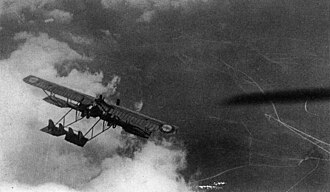
Caudron G.4: The French Twin-Engine Biplane That Helped Shape World War I Aviation
The Caudron G.4 was one of the most important early military aircraft to emerge during the First World War, a period when aviation was rapidly evolving from an experimental technology into an essential instrument of reconnaissance, battlefield coordination, and aerial attack. Developed in France by the Caudron brothers, René and Gaston, the G.4 represented a significant step beyond the single-engine aircraft that dominated the earliest years of military aviation. With two engines mounted between its wings, an open crew nacelle, a lightweight wooden structure, and a distinctive biplane configuration, it was designed to carry out missions that demanded greater power, improved payload capacity, and more operational flexibility than earlier aircraft could provide. Although its speed and defensive capabilities eventually became inadequate against increasingly effective fighter aircraft, the Caudron G.4 played an important role in the development of reconnaissance and light bombing during the opening years of aerial warfare.
What makes the Caudron G.4 particularly fascinating is that it emerged at a time when the basic principles of military aviation were still being discovered through operational experience. Aircraft designers had to balance competing demands involving structural strength, engine reliability, weight, visibility, range, and armament, often without the benefit of mature aerodynamic theory or established military aviation doctrine. The G.4 addressed several of these challenges through a practical twin-engine arrangement and a flexible airframe that could be adapted for reconnaissance, artillery spotting, bombing, and training. It was not a modern aircraft by today’s standards, but it helped establish patterns of aircraft design and mission specialization that would become increasingly important as the war progressed. Its story illustrates both the ingenuity of early aviation engineers and the extraordinary speed with which military technology developed between 1914 and 1918.
Introduction to the Caudron G.4
The Caudron G.4 was a French two-seat, twin-engine biplane introduced during the First World War. Designed by the Caudron brothers and manufactured by Caudron, it was developed from the earlier Caudron G.3, a successful single-engine reconnaissance and training aircraft. The G.4 retained several features of its predecessor, including a lightweight structure and a characteristic crew nacelle supported by an arrangement of wings and tail booms, but incorporated two engines to improve performance and increase the aircraft’s useful load. This change gave the design greater potential for carrying military equipment and bombs while providing a position in the forward nacelle for an observer or gunner.
The prototype first flew in March 1915, and the aircraft subsequently entered service with French military aviation. It was produced in substantial numbers for its era and became an important Allied aircraft during the early development of aerial reconnaissance and bombing operations. The G.4 was also used by other countries, including Britain, Italy, and Russia, while a small number reached American aviation units for training purposes. Different versions were adapted to specific tasks, with reconnaissance models equipped for photographic work and artillery observation, bombing versions carrying light bomb loads, and training versions fitted with dual controls. The aircraft therefore represents an early example of a military airframe being developed into a family of mission-specific configurations.
The Caudron G.4 is especially significant because twin-engine aircraft were still relatively uncommon in front-line military service when it appeared. The addition of a second engine increased the available power and gave the aircraft a useful operational advantage over some earlier single-engine types. However, the design remained constrained by the materials, engines, control systems, and tactical understanding of its time. It was built from wood and fabric, used early flight-control technology, and lacked the speed and comprehensive defensive armament needed to remain effective against increasingly capable fighters. Its historical importance consequently lies in both its achievements and the limitations it revealed about early military aircraft design.
The History and Development of the Caudron G.4
The Caudron Brothers and Their Early Aircraft
The history of the G.4 begins with René and Gaston Caudron, French aviation pioneers who established themselves as aircraft designers and manufacturers before the First World War. Their early work reflected the experimental character of aviation during the first decade of powered flight, when manufacturers were exploring different combinations of wing structures, engine installations, control systems, and fuselage arrangements. The brothers established an aircraft factory and flight-training operation in France in 1910, helping build the technical and commercial foundation for their later military aircraft programs.
The Caudron company’s early aircraft were generally designed around light structures and relatively simple construction methods. At a time when aircraft engines were less powerful and less reliable than later powerplants, reducing structural weight was essential for achieving acceptable flight performance. Wooden members, wire bracing, fabric coverings, and open cockpits were common characteristics of the period. These materials allowed aircraft to be manufactured and repaired with the industrial methods available at the time, although they also imposed limitations on structural strength, durability, and resistance to damage.
The Caudron brothers developed a family of aircraft that increasingly attracted military attention as European governments began evaluating the potential of aviation. Their designs were particularly useful for training and reconnaissance, roles in which a relatively light aircraft could provide meaningful operational value. The G.4 emerged from this experience, building upon a recognizable Caudron layout while adding the power and payload capacity required for more demanding military tasks.
From the Caudron G.3 to the G.4
The Caudron G.3 was an important predecessor of the G.4. It was widely used for reconnaissance and training, but its single-engine configuration limited the power available for carrying additional equipment, defensive weapons, and useful bomb loads. Military planners increasingly wanted aircraft capable of performing observation missions while also carrying a machine gun or delivering small quantities of bombs against suitable targets. These requirements created a clear incentive to develop a larger and more powerful design.
The G.4 retained the general concept of a light crew nacelle supported by a braced biplane structure and tail booms, but the addition of a second engine changed the aircraft’s capabilities. Rather than concentrating all propulsion in a single engine at the front of the aircraft, the G.4 mounted one engine on each side of the crew nacelle, between the wings. This arrangement increased available power and created space in the forward section for an observer or gunner, although the nearby engines and structural members limited the field of fire.
The design also incorporated four vertical tail surfaces instead of the two used on the G.3. The revised tail arrangement formed part of the aircraft’s overall effort to accommodate the larger airframe and its changed configuration. While the G.4 still reflected the engineering conventions of the prewar period, its twin-engine arrangement represented a meaningful adaptation to the emerging demands of military aviation. The resulting aircraft could carry more useful equipment and perform missions that were increasingly important to armies operating across the Western Front.
First Flight and Entry into Military Service
The Caudron G.4 prototype first flew in March 1915, less than a year after the outbreak of the First World War. Its development came during a period when military aviation was changing rapidly. Aircraft that had initially been used mainly to observe enemy positions were beginning to perform increasingly specialized tasks, including artillery spotting, photographic reconnaissance, and light bombing. The G.4 was well suited to this transition because its twin-engine arrangement and expanded payload capacity allowed it to undertake a wider range of duties than the smaller aircraft that had preceded it.
Once introduced, the G.4 became an important part of French military aviation. It was used extensively for reconnaissance and bombing during the early and middle stages of its operational life, while its performance and handling characteristics also made it useful for training. The aircraft’s reputation for relatively dependable operation was valuable at a time when engine failures, structural problems, and difficult flying conditions were common challenges for military pilots.
However, the conditions under which the G.4 operated changed quickly. As the war progressed, opposing forces introduced more effective fighters, improved machine-gun installations, and increasingly coordinated air-defense tactics. The G.4’s relatively low speed and limited ability to defend itself from attacks approaching from behind made it more vulnerable. Its use as a bomber declined as the tactical environment became more dangerous, although reconnaissance and training remained important roles. This progression demonstrates how rapidly a military aircraft could move from an important frontline asset to a more specialized or secondary platform as technology advanced.
Design and Structural Characteristics
Biplane Wing Configuration
The Caudron G.4 used a biplane configuration, with two main wings arranged one above the other and connected by a framework of struts and wires. During the First World War, this layout was common because it offered substantial lifting area within a relatively compact span. The arrangement could provide useful structural stiffness and lift for aircraft built using the lightweight materials and manufacturing techniques available at the time.
The G.4’s wing structure was designed to support a relatively light airframe while accommodating two engines, a crew nacelle, and the additional weight of military equipment. The wings were constructed primarily from wood and covered with fabric, a combination that could be manufactured and repaired using contemporary workshop methods. Wire bracing and interplane struts helped maintain the structure’s shape under aerodynamic and operational loads, although the arrangement required careful inspection and maintenance.
Biplane construction had important advantages for early aircraft, but it also created aerodynamic drag. As aircraft technology progressed, designers increasingly adopted monoplane configurations that could offer better performance at higher speeds. The G.4 therefore represents a period when structural practicality and low-speed performance often mattered more than aerodynamic streamlining. Its configuration helped make the aircraft useful in its intended role, even as later designs moved toward different structural solutions.
The Twin-Engine Arrangement
The G.4’s twin-engine configuration was its most distinctive departure from the earlier G.3. Two engines were mounted between the wings, one on each side of the central crew nacelle. This arrangement distributed propulsion across the aircraft and increased the power available for takeoff, climb, and carrying military equipment. The engines also helped make the aircraft suitable for missions requiring a greater useful load than the earlier single-engine design could comfortably support.
The use of two engines was particularly important during a period when engine reliability and power output remained major engineering challenges. A twin-engine arrangement offered the potential for continued flight following certain engine failures, although the ability to maintain safe flight depended on aircraft weight, the remaining engine’s performance, altitude, weather, and other conditions. It would be incorrect to assume that the G.4 could always continue flying normally after losing one engine, but its layout reflected the growing interest in multi-engine aircraft for military transportation and reconnaissance.
Different G.4s used different engine installations. Many aircraft were powered by two 80-horsepower Le Rhône 9C rotary engines, while others used Anzani engines with different power ratings. Engine type influenced the aircraft’s performance and handling characteristics, and some Anzani-powered examples used engines rotating in opposite directions to help balance propeller torque. These differences are important when interpreting historical specifications, since not every Caudron G.4 had exactly the same powerplant or performance.
The Central Nacelle and Open Cockpits
The G.4’s central crew nacelle was a distinctive feature of the Caudron design family. Instead of a fully enclosed fuselage resembling that of a modern aircraft, the G.4 used a relatively short, open structure that housed the crew and supported the aircraft’s forward equipment. The nacelle was connected to the wings and tail assembly through a network of structural members, giving the aircraft a visually unusual appearance compared with later military bombers.
The open cockpit arrangement provided crew members with direct exposure to the surrounding environment. This made it easier to observe the ground and communicate with other aircraft or personnel, but it offered little protection against wind, cold, rain, or enemy fire. Crews operated in conditions that would be considered extremely uncomfortable by modern aviation standards, relying on suitable clothing, goggles, helmets, and other personal equipment to manage the environment.
The forward position could accommodate an observer or gunner, while the pilot operated the aircraft from the main cockpit area. This layout supported reconnaissance and defensive duties, although the proximity of the engines and wing structure restricted the observer’s field of fire. The G.4’s crew arrangement was a practical compromise between the space available, the need for observation, and the structural constraints of early aircraft design.
Tail Booms and Four Vertical Fins
Another recognizable feature of the Caudron G.4 was its tail assembly, supported by long booms extending rearward from the wing structure. This arrangement allowed the aircraft to retain a relatively short central nacelle while positioning the tail surfaces behind the wings and engines. The booms were an essential structural element, linking the main lifting surfaces and the tail into a complete airframe.
The aircraft used four vertical tail surfaces, an increase from the two found on the earlier G.3. The arrangement was intended to provide the directional stability and control required by the larger aircraft. Its open structural layout also meant that the tail assembly relied on a combination of lightweight members and bracing rather than a conventional enclosed fuselage extending all the way to the tail.
Although the arrangement looks unusual from a modern perspective, it reflects the engineering priorities of its time. Designers were exploring different ways to reduce weight, maintain adequate strength, and position the aircraft’s components around available engines and crew spaces. The G.4’s tail structure is therefore an important part of its historical identity and an illustration of the diversity of early aircraft configurations.
Engines and Flight Performance
Le Rhône Rotary Engines
Many Caudron G.4 aircraft were powered by two Le Rhône 9C rotary engines, each producing approximately 80 horsepower. Rotary engines were widely used during the First World War because they offered a favorable power-to-weight ratio and relatively compact construction. Unlike a stationary radial engine, in which the cylinders remain fixed while the propeller rotates, a rotary engine has its crankcase and cylinders rotating with the propeller around a stationary crankshaft. This design helped with cooling and reduced the need for a separate heavy flywheel, although it introduced distinctive handling and maintenance characteristics.
The Le Rhône 9C was a nine-cylinder air-cooled rotary engine that relied on the movement of the rotating cylinders through the air for cooling. Its compact design was well suited to lightweight aircraft, but rotary engines generally consumed considerable quantities of lubricating oil and fuel compared with later powerplants. Their operating characteristics also influenced how pilots controlled the aircraft, particularly during turns and changes in power. For an aircraft such as the G.4, engine selection affected not only performance but also the practical demands placed on pilots and ground crews.
The use of two engines gave the Caudron G.4 a combined nominal output of approximately 160 horsepower in its common Le Rhône-powered configuration. This was a substantial amount of power for a lightweight aircraft of its era, allowing it to carry a second crew member, military equipment, and a useful bomb load. Nevertheless, the aircraft’s performance remained constrained by its large braced wings, exposed structure, and the aerodynamic limitations of early biplane design.
Alternative Anzani Engines
Some Caudron G.4 aircraft were fitted with Anzani engines rather than Le Rhône rotary engines. These installations differed in power output and mechanical characteristics, which meant that the performance figures associated with one version cannot automatically be applied to every G.4. Anzani-powered examples were particularly associated with training duties, although their precise use depended on the individual aircraft and operator.
The availability of different engines reflected the realities of wartime aircraft production. Manufacturers had to work with the engines available to them, and the supply of suitable powerplants could affect manufacturing schedules, aircraft performance, and maintenance arrangements. The ability to use alternative engines helped broaden production possibilities, but it also created variation within the aircraft family.
When researching the G.4, it is therefore important to distinguish between a representative Le Rhône-powered reconnaissance aircraft and an example equipped with Anzani engines. Museum records, surviving aircraft documentation, and historical technical references may describe different configurations. A reliable technical description should identify the engine type whenever possible instead of treating the G.4 as a completely uniform aircraft.
Speed, Climb, and Operational Range
The Caudron G.4 was designed for useful military performance rather than high speed. Depending on the engine installation and aircraft configuration, published maximum-speed figures are generally around 130 km/h, or approximately 81 mph. This was adequate for many reconnaissance and training missions during the early war years, but it left the aircraft at a significant disadvantage when confronted by faster and more heavily armed fighters.
The aircraft’s relatively large wing area and modest weight contributed to useful climbing characteristics. A good rate of climb was important for reconnaissance aircraft because crews sometimes needed to reach observation altitude quickly or operate above certain battlefield threats. The G.4 was also regarded as comparatively pleasant to fly, which contributed to its later usefulness as a trainer. Its performance was therefore not defined solely by its maximum speed; climb capability, handling, and the ability to carry useful equipment were equally important to its intended mission.
Operational range depended on the engine type, fuel carried, payload, weather, and flight profile. Some historical references describe endurance of several hours, but a single range or endurance figure should not be assumed to apply to every G.4. Reconnaissance flights, bombing missions, and training sorties had different fuel and payload requirements. The aircraft’s actual useful range was determined by the combination of those requirements rather than by its maximum theoretical endurance alone.
Military Roles of the Caudron G.4
Aerial Reconnaissance
Aerial reconnaissance was among the most important applications of the Caudron G.4. During the First World War, armies depended heavily on information about enemy positions, artillery batteries, troop movements, roads, supply routes, and defensive installations. Aircraft could observe areas that were difficult to monitor from the ground and provide information that helped commanders understand changes along the front.
The G.4’s two-engine arrangement and useful payload made it suitable for carrying an observer and the equipment needed for reconnaissance. Depending on the configuration, the aircraft could carry cameras, wireless radio equipment, maps, and other instruments used to collect and communicate information. Photographic reconnaissance was particularly valuable because it allowed aerial observations to be examined after the aircraft returned, helping intelligence personnel compare images over time and identify changes in enemy positions.
Reconnaissance was dangerous work. Aircraft often had to fly over or near enemy territory, where they could be attacked by fighters or targeted by ground-based weapons. Crews had to contend with poor visibility, weather, engine problems, and the difficulty of identifying ground features from altitude. Despite these challenges, aircraft such as the G.4 helped establish aerial observation as an essential component of modern military operations. The information gathered by reconnaissance crews influenced artillery planning, operational decisions, and the broader conduct of the war.
Artillery Spotting and Wireless Communication
Artillery spotting became increasingly important as armies deployed large numbers of guns across extensive front lines. Ground observers could often see only a limited portion of the battlefield, while an aircraft could observe firing positions, impacts, and changes in enemy activity from above. An aircraft equipped with suitable communications equipment could transmit observations to artillery units, allowing them to adjust their fire more effectively.
Certain Caudron G.4 reconnaissance variants, including the A.2, were equipped with wireless radio systems for artillery observation and related tasks. This equipment expanded the aircraft’s usefulness beyond simply taking photographs or returning with a written report. Wireless communication allowed information to be passed to the ground while the mission was underway, although early radio equipment was heavy, comparatively limited, and demanding to operate.
The aircraft’s role in artillery spotting illustrates how military aviation evolved through the integration of airframes, sensors, communications, and ground procedures. The value of the aircraft depended not only on its ability to fly, but also on whether the crew could obtain useful information and communicate it to the people who needed it. The G.4 therefore belongs to the early history of integrated air-ground operations, where aircraft became part of a wider military information system rather than functioning as isolated flying machines.
Light Bombing Missions
The Caudron G.4 was also developed for light bombing. Its twin engines and increased carrying capacity allowed it to carry bombs that would have been difficult to accommodate effectively on some smaller reconnaissance aircraft. The bombing version, commonly identified as the B.2, could carry a bomb load of approximately 100 kilograms, depending on the specific configuration.
These missions were conducted during a period when the methods of aerial bombing were still being developed. Aircraft generally carried relatively small bomb loads compared with later dedicated bombers, and targeting was often imprecise by modern standards. Crews had to navigate to the target, identify the correct location, and release their bombs under conditions that could include enemy fire, cloud cover, and limited navigation equipment.
The G.4’s bombing role became less viable as fighter defenses improved. Its relatively low speed and limited defensive coverage made it vulnerable to interception, particularly during daylight operations over contested territory. As a result, the aircraft’s use as a bomber declined during 1916, even though it continued to serve in reconnaissance and other duties. This change reflects a broader lesson from the First World War: an aircraft that performs well in one tactical environment can become unsuitable when the enemy develops more effective ways to counter it.
Defensive Armament and Crew Protection
The Caudron G.4 could be equipped with a forward-firing machine gun, often a Hotchkiss or Lewis weapon, depending on the aircraft and operator. This gave the crew some ability to engage enemy aircraft or other targets ahead of the aircraft. Some examples also carried an additional gun intended to provide rearward defense, mounted in a position above the upper wing.
However, the aircraft’s configuration imposed significant limitations on its defensive capabilities. The engines, wing structure, and other components restricted the gunner’s field of fire, and operating a weapon mounted above the wing could be difficult. Crews were also exposed to the elements and had little structural protection from enemy fire. The G.4’s defensive armament was therefore a compromise rather than a comprehensive solution to the dangers of aerial combat.
Some aircraft were built or modified with additional armor. The G.4IB designation is associated with an armored version, with the French term blindage referring to armor protection. Such modifications reflected efforts to improve survivability, but armor added weight and could affect performance. As fighter aircraft became faster and more heavily armed, these incremental measures could not fully compensate for the G.4’s underlying limitations. Its history shows the difficulty of protecting a lightly built reconnaissance aircraft without sacrificing the performance that made it useful.
Major Variants of the Caudron G.4
Caudron G.4 A.2: Reconnaissance Variant
The G.4 A.2 was intended primarily for reconnaissance and observation duties. Depending on the aircraft’s equipment, it could carry photographic instruments, wireless radio equipment, and other tools needed to observe enemy activity and communicate findings. Its role was particularly important in supporting artillery units and gathering information about enemy positions.
Aerial reconnaissance required a combination of range, useful payload, visibility, and the ability to carry equipment without compromising the aircraft’s basic performance. The G.4 A.2 offered a practical balance of these qualities for its time. Its twin-engine arrangement helped provide the power needed for a useful payload, while the crew nacelle accommodated the personnel responsible for flying and observing.
The A.2 also illustrates the increasing specialization of military aircraft during the war. Instead of using every aircraft for the same task, military aviation services began identifying distinct configurations for observation, bombing, training, and other roles. The resulting specialization helped make aircraft operations more effective, even though many variants shared the same basic airframe.
Caudron G.4 B.2: Bombing Variant
The G.4 B.2 was developed for bombing duties and could carry a light bomb load, commonly cited at approximately 100 kilograms. Its purpose was to attack suitable targets while retaining the ability to operate as part of the wider reconnaissance and military support system.
Early light bombers faced major limitations in payload, targeting accuracy, and defensive capability. The G.4 B.2 was no exception. Its payload was useful for the period but small compared with later dedicated bombers, and its relatively low speed exposed it to interception. Nevertheless, the variant contributed to the development of aerial bombing as a military mission and helped demonstrate the possibilities and limitations of using relatively light aircraft to attack targets beyond the immediate front line.
As fighter defenses improved, the B.2’s operational usefulness declined. This did not mean that the aircraft was a failure; rather, it reflected the rapid development of air warfare. Aircraft designers and military planners were learning through experience which combinations of speed, armament, payload, and protection were required for different missions.
Caudron G.4 E.2: Training Variant
The G.4 E.2 was intended for training and could be fitted with dual controls for instructional purposes. Training became an increasingly important role as military aviation expanded and armed forces needed to prepare more pilots for reconnaissance, bombing, and other duties.
The G.4’s handling qualities made it suitable for instruction, particularly after its effectiveness in front-line bombing had declined. Training aircraft needed to provide predictable flight characteristics and a platform on which pilots could build experience before moving to more demanding aircraft. The G.4 offered useful exposure to twin-engine operations and the practical challenges of early military aviation.
Its training role also helped extend the useful life of aircraft that were no longer ideal for combat. Rather than withdrawing every older airframe from service, military organizations could employ suitable examples for instruction or other secondary tasks. The transition from combat use to training was common among aircraft of the period and demonstrates how operational value can change as technology evolves.
Other National and Production Variants
In addition to its main French configurations, the Caudron G.4 was produced or operated in different forms outside France. British and Italian manufacturing activity contributed to the aircraft’s international presence, while examples were also used by Russian and Belgian forces. The exact equipment and engine arrangements could vary between production batches and national operators.
International service reflected the broader demand for reconnaissance and light bombing aircraft during the war. Countries acquiring the G.4 gained a platform that had already demonstrated its usefulness in military operations, although its practical capabilities depended on the version and equipment supplied. Differences in engines, armament, radio equipment, and maintenance arrangements meant that the aircraft’s performance and operational experience were not identical everywhere.
The international history of the G.4 also highlights the growing importance of aircraft manufacturing as a strategic industry. Wartime aviation required rapid production, standardized components where possible, trained mechanics, replacement engines, and systems for maintaining aircraft close to operational units. The G.4’s service across several countries illustrates how a relatively compact aircraft design could become part of a much larger international effort to develop military aviation.
The Caudron G.4 in International Service
French Military Aviation
France was the principal operator of the Caudron G.4 and the country where the aircraft was developed. French military aviation used it during a period when reconnaissance, artillery observation, and bombing were becoming increasingly organized and strategically important. Its twin-engine design gave French units a useful platform for missions that demanded more payload capacity than some earlier single-engine aircraft could provide.
The G.4 was particularly useful during the early and middle stages of the war, when aircraft were still developing their roles in battlefield operations. Crews gathered information about enemy movements, observed artillery activity, and conducted light bombing missions. These operations helped establish the importance of aviation within the broader military system, even though the aircraft itself lacked the speed and defensive capabilities of later designs.
As the war continued, French aviation units increasingly encountered faster and more capable enemy fighters. The G.4 consequently became less suitable for dangerous daylight bombing missions, although it remained useful for reconnaissance and training. Its service history demonstrates how operational requirements can change quickly when technological competition intensifies.
British and Italian Service
The Caudron G.4 also served with British and Italian aviation organizations. Its adoption by foreign operators reflected the international demand for practical reconnaissance and light bomber aircraft during the First World War. Britain and Italy were both developing their military aviation capabilities and needed aircraft that could perform observation, support, and training duties.
Italy’s mountainous terrain created particularly demanding aviation conditions, making climbing ability and useful performance at altitude important considerations. Italian Caudron G.4 aircraft were used in operations associated with the Alpine region, where terrain, weather, and altitude could place significant demands on both aircraft and crews. The G.4’s relatively useful climbing performance contributed to its suitability for some of these missions.
International operators also adapted the aircraft to their own requirements, meaning that equipment and operational practices could differ from those of the French service. The G.4’s international career provides an example of how aircraft technology circulated among Allied countries and was adapted to different geographical and operational environments.
American Training Use
The United States acquired Caudron G.4 aircraft during the later stages of the First World War. Ten examples were purchased for use as training aircraft and were associated with the American Air Service’s flight instruction activities in France. These aircraft were used to help prepare pilots for military aviation duties rather than being deployed as operational bombers by American combat units.
This training role was significant because the rapid expansion of military aviation created a demand for pilots with experience in different aircraft types. Training on a twin-engine aircraft gave pilots the opportunity to learn about the handling characteristics, engine management, and operating procedures associated with a multi-engine design.
The American experience also illustrates how the value of an aircraft could change over the course of a war. By the time some aircraft types reached new operators, they might already have become less suitable for front-line combat. Training could nevertheless provide a useful role for airframes that remained serviceable and appropriate for instruction.
The Caudron G.4 and the Evolution of Aerial Warfare
The Growing Importance of Reconnaissance
The First World War transformed aerial reconnaissance from a relatively experimental activity into a critical element of military operations. At the beginning of the conflict, aircraft were primarily valued for their ability to observe enemy positions and report information that could not easily be obtained from the ground. As armies expanded their aviation services, aircraft began carrying cameras, radios, and other equipment that made reconnaissance more systematic and useful.
The Caudron G.4 contributed to this development by combining a twin-engine powerplant with space for an observer and mission equipment. Its reconnaissance variants could support artillery observation and photographic work, helping military organizations gather information over contested areas. These missions were dangerous, but the information they provided could influence decisions about artillery fire, troop movements, and battlefield planning.
The G.4’s significance therefore extends beyond the number of aircraft produced or the amount of ordnance carried. It belongs to a generation of aircraft that helped establish the operational methods later used by dedicated reconnaissance aircraft, tactical transports, and surveillance platforms. Modern military aviation depends heavily on the ability to collect and distribute information, and early aircraft such as the G.4 helped demonstrate the value of obtaining that information from the air.
The Development of the Light Bomber
The Caudron G.4 also represents an early stage in the development of light bombers. Its ability to carry bombs allowed it to attack targets beyond the immediate reach of ground forces, but its limited payload and defensive capabilities highlighted the difficulties of designing an aircraft that could both carry weapons and survive enemy interception.
Early bombing operations were often experimental, and crews had to develop practical methods for navigation, target identification, and bomb release. Aircraft such as the G.4 helped establish the feasibility of aerial attack, even though their accuracy and destructive capability were modest compared with those of later bombers.
As fighter aircraft improved, the limitations of slow reconnaissance and bombing aircraft became increasingly apparent. Designers responded by developing faster aircraft, more effective defensive arrangements, and more specialized airframes. The G.4’s decline in the bombing role was therefore part of the wider evolution of military aviation, in which new technologies continuously changed the requirements for combat effectiveness.
Why the G.4 Became Obsolete
The Caudron G.4’s decline as a front-line combat aircraft was primarily the result of technological and tactical changes rather than a sudden loss of all practical value. Its relatively low speed made it vulnerable to faster fighters, while its open crew positions and restricted defensive fields of fire offered limited protection. The lightweight structure that made it practical during its early service also imposed constraints on how much armor or additional equipment it could carry.
By 1917, the development of more capable fighters and improved air-defense tactics had made some of the G.4’s original combat roles increasingly dangerous. The aircraft remained useful for reconnaissance in certain circumstances, but its bombing duties had been reduced. By early 1918, surviving examples still in service were largely associated with training and other secondary tasks.
This transition illustrates a recurring pattern in aviation history. An aircraft may be highly effective when first introduced, only to become less competitive as opponents develop better engines, weapons, and tactics. The G.4’s legacy is therefore connected both to its practical achievements and to the lessons that its limitations provided for later aircraft development.
Surviving Caudron G.4 Aircraft and Museum Preservation
The Smithsonian National Air and Space Museum Aircraft
One of the most historically significant surviving examples of the Caudron G.4 is preserved by the Smithsonian National Air and Space Museum. The museum’s aircraft, serial number C4263, was built in 1916 and represents a reconnaissance-configured example of the type. Its historical documentation records its construction and acceptance flight in France before it was acquired by the United States for technical evaluation.
The aircraft reached the United States in 1917 and was subsequently transferred to the Smithsonian Institution in 1918. It was initially displayed without its original engines, propellers, and armament. Later, representative engines and propellers were installed for display purposes, although these were not the exact components originally fitted to the aircraft. The museum’s documentation explains that the example was not used operationally by the French Air Service and was acquired for evaluation rather than combat deployment.
The survival of this aircraft is particularly important because relatively few multi-engine aircraft from the early years of aviation remain. Its structure provides a valuable example of the materials, engineering arrangements, and design philosophy associated with First World War aircraft. It also helps illustrate the transition from early experimental aviation to the more specialized aircraft that emerged during the conflict.
Why Preserving Early Aircraft Matters
Preserving an aircraft such as the Caudron G.4 is about more than maintaining an unusual historical object. It provides researchers and visitors with a tangible record of the technology that helped shape modern aviation. Details such as the wooden framework, fabric covering, wire bracing, engine mounts, and open crew nacelle reveal the engineering choices made when aircraft were still relatively new and designers had limited experience with sustained military operations.
Museum aircraft also help explain how military requirements influenced technological development. The G.4’s twin engines, observer position, wireless equipment, and bomb-carrying capability illustrate the gradual emergence of distinct aerial missions. By examining these features together, historians can better understand why the aircraft was developed, how it was used, and why its operational role changed as the war progressed.
Preservation also requires careful interpretation. Restored or displayed aircraft may include representative parts that differ from the original components, and museum examples may not have experienced the same operational history as other aircraft of the same type. Reliable museum documentation helps distinguish the history of an individual airframe from the broader history of the aircraft family.
Caudron G.4 Technical Specifications Summary
The following table provides representative specifications for a two-seat Caudron G.4 powered by two 80-horsepower Le Rhône 9C rotary engines. Figures vary between historical sources and production configurations, so these values should be treated as a useful reference rather than a universal specification for every aircraft.
| Specification | Representative value |
|---|---|
| Aircraft designation | Caudron G.4 / G.IV |
| Aircraft type | Twin-engine reconnaissance and light bomber biplane |
| Country of origin | France |
| Manufacturer | Caudron |
| Designers | René and Gaston Caudron |
| First flight | March 1915 |
| Introduction to service | 1915 |
| Primary operators | France, Britain, Italy, and Russia; limited use by other countries |
| Crew | Typically 2 |
| Construction | Wooden structure with fabric covering |
| Wing configuration | Biplane |
| Tail configuration | Twin-boom arrangement with four vertical tail surfaces |
| Length | Approximately 7.2 m |
| Wingspan | Approximately 16.8–17.2 m, depending on source and version |
| Height | Approximately 2.5–2.6 m |
| Wing area | Approximately 36.8 m² in some published specifications |
| Powerplant | 2 × Le Rhône 9C rotary engines on a representative version |
| Power output | Approximately 80 hp per engine |
| Total nominal engine power | Approximately 160 hp |
| Empty weight | Approximately 733 kg in the Smithsonian example’s published specifications |
| Loaded weight | Approximately 1,232 kg in the Smithsonian example’s published specifications |
| Maximum speed | Approximately 130–132 km/h, depending on configuration and source |
| Service ceiling | Approximately 4,300 m in some published specifications |
| Endurance | Several hours; approximately 5 hours in one historical reference |
| Typical armament | One forward-firing machine gun on many combat configurations; additional weapons varied |
| Maximum bomb load | Approximately 100 kg for the bombing variant |
| Reconnaissance equipment | Cameras and, on suitable A.2 versions, wireless radio |
| Main variants | G.4 A.2 reconnaissance, G.4 B.2 bombing, G.4 E.2 training, G.4IB armored version |
| Principal roles | Reconnaissance, artillery spotting, light bombing, training |
| Approximate production | More than 1,400 aircraft across French and foreign production, depending on counting method |
Technical note: The Smithsonian’s preserved aircraft is documented with a wingspan of 16.8 m, a length of 7.2 m, an empty weight of 733 kg, and a gross weight of 1,232 kg. Other historical references list somewhat different dimensions and weights, reflecting differences in production versions and technical records.
Conclusion
The Caudron G.4 occupies an important place in the history of military aviation because it helped establish the practical value of twin-engine aircraft during the First World War. Developed from the Caudron G.3, it combined a lightweight biplane structure with two engines, a flexible crew arrangement, and the ability to carry reconnaissance equipment or a modest bomb load. These features made it useful at a time when military aviation was moving rapidly beyond its earliest experimental role.
Its service history demonstrates how aircraft could perform several missions during the same period, from observing enemy positions and supporting artillery to conducting light bombing and training new pilots. The G.4’s international use also shows how important aircraft manufacturing and technical cooperation had become during the war. Yet its eventual decline in front-line combat duties illustrates the relentless pace of technological development, as faster fighters and improved defensive tactics made older designs increasingly vulnerable.
Today, the Caudron G.4 remains significant as an example of the ingenuity and limitations of early military aircraft engineering. Its wooden structure, fabric-covered wings, rotary engines, and twin-boom layout provide a window into a period when many of the principles governing aerial warfare were still being discovered. More than a century after its introduction, the G.4 continues to illustrate how experimentation, operational experience, and technological competition helped shape the future of aviation.
